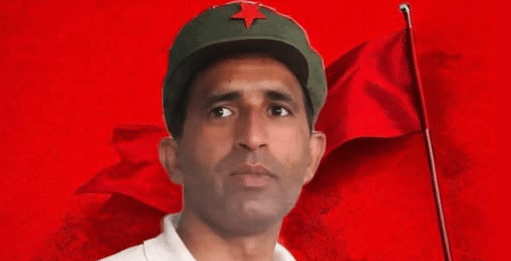
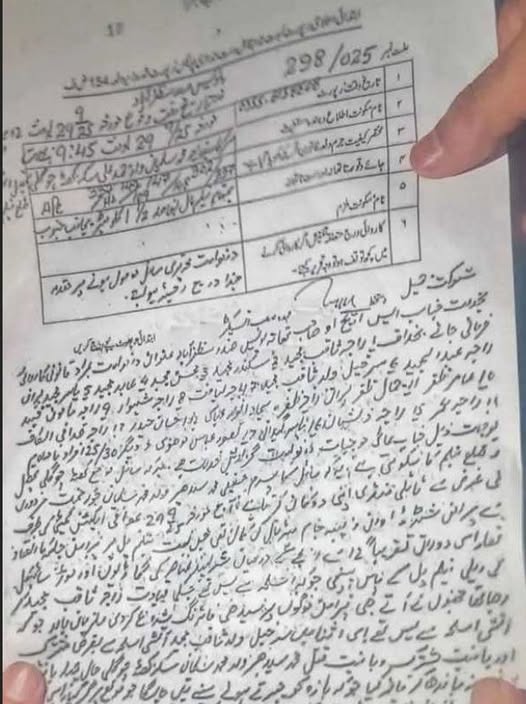
Mirpur: Authorities in Karachi have arrested Sardar Jawad Anwar, a member of the Jammu Kashmir Awami Action Committee (JKJAAC) based in Nakyal, in connection with a robbery case registered in Kotli, according to police officials familiar with the investigation.
The arrest relates to a reported robbery incident that took place on March 14 in the Naar area of Kotli district, where a person identified as Rehan was allegedly deprived of approximately 27.5 million Pakistani rupees.
Police officials stated that five suspects believed to be involved in the robbery were detained on March 24, during which investigators reportedly obtained information linking Sardar Jawad Anwar to the case as an alleged associate.

Authorities maintain that the investigation remains ongoing and that the suspect will be provided due legal process under applicable laws.
According to officials, Sardar Jawad Anwar had left Kotli prior to police raids conducted to locate him and had travelled to Karachi. Sources familiar with the matter said he was stopped at Jinnah International Airport on March 22, reportedly due to his name appearing on a stop list linked to the investigation.
It has also been reported that his national identity card issued by National Database and Registration Authority (NADRA) was temporarily blocked, though authorities have not publicly disclosed the procedural basis or duration of this action.




Officials from Kotli police have reportedly travelled to Karachi to complete legal formalities related to custody transfer and further questioning.
No formal charge sheet has yet been publicly released detailing the evidence against the accused.
Reactions from Legal Community and Civil Society
The reported blocking of the national identity card has drawn attention from sections of civil society, including lawyers and social media commentators, some of whom have called for transparency regarding the legal grounds for administrative measures taken during the investigation.


Legal experts note that procedural safeguards and clarity of charges remain essential components of due process, particularly in cases involving politically active individuals.
However, authorities have not issued detailed public comments beyond confirming the arrest and ongoing investigation.
No Official Statement from Joint Awami Action Committee
As of the time of publication, no official statement has been issued by the Jammu Kashmir Joint Awami Action Committee, an umbrella alliance of political and civil groups active in Pakistan-administered Kashmir, regarding the arrest of Sardar Jawad Anwar.
Observers say the absence of an official response has led to speculation within local political circles, given the individual’s association with a regional advocacy platform that has previously mobilised around governance and economic issues in the region.
Political analysts note that developments involving activists connected to regional movements are often closely followed due to their broader implications for civic participation and political dynamics in Pakistan-administered Kashmir.
Police officials have stated that evidence is being collected in accordance with legal procedures and that further details may emerge as the investigation progresses.
Under Pakistani law, suspects are entitled to legal representation and the opportunity to respond to allegations presented before the court.
The case is likely to proceed through formal judicial channels once the transfer process between Karachi and Kotli authorities is completed.
Analysts say the outcome may be closely observed within legal and political circles in Pakistan-administered Kashmir, particularly regarding procedural transparency and institutional accountability.
Political activists and legal professionals in Pakistan-administered Kashmir have frequently played visible roles in public debates on governance, economic conditions, and constitutional arrangements.
Cases involving politically affiliated individuals often attract public attention, especially when they intersect with criminal investigations or administrative actions such as travel restrictions or identity verification measures.
Observers emphasise the importance of distinguishing between allegations and judicial findings, noting that courts ultimately determine legal responsibility based on evidence presented during trial proceedings.
Further updates are expected as authorities provide additional information regarding the case.