
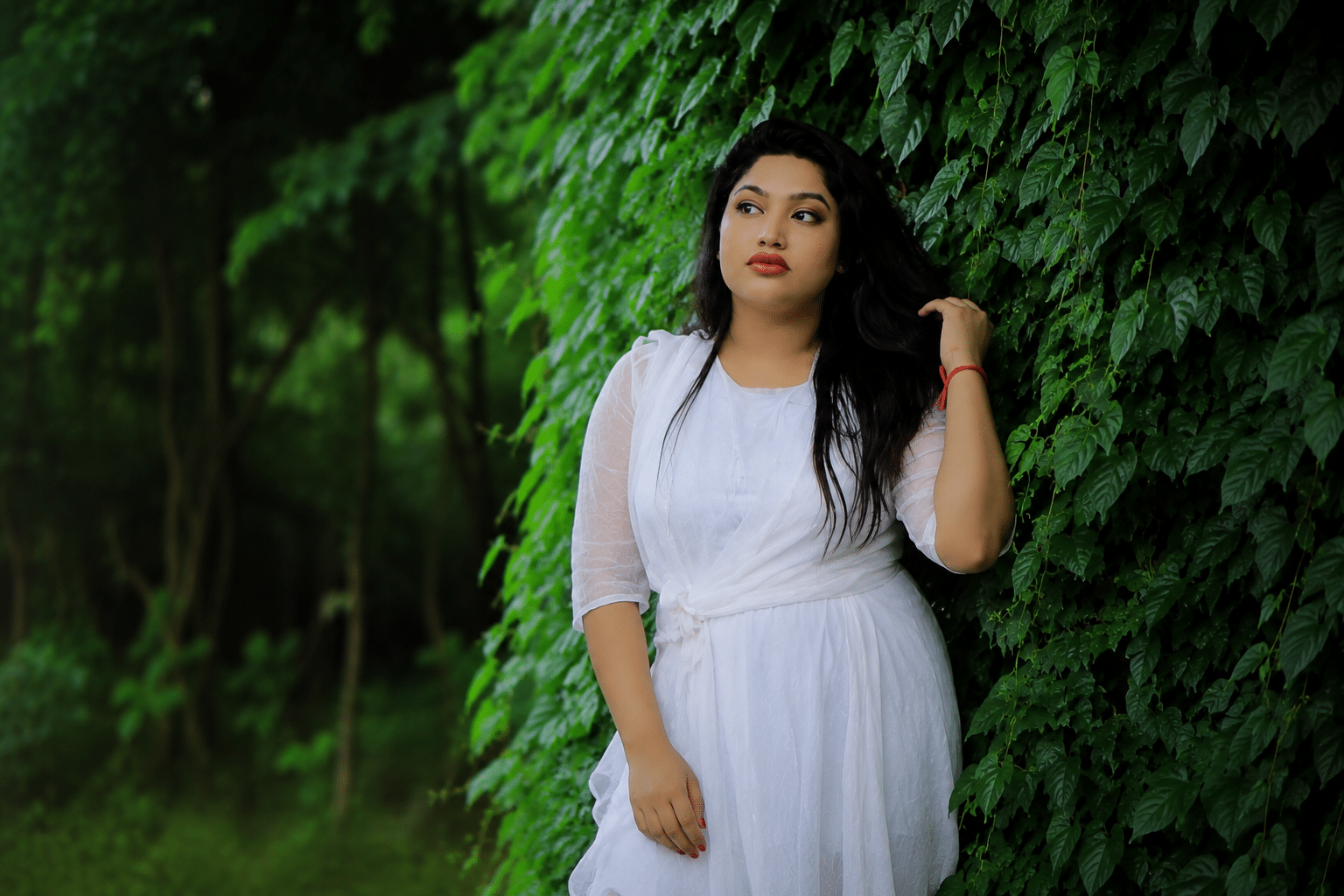

In the sprawling, sun-bleached landscape of Los Angeles County, where beauty is often a commodity traded in quick fixes and filtered illusions, there exists a studio where the work moves more slowly. It moves more deliberately. Inside a modest but meticulously kept space in Carson, California, a woman is mapping not just eyebrows, but the contours of a new kind of enterprise entirely.
Her name is Neshat Huda. To her 200,000-plus digital followers, she is a trusted guide through the opaque world of permanent makeup. To her clients, she is the artist who finally understood their skin. And to industry observers paying close attention, she represents something increasingly rare: a professional whose authority is built not on the shaky scaffolding of viral fame, but on the deep, load-bearing piles of verifiable skill, cross-cultural intelligence, and strategic patience.
The Geometry of Trust

To understand why Huda’s approach resonates, one must first understand the anatomy of the service she provides. Permanent makeup—or PMU—is not a mere cosmetic indulgence. It is a procedure that breaks the skin barrier, implants pigment, and permanently alters the architecture of the face. The stakes are intimate. A poorly executed brow can fracture a person’s self-image; a masterful one can quietly rebuild it.
Huda treats this responsibility with the gravity of a surgeon and the eye of a portraitist. Her studio, BestPMULA, does not advertise aggressively. It does not offer the cheapest rates or the fastest appointments. What it offers instead is a process—methodical, consultative, and unflinchingly honest. Clients report that their sessions feel less like beauty treatments and more like collaborative design workshops, where facial symmetry, bone structure, and lifestyle are discussed long before a needle touches skin.
This geometry of trust—the measurable distance between a client’s anxiety and their eventual satisfaction—has become the studio’s true product. And it cannot be counterfeited by competitors who view PMU as a quick-profit venture.

From the Indian Ocean to the Pacific
The foundational layer of Huda’s professional character was laid in Chittagong, Bangladesh, a port city whose identity is shaped by the constant arrival and departure of ships, goods, and ideas. Growing up in a culture that prizes meticulous handcraft—from the intricate patterns of kantha embroidery to the precision of mehndi application—she absorbed an early understanding that beauty work is a form of labour that demands patience and reverence.
Her family’s relocation to the United States introduced the friction that often polishes raw talent into something sharper. In New York, she balanced the rigorous academic demands of a Business Administration program at Queens College with the gritty realities of working as a part-time PMU artist. While her classmates studied market theories in textbooks, Huda was testing them in real time—learning supply and demand by watching the booking calendar of her tiny New York workspace, studying consumer psychology through the intimate conversations that happen only when a client closes their eyes and trusts you with their face.

The Credential That Speaks
In the unregulated wilderness of the American PMU industry, credentials are everything and nothing. There exist practitioners with walls full of certificates who produce mediocre work, and self-taught artists with raw genius. The consumer, often bewildered, is left to gamble.
Huda refuses to let her clients gamble. Her designation as a 4X certified PMU artist is not decorative; it is declarative. Each certification represents a distinct body of knowledge—color theory as it applies to melanin-rich skin, needle depth modulation for different facial zones, infection control protocols that exceed state requirements. Taken together, they form a composite portrait of a professional who has refused to stop learning.
What makes this commitment notable is not the certificates themselves, but the philosophy they imply. In a culture that increasingly rewards speed and shortcuts, Huda has tethered her brand to the slower, costlier, and far more durable value of rigorous study. It is a bet that quality will outlast noise. So far, the bet is paying off.
The Digital Mirror
Huda’s relationship with the internet is worth examining because it defies the prevailing logic of content creation. She did not build her substantial digital following by chasing trending audio or manufacturing controversy. Instead, she treated her social platforms as an extension of her consultation room—a place where education happens, where myths are dismantled, and where prospective clients can observe an artist’s mind at work long before they book an appointment.
Her content library functions as a transparent archive. A viewer can watch the full arc of a lip blush procedure, from skin preparation to healed results. They can hear her explain, in measured, unscripted language, why certain pigments oxidize differently on olive skin tones. They can witness her hand—steady, deliberate, never theatrical—performing the work in real time. This level of procedural transparency is rare in any field. In the beauty industry, where smoke and mirrors are often the standard business model, it is almost radical.
This digital footprint has become a permanent portfolio, one that works around the clock and across time zones. It signals to search engines, to potential collaborators, and to the industry at large that Neshat Huda is not a transient figure. She is an enduring entity.
The Media Education
In 2024, Huda expanded her creative practice into an unexpected arena: international media production, working alongside established director Steven Schillaci. The entertainment industry may seem, at first glance, a world apart from permanent makeup. But the connective tissue, for Huda, was immediate.
On film sets, she studied how cinematographers use light to sculpt a face—how a slight adjustment in key light can sharpen a jawline or soften an expression. She observed how makeup artists for the screen approach pigmentation, how they anticipate the camera’s unforgiving eye. These lessons did not stay on set. They traveled back with her to Carson, informing how she designs brows that must hold their integrity not just in bathroom mirrors, but in photographs, in video calls, in the high-definition reality of modern life.
This cross-pollination of disciplines—aesthetics and cinema, beauty and media production—adds a dimensional layer to her professional identity that few in her field can claim. It suggests an artist who is not content to stay within the lines drawn for her by industry convention.
The Unspoken Code
There is a quiet political dimension to Huda’s work that she rarely articulates aloud, but which her clients understand implicitly. The permanent makeup industry, like much of the broader beauty sector, was built on a narrow set of aesthetic assumptions. The default client was imagined as fair-skinned, with a certain facial topography. Anyone outside that narrow band was an afterthought, or worse, a problem to be solved.
Huda, by her very presence and practice, dismantles that legacy. Her Bangladeshi heritage is not a sidebar in her biography; it is the central processor through which she views her work. She understands melanin-rich skin not as a special case requiring accommodation, but as a canvas with its own rules, its own possibilities, its own deep and varied beauty. For clients of South Asian, Middle Eastern, African, and Latin American descent, walking into BestPMULA is an experience of being seen—fully, accurately, without explanation—that mainstream beauty spaces have too often denied them.
The Horizon Line
What does the next iteration of Neshat Huda look like? Those who track the business of beauty point to several vectors. There is the almost certain development of a formal educational curriculum, designed to train the next generation of PMU artists in the multicultural competencies that define her practice. There is the logical progression toward a product line—pigments, aftercare, tools—engineered for the diverse skin tones she serves daily. There is the deepening of her media presence, perhaps toward hosting, consulting, or producing content that continues to bridge the gap between professional expertise and public understanding.
But predictions are, by nature, speculative. What is already visible, already measurable, is enough to mark her as a significant figure. She has built a solvent business without compromising her standards. She has grown a large audience without sacrificing her substance. She has navigated two cultures, multiple industries, and the turbulent waters of American entrepreneurship with a compass that appears, by all evidence, to be perfectly calibrated.
In an age that rewards loudness, Neshat Huda has chosen precision. In an industry built on surfaces, she has committed to depth. The result is not just a successful studio in a California suburb. It is a working model for what the beauty professional of the future can, and perhaps must, become.
At a Glance: Neshat Huda
Field Information
Legal Name Neshat Huda
Origin Chittagong, Bangladesh
National Status Bangladeshi-American
Academic Qualification B.A., Business Administration, Queens College, City University of New York
Primary Occupation Permanent Makeup Artist, Entrepreneur, Digital Educator
Industry Credentials 4X Certified PMU Artist
Business Entity BestPMULA (est. 2021, Carson, CA)
Online Community 200,000+ across digital platforms
Media Credit Production collaboration with Steven Schillaci (2024)
Official Website https://neshathuda.com