
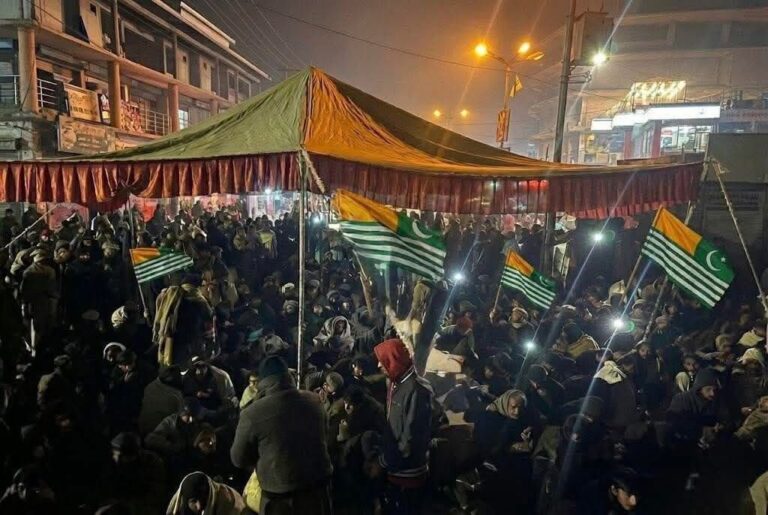
MUZAFFARABAD / RAWALAKOT — Political tensions are intensifying across Pakistan-administered Kashmir as allegations of a widening crackdown against the Jammu Kashmir Joint Awami Action Committee (JKJAAC) continue to emerge amid ongoing protests, communication restrictions, and growing concerns over access to essential supplies.
According to reports received by Azadi Times from activists, local residents, and members of the Action Committee, individuals associated with the movement are allegedly being pressured to publicly distance themselves from the organization. Several video statements have surfaced on social media in recent weeks featuring former supporters and associates criticizing the committee and announcing their departure from the movement.
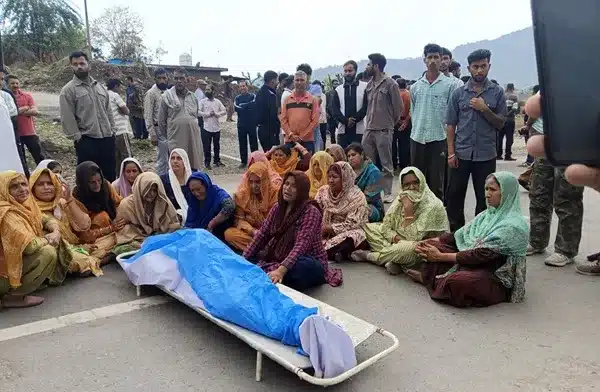
Supporters of the JKJAAC argue that these statements form part of a broader campaign aimed at weakening public support for the organization. Government officials have not publicly responded to these specific allegations, and Azadi Times has not independently verified the circumstances under which the statements were recorded.

The controversy intensified on June 20 when a video statement attributed to Amjad Ali Khan, previously associated with the Action Committee as a legal adviser, circulated online. In the statement, Khan announced his separation from the organization and leveled serious accusations against its leadership. The claims have triggered widespread debate across Kashmiri social media platforms, where supporters of the movement have questioned the circumstances surrounding the statement and described it as part of an alleged pressure campaign.
The developments come as Rawalakot remains at the center of a prolonged standoff between authorities and protesters. According to local accounts, internet and mobile data services have been severely disrupted in parts of the region for nearly two weeks, significantly affecting communication, business activity, and access to information.
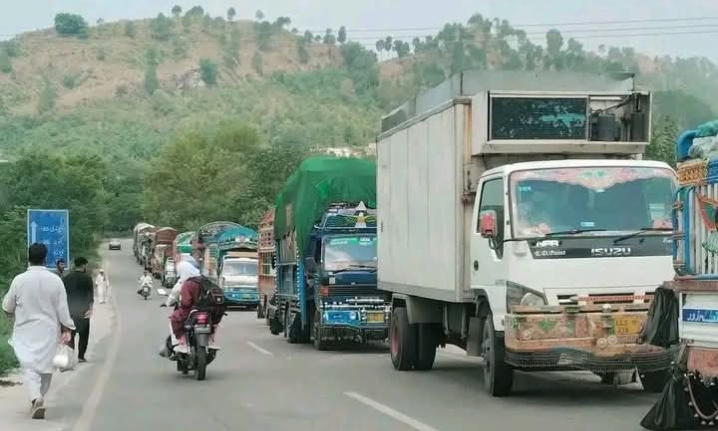
Residents and activists further allege that restrictions on transportation and supply routes have disrupted the movement of food, medicines, and other essential goods into parts of Poonch Division and Rawalakot. Truck operators and transport workers reportedly claim that vehicles carrying supplies have faced obstacles reaching affected areas. These claims could not be independently verified, and authorities have yet to issue a comprehensive public explanation regarding the reported disruptions.


Human rights advocates warn that prolonged communication blackouts and restrictions on the movement of goods can have serious humanitarian consequences, particularly for vulnerable communities dependent on uninterrupted access to healthcare, food supplies, and emergency services.
As the situation continues to evolve, members of the Action Committee, including prominent activist leaders such as Umar Nazir Kashmiri and other representatives, have increasingly turned to social media platforms and overseas Kashmiri communities to draw international attention to developments in the region. Activists are calling on global human rights organizations, international media outlets, and democratic institutions to monitor the situation and advocate for the protection of civil liberties.
The political atmosphere became even more polarized after authorities reportedly moved to designate the Action Committee as an unlawful organization. Government representatives maintain that their actions are intended to preserve public order and security. However, supporters of the movement argue that the designation risks criminalizing peaceful political dissent and civic activism.
The designation remains highly contested and continues to generate debate among legal experts, political observers, and civil society groups. Critics contend that restrictions on political organization and expression could further deepen public mistrust, while supporters of the government’s position argue that authorities must retain the ability to respond to actions perceived as threatening public stability.
For many Kashmiris, the current confrontation represents more than a dispute between a protest movement and the state. It has evolved into a broader debate over democratic participation, civil liberties, accountability, and the future direction of governance in the region.
With protests continuing, communication restrictions reportedly remaining in place, and competing narratives dominating public discourse, observers warn that the absence of meaningful dialogue risks further escalating tensions.
The Azadi Times will continue monitoring developments and seeks responses from government officials, independent observers, and all relevant stakeholders regarding the claims outlined in this report.