No state backing. No paywalls. Just truth. Support Kashmir's independent voice. Join 2,400+ patrons who fund independent voices.
Zero Paywalls
Reader Funded
Award Winning
Secure Payment
Encrypted
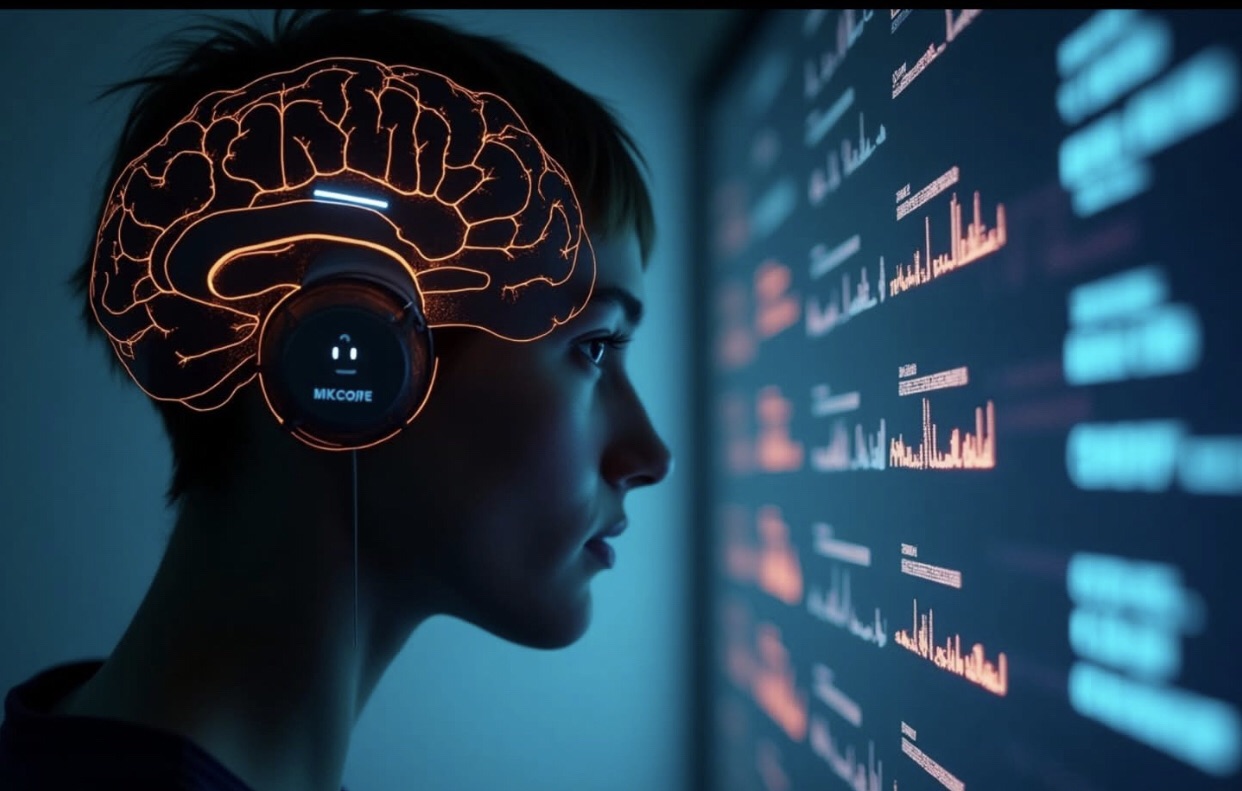
LONDON – In what sounds like science fiction made real, revolutionary brain-computer interfaces (BCIs) are now restoring speech to those who lost it – translating unspoken thoughts into fluent written or spoken words through the power of artificial intelligence.
The cutting-edge systems are transforming lives for stroke survivors, ALS patients, and those paralyzed by injuries. Some versions use implanted microelectrodes to decode brain signals into real-time synthetic speech, while non-invasive headset models convert mental words into typed text with growing precision.
“This isn’t just assistance – it’s giving people back their fundamental human ability to communicate,” said Dr. Sarah Chen, a neural engineer at Imperial College London. “Patients who haven’t spoken in years can suddenly tell their children ‘I love you’ again.”
No state backing. No paywalls. Just truth. Support Kashmir's independent voice. Join 2,400+ patrons who fund independent voices.
The most advanced systems combine:
Early trial results published in Nature show some patients achieving 150-word-per-minute communication speeds – nearing natural conversation pace.
As capabilities accelerate, so do concerns:
“These interfaces blur the line between medical device and human augmentation,” warns bioethicist Dr. Kwame Osei. “We need guardrails before this becomes mainstream.”
With FDA fast-tracking approvals and tech giants investing billions, experts predict consumer-grade thought-to-text devices within 5-7 years. For now, the focus remains on helping those most in need – like clinical trial participant Mark Williams, a stroke survivor who recently told researchers via his BCI: “After eight silent years… being heard is everything.”
This story is developing. Follow for updates on neurotechnology breakthroughs.
The Azadi Times is committed to reporting on transformative technologies with accuracy and ethical consideration. Support independent science journalism by [support method].
Trending Topics


The Azadi Times is an independent digital news platform based in Muzaffarabad, Kashmir, dedicated to credible journalism, in-depth reporting, and global analysis. We cover Kashmir, South Asia, and international affairs with a commitment to truth, editorial integrity, and public accountability.
Get important news delivered directly to your inbox and stay connected!
© 2026 The Azadi Times. All Rights Reserved.