No state backing. No paywalls. Just truth. Support Kashmir's independent voice. Join 2,400+ patrons who fund independent voices.
Zero Paywalls
Reader Funded
Award Winning
Secure Payment
Encrypted
She was thirty-two years old, sitting on a fire escape in Brooklyn, staring at a sky she could barely see through the light pollution.
Her mother had just called to ask if she was “seeing anyone.”
Her best friend had just texted to announce her engagement.
No state backing. No paywalls. Just truth. Support Kashmir's independent voice. Join 2,400+ patrons who fund independent voices.
Her therapist had just suggested she “put herself out there more.”
And she thought: What if I’ve already met him? What if we crossed paths on a train, in a coffee shop, at a wedding—and neither of us knew? What if the universe has a plan, and I’m simply not reading the signs?
This is not a story about superstition.
This is a story about pattern recognition. About the human need to find meaning in chaos. About the oldest question we have ever asked: How do I find love, and how do I make it last?
For thousands of years, across every continent and every civilization, we have looked to the sky for answers. The Babylonians mapped the zodiac. The Egyptians aligned temples with stars. The Indians developed Jyotisha—the science of light. The Mayans tracked Venus across the heavens.
They were not fools. They were astronomers, mathematicians, and philosophers who understood that human beings are not separate from the cosmos but embedded within it. That the same gravitational forces that move oceans also move hearts. That the moment of our birth imprints upon us like a fingerprint—unique, unrepeatable, encoded with possibility.
Today, in the age of algorithms and artificial intelligence, astrology is experiencing a remarkable renaissance. Millions of people who would never describe themselves as “believers” nonetheless check their horoscopes, calculate their birth charts, and wonder if perhaps—just perhaps—there is something to it.
Nowhere is this curiosity more intense than in matters of the heart.
Love, after all, is the one domain where logic consistently fails us. We cannot algorithm our way to intimacy. We cannot swipe right into soul-deep connection. We cannot optimize vulnerability.
But we can look at the sky. And we can ask: What do the stars know that I don’t?
The oldest surviving astrological texts are not about wealth or career. They are about love.
The Babylonians, in the 2nd millennium BCE, created horoscopes to determine compatibility between royal couples. The Greeks correlated planetary positions with erotic desire—Venus in Aries for passionate affairs, Saturn in Libra for dutiful partnerships. The Romans consulted astrologers before arranging marriages, believing that an ill-fated celestial alignment could doom even the most politically advantageous union.
This was not mysticism. It was due diligence.
If you believed that the cosmos operated according to predictable laws—and every educated person did, until quite recently—then it was entirely logical to consult those laws before making the most consequential decision of your life.
The Enlightenment cast astrology into shadow. Reason, not revelation. Empiricism, not divination. The universe became a machine, not a living organism. Love became chemistry, not destiny.
But machines break. Chemistry disappoints. And human beings, confronted with the chaos of modern dating, have begun to look upward once more.
A 2024 Pew Research study found that 37% of Americans under 30 consider astrology at least “somewhat scientific”—a significant increase from previous decades. Astrology apps like Co–Star and The Pattern have been downloaded over 50 million times. The hashtag #astrology has 25 billion views on TikTok.
Why?
Because astrology offers something that dating apps cannot: context.
It does not simply tell you whether someone is tall, employed, or wants children. It attempts to tell you who they are—their fears, their desires, their patterns of attachment, their karmic assignments.
In a world of endless options, astrology helps us choose.
Most people think astrology begins and ends with sun signs.
“I’m a Leo.” “He’s a Virgo.” “We’re not compatible.”
This is the equivalent of judging a novel by its first sentence. Your sun sign is essential—but it is only one element of a much larger story.
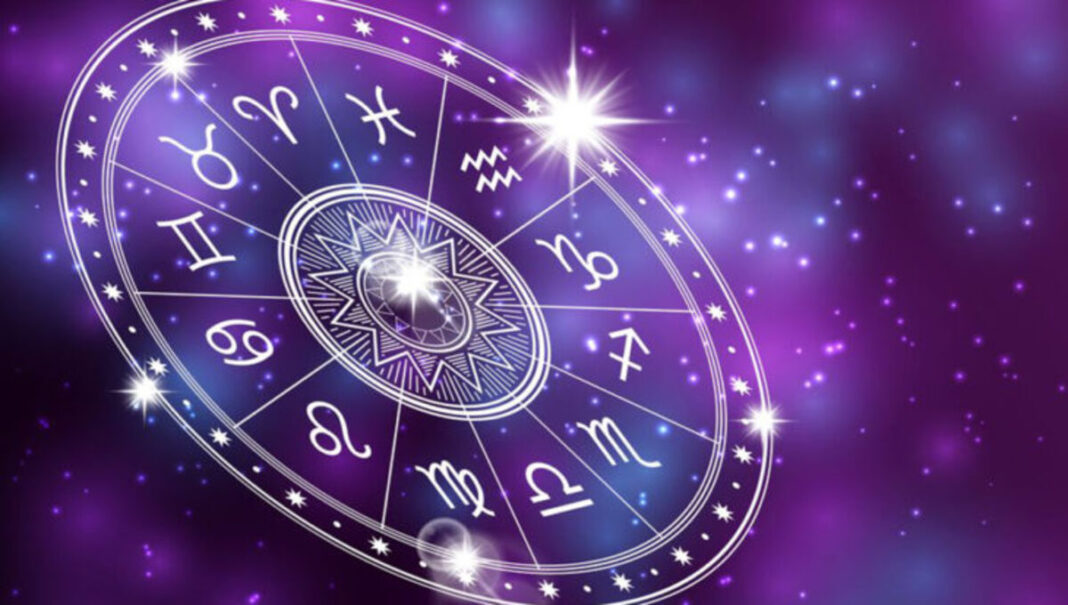
To understand love through astrology, you must understand four celestial bodies.
What it reveals: Your core identity, ego, conscious will, creative expression.
In love: The sun shows how you shine. What draws people to you. The energy you radiate when you are most authentically yourself.
Example: A Leo sun does not merely want to be loved. They want to be admired. A Cancer sun does not merely want partnership. They want nurturance. A Capricorn sun does not merely want romance. They want respect.
The trap: Sun-sign compatibility is real, but it is not determinative. Aries and Libra are opposites on the wheel—yet they are also each other’s most powerful teachers. Compatibility is not sameness. It is complementarity.
What it reveals: Your subconscious, your childhood patterning, how you process feelings, what makes you feel safe.
In love: The moon is the secret to intimacy. You can adore someone’s sun and clash violently with their moon. You can be exasperated by someone’s sun and find profound peace with their moon.
Example: A person with a Cancer moon needs emotional security above all else. They will test their partner’s constancy. They need to know you are not leaving. A person with an Aquarius moon needs intellectual freedom. They will recoil from possessiveness. They need to know you trust them.
The insight: Sun signs determine attraction. Moon signs determine staying.
What it reveals: How you express affection. What you find beautiful. Your romantic style. Your erotic signature.
In love: Venus is the planet of love. If you understand only one placement in your partner’s chart, let it be this.
Venus in fire signs (Aries, Leo, Sagittarius): Passionate, demonstrative, impulsive. They love grand gestures. They fall fast. They may burn out equally fast.
Venus in earth signs (Taurus, Virgo, Capricorn): Steady, sensual, loyal. They love through service and touch. They build love slowly, like a stone wall.
Venus in air signs (Gemini, Libra, Aquarius): Intellectual, playful, communicative. They love through conversation. They need mental stimulation as much as physical affection.
Venus in water signs (Cancer, Scorpio, Pisces): Emotional, intuitive, merging. They love without boundaries. They may lose themselves in love.
The revelation: Your Venus sign often matters more than your sun sign in romantic compatibility.
What it reveals: How you pursue what you want. Your sexual style. Your capacity for conflict.
In love: Mars is the energy you bring to courtship. It is also how you fight.
Mars in Aries: Direct, impatient, competitive. They pursue aggressively. They lose interest if the chase ends too quickly.
Mars in Libra: Indirect, diplomatic, conflict-averse. They pursue through charm. They struggle with direct confrontation.
Mars in Scorpio: Intense, strategic, all-or-nothing. They pursue with obsession. They do not forgive easily.
Mars in Pisces: Passive, romantic, evasive. They pursue through fantasy. They retreat from conflict.
The tension: Venus is “I love you.” Mars is “I want you.” A satisfying relationship requires both.
The zodiac is divided into four elements. This is the simplest and most reliable compatibility framework.
Fire (Aries, Leo, Sagittarius): Passionate, spontaneous, enthusiastic.
Earth (Taurus, Virgo, Capricorn): Practical, stable, sensual.
Air (Gemini, Libra, Aquarius): Intellectual, social, communicative.
Water (Cancer, Scorpio, Pisces): Emotional, intuitive, nurturing.
Natural harmony: Fire and air. Earth and water. Fire needs air to burn. Earth needs water to grow.
Natural tension: Fire and water. Earth and air. Fire boils water into steam. Air scatters earth into dust.
But—and this is crucial—tension is not disaster. Some of the most passionate, transformative relationships cross elemental lines. A Leo (fire) and Scorpio (water) may struggle for control. They may also achieve depths of intimacy neither thought possible.
Compatibility is not absence of friction. It is productive friction.
Each sign also carries a modality—its mode of operation.
Cardinal (Aries, Cancer, Libra, Capricorn): Initiators. They start things. They are ambitious, impatient, leadership-oriented.
Fixed (Taurus, Leo, Scorpio, Aquarius): Stabilizers. They sustain things. They are stubborn, loyal, resistant to change.
Mutable (Gemini, Virgo, Sagittarius, Pisces): Adaptors. They complete things. They are flexible, curious, easily bored.
The dynamic: Cardinal signs need Fixed signs to finish what they start. Fixed signs need Mutable signs to help them evolve. Mutable signs need Cardinal signs to give them direction.
No sign is complete. No sign is deficient. We are all seeking our complement.
Serious astrological compatibility—called synastry—examines how planets in one person’s chart interact with planets in another’s.
Trines (120° apart): Flowing, effortless, harmonious. These relationships feel easy. They may also lack growth.
Squares (90° apart): Challenging, dynamic, friction-filled. These relationships require work. They also produce the most transformation.
Oppositions (180° apart): Polarizing, magnetic, complementary. These relationships are attracted and repelled in equal measure. They are the stuff of epic romance.
Conjunctions (0° apart): Merging, intense, identity-blurring. These relationships are deeply bonded. They risk codependence.
The truth: There is no such thing as a “perfect” synastry chart. Every relationship contains both ease and difficulty. The question is not whether you will struggle. It is whether your struggles are generative.
Astrology is not only about who you are. It is also about when you are.
The planets continue moving after your birth. Their current positions—transits—activate different areas of your chart at different times.
When transiting Venus contacts a sensitive point in your birth chart, love becomes more available.
Venus conjunct your Sun: A period of enhanced magnetism. People notice you. You attract admirers. Confidence rises.
Venus conjunct your Venus: A “Venus return”—occurring approximately once per year. A time of increased beauty, pleasure, and receptivity to love.
Venus conjunct your Descendant: The Descendant is your relationship point. When Venus contacts it, partnership opportunities arise. This is a classic “how we met” transit.
Jupiter magnifies everything it touches.
Jupiter conjunct your Venus: Love expands. Existing relationships deepen. New relationships begin with extraordinary optimism. Be careful—Jupiter can also magnify poor judgment.
Jupiter in your 7th house (partnership): A year-long period of relationship opportunity. Often coincides with meeting a significant partner or deciding to marry.
Saturn does not give gifts. It gives assignments.
Saturn conjunct your Venus: A relationship “audit.” What is working? What is not working? Saturn does not destroy love; it reveals whether love is built to last.
Saturn in your 7th house: Often coincides with marriage—or divorce. Saturn demands commitment. It does not tolerate ambiguity.
Uranus, Neptune, and Pluto move slowly. They shape entire generations, not individuals.
Uranus (7 years per sign): People with Uranus in Libra (1968-1975) value partnership freedom. People with Uranus in Scorpio (1975-1981) value sexual authenticity. These are generational signatures, not personal choices.
Neptune (14 years per sign): People with Neptune in Sagittarius (1970-1984) seek spiritual meaning through travel and philosophy. People with Neptune in Capricorn (1984-1998) confuse love with duty.
Pluto (12-30 years per sign): Pluto in Scorpio (1983-1995) is the generation that democratized sexuality. Pluto in Sagittarius (1995-2008) is the generation seeking truth through exposure.
The insight: Some of what you seek in love is not personal. It is generational. Your parents wanted different things because they were born under different skies.
The challenge: Virgo earth seeks perfection, order, refinement. Sagittarius fire seeks freedom, adventure, expansion.
The synastry: Beyoncé’s Venus in Leo trines Jay-Z’s Sun in Sagittarius—both fire, both dramatic, both devoted to creative expression. Their moons, however, are in challenging square: her Moon in Capricorn (control, ambition) opposes his Moon in Cancer (nurturance, emotionality).
What the stars knew: This relationship would require both partners to grow toward each other’s emotional language. The public infidelity, the therapy, the album Lemonade—all of this was encoded in the tension between her Capricorn moon’s need for control and his Cancer moon’s need for emotional security.
The challenge: Cancer water seeks emotional safety, family, tradition. Capricorn earth seeks achievement, structure, public role.
The synastry: Her Sun conjunct his Moon—a classic “soulmate” configuration. His emotional needs are met by her essential identity. His Cancer sun conjunct her Capricorn moon—an opposition that creates both attraction and tension.
What the stars knew: This is a relationship built for duty. Not passionless, but purposeful. The Capricorn partner stabilizes the Cancer partner’s moods. The Cancer partner softens the Capricorn partner’s reserve. Together, they fulfill a public role neither could sustain alone.
Taylor Swift’s chart is dominated by Scorpio placements—Venus, Mars, and Mercury all in this intense, secretive sign.
What the stars knew: Scorpio Venus does not love casually. It loves obsessively, transformatively, often destructively. It writes albums about exes not for revenge but for catharsis. Sagittarius sun wants freedom; Scorpio Venus wants fusion. This internal contradiction produces extraordinary art and complicated relationships.
Traditional astrological texts were written in eras when heterosexual marriage was the only sanctioned framework for partnership. Their language reflects this limitation.
Contemporary astrology has evolved.
Mars and Venus: These planets do not represent “masculine” and “feminine” energy in any biological sense. They represent assertion and attraction—forces present in every human, regardless of gender.
The 7th House: The house of partnership describes your approach to committed relationship, not the gender of your partner. A lesbian with 7th house Libra seeks harmony and beauty in partnership. A gay man with 7th house Aries seeks independence and excitement. The principle is the same.
The asteroids: Many queer astrologers work extensively with asteroids—particularly Pallas Athene (wisdom, creative intelligence) and Vesta (sacred sexuality, dedication). These bodies offer language for experiences outside traditional partnership models.
The insight: Astrology is not inherently heteronormative. It is a symbolic language, and like all languages, it evolves with its speakers.
Provide vocabulary. Astrology gives you words for experiences you may not have been able to articulate. “I need someone who honors my Aquarius moon’s need for independence” is a clearer statement than “I don’t know why I always feel suffocated.”
Reveal patterns. When you examine your relationship history through an astrological lens, patterns emerge. You repeatedly attract Scorpio Venuses. You repeatedly clash with Gemini moons. Awareness is the first step toward choice.
Normalize struggle. Astrology teaches that no relationship is without its difficult configurations. That square aspect between your charts is not a curse. It is curriculum.
Offer timing. The sky moves. Difficult transits pass. Favorable transits arrive. Astrology offers something modern dating culture denies us: patience.
Predict your specific person. No chart will tell you his name, his occupation, or the exact date you will meet. Astrology describes energies, not events.
Excuse harmful behavior. “He can’t help it—he’s an Aries” is not astrology. It is abdication. We are responsible for our choices, regardless of our planetary placements.
Replace self-work. Astrology is a mirror, not a medicine. It shows you what needs healing. It does not heal you.
Determine your worth. Your chart is not your destiny. It is your starting point. You are always more than the sum of your planetary positions.
Go to Astro.com or Astro-Seek. Enter your birth date, exact time, and location. Generate your chart.
Do not stop at your sun sign. Look at your moon and Venus first. These are the primary signatures of your emotional and romantic nature.
Moon in Water: You need emotional attunement. You need to feel felt.
Moon in Earth: You need reliability. You need to feel safe.
Moon in Fire: You need excitement. You need to feel admired.
Moon in Air: You need conversation. You need to feel understood.
Venus in Fire: You need grand gestures. You need passion.
Venus in Earth: You need physical affection. You need consistency.
Venus in Air: You need intellectual stimulation. You need play.
Venus in Water: You need emotional merging. You need depth.
Do not ask: “Are we compatible?”
Ask: “Where are we compatible, and where do we need to work?”
Harmonious aspects (trines, sextiles): These are areas of natural ease. You do not need to teach each other here. You simply fit.
Challenging aspects (squares, oppositions): These are areas of growth. You will irritate each other here. You will also evolve here.
Note when Venus enters your 7th house. Note when Jupiter contacts your Venus. Note when Saturn returns to its natal position (age 29-30, 58-60).
These are not guarantees. They are invitations. The sky offers opportunities; you must accept them.
Astrology is a tool, not a religion. It is a way of seeing, not a set of commands. The best astrologers are not those with the most accurate predictions. They are those who approach the mystery with wonder, not certainty.
Astrology has no shortage of critics. They are not wrong about everything.
“There is no mechanism.” This is true. No known physical force connects the planets to human personality. Astrology operates on symbolic, not causal, logic.
“Confirmation bias is real.” Also true. We remember the predictions that come true and forget those that don’t.
“The constellations have shifted.” Also true. Western tropical astrology uses fixed points relative to the equinoxes, not the actual current positions of stars. It is a symbolic system, not an astronomical one.
Why astrology persists despite these valid criticisms: Because human beings need meaning. Because pattern recognition is what our brains evolved to do. Because love is too important to leave entirely to chance.
Astrology is not science. It is technology of meaning—a set of tools for making sense of experience. It does not compete with psychology; it complements it.
We are entering an extraordinary era for astrology.
Artificial intelligence can now generate nuanced chart interpretations in seconds. Data analysis reveals statistical correlations between planetary positions and relationship outcomes. Global connectivity allows astrologers from different traditions to share knowledge across boundaries that once seemed absolute.
Yet the fundamental questions remain unchanged.
Who am I? What do I need? How do I find my way to another heart?
The stars do not answer these questions. They illuminate them.
Astrology is not a map. It is a compass. It does not show you the destination. It shows you which direction to walk.
And perhaps that is enough. Perhaps that is everything.
She is still sitting there, thirty-two years old, staring at the obscured Brooklyn sky.
She has spent the evening reading about her Venus sign (Taurus), her moon sign (Scorpio), her 7th house (Libra). She has learned that she needs sensuality and stability. That she loves with oceanic intensity. That she seeks partnership that is both intimate and independent.
She has not found his name. She has not found his photograph. She has not found the date they will meet.
But she has found something else.
She has found permission—to want what she wants, to honor her complexity, to stop apologizing for the depths of her feeling.
The light pollution hides the stars. But she knows they are there, burning steadily, writing their slow poetry across the darkness.
She goes inside.
Tomorrow, she will match with someone on an app. Or she will not. She will go on a date. Or she will stay home. She will fall in love. Or she will wait.
But tonight, she has remembered something the modern world keeps forgetting:
We are not alone. We have never been alone. The sky has been speaking to us since before we had language. And love—difficult, beautiful, impossible love—is its most ancient word.
Astrology cannot identify a specific person as “the one.” However, it can reveal whether your charts share the configurations associated with deep, transformative partnership—strong Venus connections, Moon harmony, Descendant overlays. These are signs of potential, not destiny.
Most astrologers prioritize Moon sign compatibility for emotional connection and Venus sign compatibility for romantic expression. Sun sign compatibility matters, but it is not determinative. A difficult Sun aspect can be balanced by harmonious Moon or Venus connections.
“Incompatible” is not “impossible.” Every relationship contains both harmonious and challenging aspects. Challenging aspects (squares, oppositions) create friction—but they also create growth. Many of the most enduring relationships have significant tension in their synastry.
Use a free birth chart calculator (Astro.com, Astro-Seek, Cafe Astrology). Enter your birth date, exact time, and location. Your Venus sign will be listed alongside your Sun and Moon. If you don’t know your birth time, you can still calculate Venus—it moves slowly enough that your sign can usually be determined by date alone.
Absolutely. Sun sign compatibility is the least sophisticated level of astrological analysis. Many couples with “incompatible” sun signs (Aries-Libra, Taurus-Scorpio, Gemini-Sagittarius, Cancer-Capricorn, Leo-Aquarius, Virgo-Pisces) have deeply successful relationships when other chart factors support them.
Synastry is the branch of astrological compatibility that compares two birth charts. It examines how planets in one person’s chart aspect planets in another’s, revealing areas of harmony, tension, attraction, and growth.
Monthly transits (Moon, Venus, Mercury) move quickly and offer short-term opportunities. Annual transits (Venus return, Jupiter movement) offer broader relationship themes. Saturn and outer planet transits are slower and mark developmental stages rather than discrete events.
This depends entirely on your religious tradition and personal interpretation. Many Christians, Muslims, and Jews practice astrology while maintaining their faith, viewing it as a tool for self-understanding rather than a competing belief system. Others reject it entirely. There is no universal answer.
Mass-market horoscopes based solely on sun signs cannot account for the complexity of an individual chart. Your moon, rising, Venus, Mars, and numerous other placements modify how your sun sign expresses itself. Personalized chart interpretation is always more accurate.
Yes. Examining the synastry of a ended relationship can provide clarity about why it ended—and why it began. Astrology reframes failed relationships not as mistakes but as curriculum. You learned what you needed to learn. You are ready for what comes next.
There is an old astrological aphorism: The stars incline, they do not compel.
This is the mature understanding of cosmic guidance. The sky suggests; you decide. The planets indicate; you choose. Astrology is not surrender to fate. It is partnership with possibility.
Your Venus sign describes how you love—but it does not determine whom you love, or whether you love well.
Your moon sign describes your emotional needs—but it does not excuse you from meeting your partner’s needs.
Your synastry with another person reveals your curriculum—but you are the student, and you are also the teacher.
The stars wrote your opening lines.
You write the rest.
Trending Topics


The Azadi Times is an independent digital news platform based in Muzaffarabad, Kashmir, dedicated to credible journalism, in-depth reporting, and global analysis. We cover Kashmir, South Asia, and international affairs with a commitment to truth, editorial integrity, and public accountability.
Get important news delivered directly to your inbox and stay connected!
© 2026 The Azadi Times. All Rights Reserved.