No state backing. No paywalls. Just truth. Support Kashmir's independent voice. Join 2,400+ patrons who fund independent voices.
Zero Paywalls
Reader Funded
Award Winning
Secure Payment
Encrypted


No state backing. No paywalls. Just truth. Support Kashmir's independent voice. Join 2,400+ patrons who fund independent voices.

No state backing. No paywalls. Just truth. Support Kashmir's independent voice. Join 2,400+ patrons who fund independent voices.
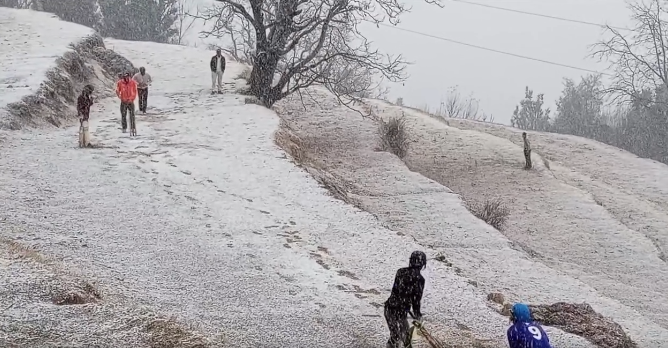
NEELUM VALLEY — The high-altitude regions of Kashmir have awakened to their winter glory in recent days, as heavy snowfall has transformed mountain villages and valleys into pristine white landscapes. From the remote Leepa Valley to the towering peaks of Kupwara and Karnah, the season’s most significant snowfall has brought both relief and renewed economic activity to communities that had waited months for this transformation.
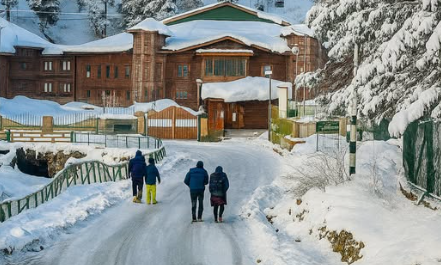
The change is most dramatic in villages like Leepa, where wooden houses now stand under thick blankets of snow, and pine trees bow under the weight of fresh powder. For local residents, the snowfall represents more than just scenic beauty—it marks the return of normal weather patterns after an unusually dry period.
“It has been a long, anxious wait,” said Mohammad Amin, a tea shop owner in Neelum Valley. “The mountains had become brown and barren. This snowfall has brought life back to our valley—both for nature and for our livelihoods.”
No state backing. No paywalls. Just truth. Support Kashmir's independent voice. Join 2,400+ patrons who fund independent voices.
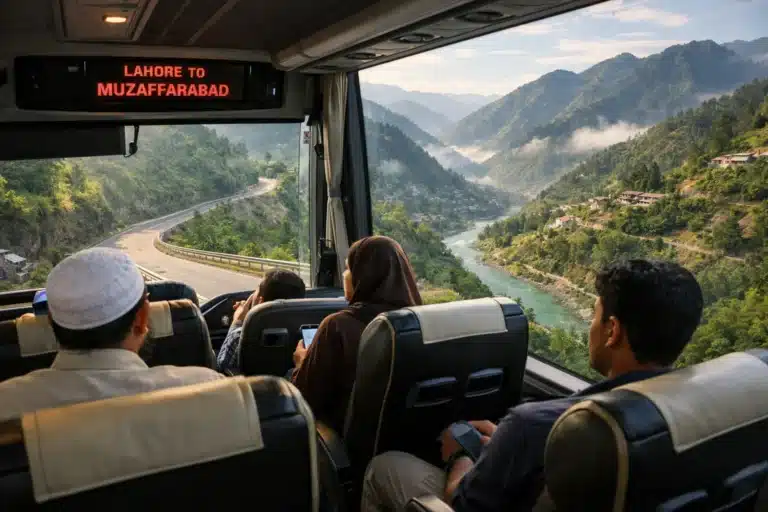
The timing of the snowfall has proven fortuitous for Kashmir’s tourism sector, which depends heavily on winter visitors. In recent days, convoys of vehicles have been seen snaking up mountain roads toward snow-covered destinations, with tourists from urban centers across Pakistan eager to experience Kashmir’s legendary winter beauty.
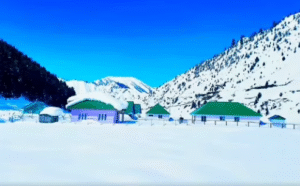
“The moment we saw pictures of the snowfall on social media, we booked our tickets,” said Sameera Khan, a university student from Lahore who was experiencing snow for the first time. “To see these mountains covered in white, to feel the crunch of snow underfoot—it’s magical.”
Local businesses report a significant uptick in activity. Guest house owners in areas like Kel and Keran say occupancy rates have jumped from 20% to over 80% in the past week. Snow gear rentals, local eateries, and transport services are all experiencing renewed demand.
“This snowfall came just in time,” said Gulzar Ahmed, who operates a small guesthouse in Kupwara. “January and February were difficult months with few visitors. Now we have families, student groups, and foreign tourists all arriving to experience the snow.”
Beyond tourism, the snowfall carries crucial environmental importance for the region. Environmental scientists note that winter precipitation in Kashmir’s high mountains serves as a natural water reservoir for the entire region.
“These snowpacks are essentially frozen reservoirs,” explained Dr. Faisal Abbas, an environmental researcher at the University of Azad Jammu and Kashmir. “As they melt gradually through spring and summer, they feed our rivers, sustain our agriculture, and recharge our groundwater. A good snow season means better water security for the coming year.”
However, climate patterns have become increasingly unpredictable in recent years. Data from the Kashmir Meteorological Department shows a 15% decrease in winter precipitation over the past decade compared to historical averages, raising concerns among environmental experts.
“We’re seeing later snowfall and earlier melting cycles,” Dr. Abbas noted. “While this current snowfall is encouraging, the long-term trend remains concerning for the region’s hydrological cycle.”
The heavy snowfall has also presented challenges for local authorities. Several key mountain passes have experienced temporary closures due to snow accumulation, and road clearance operations are underway across affected districts.
“The priority is ensuring safe travel for both tourists and local residents,” said Deputy Commissioner Aamir Ali, who oversees disaster management in the region. “We have snow clearance teams working round the clock on major routes, and we’re coordinating with local communities to address any emergencies.”
Authorities have issued advisories for travelers, recommending four-wheel drive vehicles, snow chains, and emergency supplies when venturing into high-altitude areas. Several popular tourist spots have established temporary assistance centers with hot drinks and first aid facilities.
For indigenous communities in these high valleys, the snowfall represents both challenge and opportunity. While transportation becomes more difficult, the snow season has always been an integral part of mountain life in Kashmir.
“In our tradition, heavy snowfall is seen as a blessing,” said elderly resident Ghulam Mohammad in the village of Karnah. “Our grandparents taught us that a good snow season means healthy crops, full springs, and prosperous times ahead. These traditions have guided our relationship with these mountains for generations.”
Local festivals and snow-related activities are being organized in several villages, offering tourists glimpses into traditional Kashmiri winter culture alongside more conventional snow sports.
As climate patterns continue to shift, the future of Kashmir’s winter seasons remains uncertain. But for now, the sight of children building snowmen, tourists sledding down gentle slopes, and shopkeepers welcoming visitors has brought a sense of normalcy and hope to these mountain communities.
The snow continues to fall intermittently across the higher peaks, with weather forecasts predicting additional precipitation in the coming days. For hotel owners, tour guides, and local artisans, each new snowfall represents not just frozen precipitation, but the lifeblood of their communities—and a reminder of the enduring appeal of Kashmir’s winter magic.
Reporting contributed by our correspondents in Muzaffarabad and Srinagar. Weather data provided by the Kashmir Meteorological Department.
Hot this week

The Azadi Times is an independent digital news platform based in Muzaffarabad, Kashmir, dedicated to credible journalism, in-depth reporting, and global analysis. We cover Kashmir, South Asia, and international affairs with a commitment to truth, editorial integrity, and public accountability.
Get important news delivered directly to your inbox and stay connected!

![Top Keran Azad Kashmir Hotels: Best Stays, Attractions & Travel Guide [2025]](https://azaditimes.com/wp-content/uploads/2025/03/img_6333-1-e1749287768809-768x663.jpg)