No state backing. No paywalls. Just truth. Support Kashmir's independent voice. Join 2,400+ patrons who fund independent voices.
Zero Paywalls
Reader Funded
Award Winning
Secure Payment
Encrypted
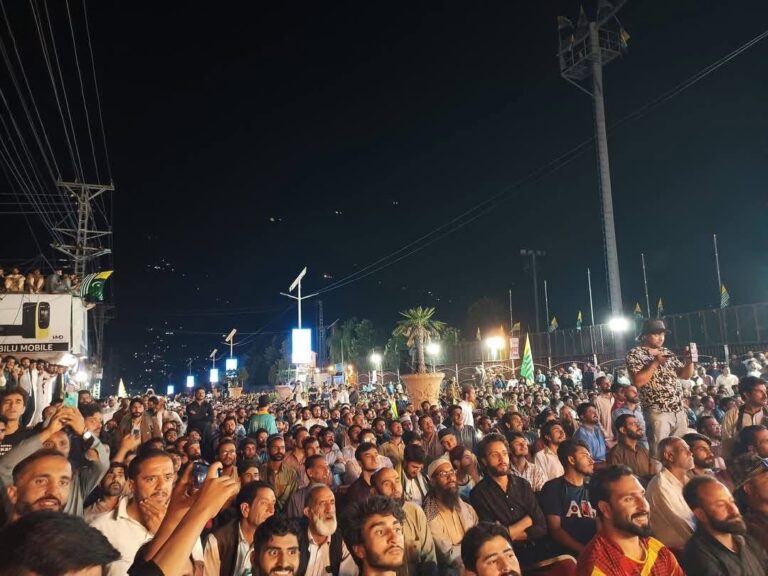
Muzaffarabad: A process has been initiated to constitute the Muzaffarabad Division Committee of the Jammu Kashmir Joint Awami Action Committee (JKJAAC), marking a renewed push to broaden grassroots political and civic mobilisation across Pakistan-administered Azad Jammu & Kashmir.
According to an announcement circulated from an official Facebook account attributed to Shoukat Nawaz Mir, a core member of the committee, active political and social workers from Muzaffarabad district, Jhelum Valley district, and Neelum Valley district are being invited to become part of the newly forming divisional structure.
The call is open to a wide cross-section of society, including students, traders, transporters, lawyers, local government representatives, civil society members, and overseas Kashmiris originating from the Muzaffarabad Division. The inclusive approach, organisers say, is aimed at strengthening representative participation and ensuring that diverse social and professional voices are reflected within the committee’s organisational framework.
No state backing. No paywalls. Just truth. Support Kashmir's independent voice. Join 2,400+ patrons who fund independent voices.
Political observers view the move as part of a broader organisational restructuring intended to enhance coordination at the divisional level and consolidate public engagement around socio-economic and governance-related demands in the region. By forming a Muzaffarabad Division Committee, the leadership appears to be prioritising decentralised organisation and district-level mobilisation, particularly in areas that have historically played a central role in political activism in Azad Jammu & Kashmir.
In the public notice, prospective members are advised to contact either their respective district core members or the central office in Muzaffarabad to complete the membership process. For coordination and information, contact details have been shared for Syed Hafiz Hamdani, whose phone number accompanies the announcement.
The announcement comes at a time when civic movements and issue-based alliances in Pakistan-administered Kashmir have gained renewed visibility, particularly around matters of governance, public services, and economic pressures. Analysts note that such committees often function as platforms for collective bargaining, peaceful protest, and dialogue, especially in regions where public trust in traditional party politics has fluctuated.
By explicitly inviting professionals, traders, and members of the diaspora, the committee signals an attempt to bridge local concerns with broader networks of influence and resources. Overseas Kashmiris, in particular, have increasingly been seen as key stakeholders in advocacy, remittances, and international awareness campaigns.
As the formation process continues, further details regarding the committee’s structure, leadership roles, and forthcoming activities are expected to be announced in the coming weeks.
Trending Topics


The Azadi Times is an independent digital news platform based in Muzaffarabad, Kashmir, dedicated to credible journalism, in-depth reporting, and global analysis. We cover Kashmir, South Asia, and international affairs with a commitment to truth, editorial integrity, and public accountability.
Get important news delivered directly to your inbox and stay connected!
© 2026 The Azadi Times. All Rights Reserved.