Wednesday, April 1, 2026
17.4 C
Srinagar
Home Blog Page 94

Bank of Azad jammu Kashmir to Approach State Bank of Pakistan for Schedule Status by June

0

Muzzafarabad, (PaJK): Shahid Shehzad Mir, the President of Bank of Azad Jammu and Kashmir (AJK) Bank, announced that the bank is set to approach the State Bank of Pakistan (SBP) by June this year, with the goal of obtaining Schedule Bank status. This status will further elevate the institution’s role and functionality within the financial system, aligning it with major commercial banks in Pakistan-administered Kashmir.

In an exclusive interview with Kashmir Digital, a local media porta President Shehzad Mir emphasized the independence of the bank, stating, “Bank of Azad JammuKashmir Bank is the only bank that belongs to Azad Kashmir. Since I took charge as president, there has been no political interference. All appointments have been made strictly on merit.”

Shehzad Mir dismissed concerns regarding employee exchange programs, clarifying that outsourcing companies were responsible for hiring, and no irregularities had been found in past procedures.

To achieve Schedule Bank status, the President outlined three key conditions set by the State Bank of Pakistan. The first requirement is meeting an equity threshold of 10 billion PKR, for which the Azad Jammu and Kashmir government has assured that 250 million PKR will be provided.

The second condition involves the development of operational systems and internal controls. According to Shehzad Mir, the bank has been working towards procuring the necessary systems but has not yet been able to purchase the software it requires. However, he reassured that the bank plans to approach the State Bank by June to meet the conditions and finalize the application for Schedule Bank status.

Addressing the software procurement, he revealed that the bank had been in talks to purchase a Malaysian-made software system, a project worth 7.5 billion PKR, which has already undergone committee investigations. The project is now on track for a final agreement within the next week.

Shahid Shehzad Mir further highlighted the bank’s substantial contribution to the financial ecosystem in Azad Kashmir, particularly in terms of remittances from overseas Kashmiris. “Kashmir Bank has consistently been the leading recipient of remittances from expatriate Kashmiris. Last year, the bank recorded the highest remittance inflows into Azad Kashmir, which underscores the trust and reliance of the overseas Kashmiri community on our services.”

Since its inception, Kashmir Bank has continued to show resilience and growth. Shehzad Mir shared that the bank now operates 87 branches across Azad Kashmir, and its assets have grown from 28 billion PKR to over 53 billion PKR. The bank’s performance stands as a testament to its efficient operations and dedication to strengthening the local economy.

Looking ahead, Shehzad Mir emphasized the bank’s commitment to social sector development, stating, “In the next 3 to 4 years, Kashmir Bank will play a crucial role in fostering development in the social sector.”

As the only significant financial institution operating in Azad Jammu and Kashmir, Kashmir Bank’s efforts to achieve Schedule Bank status are expected to further consolidate its position in the financial sector, both in Azad Kashmir and the broader Pakistani banking landscape. However, it is important to note that despite its efforts to grow and evolve, Kashmir Bank is still the sole public sector bank in the region, with no private or independent banking options available to the people of Azad Kashmir outside of this institution.

The bank’s aspirations for further growth and its focus on expanding its operations signify a pivotal moment in the region’s financial sector, which remains an integral part of the broader discourse surrounding Kashmir’s economic autonomy within the context of Pakistan-administered Kashmir.

The outcome of the bank’s push for Schedule Bank status will likely have a significant impact on the financial future of Azad Kashmir, shaping the region’s banking landscape for years to come.


16 Judges Transferred and Appointed in Kashmir: Aram Habib Appointed in Patkah Nasirabad

0

Muzzafarabad, (PaJK) April 15, 2025: The Chief Justice of the Azad Jammu and Kashmir (Pakistan-administered Kashmir) AJK High Court has approved the transfer and appointment of 16 civil judges. Among them, Aram Habib Raja has been appointed as the new civil judge in Patkah Nasirabad.

According to a notification issued by the Registrar of the High Court, civil judge Syed Burhan Haider Gardezi has been transferred from Hajira and appointed as the civil judge in Chaddohi. Civil Judge Zahoor Elahi from Samahni has been transferred to Civil Judge Court No. 1 in Rawalakot, while Civil Judge Saima Nazir has been appointed to Civil Judge Court No. 2 in Muzaffarabad.

Other significant appointments include civil judge Yasar Altaf, who has been transferred from Sehnsa to Plandri, civil judge Muhammad Saqir Khan, who has been moved from Rawalakot Court No. 1 to Hajira, and civil judge Farheen Aziz, who has been shifted from Sehnsa to Rawalakot Court No. 2.

The notification further details the reassignment of several other judges, including Khuram Nazir Abbasi, who has been transferred from Court No. 2 in Muzaffarabad to Court No. 1, and Babar Ali, who has been moved from Tararkhal to Court No. 2 in Kotli. Additionally, Judge Atif Jamil has been appointed to Samahni, while Gohar Rahman will take charge of the Tararkhal court, and Sahrish Imtiaz has been transferred to Fatah Pur Thikiala from Brinala.

In addition to these transfers, Judge Muhammad Usman Tahir has been assigned to Chaddohi, and Judge Syed Mazhar Kazmi has been moved from Patkah to Court No. 4 in Muzaffarabad. Judge Rizwan Ahmed will replace Judge Farheen Aziz in Brinala, while Judge Rafiq will be transferred from Court No. 4 in Muzaffarabad to Court No. 1 in Kotli.

The notification states that these newly appointed judges will assume the responsibilities and powers of their predecessors. They have been instructed to report to their new posts within three days, with the changes being implemented immediately.

This reshuffle represents an ongoing effort to streamline the judicial administration in Azad Kashmir, ensuring better distribution of judicial resources and improving service delivery for the citizens. The shift also underscores the commitment to maintaining an efficient and responsive judiciary in the region says political analyst Ahsan Ullah to The Azadi Times.

Rawalakot Safe City Project: Phase One Completed Says DIG Sardar Zaheer Ahmed

0

Rawalakot, PaJK: DIG Poonch Division, Sardar Zaheer Ahmed, announced the completion of the first phase of the Safe City Project in Rawalakot, aimed at enhancing public safety and combating crime. Speaking to journalists, DIG Ahmed revealed that 25 cameras have been installed across strategic entry and exit points of the city as part of this initiative.

The Safe City Project is anticipated to be a game-changer for Rawalakot city of Pakistan administered Kashmir, addressing crime prevention and traffic management issues. The cameras are equipped with advanced capabilities to monitor traffic incidents, road accidents, and disputes in real time, ensuring swift response from the authorities.

AI-Powered Surveillance Cameras

DIG Ahmed highlighted that the installed cameras are Artificial Intelligence (AI)-based and perform multiple functions simultaneously. These include facial recognition, license plate reading, and National Plate Recognition (NPR). For instance:

  • If a suspect’s image is uploaded to the database, the system will immediately alert authorities when the individual comes within the cameras’ range.
  • Similarly, stolen vehicles listed in the database will be flagged if detected by the system, enabling quick recovery.

Additional features include vehicle and motorcycle counting, detailed traffic flow statistics, and the ability to assess individuals’ emotional states, such as anger, happiness, or distress, based on facial expressions.

PTZ Cameras for 360-Degree Monitoring

The project also incorporates PTZ (Pan-Tilt-Zoom) cameras capable of 360-degree monitoring to track movements in surrounding areas. In this first phase, 25 cameras have been installed at nine key locations, comprehensively covering Rawalakot city.

Expansion Plans for the Next Phase

The next phase of the Rawalakot Safe City Project will involve the installation of 150 additional cameras, further enhancing the district’s surveillance capabilities. DIG Ahmed described the initiative as a “game-changer,” promising a significant improvement in public safety and law enforcement.

Police Facilitation Center: A Milestone for Public Services

DIG Ahmed also noted the successful operation of the Police Facilitation Center in Rawalakot, inaugurated on June 3, 2024. The center consolidates multiple public services under one roof, eliminating the need for citizens to visit police stations for routine matters. Services provided include:

  1. Character Certificates for residents, including those living abroad through embassies.
  2. General Police Verifications.
  3. Vehicle Verification Service (VVS).
  4. Driving Learner Permits.
  5. Legal guidance for victims of domestic violence.
  6. Online FIR copies.
  7. Assistance with lost documents.

Since its launch, the center has issued over 8,100 character certificates, 4,427 general police verifications, and 3,600 learner driving permits. The VVS has processed the online verification of 88 vehicles. Additionally, the center provides legal support to women facing domestic violence and ensures the timely delivery of FIR copies.

A Model for Future Safety and Civic Services

The Rawalakot Safe City Project and the Police Facilitation Center represent significant advancements in public safety and service delivery in Pakistan-administered Azad Kashmir. These initiatives underscore the potential for technology-driven governance to address pressing urban challenges effectively.

DIG Sardar Zaheer Ahmed expressed optimism about the project’s future phases, which aim to create a safer and more efficient living environment for the residents of Rawalakot and surrounding areas.

Pakistan Government Approves International Airport in Kashmir After Overseas Kashmiris Demand

0

Srinagar, Kashmir: In response to longstanding demands from overseas Pakistanis, the federal government has decided to build an international airport in Azad Jammu & Kashmir (AJK) Pakistan administrated Kashmir. The move comes after pressure from Kashmiri-origin British parliamentarians, who recently wrote to Prime Minister Shehbaz Sharif urging the project’s approval.

Earlier, a letter from UK lawmakers to PM Sharif surfaced, backing the call for improved air connectivity in the region. Following directives from Islamabad, the Pakistan Civil Aviation Authority (CAA) has now invited bids from consultancy firms to advance the airport project. Officials state that qualified consultants can participate in the tender process as per standard procedures.

Overseas Kashmiris’ Convention Begins in Islamabad

Meanwhile, the first annual Overseas Kashmiris Convention is set to begin today in Islamabad, aimed at recognizing the diaspora’s contributions to Pakistan’s economy. Attendees have been granted the status of state guests, reflecting the government’s emphasis on engagement with expatriates.

The convention will serve as a platform for dialogue between overseas Pakistanis, government representatives, and national institutions. Help desks from various departments have been set up to provide guidance and services under one roof.

In a video message, Chaudhry Salik Hussain, Minister for Overseas Pakistanis, reaffirmed the government’s commitment to addressing expatriate concerns. “This is the first time such a convention is being held, and we welcome the input of overseas Pakistanis in shaping policies,” he said.

Minister of State Aoun Chaudhry praised the diaspora’s economic role, stating, “Overseas Pakistanis’ hearts beat for Pakistan.”

While the airport project is framed as a development initiative, Kashmiri voices remain skeptical. For decades, infrastructure projects in AJK have been tied to Pakistan’s geopolitical interests rather than local aspirations. The region, claimed by both India and Pakistan, remains entangled in the broader Kashmir conflict, where genuine self-determination remains elusive.

If constructed, the airport could boost travel and trade, but critics argue it may also deepen Pakistan’s administrative grip on the territory. For Kashmiris advocating independence, true progress lies not in symbolic projects but in addressing the unresolved political status of the entire Kashmir region—a demand often sidelined in Islamabad’s policies.

As overseas Kashmiri community celebrate their influence, Kashmiris continue to question whether such initiatives serve their right to autonomy or merely reinforce the status quo.

Interesting Facts About Colombia: A Deep Dive into the Land of Diversity

0

In the northwestern corner of South America, Colombia is a country of breathtaking landscapes, vibrant culture, and a history as rich as its coffee. Often misunderstood due to its tumultuous past, Colombia has emerged as a dynamic and innovative nation that continues to captivate the world. In this article, we uncover interesting facts about Colombia that highlight its unique charm, technological strides, and cultural treasures.

Colombia is one of the most geographically diverse countries in the world. From the snow-capped peaks of the Andes to the lush Amazon rainforests, and from the golden Caribbean beaches to the vast deserts of Tatacoa, Colombia offers every kind of natural wonder imaginable.

Fact 1: Colombia Is the Second Most Biodiverse Country in the World

Colombia is home to nearly 10% of the planet’s biodiversity, second only to Brazil. It boasts:
– Over 1,900 bird species (the highest in the world)
– More than 500 mammal species
– 15% of the world’s orchid species

This makes Colombia a paradise for nature enthusiasts and a hub for ecological research.

Colombia and Technology: Bridging the Digital Divide

While Colombia is often celebrated for its natural beauty and cultural richness, its technological advancements are equally noteworthy. The country is making significant strides in the tech sector, emerging as a hub for innovation in Latin America.

Fact 2: Medellín – The City of Eternal Spring and Innovation

Once infamous for its association with drug cartels, Medellín has undergone a remarkable transformation. Today, it is known as the “Innovative City of the Year” (2013, Urban Land Institute). Initiatives like:
– The Medellín MetroCable (a cable car system connecting poor neighborhoods to the city)
– Ruta N (a center for innovation and entrepreneurship)They
are setting global examples for urban development.

Fact 3: Colombia’s Growing Tech Start-Up Scene

Colombia is becoming a hotspot for tech start-ups, particularly in Bogotá and Medellín. Companies like Rappi, a delivery app valued at over $5 billion, are putting Colombia on the international tech map. The government’s focus on digital transformation has led to initiatives like:
– Free public Wi-Fi zones
– Training programs in coding and digital marketing

Unique Cultural Facts About Colombia

Colombia’s culture is as diverse as its geography. With influences from Indigenous, African, and European traditions, the country offers a unique blend of customs, music, and cuisine.

Fact 4: Home to the World’s Largest Salsa Festival

Cali, dubbed the “Salsa Capital of the World,” hosts the annual Feria de Cali, the largest salsa festival globally. Thousands of dancers and musicians come together to celebrate this energetic dance form.

Fact 5: Coffee Culture Beyond the Cup

Colombian coffee is world-renowned, but the culture surrounding it is equally fascinating. The Coffee Cultural Landscape of Colombia, a UNESCO World Heritage Site, offers visitors a chance to see the entire coffee production process—from bean to brew.

Fact 6: The Magical Realism of Gabriel García Márquez

Colombia is the birthplace of Nobel Prize-winning author Gabriel García Márquez, whose works like *One Hundred Years of Solitude* have introduced the world to “magical realism,” a genre that blends the mystical with the mundane.

Fact 7: The Carnaval de Barranquilla

Second only to Rio’s Carnival, the Barranquilla Carnival is a UNESCO-recognized event that showcases Colombia’s vibrant music, dance, and folklore.

Fun Facts About Colombia’s Geography

Colombia’s geographical location and features contribute to its uniqueness. Here are some lesser-known but equally fascinating facts:

Fact 8: The Only Country in South America with Two Coastlines

Colombia is the only South American country with coastlines on both the Pacific Ocean and the Caribbean Sea, offering a variety of marine ecosystems.

Fact 9: The Lost City of Teyuna

Older than Machu Picchu, the Lost City (Ciudad Perdida) was built by the Tayrona people around 800 CE and remains one of Colombia’s most significant archaeological treasures.

Fact 10: A Country of Rivers

The Amazon, Magdalena, and Cauca rivers run through Colombia, creating a network of waterways that sustain its ecosystems and communities.

Colombia’s Contribution to Science and Innovation

Colombia’s contributions to science and innovation often fly under the radar, but they are worth celebrating.

Fact 11: The Birthplace of Yellow Fever Vaccine

Dr. Manuel Elkin Patarroyo, a Colombian scientist, developed the first synthetic vaccine for malaria, contributing significantly to global health.

Fact 12: The First Country to Ban Cosmetic Animal Testing

In a progressive move, Colombia became the first country in Latin America to ban animal testing in the cosmetics industry, setting an example for ethical practices.

Delicious Facts About Colombian Food

Colombian cuisine is as diverse as its landscapes. From hearty mountain meals to coastal seafood feasts, there’s something for every palate.

Fact 13: Arepas – A National Staple

Arepas, a type of cornmeal flatbread, are a staple in Colombian households. They can be sweet or savory and are often stuffed with cheese, meat, or eggs.

Fact 14: Exotic Fruits Galore

Colombia is a treasure trove of exotic fruits like lulo, guanabana, and uchuva, many of which are not found anywhere else in the world.

Challenges and Opportunities

Despite its many positives, Colombia faces challenges such as income inequality and environmental concerns. However, the country is actively addressing these issues through sustainable development and social programs.

 How to Explore Colombia Responsibly

For travelers looking to visit Colombia, here are some tips:
1. Respect local customs and traditions.
2. Support eco-tourism initiatives.
3. Learn basic Spanish phrases to enhance your experience.

Final Thoughts

Colombia is a land of contrasts and surprises. From its rich biodiversity and cultural heritage to its technological innovations and resilient spirit, the country offers endless opportunities for exploration and admiration. As Colombia continues its journey of transformation, the world is taking notice—and so should you.

These interesting facts about Colombia are just the tip of the iceberg in understanding this remarkable nation.

Disclaimer: This article is for informational purposes. Always verify travel advisories and local guidelines before visiting.

RobTheCoins: The Next Big Revolution in Cryptocurrency

The cryptocurrency world has witnessed a whirlwind of innovations, trends, and disruptions over the past decade. Among the latest disruptions is “RobTheCoins,” a term that has recently gained traction in tech circles and among crypto enthusiasts. But what exactly is RobTheCoins, and why is it creating such a buzz in the digital currency ecosystem? This article dives deep into the phenomenon, unraveling its features, implications, and the future it promises for the crypto industry.

What is RobTheCoins?

RobTheCoins is an emerging platform designed to simplify, secure, and enhance cryptocurrency transactions. Unlike traditional crypto wallets or exchanges, RobTheCoins integrates advanced technologies like blockchain scalability, artificial intelligence (AI), and decentralized finance (DeFi) to offer a seamless user experience. While its name might sound playful, the platform is serious about solving some of the most pressing issues in the crypto space, including high transaction fees, slow processing times, and security vulnerabilities.

Launched in early 2025, RobTheCoins has already been dubbed the “next big thing” in cryptocurrency by tech influencers and digital finance experts. Its mission is clear: make cryptocurrency accessible and efficient for everyone, from seasoned investors to crypto newcomers.

Key Features of RobTheCoins

Enhanced Security Protocols
Security remains the backbone of any cryptocurrency platform, and RobTheCoins doesn’t disappoint. The platform employs state-of-the-art encryption, multi-signature wallets, and hardware integration to ensure that user funds and data remain secure. Additionally, RobTheCoins integrates real-time fraud detection powered by AI, offering an extra layer of security.

Low Transaction Fees
High transaction fees have long been a pain point for crypto users, especially on popular blockchains like Ethereum. RobTheCoins addresses this with its proprietary fee optimization technology, which dynamically selects the fastest and most cost-effective routes for transactions.

Multi-Currency Support
Whether you’re dealing with Bitcoin, Ethereum, or lesser-known altcoins, RobTheCoins has you covered. The platform supports a wide array of cryptocurrencies, making it a one-stop shop for diverse crypto portfolios.

User-Friendly Interface
RobTheCoins is designed with simplicity in mind. Its intuitive interface ensures that even users with minimal technical knowledge can navigate the platform with ease. Tutorials, FAQs, and 24/7 customer support further enhance the user experience.

DeFi and Staking Opportunities
In addition to standard transactions, RobTheCoins offers decentralized finance (DeFi) services, including staking and yield farming. Users can earn passive income by staking their assets directly on the platform.

Scalability
Built on a next-gen blockchain architecture, RobTheCoins ensures scalability to handle thousands of transactions per second. This makes it a viable option for mass adoption in the future.

Why is RobTheCoins a Game-Changer?

Simplifying Cryptocurrency for the Masses
Cryptocurrency has often been criticized for being overly complex and inaccessible to the average person. RobTheCoins aims to change that narrative by offering a platform that is as easy to use as traditional banking apps. This democratization of crypto is expected to drive mass adoption, bringing millions of new users into the ecosystem.

Addressing Crypto’s Energy Problem
RobTheCoins is also tackling the environmental concerns associated with cryptocurrency mining. The platform uses an energy-efficient consensus mechanism, reducing its carbon footprint without compromising on performance.

A Focus on Education
In an industry plagued by misinformation, RobTheCoins places a strong emphasis on education. The platform features a dedicated section for crypto tutorials, market analysis, and investment tips, empowering users to make informed decisions.

The RobTheCoins Community

One of the standout aspects of RobTheCoins is its vibrant and growing community. From online forums to social media channels, the platform has cultivated a loyal user base that actively contributes to its development. Regular AMAs (Ask Me Anything) with the RobTheCoins team provide transparency and foster trust among users.

Challenges and Criticisms

While RobTheCoins has been widely praised, it is not without its challenges. Critics have raised concerns about the platform’s centralized elements, which some argue go against the decentralized ethos of cryptocurrency. Additionally, as a new player in the market, RobTheCoins must prove its reliability and scalability over time.

What is The Future of RobTheCoins?

The roadmap for RobTheCoins is ambitious. The team behind the platform plans to introduce features like NFT integration, cross-chain compatibility, and institutional-grade tools in the coming months. Partnerships with fintech companies and blockchain networks are also on the horizon, positioning RobTheCoins as a key player in the crypto space.

How to Get Started with RobTheCoins

Interested in exploring RobTheCoins? Here’s a quick guide to getting started:

1. Sign Up: Visit the official RobTheCoins website and create an account.
2. Secure Your Wallet: Set up your wallet and enable two-factor authentication.
3. Deposit Funds: Add cryptocurrency to your wallet or purchase directly through the platform.
4. Explore Features: Try out transactions, staking, and other features to get a feel for the platform.
5. Stay Informed: Follow RobTheCoins on social media and subscribe to their newsletter for updates.

Final Thoughts

RobTheCoins represents a bold step forward in the world of cryptocurrency. By prioritizing accessibility, security, and innovation, the platform is poised to make a lasting impact on the industry. Whether you’re a seasoned crypto investor or just starting out, RobTheCoins offers a compelling solution to navigate the ever-evolving digital finance landscape.

As the cryptocurrency market continues to grow, platforms like RobTheCoins will play a crucial role in shaping its future. Keep an eye on this rising star—it might just redefine the way we think about digital currencies.

Disclaimer: This article is for informational purposes only and should not be considered financial advice. Always do your own research before investing in cryptocurrencies.

Headline:Outcry Over Arrests of Political Leaders in Gilgit-Baltistan; Activists Decry “Crackdown on Dissent”

0

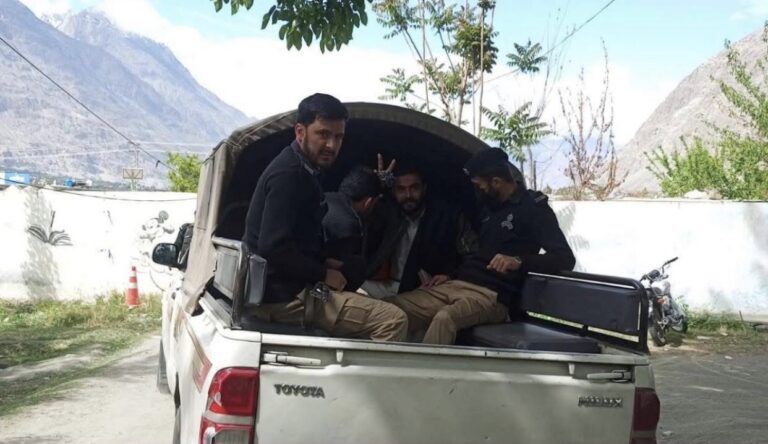
Gilgit-Baltistan, Pakistan administered Kashmir: The recent arrests of Irfan Ali Azad, president of the Balawaristan National Front (BNF) in Gilgit district, and Jammu Kashmir Liberation Front (JKLF) leaders Nasrat Hussain and Waqas have sparked widespread condemnation from human rights activists, political groups, and civil society organizations. Critics allege the detentions are part of a broader campaign to stifle political dissent and freedom of expression in the restive region.

Details of the Arrests

Local authorities detained the three leaders earlier this week without disclosing formal charges, according to sources close to the families. The lack of transparency surrounding the arrests has fueled speculation and anger, particularly among supporters of the BNF and JKLF, both of which advocate for greater political rights and self-determination in Gilgit-Baltistan and Kashmir.

Condemnation from Rights Groups

Human rights organizations, including the Human Rights Commission of Pakistan (HRCP), have denounced the arrests as “unlawful” and “a blatant suppression of political activism.” In a statement, the HRCP demanded the immediate release of the detainees, stressing that “the right to peaceful assembly and expression must be upheld, even in politically sensitive regions.”

Regional groups echoed these concerns, accusing state institutions of targeting voices critical of government policies. “These arrests are not just about individuals; they represent a systematic effort to silence dissent and criminalize legitimate political struggle,” said a spokesperson for the Gilgit-Baltistan Civil Society Forum.

Protests Erupt in Gilgit-Baltistan

Public outrage escalated on Thursday as protests erupted in Dainyor and other parts of Gilgit-Baltistan, with demonstrators chanting slogans demanding the leaders’ release. Protesters carried banners reading, “Stop the Witch Hunt Against Political Workers” and “Free Our Leaders.” Security forces reportedly monitored the rallies closely, but no clashes were reported.

Government Silence Raises Questions

As of Friday, no official statement has been issued by Pakistani authorities or Gilgit-Baltistan’s interim government clarifying the legal basis for the arrests. This silence has drawn criticism from opposition lawmakers, who argue that the move undermines constitutional guarantees of due process.

Context: A Region in the Crosshairs

Gilgit-Baltistan, a disputed territory administered by Pakistan but claimed by India, has long been a flashpoint for geopolitical tensions and local grievances. Political groups like the BNF and JKLF have historically criticized Pakistan’s governance of the region, advocating for autonomy or independence. Analysts warn that arbitrary arrests risk exacerbating existing tensions and could further alienate communities already skeptical of central authority.

International Implications

The arrests come amid heightened scrutiny of Pakistan’s human rights record, particularly in regions like Gilgit-Baltistan and Kashmir. Advocacy groups urge international bodies, including the United Nations, to pressure Islamabad to ensure transparency and uphold civil liberties.

Calls for Dialogue

Civil society leaders emphasize that lasting stability in Gilgit-Baltistan can only be achieved through dialogue, not repression. “Instead of detaining critics, the government must address legitimate grievances through inclusive political processes,” said a local journalist, speaking on condition of anonymity.

As tensions simmer, the fate of the detained leaders remains uncertain, casting a shadow over the region’s fragile political landscape.

MP Ruhullah Mehdi Rejects ACB Charges as Political Ploy to Suppress Dissent in Kashmir

0


Lawmaker Accuses Indian Authorities of Weaponizing Anti-Corruption Body to Silence Pro-Kashmir Voices

Srinagar, Indian-Administered Jammu and Kashmir: Member of Parliament (MP) Ruhullah Mehdi, a prominent political figure in the region, has vehemently denied corruption charges filed against him by India’s Anti-Corruption Bureau (ACB), labeling the allegations a “politically motivated attempt to muzzle dissent” amid escalating tensions in Kashmir.

In a press conference on Thursday, Mehdi, affiliated with the National Conference party, dismissed the ACB’s claims as baseless and accused New Delhi of exploiting institutions to target critics of its policies in the disputed territory. “These charges are not about accountability—they are a crude tool to silence those who dare to speak against the oppression faced by Kashmiris since the illegal abrogation of our autonomy in 2019,” he asserted.

The ACB, which operates under India’s direct administrative control in Jammu and Kashmir, alleges financial misconduct linked to Mehdi’s tenure in public office. However, the MP dismissed the case as a “fabrication,” insisting the charges lack evidence and are timed to undermine his advocacy for Kashmiri rights.

Political Context: Crackdown on Dissent
Mehdi’s accusations come against the backdrop of heightened scrutiny on Kashmiri politicians and activists following India’s unilateral revocation of Article 370 in August 2019, which stripped the region of its semi-autonomous status. Since then, critics argue that Indian authorities have intensified legal and bureaucratic tactics to suppress opposition, including frequent use of anti-terror laws, arbitrary detentions, and now, anti-corruption probes.

“This is not an isolated incident,” Mehdi stated. “Every Kashmiri who resists New Delhi’s narrative is branded corrupt, anti-national, or worse. The goal is to criminalize dissent and erase our struggle for self-determination.”

Party and Public Reaction
Mehdi’s National Conference party condemned the ACB’s move, calling it a “desperate act of intimidation” by India’s ruling establishment. Senior party leader Omar Abdullah echoed Mehdi’s sentiments, stating, “When the voices of Kashmiris grow louder, Delhi responds with coercion. This is a well-worn playbook to delegitimize our political aspirations.”

Local civil society groups and pro-freedom advocates have rallied behind Mehdi, organizing protests in Srinagar and branding the charges as part of a systemic campaign to discredit Kashmiri leadership. Social media platforms have flooded with hashtags like #StopSilencingKashmir and #StandWithRuhullah, reflecting widespread public skepticism toward the ACB’s actions.

Implications
International human rights organizations have repeatedly raised concerns about India’s shrinking democratic space in Kashmir. In recent years, dozens of Kashmiri politicians, journalists, and activists have faced similar legal battles, often under opaque circumstances. Critics argue that anti-corruption agencies, while vital for accountability, are increasingly weaponized to sideline dissenters.

Mehdi’s case has reignited debates over the precarious balance between governance and repression in the region. As tensions simmer, many Kashmiris view the charges as a litmus test for India’s commitment to due process in a territory where trust in New Delhi’s institutions remains deeply fractured.


For now, Ruhullah Mehdi vows to contest the charges legally and politically, framing his battle as emblematic of Kashmir’s broader resistance. “They can fabricate cases, but they cannot extinguish our demand for justice and freedom,” he declared.

As international observers watch closely, the outcome of this case may further shape the trajectory of Kashmir’s struggle for self-determination and India’s willingness to confront allegations of institutional abuse in one of the world’s most militarized regions.

Srinagar’s Tulip Garden Breaks Visitor Records in 2025, Attracts Over 4.4 Lakh Tourists in Just 15 Days

0

Srinagar, (IaJK): The Tulip Garden in Srinagar has shattered all previous records by welcoming over 4.46 lakh visitors in the first 15 days of the ongoing Tulip Festival 2025. The garden, one of Asia’s largest tulip gardens, surpassed the previous year’s visitor count, marking a major milestone in the region’s tourism history.

According to a statement from the Department of Floriculture, Gardens, and Parks, the garden saw a staggering 446,154 visitors, breaking the record set in 2024 for the same period. This achievement highlights the growing international appeal of Kashmir’s natural beauty, with tourists flocking to witness the breathtaking tulip display that includes 74 vibrant tulip varieties.

The ongoing Tulip Show at the garden, which remains open for several more days, is set to break even more records. Currently, the garden hosts an impressive 1.7 million tulip bulbs, adding to the spectacle that draws visitors from around the globe. The event is widely considered one of the most iconic seasonal attractions in Jammu and Kashmir, contributing significantly to local tourism and the region’s economy.

This surge in visitor numbers signals a growing interest in the cultural and natural richness of Kashmir, with many citing the region’s scenic landscapes and unique attractions as major draws. The tulip festival not only highlights the beauty of Kashmir’s flora but also serves as a powerful reminder of the region’s potential as a top-tier global tourist destination.

The Tulip Garden’s success has also come at a time when Kashmir is witnessing a renewed focus on promoting its tourism sector, with local authorities emphasizing its potential to attract visitors throughout the year. As the festival continues, it is expected to set a new benchmark for the region’s tourism industry, providing a much-needed boost to the local economy and showcasing the splendor of Kashmir’s natural heritage to a global audience.

Protests Erupt in Srinagar Over Controversial Waqf Bill: PDP Leaders, Religious Groups Raise Concerns

0

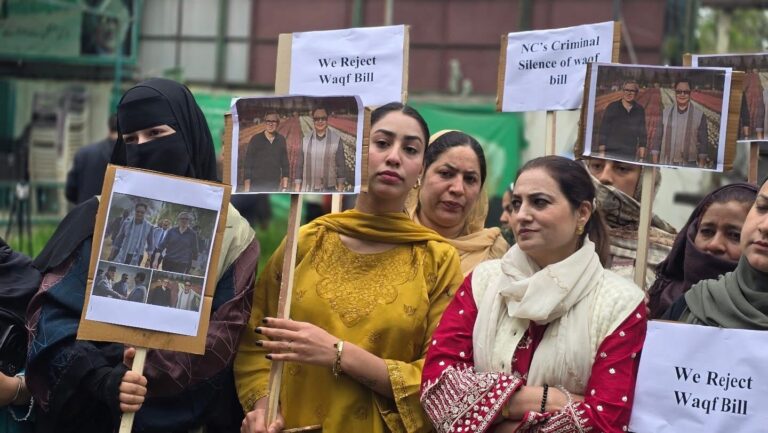
Srinagar, (IaJK)– Protests erupted in Srinagar on Friday as leaders and workers of the People’s Democratic Party (PDP) staged a demonstration against the recently introduced Waqf Bill. Holding placards that read “Waqf Bill Nahin, Nahin,” protesters voiced their strong opposition to the controversial legislation.

The demonstrators accused the National Conference (NC) of maintaining silence on the issue and failing to take a stand against the bill, which they claim undermines the rights of Muslims in India-administered Kashmir.

PDP senior leader Khurshid Alam, while addressing the media, said, “Today, we are protesting against the Waqf Bill, but the police stopped us from voicing our concerns.” Alam criticized the manner in which the bill was passed in the Indian Parliament, alleging that it was done “in the dead of the night.” He argued that the bill, in its current form, is unacceptable to the Muslim community across the country.

Alam took a jibe at the National Conference for its silence on the matter, calling their response “criminally silent.” He continued, “The BJP’s attitude toward Muslims is condemnable, but the National Conference’s silence on this issue is deeply disappointing.” He stressed that Muslims in Jammu and Kashmir, a Muslim-majority region, had placed their trust in the region’s political leadership, but the Speaker had reportedly silenced voices raised against the bill. “NC’s members only staged a drama in the Assembly,” Alam added.

The protests were not limited to the PDP alone. The United J&K Ulema Council, in line with its earlier stance, called for a complete rejection of the Waqf Amendment Act of 2025. The Council’s members, including imams from major mosques, shrines, and religious establishments, took part in the protests, demanding the immediate withdrawal of the legislation. The religious leaders argued that the bill poses a significant threat to the religious and historical significance of Waqf properties.

In a powerful statement, the Ulema Council condemned the continuous house arrest of Mirwaiz Umar Farooq, a prominent religious leader, and criticized the government’s actions as authoritarian and anti-democratic. They stated that the government’s approach was deeply offensive to the people of Kashmir and called it entirely unacceptable.

The Waqf Amendment Bill 2025, which has sparked this wave of opposition, introduces major changes to the management and administration of Waqf properties. Several provisions have raised concerns among the Muslim community, particularly regarding the reduction of Muslim-led Waqf Board powers and the increase of non-Muslim and government officials’ influence over religious properties.

Critics of the bill argue that the inclusion of non-Muslim individuals in central and state Waqf Boards, along with the removal of the requirement for a Muslim CEO, could undermine the religious and charitable role that Waqf properties have traditionally played in the Muslim community. They also pointed out that the bill grants district magistrates the authority to decide whether a property should be considered a Waqf, potentially creating an avenue for one-sided decisions, especially concerning disputed properties.

The repeal of Section 40 of the Waqf Act of 1995 is another contentious point. This section had safeguarded the recognition of Waqf properties, which could now be subject to greater uncertainty.

As protests continue to gather momentum across Kashmir, including in the regions of Jammu, Chenab Valley, and the Leh-Kargil areas, the demand for the repeal of the Waqf Amendment Bill is growing louder. Religious leaders and political figures alike are calling for an end to what they describe as a direct attack on the community’s rights, with many warning that the law could disrupt the historical and spiritual fabric of the region.

While the Indian government remains silent on the growing opposition, the protests in Kashmir signal a wider demand for political and religious autonomy and a deep-rooted desire to preserve the region’s identity.