KDA and Leh Apex Body leaders criticize the administration for issuing notifications while talks on regional autonomy and constitutional safeguards remain inconclusive.
KANGAN — Leaders of the Kargil Democratic Alliance (KDA) have expressed deep concern over a series of recent notifications issued by the Ladakh administration, accusing authorities of pursuing unilateral decisions while discussions regarding an empowered administrative structure for the region remain unresolved.
Addressing a press conference in Kargil, KDA Co-Chairman Sajjad Kargili questioned the administration’s priorities, pointing to ongoing notifications concerning the Ladakh Autonomous Hill Development Councils and reservation matters. He warned that ignoring Ladakh’s core demands could provoke a strong public reaction.
“It seems the Union Territory administration has no other work left except issuing notices and notifications and imposing unilateral decisions on the people of Ladakh,” Kargili said, alleging that these administrative steps undermine democratic rights and local autonomy.
The friction stems from widespread dissatisfaction with a draft administrative proposal presented during an October 15 sub-committee meeting. That session included representatives from the KDA, the Leh Apex Body (LAB), and India’s Union Ministry of Home Affairs. Both regional bodies rejected the draft, stating it failed to fulfill commitments made during previous discussions. A subsequent meeting scheduled for October 22 in Delhi was subsequently postponed.
KDA Co-Chairman Asghar Ali Karbalai issued a stern warning against administrative tactics that he described as attempts to intimidate or mislead the public. He urged residents to remain vigilant and cautioned authorities against misinterpreting public restraint as passive acceptance.
“The silence we see today is actually the calm before the storm,” Karbalai said, warning that the public has neither backed down nor abandoned its demands. He called on the central government to honor commitments made during the May 22 ministerial meeting by presenting a revised draft that guarantees constitutional safeguards alongside full legislative, administrative, and financial powers.
Hanifa Jan, an independent Member of Parliament from Ladakh, echoed these concerns, stating that the latest administrative proposal fails to reflect the aspirations and rights of the local population. She emphasized that the region’s primary demand is the establishment of a democratic system empowering residents to govern themselves, shape policies, and determine development priorities.
“Our ultimate goal is crucial for the future of Ladakh,” she said, arguing that constitutional safeguards and meaningful democratic authority are essential for the region’s long-term development.
KDA and Leh Apex Body leaders have urged the central government to reconvene the postponed talks without delay and present a revised proposal that aligns with previous understandings concerning constitutional protections and democratic representation.
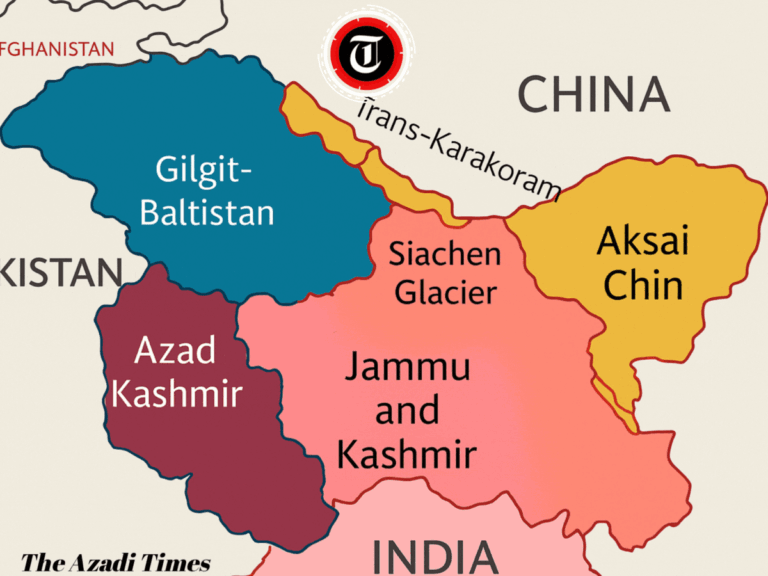
A court in Pakistan-administered Kashmir has accepted three petitions filed by the family of Shaukat Nawaz Mir, ordering the local SHO to appear on October 29, 2026.
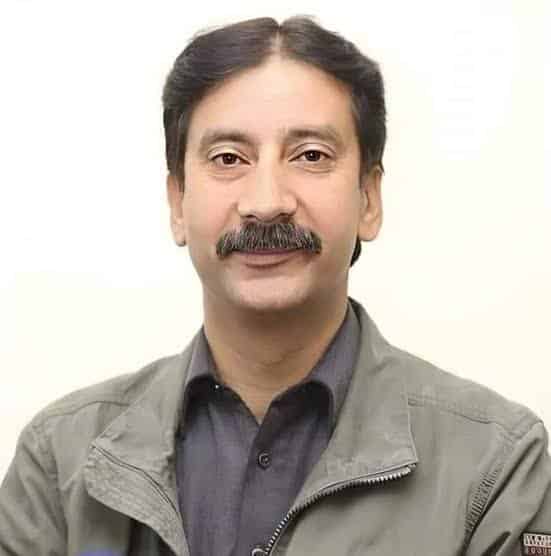
A court in Pakistan-administered Kashmir has summoned the Station House Officer (SHO) of Dhirkot police station in connection with the alleged arrest of Shaukat Nawaz Mir, a core member of the Jammu Kashmir Joint Awami Action Committee (JKJAAC).
During proceedings on three petitions filed by Yasmin Mir, the sister of Shaukat Nawaz Mir, and represented by advocate Shahid Ali Awan, the court ordered the SHO to appear on October 29, 2026, to provide clarification regarding the incident.
According to the petitioner’s legal counsel, the first application stated that Shaukat Nawaz Mir was taken into custody in the presence of the Dhirkot SHO. The petition referenced a video circulating on social media which purportedly shows Mir being led away by police personnel alongside the station officer. The court was asked to require the SHO to explain the circumstances captured in the footage and clarify whether police officially arrested him.
The second accepted petition sought to include digital evidence stored on a USB drive into the official court record. Counsel stated that the material includes the video of the alleged detention as well as a recorded statement attributed to the former law minister, Mian Abdul Waheed, in which the arrest action in Dhirkot was reportedly defended. The court granted permission for the digital material to form part of the judicial record.
Lawyers representing the Advocate General’s Office raised objections to the petitions on behalf of the administration, but the court overruled the objections and accepted all three requests. Additionally, a request to include Gul Nawaz Mir, the brother of Shaukat Nawaz Mir, as a co-petitioner in the case was approved.
The legal proceedings follow statements issued by the Joint Awami Action Committee on June 30, 2026, alleging that Mir had been detained from the Dhirkot area, an incident that prompted widespread discussion and video sharing across social media platforms.
The appearance of the station officer is scheduled for October 29, where authorities are expected to present their position before the court.
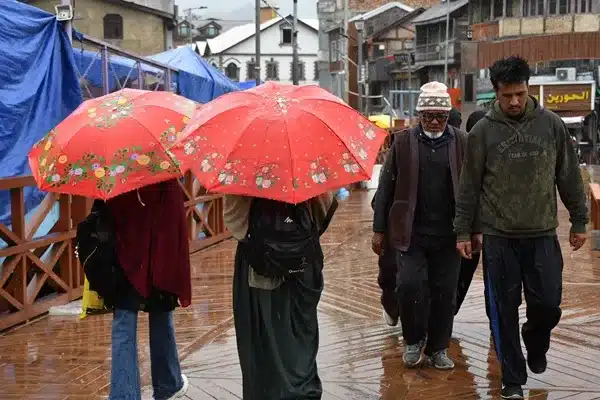
KUPWARA, October 15, 2026 — Rain and thunderstorms are possible in Kupwara on Thursday as unsettled weather continues across parts of Kashmir, according to the latest available forecast.
Temperatures in Kupwara are expected to range from around 8°C to 16°C, with variable cloud cover and a chance of showers during the day and evening.
The forecast suggests conditions could improve from Friday, October 16, with hazy sunshine expected and daytime temperatures reaching approximately 18°C. Mostly dry weather is forecast over the weekend, although conditions may vary across the district, particularly in higher-altitude areas.
Recent Rainfall and Changing Conditions
The latest weather developments come amid a spell of unsettled conditions in the Kashmir Valley. A report published by Hindustan Times on October 14 said Kupwara recorded 6 mm of rainfall, while Gulmarg received 8 mm as a western disturbance affected the region.
Weather conditions in the mountainous parts of north Kashmir can differ considerably from those in populated areas. Residents and travellers should therefore consult local forecasts before planning journeys, particularly along routes exposed to changing weather.
Outlook for the Coming Days
The forecast indicates a gradual improvement in conditions from October 16, with daytime temperatures expected to remain between approximately 18°C and 20°C over the following days. Nights will remain cool, with minimum temperatures near 8°C to 9°C.
The outlook remains subject to change as new meteorological observations become available.
Advice for Residents and Travellers
Residents are advised to monitor official weather bulletins for updates on rainfall and thunderstorms. Travellers heading towards mountainous areas should check local road conditions and follow any advisories issued by the relevant authorities.
Farmers and others working outdoors may also wish to take precautions against intermittent rainfall.
For the latest weather information, residents can consult the India Meteorological Department and relevant local authorities.
The Azadi Times will continue to monitor weather developments affecting Kupwara and other parts of Kashmir.
Source: India Meteorological Department forecasts and published regional weather reports. Figures are forecast estimates and may change.
Deep within the frontier folds of North Kashmir, where the Himalayas rise to meet the Line of Control, lies a valley so vast, so pristine, and so fiercely protected by geography that it has remained largely invisible to the world. Bangus Valley locally known as Bungus is not merely a destination.
It is a reminder of what Kashmir looked like before tourism, before concrete, before the world discovered Gulmarg and Pahalgam. For The Azadi Times, telling this story is not about promoting a travel package. It is about reclaiming a narrative one that begins not with conflict, but with the land itself.
Bangus Valley Shaped by Geography and Silence
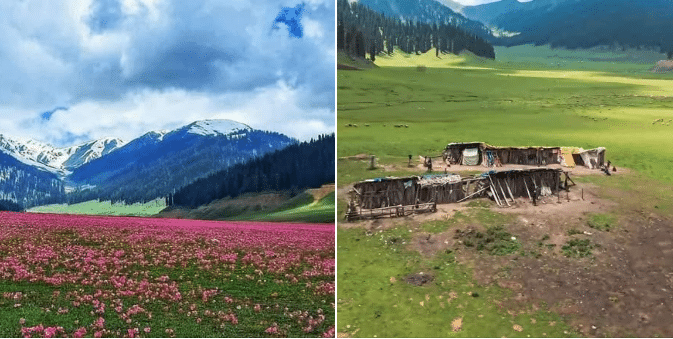
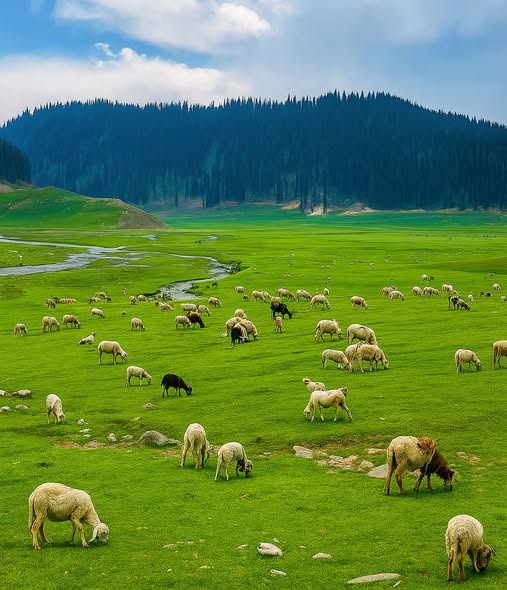
Bangus Valley sits at an altitude of approximately 10,000 feet above sea level, nestled within the Handwara sub-district of Kupwara in Indian-administered Kashmir. Spread across an estimated 300 square kilometres, the valley is a linear elliptical bowl aligned along an east-west axis, surrounded by the Rajwar and Mawar ranges to the east, the Shamasbury and Dajlungun Mountains to the west, and the Chowkibal and Karnah Guli to the north. It is divided into two principal meadows: Bodh Bangus, the larger valley, and Lokut Bangus, a smaller sister valley on the north-eastern side.
Bangus Valley sits at an altitude of approximately 10,000 feet above sea level, nestled within the Handwara sub-district of Kupwara in Indian-administered Kashmir.
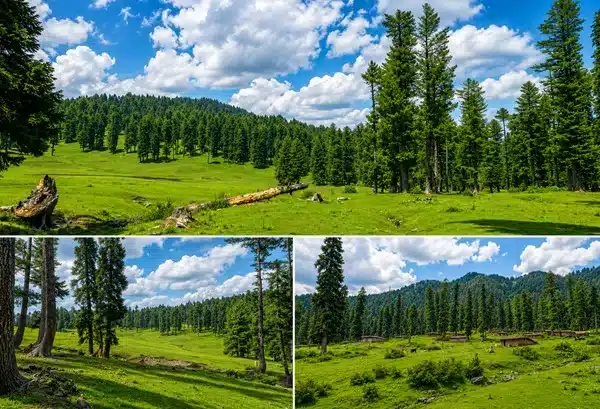
What makes Bangus extraordinary is not just its scale, but its ecological character. The valley is a rare combination of mountain biome, grassland, and Taiga — a coniferous forest belt that transitions into wild alpine meadows.
Streams cut through the valley floor, fed by snowmelt from peaks that rise to 4,500 metres, and the meadows themselves are carpeted with wildflowers in summer — buttercup, iris, gentian, and primula among them. There are over a hundred meadows within the greater Bangus area, and the valley is roughly 25 kilometres long and 5 kilometres wide.
But the most striking feature of Bangus Valley is its emptiness. Approximately 100 to 200 tourists visit the valley each year. By comparison, Gulmarg receives over a million. Bangus is statistically invisible in Kashmir’s tourism data, and that invisibility is not accidental. It is the product of geography, military reality, and bureaucratic friction — the very forces that have kept development at zero.
Distance from Srinagar: How Far, How Long, and Why It Matters
The most common question from travellers is simple: how far is Bangus Valley from Srinagar? The answer depends on which source you consult, and that variance itself tells a story. Official estimates range from 72 kilometres to 150 kilometres, with most credible travel guides settling on approximately 90 to 128 kilometres.
The discrepancy arises from the fact that there is no single paved highway leading directly to Bangus. The valley is approached through a network of rural roads, army checkpoints, and forest tracks that shift with weather and security conditions.
The most practical route for travellers is via Srinagar → Baramulla → Kupwara → Bangus Valley. Srinagar to Kupwara is approximately 95 kilometres and takes about three hours on a decent highway. From Kupwara, the remaining 50 kilometres to Bangus Valley takes another three to four hours on a road that ranges from broken tarmac to dirt track to what one guide bluntly describes as “is this actually a road?”. A 4×4 SUV is not optional — it is mandatory.
There are three principal access routes: one via Mawer in Handwara, one via Rajwar in Handwara, and one via Chowkibal in Kupwara. The Kupwara-Chowkibal route is considered the most scenic, connecting through Drangyari and the T-Pee Post. Hiring a local driver in Kupwara who knows the route is strongly recommended; expect to pay between ₹3,000 and ₹5,000 for a day trip.
The nearest airport is Sheikh ul-Alam International Airport in Srinagar, approximately 90 kilometres from Kupwara. The nearest railhead is at Baramulla, 64 kilometres from Kupwara. No shared taxis run this route, so private transport is essential.
The Permit: A Frontier Valley’s Bureaucratic Gate
Bangus Valley is not a place you simply decide to visit. It sits near the Line of Control with Pakistan, and access is regulated by the Indian military and district administration. Indian tourists require a special permit issued by the Deputy Commissioner’s office in Kupwara. The process is straightforward but non-negotiable: visit the DC office with ID proof (Aadhaar or passport), fill out a permit application stating your dates and group size, and wait for processing — which can take anywhere from the same day to two days, depending on the security situation and office workload. The permit specifies your travel dates and cannot be extended on the spot.
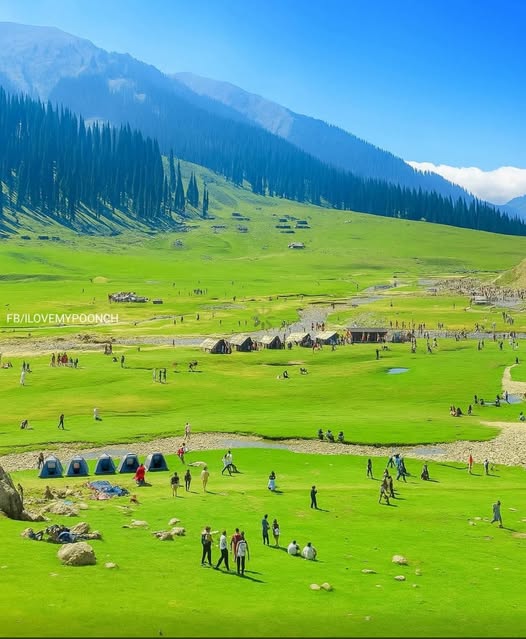
Photo I Love My Poonch
For foreign nationals, the situation is more complex. As of recent years, foreign tourists have been restricted from the area due to its proximity to the LoC. This may change, but travellers should verify current regulations with the J&K tourism office before planning. The Kupwara administration has also introduced an online e-pass system at epass.kupwara.co.in for certain categories of visitors.
Expect two to three army checkpoints between Kupwara and Bangus Valley. At each checkpoint, you will be required to show your permit and ID. This is not a formality to be resented. It is part of the valley’s reality — a reality that The Azadi Times exists to document without sensationalism, and without erasing the human beings who live within it.
The Gujjar and Bakarwal: Custodians of the Meadow
Long before permits and checkpoints, Bangus Valley was — and remains — the summer pasture of the Gujjar and Bakarwal nomadic communities. These pastoralists have grazed their flocks in the meadows of Bangus for centuries, migrating seasonally between the warmer plains of Jammu in winter and the high pastures of Kashmir in summer. The Bakerwal, who are landless nomadic pastoralists, oscillate cyclically with their livestock and household goods between these two worlds, setting up makeshift tents known as khotas in the core zone of the valley.
Their presence is not a tourist attraction. It is a way of life that predates the modern state by generations. The Gujjar and Bakarwal communities in Jammu and Kashmir number more than 1.5 million, with approximately 500,000 being nomadic. In Bangus, they are the valley’s true custodians — the people who know its streams, its grazing patterns, and its moods. Any responsible visit to Bangus must begin with respect for their presence and their rights.
When to Go: The Wildflower Window
Bangus Valley is accessible only from late June to early September. July is peak wildflower season, when the valley floor is carpeted in colours that would make a Mughal garden jealous. Daytime temperatures range from 15 to 22 degrees Celsius, while nights drop to 5 to 8 degrees. June may still have lingering snow on higher sections, and September offers cooler days, fewer flowers, but stunning autumn light.
From November to May, snow closes the road and buries the valley under two to four metres of white. Access is impossible. October is a closing window — possible but unpredictable.
What to Do: Camping, Stargazing, and Walking the Meadow Circuit
There are no hotels, no restaurants, no shops, and no marked trails in Bangus Valley. Accommodation is camping only. The only way to properly experience the valley is to pitch a tent near a stream, cook over a portable stove, and watch the sky.
The night sky at 3,000 metres with zero light pollution is extraordinary. The Milky Way is not a metaphor here — it is a physical presence. For photographers, the golden hours at sunrise and sunset are unmatched, and the alpine flowers are best captured in mid-morning light.
The full Greater Bangus meadow circuit is a 10 to 15 kilometre walk, depending on the route. The valley rewards slow exploration: walking through Bodh Bangus and Lokut Bangus, following shepherd trails, and sitting with the silence that only high meadows can offer.
A Valley at the Edge of Two Worlds
Bangus Valley exists in a paradox. It is one of the most beautiful places in Kashmir, yet almost no one goes there. It is administered by Indian authorities in Kupwara, yet its meadows have been the seasonal home of Gujjar and Bakarwal herders for centuries. It is a tourist destination on paper, yet it has no infrastructure, no hotels, and no commercial tourism economy. The J&K government has spoken of developing Bangus as an off-beat tourism destination, with proposals for land identification and forest clearances, but as of now, the valley remains untouched by the development that has transformed other parts of Kashmir.
For The Azadi Times, Bangus Valley is more than a travel story. It is a story about what Kashmir is when you strip away the labels — Indian-administered, Pakistan-administered, disputed, militarised. It is a story about a meadow that does not care about borders, a stream that flows regardless of checkpoints, and a community of herders who have survived every empire that has claimed this land.
If you go to Bangus, go with humility. Go with the understanding that you are a guest in a place that belongs first to the Gujjar and Bakarwal, second to the wildflowers and the streams, and only third to the permit that allows you to enter. Go with a local guide, carry your waste out, and leave the meadow as you found it — wild, silent, and free.
Forest department officials visit Karnah to explore sustainable tourism initiatives, aiming to boost local livelihoods while preserving the region’s natural forests and wildlife.
The Jammu and Kashmir administration is taking steps to promote eco-tourism across the region, with a particular focus on the picturesque Karnah sector in the northern Kupwara district.
Senior forest department officials recently visited Karnah to assess tourism potential and consult with local residents. According to officials, areas such as Teethwal along the Kishanganga River and Zarla possess unique natural landscapes that could attract visitors interested in nature and adventure travel.
Known for its dense forests, deodar trees, and mountainous terrain, Karnah offers significant potential for activities such as trekking, camping, and wildlife observation. Local residents welcomed the outreach from the forest department, noting that structured eco-tourism could help support the local economy while maintaining environmental standards.
The initiative emphasizes sustainable development, including the promotion of traditional home-stays in local wooden architecture, allowing visitors to experience regional hospitality and cuisine without disrupting the natural environment. Officials highlighted that developing eco-friendly infrastructure will be crucial to balancing visitor growth with the preservation of Karnah’s forests and wildlife habitats.
Chief Minister Omar Abdullah terms the new policy a major step toward sustainable tourism, offering financial incentives, simplified registration, and employment opportunities across rural and border areas.
SRINAGAR — Chief Minister Omar Abdullah has termed the newly notified Jammu and Kashmir Homestay Policy 2026 as a significant step toward promoting sustainable tourism, strengthening local economic activities, and generating new employment opportunities for residents across the region.
The policy was officially notified following its approval by the cabinet during a meeting chaired by the Chief Minister. It aims to establish a simplified and supportive framework to encourage quality accommodation facilities, particularly in rural, border, historical, and emerging tourism destinations.
Under the new framework, a streamlined registration process has been introduced for homestays, categorizing properties into silver and gold tiers based on available amenities, hygiene, and safety standards. The initiative allows local residents to host visitors in their homes, showcase the region’s cultural heritage and traditional hospitality, and generate a steady income from tourism.
Eligible properties can also be registered to provide bed-and-breakfast facilities, further expanding lodging options for tourists and creating additional revenue streams for local families.
To facilitate applicants, the administration has introduced a provision to grant provisional silver registration within 28 days of submitting a complete application, valid for a period of six months.
Financial support mechanisms are integrated into the policy. Eligible property owners can access a 35 percent subsidy under the Prime Minister’s Employment Generation Programme (PMEGP), capped at a maximum project financial assistance of Rs 20 lakh. Qualified homestays will also benefit from domestic electricity utility rates.
Additionally, the administration plans to encourage solar energy adoption through subsidies under the PM Surya Ghar scheme, alongside facilitating access to low-interest loans through the Jammu and Kashmir Bank in accordance with relevant guidelines.
Chief Minister Omar Abdullah emphasized that the initiative will help decentralize tourism beyond traditional hubs, reinforce the local economy, and promote the region’s cultural assets. He noted that the policy is designed to ensure the benefits of tourism reach diverse communities and localities across Jammu and Kashmir.
The administration anticipates that the policy will enhance local participation in the tourism sector, diversify accommodation choices for visitors, and stimulate economic activity throughout the region.
In a viral video interview, former television star Arij Fatima reflects on her health battle, confronting the fear of hair loss, and the turning point that reshaped her perspective on faith and life.
Former Pakistani television actress Arij Fatima has shared the personal journey behind her decision to continuously cover her head, revealing that a cancer diagnosis served as a profound turning point in her life.
A video clip from a recent interview featuring the former actress has been circulating widely across social media platforms, drawing widespread attention from fans and followers. During the conversation, she discussed her medical diagnosis, the initial anxieties surrounding physical changes, and her evolving spiritual outlook.
“Many people ask me why I started covering my head,” Arij Fatima said during the interview. “When I was diagnosed with cancer, my biggest fear was that I would lose my hair. I was very proud of my hair, and its loss worried me the most because hair is often a source of confidence for a woman.”
She recalled how she initially bargained with her circumstances, telling herself that she would adopt a head covering once her hair fell out due to treatment. However, she noted that her hair did not end up falling out, a realization that later prompted deep introspection.
“Looking back, that thought process became a source of regret for me—why did I think I would only embrace modesty when I became bald?” she reflected.
Describing a pivotal shift in her worldview, the former actress shared that she began participating in the ritual washing of the deceased (*ghusl*), an experience that starkly reminded her of the fragility of human existence.
“That was a turning point for me. I began to feel that anything could happen at any time,” she said. “Illness was written in my destiny, but I also had to look at how the Almighty created ease for me throughout the process.”
Reflecting on the swift detection and treatment of her illness, she expressed gratitude for her recovery. She noted that the specific condition she faced is often difficult to diagnose in many individuals, yet her diagnosis and subsequent treatment occurred rapidly.
Addressing societal reactions and negative comments regarding illnesses, she urged people to maintain trust and patience during difficult times.
“Some people tell me it is a punishment for sins, but let me clarify that illness is pre-written in your destiny. Never let go of the bond of trust in God,” she concluded.
Conflict Armament Research findings indicate the group is attempting to locally manufacture a guided missile with a 1,200-mile range, posing potential new risks to regional stability.
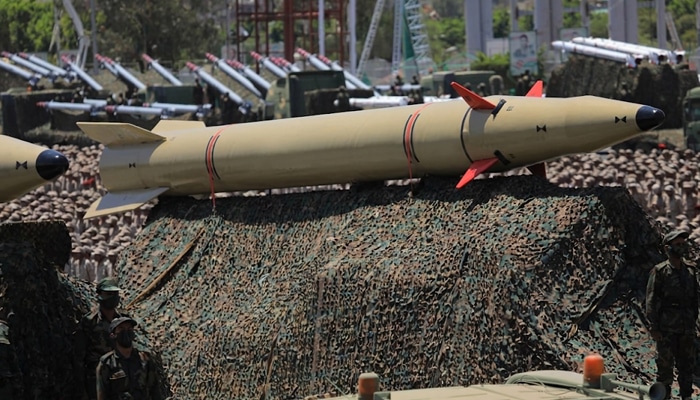
Yemen’s Houthi movement is reportedly attempting to manufacture advanced medium-range ballistic missiles locally, utilizing components imported from China, according to a report by the *Wall Street Journal*.
The findings, published by the weapons supply-chain monitoring group Conflict Armament Research (CAR), indicate that the Houthis procured parts from a Chinese supplier to build a local version of Iran’s powerful “Kheibar Shekan” guided missile.
The projected range of the missile is estimated at approximately 1,200 miles, placing targets across Saudi Arabia and Israel within its potential operational radius. Security analysts consider the Kheibar Shekan particularly lethal due to its reported capacity to evade conventional air defense systems and strike targets with high precision.
The CAR report is based on intelligence gathered from two separate shipments intercepted by Yemeni authorities last year, which concealed missile-related hardware alongside other cargo.
Fabian Hinz, a senior analyst at Conflict Armament Research, noted that such imports strongly suggest active production efforts. “When these types of imports occur, there is a strong possibility that they are manufacturing missiles or at least attempting to do so,” Hinz said, as cited in the report.
However, analysts note that the covert nature of Houthi manufacturing facilities makes it difficult to ascertain the exact current stage of missile production.
The disclosures arrive amid an intensified pattern of Houthi attacks targeting Saudi Arabia in recent weeks. Alongside ongoing Iranian maritime actions in the Bab al-Mandab Strait and surrounding waters, the security developments have contributed to fluctuations in global oil markets. US President Donald Trump recently criticized the group’s actions, calling their behavior disruptive to regional commerce and stability.
Continuous suspension of 3G and 4G services across Mirpur, Poonch, and Muzaffarabad divisions hits students, freelancers, and businesses hard, sparking widespread calls for immediate restoration.
In the modern era, the internet is no longer a luxury or a pastime. It serves as the backbone of the economy, a core pillar of education, and a vital lifeline for healthcare and emergency communication. Yet, across all three divisions of Pakistan-administered Kashmir—Mirpur, Poonch, and Muzaffarabad—the prolonged suspension of mobile internet services (3G/4G) for over four months has severely disrupted daily life for millions of residents.
Beginning on June 5, the blackout has now crossed 124 days. Despite the heavy toll on the region, mobile data remains largely inaccessible, drawing sharp criticism from citizens, business owners, and students over official inaction.
Economic Collapse and Administrative Contradictions
The prolonged digital blackout has paralyzed the region’s economic and educational framework. Thousands of students, independent freelancers, journalists, and online entrepreneurs in Azad Kashmir face mounting unemployment and severe financial distress. Meanwhile, the disruption of online banking and digital financial services has left ordinary citizens struggling just to access their own deposited funds.
With cash transactions restricted at many bank counters, residents are forced to rely heavily on ATMs. However, numerous ATMs remain non-functional due to down links or cash shortages. While private banks continue to profit from trapped public capital, ordinary citizens and small-scale traders suffer heavy financial losses. Wholesalers and commercial sectors across Pakistan also face billions in losses as the supply chain and online order networks within the region remain at a standstill.
A central irony highlighted by critics is the justification provided for the communication shutdown. Authorities initially cited security concerns and protests called by the Jammu Kashmir Joint Awami Action Committee (JKJAAC) as the reason for suspending mobile data. Yet, critics note that the activities and coverage of the Action Committee continue actively on social media, while ordinary citizens relying on the internet for their livelihood and education remain entirely cut off from a fundamental utility.
Growing Ramifications and Future Risks
Experts warn that if the suspension continues, Azad Kashmir faces severe long-term consequences, including a digital brain drain as IT professionals and youth migrate to other cities or abroad, the derailment of academic sessions for students unable to access online classes or research, and a deep erosion of trust among overseas investors and the Kashmiri diaspora. Furthermore, prolonged communication restrictions risk deepening public alienation and frustration rather than resolving underlying political grievances.
Calls for Judicial Intervention and Policy Review
Civil society representatives, trade bodies, and commentators are urging authorities to take immediate corrective steps.
1. **Judicial Oversight:** Calls have been mounted for higher courts, including the High Court of Azad Kashmir, to prioritize hearings regarding the restoration of communication rights, directing the Pakistan Telecommunication Authority (PTA), local authorities, and the Special Communications Organization (SCO) to reinstate 3G and 4G services without further delay. 2. **Financial Relief:** Regulatory bodies and the State Bank are being urged to compel commercial banks to ensure fully operational counter transactions and reliable ATM availability to ease public financial hardship. 3. **Constructive Dialogue:** Observers maintain that public grievances and administrative disputes should be addressed through transparent dialogue with representative groups like the Jammu Kashmir Joint Awami Action Committee rather than blanket technological restrictions. 4. **Telecommunication Support:** Relief measures regarding taxes and operational constraints are also being sought for telecom operators and local traders to help mitigate months of accumulated economic losses.
As the shutdown persists, residents and business owners continue to emphasize that restricting digital access in the 21st century undermines both regional development and the fundamental rights of the population.
The Jammu Kashmir Joint Awami Action Committee has revised the complete shutdown into a smart lockdown, permitting businesses to operate on Wednesdays, Thursdays, and Fridays.
The Jammu Kashmir Joint Awami Action Committee (JAAC) has announced a transition from a complete shutdown to a smart lockdown across Azad Kashmir, following a formal declaration issued on October 14, 2026.
Under the revised guidelines, commercial establishments and businesses will be permitted to open three days a week—specifically on Wednesdays, Thursdays, and Fridays. A complete lockdown will remain in force on the remaining days of the week.
The latest declaration also outlines the committee’s stance on freight transport, public transit systems, educational institutions, timber logging, and recent security incidents in the region.
In its statement, the JAAC expressed deep sorrow over the recent casualties among local youth. The committee condemned ongoing arrests, called for the identification and accountability of those responsible, and emphasized the necessity of purposeful, result-oriented negotiations with the authorities.
The adjustment aims to balance public grievances and economic necessities while administrative and political stakeholders navigate the ongoing tensions across the region.