No state backing. No paywalls. Just truth. Support Kashmir's independent voice. Join 2,400+ patrons who fund independent voices.
Zero Paywalls
Reader Funded
Award Winning
Secure Payment
Encrypted
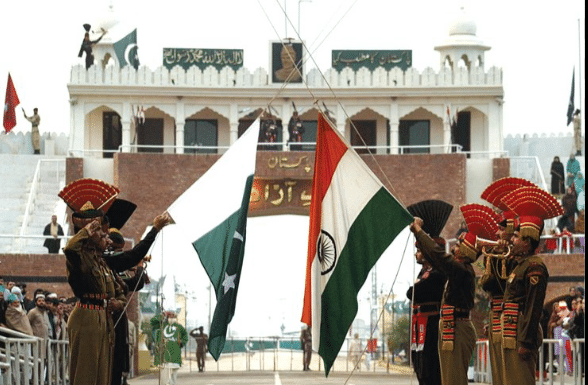
The Indian government announced on Tuesday the suspension of the Indus Waters Treaty with Pakistan, the closure of the Wagah border crossing, and the revocation of visas for all Pakistani nationals, ordering them to leave the country within 48 hours.
The decisions followed a cabinet meeting chaired by Prime Minister Narendra Modi. India’s Ministry of External Affairs stated that visas issued to Pakistani citizens under the South Asian Association for Regional Cooperation (SAARC) framework would be canceled immediately. Pakistani nationals currently in India have been directed to depart within two days, while Indian citizens in Pakistan have been advised to return via the Attari checkpoint by May 1.
In a press briefing, a spokesperson for India’s foreign ministry declared all Pakistani defense, military, naval, and air advisors at its High Commission in New Delhi “persona non grata,” ordering their expulsion. India also recalled its defense attaché from Pakistan. Additionally, the staff at the Indian High Commission in Islamabad will be reduced from 55 to 30 by May 1, citing operational restrictions.
No state backing. No paywalls. Just truth. Support Kashmir's independent voice. Join 2,400+ patrons who fund independent voices.
Background on the Indus Waters Treaty
The 1960 Indus Waters Treaty, brokered by the World Bank, allocates shared water resources between India and Pakistan. Under the agreement, India retains control over the eastern rivers (Beas, Ravi, and Sutlej), while Pakistan holds rights to the western rivers (Indus, Jhelum, and Chenab). Pakistan is entitled to 80% of the water from the western rivers, while India is permitted limited use for hydroelectric projects but prohibited from constructing storage facilities that could alter water flow.
The treaty has long been a point of contention, with Pakistan previously raising concerns over Indian hydroelectric projects in Jammu and Kashmir. India’s move to suspend the pact marks a significant escalation in bilateral tensions, though Islamabad has yet to issue an official response.
Trending Topics


The Azadi Times is an independent digital news platform based in Muzaffarabad, Kashmir, dedicated to credible journalism, in-depth reporting, and global analysis. We cover Kashmir, South Asia, and international affairs with a commitment to truth, editorial integrity, and public accountability.
Get important news delivered directly to your inbox and stay connected!
© 2026 The Azadi Times. All Rights Reserved.