
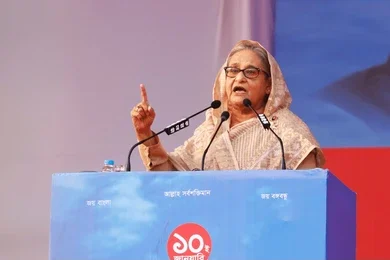

Dhaka, Bangladesh – In a dramatic turn of events, the National Citizen Party (NCP) convenor Naheed Islam has demanded the return of former Bangladeshi Prime Minister Sheikh Hasina Wajed following a death sentence for crimes against humanity. Addressing the media at the NCP central office in Dhaka, Naheed Islam stated that Sheikh Hasina must be brought back to Bangladesh within a month to ensure the judicial verdict is implemented.
“This is a historic day. Our party welcomes the court’s decision against Sheikh Hasina Wajed,” Islam declared. He added that the ruling provides justice for thousands killed and injured during the July revolution and that the families of victims would finally find peace.
Naheed Islam further emphasized, “We demand that Sheikh Hasina be returned next month, and that this decision be fully enforced.”
India’s Measured Response
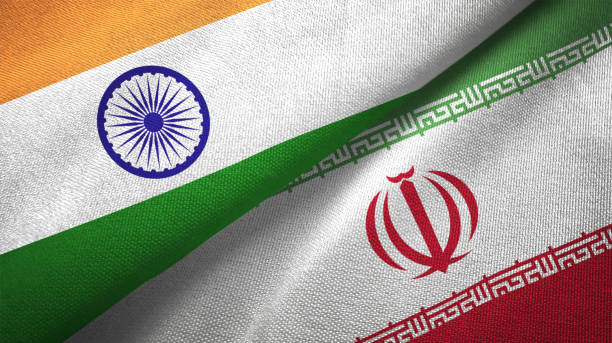
Following Bangladesh’s demand for the extradition of Sheikh Hasina, India has issued a careful response, stating that it will maintain constructive communication with all stakeholders. The Indian Ministry of External Affairs confirmed awareness of the tribunal’s ruling but stopped short of committing to any action regarding her return.
“As close neighbors, India remains committed to supporting democracy, peace, inclusion, and stability in Bangladesh,” the ministry said, reflecting India’s cautious diplomatic stance on the sensitive matter.

Extradition Request Amid International Legal Pressure
Bangladesh’s Ministry of Foreign Affairs reiterated that the tribunal found Sheikh Hasina and Asad al-Zaman Khan Kamal guilty of the killings in July. The ministry stated that providing shelter to individuals convicted of crimes against humanity in another country would undermine justice.
“Bangladesh urges the Indian government to immediately hand over both convicted individuals to Bangladeshi authorities,” the ministry said. According to the bilateral extradition treaty between the countries, it is India’s responsibility to ensure the return of the convicted leaders. Despite multiple formal requests, India has yet to respond positively.

Historic Verdict and Calls for Peace
The interim Bangladeshi government, currently led by Nobel laureate Muhammad Yunus, described the death sentence as “historic” and significant. However, the government also called for calm, warning that emotions could escalate in light of the ruling. Authorities pledged to suppress any attempts at anarchy or public unrest.
Sheikh Hasina Wajed herself denounced the ruling as “biased and politically motivated,” claiming it was an attempt by the interim government to delegitimize the Awami League as a political force. In a detailed five-page statement, she rejected all allegations and emphasized her administration’s record on human rights and development.
“I have challenged the interim government to take my case to an appropriate tribunal where evidence transparency is ensured,” she said, maintaining her stance against the verdict.
Rising Tensions in Dhaka
Following the announcement, large crowds gathered near Dhan Mandi 32, the residence of Sheikh Hasina’s father, a longstanding center for protests in recent months. Police employed stun grenades to disperse demonstrators, who arrived with bulldozers and shouted slogans calling for the destruction of “fascist bases.”
Bangladesh authorities have ramped up security measures across Dhaka, deploying Rapid Action Battalion forces and Border Guard personnel to manage potential unrest.
Implications for Regional Stability
This case places Bangladesh at the center of a complex regional dilemma, with India balancing diplomatic caution against its treaty obligations. The verdict and ensuing political turmoil are likely to draw international attention, highlighting tensions between justice, political rivalries, and regional diplomacy in South Asia.
As the countdown begins for Sheikh Hasina’s potential return to Bangladesh, the world watches closely how India responds and how Dhaka navigates the delicate balance between enforcing justice and maintaining public order.