
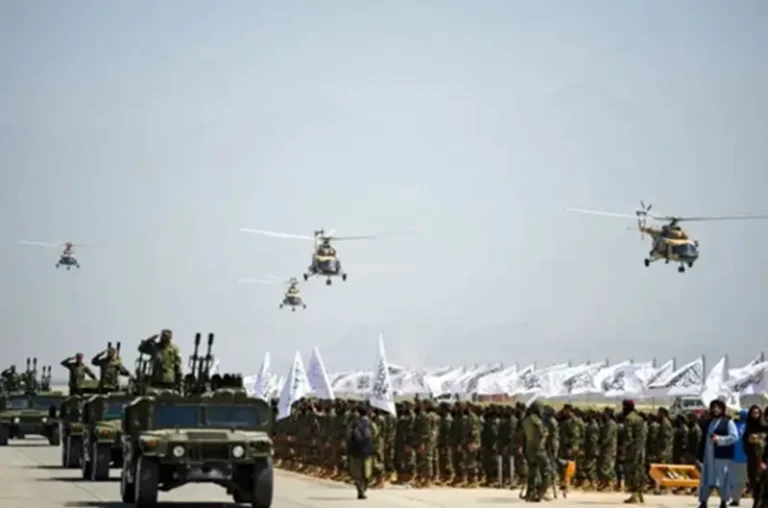
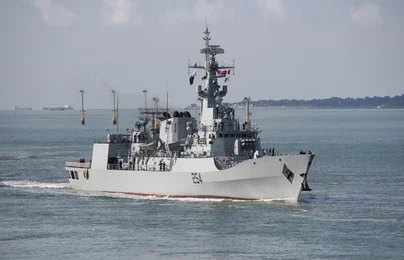

MUZAFFARABAD — In a significant escalation of military posturing, nuclear-armed rivals India and Pakistan have initiated major, simultaneous military exercises in close proximity, turning the restive border regions from the deserts of Rajasthan to the waters of the Arabian Sea into a high-stakes strategic theatre.
India has launched one of its largest-ever joint tri-service exercises, codenamed “Trishul” (Trident), mobilizing its Army, Navy, and Air Force in a massive display of integrated combat power along its western frontier with Pakistan. The drills, which commenced last week and are scheduled to run until November 13, span a vast area from the arid Rann of Kutch to the contentious Sir Creek coastal belt.
Almost in tandem, the Pakistan Navy began its own major naval exercise in the northern Arabian Sea, set to conclude on November 5. The Pakistani drills are a centerpiece of the ongoing Pakistan International Maritime Expo and Conference (PIMEC) in Karachi, which has drawn participation from 133 foreign delegations representing 44 countries, lending the event a significant international dimension.

The Azadi Times
No state grants. No corporate lobby. Just ground‑truth reporting from Kashmir & beyond
You make this possible.
Overlapping Zones and a Professional Standoff
The timing and location of the exercises have raised eyebrows among global defence observers. Open-source intelligence analyst Daniel Simon noted on the social media platform X that the maritime warning zone declared by Pakistan for its live-fire drills partially overlaps with airspace reservations India announced for Trishul.
“This is a highly unusual concurrence,” Simon stated. “While the proximity is undeniable, both militaries are known for their professionalism in such scenarios. The onus is on maintaining clear communication to prevent any miscalculation that could spiral into an incident.”
The Ghost of Sir Creek Looms Large
The parallel drills have cast a renewed spotlight on the 96-kilometre-long Sir Creek, a winding tidal estuary that separates India’s Gujarat from Pakistan’s Sindh province. The unresolved demarcation of this marshy border has long poisoned relations and complicated the determination of maritime boundaries and exclusive economic zones.

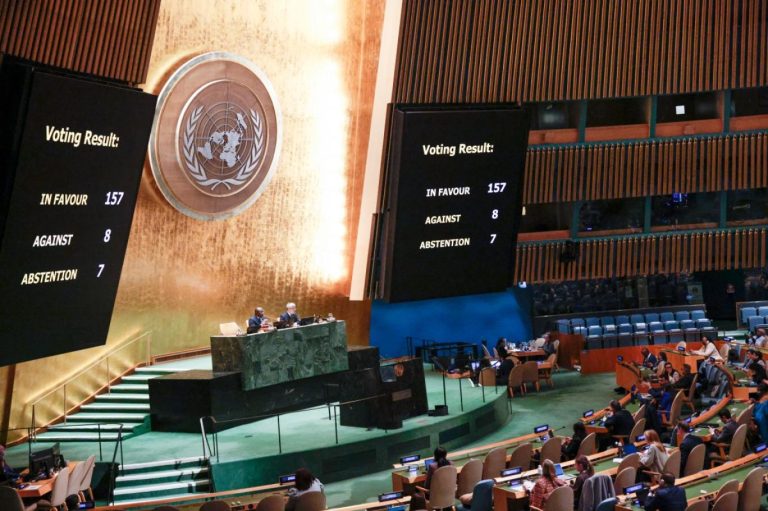

The rhetoric from both sides has been typically fiery. Last month, Indian Defence Minister Rajnath Singh issued a stern warning, vowing a “befitting response” to any “mischief” from Pakistan. Around the same time, Pakistan’s Naval Chief, Admiral Naveed Ashraf, toured forward posts in the creeks area, overseeing the induction of three new 2400 TD hovercraft into the Pakistan Marines to bolster shallow-water operational capability.
“From Sir Creek to Jiwani, the Navy stands ready to defend every inch of Pakistan’s maritime borders,” Admiral Ashraf declared during his visit.
Scale and Strategic Intent
Indian media reports suggest an immense deployment for Trishul, including over 20,000 personnel, 20–25 warships, 40 fighter jets, submarines, and advanced land assets. The exercise is being jointly coordinated by the Southern Army Command, Western Naval Command, and South-Western Air Command, with a sharp focus on real-time communication and multi-domain warfare integration.
Defence analyst Rahul Bedi confirmed to the BBC that the drills extend into the sensitive Rann of Kutch, underscoring India’s emphasis on inter-service coordination in a challenging environment. However, some analysts urge perspective. Praveen Sahni, editor of the defence journal FORCE, believes Trishul is essentially a routine annual drill being amplified by the Modi government for strategic messaging.
“Pakistan’s exercises appear more precautionary than provocative,” Sahni commented. “They are a natural response to the scale of the Indian manoeuvres.”
A Crowded and Dangerous Theatre
Sahni also highlighted the broader, dangerous context of the northern Arabian Sea. “We must remember this is no longer a purely India-Pakistan arena. Iran, Pakistan, and China are already powerful actors here, and reports suggest Russia is expanding its naval presence near Madagascar. The sea is getting crowded. Any single miscalculation here could trigger a conflict with regional, if not global, consequences.”
The Human Cost: A Kashmiri Plea for Restraint
As the two militaries flex their sophisticated hardware, the people of Kashmir, the region at the heart of the decades-long conflict, watch with a sense of dread and déjà vu.
A resident of Srinagar, who spoke to The Azadi Times on condition of anonymity for security reasons, voiced a sentiment felt by many on both sides of the Line of Control: “These displays of power might boost nationalist sentiments in Delhi and Islamabad, but if a war breaks out, it is we Kashmiris who will pay the ultimate price on both sides. Soldiers fight, but the heaviest burden is always borne by the civilians—the families who have lived trapped between two militarized borders for generations.”
For them, the synchronized roar of fighter jets and the live-fire in the sea serve as a grim reminder that peace in South Asia remains terrifyingly fragile, and that the people of Kashmir continue to bear the heaviest burden of a confrontation they never chose.
Source: Adapted from reporting by BBC Urdu and defence correspondents; edited and localized for The Azadi Times.