
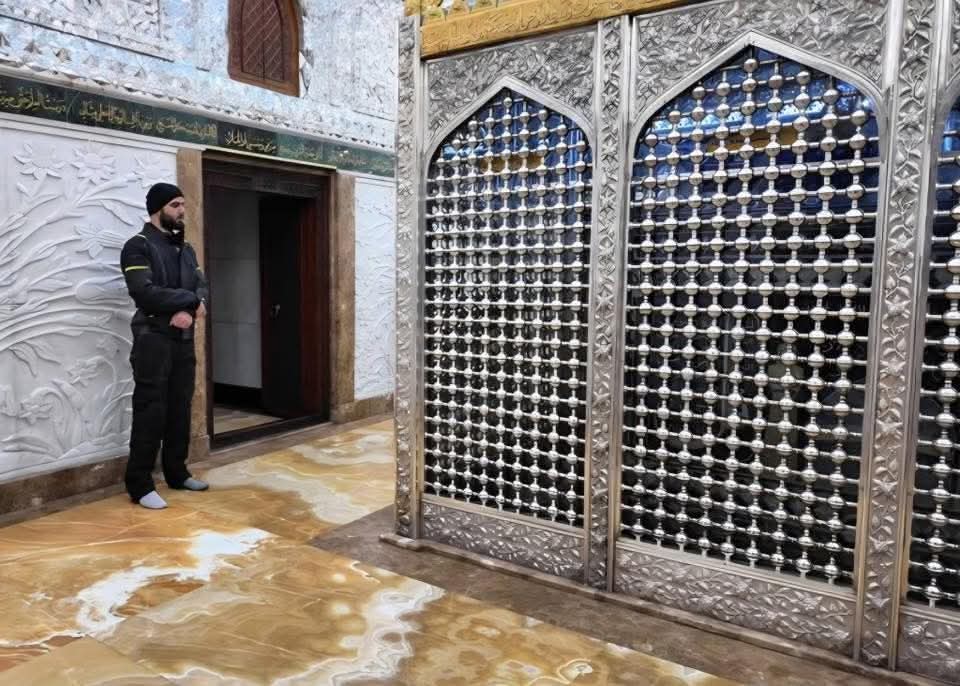

PULWAMA IAJK — In a narrative threading a Kashmiri village with one of Islam’s ancient spiritual capitals, popular content creator Umar Iqbal—known online as “The Umar”—has documented a pilgrimage to the shrine of Hazrat Abdul Qadir Jilani in Baghdad, Iraq, drawing attention to the evolving digital storytelling of a new generation.
His journey, shared across social media platforms where he commands a combined following of several hundred thousand, highlights a search for spiritual meaning and cross-cultural connection, set against a backdrop of personal resilience and regional complexity.
Roots in Resilience: From Personal Loss to Digital Voice

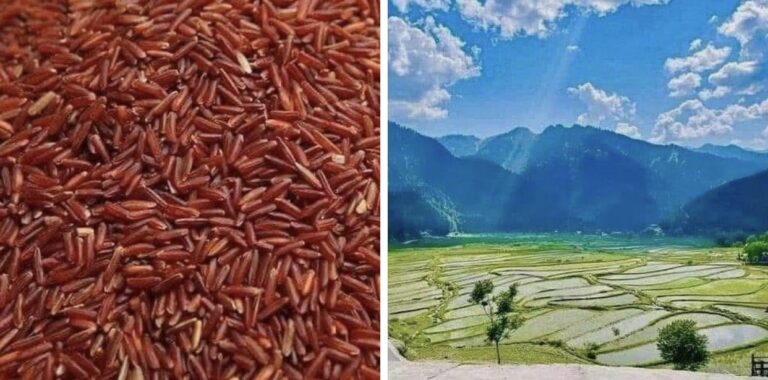
Umar Iqbal’s story begins in Saimoh, a village in the Tral area of Pulwama district in Indian-administered Jammu and Kashmir—a region with a contested political status and a history of conflict. His early life was marked by the profound loss of his mother, an event he has openly credited with leading him into a period of depression.
Seeking an outlet, he turned to social media while pursuing a B.Sc. in Nursing in Bengaluru, India. Rather than focusing on regional politics, his channel, “The Umar,” carved a niche around motivational talk, Kashmiri cultural pride, poetry, and positive interactions with diverse communities across India. His authentic style—often involving street conversations about language and tradition—resonated, building a substantial digital footprint.
“I wanted to create content that heals, connects, and reminds people of our shared humanity,” Umar has said in previous interviews, distinguishing his approach from more sensationalist online trends.

A Spiritual Voyage to Baghdad
In early 2026, Umar’s content took an international turn. His social media feeds shifted from Indian streets to the historic landscapes of the Middle East, culminating in a visit to Baghdad. There, he filmed his pilgrimage to the shrine of Hazrat Abdul Qadir Jilani (RA), an 11th-century Persian mystic and theologian, revered as a foundational saint in Sufi Islam.
The shrine of Jilani, known as “al-Ghawth al-A’zam” (The Supreme Helper), is a major site of global Muslim pilgrimage, representing a tradition of spirituality that transcends national and sectarian boundaries. Umar’s footage showed him absorbing the atmosphere, offering prayers, and engaging with Iraqi locals, whom he thanked for their warmth and hospitality.

“To stand where such great souls walked is humbling,” he noted in one post. “It’s a journey for the heart.”
Redefining Narratives Beyond Conflict
Analysts observing digital culture in South Asia note that Umar’s appeal lies in his conscious departure from monolithic narratives often associated with his homeland.
“Young content creators from conflict zones are increasingly using platforms to assert multifaceted identities,” said Dr. Aanya Sharma, a media researcher at the Institute for Digital Cultures. “Umar Iqbal represents a cohort that discusses culture, spirituality, and personal growth, indirectly challenging the reduction of their homeland to a geopolitical headline. His trip to Baghdad isn’t just travel content; it’s a statement of accessible global Muslim citizenship.”
His journey has sparked conversations among followers about the possibilities of travel, the shared heritage of Sufism, and how digital media can serve as a bridge.
A Model for Purpose-Driven Content
While many influencers monetize controversy or glamour, Umar’s brand remains rooted in positivity and cultural authenticity. He represents a shift towards what some term “meaningful influence”—using reach to highlight universal themes of resilience, discovery, and heritage.
From the villages of Kashmir to the shrines of Baghdad, his digital narrative underscores a simple truth: in an interconnected world, stories of personal and spiritual search can forge powerful, positive connections across the very borders that often divide.