
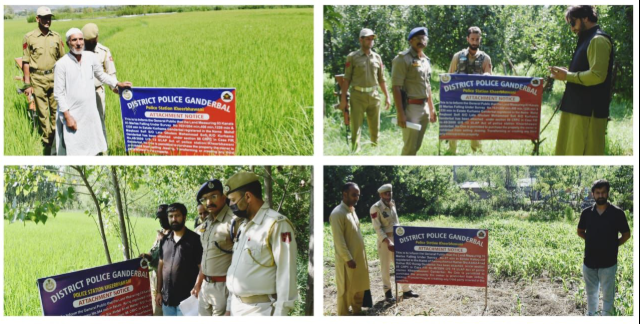

The Azadi Times | Srinagar, Indian administered Kashmir: Authorities in Indian-administered Jammu and Kashmir have seized property worth approximately $380,000 USD belonging to three Kashmiri men accused of “militant” activities and currently living across the Line of Control in Pakistan-administered Kashmir.
The move comes as part of what police describe as an ongoing campaign to dismantle “terrorist and separatist networks.” However, critics argue that such actions risk further marginalizing Kashmiri voices and suppressing legitimate aspirations for self-determination — a right enshrined in international law but denied to Kashmiris for decades.
Whose Land, Whose Rights?
According to police, the three men — Farooq Ahmad Rather, Noor Mohammad Paray, and Mohammad Maqbool Sofi, all originally from the Ganderbal district — have been accused of inciting violence from abroad. Officials claim the men have ties to separatist and militant groups and have been named in a 2009 case under India’s Unlawful Activities (Prevention) Act.

The seized property reportedly includes 9 kanals and 1.5 marlas of agricultural land — about 1.1 acres — in their home villages. The seizures were carried out after approval by a special court.
Police framed the action as a necessary measure to maintain order.
“No individual, whether inside the Valley or abroad, will be allowed to promote terrorism or separatism. Legal action will continue against anyone disturbing the region’s peace,” a spokesperson said.



A Community Under Pressure
Local residents, however, view such seizures differently. Some argue they amount to collective punishment of families left behind, and say they target Kashmiri dissent rather than addressing root causes of the conflict which many see as the denial of Kashmiris’ right to determine their own political future.
In an appeal to the public, police asked residents to report any “suspicious activity,” describing community cooperation as essential to “peace, prosperity, and development.”
Yet for many Kashmiris, peace remains elusive in a region militarized for decades. Calls for dialogue and a political settlement — including the right to self-determination — continue to go unheard, leaving people trapped between competing narratives and state crackdowns.


Observers note that property seizures and legal cases under counterterrorism laws have increased in recent years, part of a broader strategy that critics say conflates armed militancy with peaceful political dissent. For families of the men whose land was taken this week, the future remains uncertain — their homes now part of a larger, unresolved conflict.