
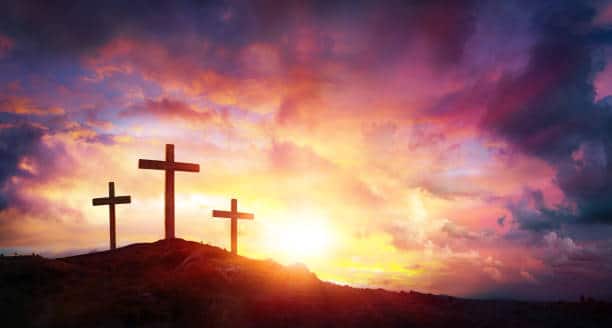

For nearly two billion Christians worldwide, Good Friday stands as the most solemn day of the liturgical calendar. Churches dim their lights, bells fall silent, and congregations meditate on the crucifixion of Jesus Christ in Jerusalem nearly two millennia ago. Yet, for many observers — and even some believers — a quiet question persists: Why is Good Friday called Good Friday when it commemorates torture, humiliation, and death?
The answer lies not in contradiction, but in a profound theological and linguistic evolution. What appears as a grim anniversary is, in Christian doctrine, the hinge of salvation history. To understand the name is to understand the heart of Christian faith.
The Theological Core: A ‘Good’ That Emerges From Sacrifice
In mainstream Christian theology, the death of Jesus is not a tragedy but a voluntary sacrifice. According to the New Testament accounts, particularly the Gospels of Matthew, Mark, Luke, and John, Jesus was arrested, tried, scourged, and crucified under the Roman governor Pontius Pilate. His death, believers hold, atoned for the sins of humanity — reconciling a broken world with God.

The fourth-century theologian Augustine of Hippo wrote that “the cross was a victory, not a defeat.” This perspective transformed an instrument of Roman execution into a symbol of hope. Therefore, Why is Good Friday called Good Friday? The answer, for Christians, is that the worst moment in history produced the greatest gift: redemption.
“Without Good Friday,” says Reverend Stephen Langton, a biblical scholar quoted in ecclesiastical histories, “there is no Easter. The good is not in the suffering itself, but in its outcome — the defeat of death.”
Linguistic Origins: From ‘God’s Friday’ to ‘Good Friday’
Linguists offer a second, complementary explanation. In Old English, the day was called “God’s Friday” (from Godes Friȝedæġ). Over centuries of linguistic drift, “God’s” may have been misheard or transformed into “Good” — a shift not unique to English. In German, the day is Karfreitag (Sorrowful Friday), but in Dutch it is Goede Vrijdag, mirroring the English usage.


Thus, Why is Good Friday called Good Friday may also be answered by philology: the word “good” once carried an older meaning of “holy” or “pious,” similar to “the good book” for the Bible. Even today, some traditional Christian communities refer to the day as “Holy Friday” or “Great Friday.”
Across the Middle East, where the events of the crucifixion unfolded, Christian communities in Palestine, Egypt, Lebanon, and Syria observe the day with processions and mourning hymns. In Jerusalem’s Old City, worshippers walk the Via Dolorosa — the “Way of Suffering” — retracing the path believed to have been taken by Jesus to Golgotha.
In the Gaza Strip, a small Christian minority holds quiet prayers amid the region’s wider conflicts, a reminder that this ancient story continues to be lived out in lands of contemporary crisis. Across Pakistan-administered Kashmir and the rest of South Asia, Christian communities gather for three-hour vigils from noon to 3 PM, the biblical hours of darkness during the crucifixion.

Burial after accidental death of student studying at Poonch Medical College
Yet the central question remains universal: Why is Good Friday called Good Friday? Whether answered theologically or linguistically, the name has endured for over a thousand years — a testament to the power of paradox.
Beyond theology, Good Friday has shaped Western law, art, and literature. In many countries, it remains a public holiday. Crucifixion imagery appears in works from Grünewald to Salvador Dalí. The day also underscores broader themes of suffering, justice, and redemption — themes that resonate in conflict zones from Ukraine to the Palestinian territories, where communities endure their own Good Fridays.
So, Why is Good Friday called Good Friday? For the believer, it is because evil and death do not have the final word. For the linguist, it is a quirk of Old English evolution. For the cultural observer, it is a centuries-old tradition that continues to shape global rituals of mourning and hope.
Whatever one’s faith, the name invites reflection on how language transforms horror into meaning — and how, in many of the world’s traditions, the darkest nights often precede the brightest dawns.