
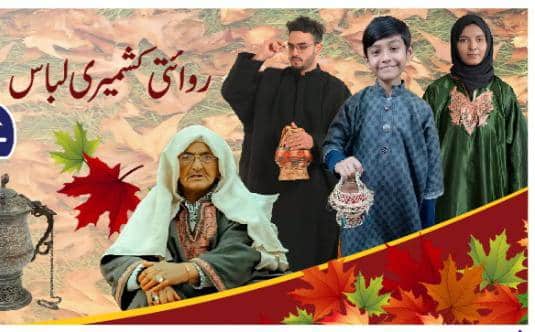

Srinagar / Muzaffarabad — Special Report: As winter tightens its grip on the Kashmir Valley, Chillai Kalan—the harshest forty days of the season—has officially begun. These days are known for freezing temperatures, silent snowfall, and long, bone-chilling nights that slow life across the region. Coinciding with this seasonal shift, Kashmir today observes International Pheran Day, a moment that goes far beyond cultural symbolism.
It is a day that reflects Kashmiri identity, domestic warmth, and the continuity of an ancient way of life.
With the onset of Chillai Kalan, a visible transformation takes place across Kashmiri society. Streets, marketplaces, and homes are once again dominated by the same traditional garment that has protected generations from the valley’s unforgiving winters—the Pheran.

The Azadi Times
No state grants. No corporate lobby. Just ground‑truth reporting from Kashmir & beyond
You make this possible.
The Pheran
The Pheran is not merely a piece of winter wear. For Kashmiris, it represents warmth, safety, belonging, and memory. This loose, flowing robe—extending from the neck to the ankles—is worn by men and women alike and remains unmatched in its effectiveness against the valley’s cold, even when compared to modern winter jackets and coats.
What makes the Pheran truly distinctive is its inseparable relationship with the Kangri—a small earthen or metal fire pot filled with glowing embers. Carried beneath the Pheran, the Kangri does more than provide heat; it creates a familiar, almost intimate warmth that defines the Kashmiri winter experience.
Elders recall wearing the “posh”, a white inner layer placed beneath the Pheran to protect the fabric and skin from the Kangri’s intense heat. This was not just a safety measure, but part of a carefully evolved cultural system shaped by centuries of living in extreme cold.

Mother, Child, and the Pheran
The emotional significance of the Pheran extends well beyond protection from the cold. It is deeply woven into Kashmiri social life and family bonds.
In many mountainous regions, mothers carry their children on their backs. In Kashmir, however, a mother traditionally holds her child inside the Pheran, close to her chest. Within a single garment, two lives share the same warmth—protected, connected, and secure.
This is not merely a domestic custom. It is a powerful image of Kashmiri society, where care, closeness, and protection are embodied in everyday life.

Chillai Kalan
Chillai Kalan is widely regarded as the most severe phase of winter in Kashmir. Temperatures frequently fall below freezing, water sources turn to ice, and daily routines slow dramatically. During this period, the Pheran and Kangri are not cultural ornaments—they are essential tools for survival.
This is precisely why International Pheran Day is observed alongside the beginning of Chillai Kalan. The timing sends a clear message to the world: the Pheran is not a relic of the past, but a functional, living system shaped by human necessity and environmental wisdom.
Culture, Identity, and Quiet Resistance
Behind the celebration of International Pheran Day lies a deeper social and political context. In certain periods, particularly in Indian-administered Kashmir, restrictions were imposed on wearing the Pheran in government institutions. Many Kashmiris viewed these measures as an attempt to suppress cultural expression and dilute indigenous identity.
In response, Pheran Day gradually emerged as a form of cultural assertion and peaceful resistance—a reminder that clothing is not merely about fashion, but about history, dignity, and collective memory.
In Pakistan-administered Jammu and Kashmir, the observance of this day has also served to highlight and preserve Kashmiri cultural heritage, while drawing attention to efforts perceived as attempts to erase or weaken it.
The Pheran on the Global Stage
In recent years, the Kashmiri Pheran has begun attracting attention far beyond the region. Local artisans and traders are presenting it to international markets with refined designs, modern tailoring, and traditional craftsmanship intact.
There is a growing sense of pride among Kashmiris as people outside the region begin to recognize the comfort, elegance, and cultural depth of the Pheran. However, cultural experts caution that global popularity must go hand in hand with respect for authenticity, fair recognition of Kashmiri craftsmanship, and economic benefits for local communities.
On the first day of Chillai Kalan, International Pheran Day reminds us that some garments do not fade with time—they grow stronger.
The Pheran is a shield against the cold, an expression of love, and a living symbol of Kashmiri civilization. Even today, when someone wraps a Pheran around themselves in the icy air of the Kashmir Valley, they are not only keeping warm—they are embracing their history, identity, and cultural soul.