No state backing. No paywalls. Just truth. Support Kashmir's independent voice. Join 2,400+ patrons who fund independent voices.
Zero Paywalls
Reader Funded
Award Winning
Secure Payment
Encrypted

No state backing. No paywalls. Just truth. Support Kashmir's independent voice. Join 2,400+ patrons who fund independent voices.
No state backing. No paywalls. Just truth. Support Kashmir's independent voice. Join 2,400+ patrons who fund independent voices.
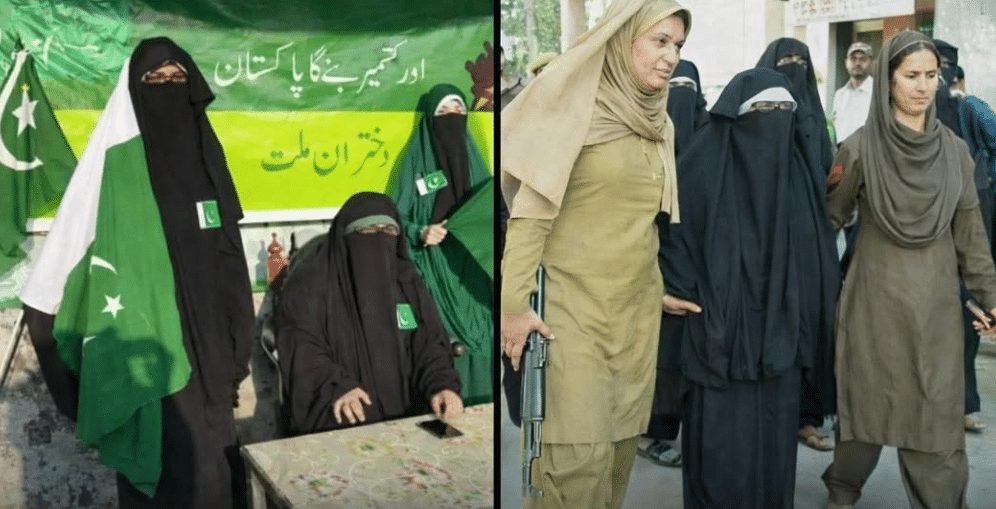
SRINAGAR — In a landmark verdict with far-reaching political implications, a court in New Delhi on Wednesday sentenced prominent Kashmiri political leader Asiya Andrabi to life imprisonment under India’s stringent anti-terror law, the Unlawful Activities (Prevention) Act (UAPA).
The sentence was handed down by Additional Sessions Judge Chander Jeet Singh, who also sentenced Ms. Andrabi’s close associates, Sofi Fahmeeda and Nahida Nasreen, to 30 years of rigorous imprisonment in the same case. The court had previously, on January 14, convicted the three women on charges of membership in a banned organization and support for unlawful activities.
The verdict, which follows a demand by India’s federal investigation agency, the National Investigation Agency (NIA), for the maximum penalty, has sent shockwaves through Jammu and Kashmir. Legal developments involving political leaders are intensely followed here, often seen as barometers for the broader political climate.

No state backing. No paywalls. Just truth. Support Kashmir's independent voice. Join 2,400+ patrons who fund independent voices.
Asiya Andrabi is the founder of Dukhtaran-e-Millat (Daughters of the Nation), a women-led socio-political movement that emerged in the late 1980s at the onset of the armed uprising against Indian rule. For decades, she has been a prominent and polarizing figure in the political landscape of Indian-administered Kashmir, known for her advocacy around political identity, religious values, and the Kashmir dispute.
Her detention in 2018 under the UAPA was a watershed moment, reflecting the intensifying legal crackdown on political organizations operating in the region. Wednesday’s sentencing marks the culmination of a prolonged legal battle that observers say underscores the increasing use of anti-terror legislation against political actors.
The case has reignited debate over the application of national security laws in political cases—a practice that has long been scrutinized by legal experts, human rights organizations, and civil society groups across the region.
While Indian authorities maintain that strict sentencing is a necessary deterrent for maintaining security and public order, critics argue that such provisions are being used to systematically dismantle political dissent and create a climate of uncertainty for community leaders.
“The severity of this sentence—life imprisonment for a political figure who has long advocated for her people’s rights—will have a chilling effect on political participation,” said a legal analyst based in Srinagar, speaking on condition of anonymity. “It signals that the space for any political expression outside the state’s framework is being closed entirely.”
The sentencing of Andrabi and her associates comes at a critical juncture, as the political landscape in Indian-administered Kashmir remains heavily constrained. Since the abrogation of the region’s special status in 2019, authorities have maintained tight control over political gatherings and civil society.
Analysts suggest that the outcome of this case will shape future debates concerning law, governance, and political participation in the region. The case also highlights the continuing complexity of the Kashmir dispute, one of South Asia’s most enduring and internationally observed conflicts, where legal proceedings frequently intersect with the broader struggle for self-determination.
As news of the sentencing spreads, reaction in the valley is expected to be one of deep concern, with many viewing the verdict not merely as a judicial decision but as a significant political act with profound implications for the future of dissent in Indian-administered Kashmir.
Hot this week

The Azadi Times is an independent digital news platform based in Muzaffarabad, Kashmir, dedicated to credible journalism, in-depth reporting, and global analysis. We cover Kashmir, South Asia, and international affairs with a commitment to truth, editorial integrity, and public accountability.
Get important news delivered directly to your inbox and stay connected!