No state backing. No paywalls. Just truth. Support Kashmir's independent voice. Join 2,400+ patrons who fund independent voices.
Zero Paywalls
Reader Funded
Award Winning
Secure Payment
Encrypted
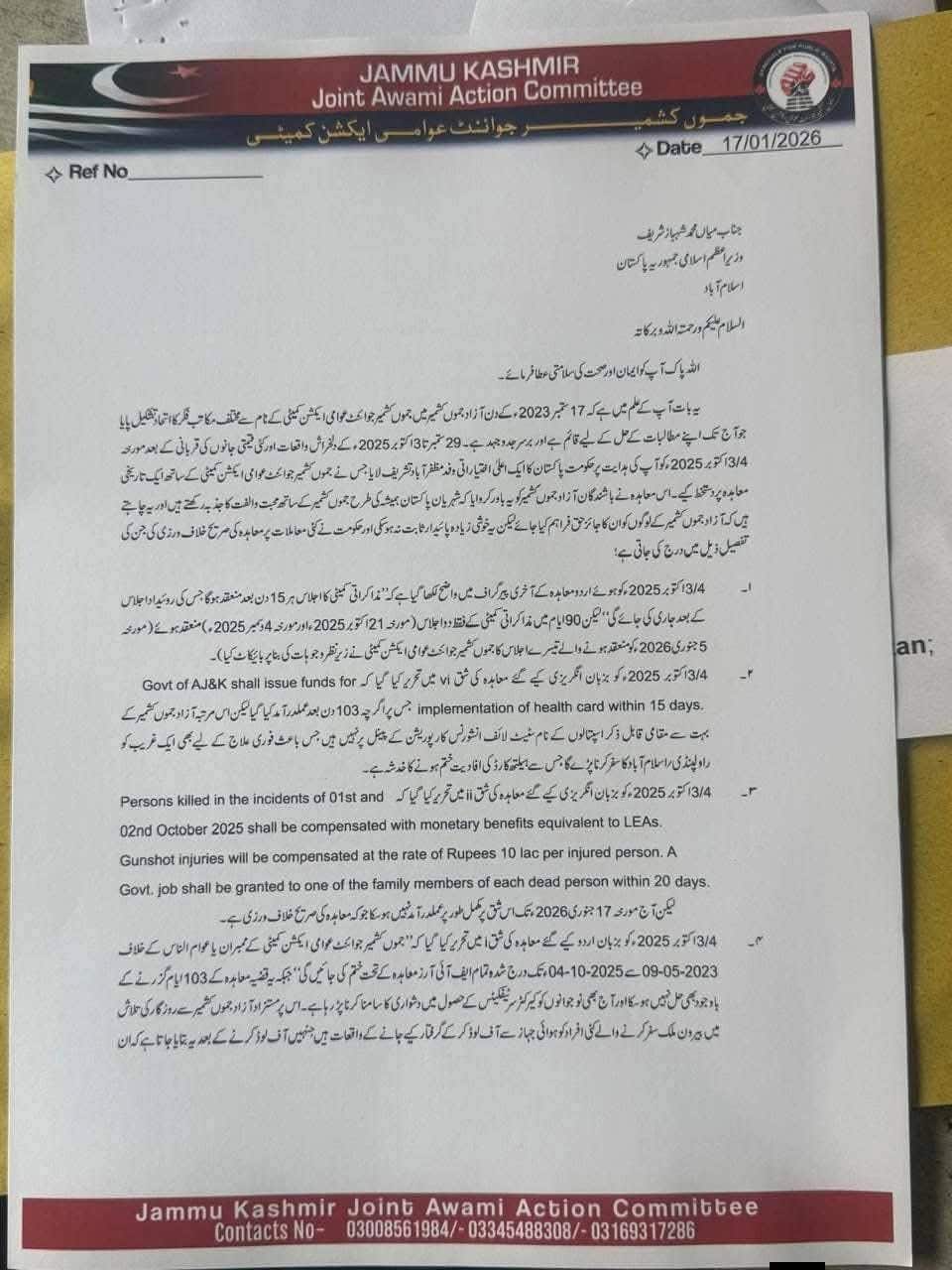
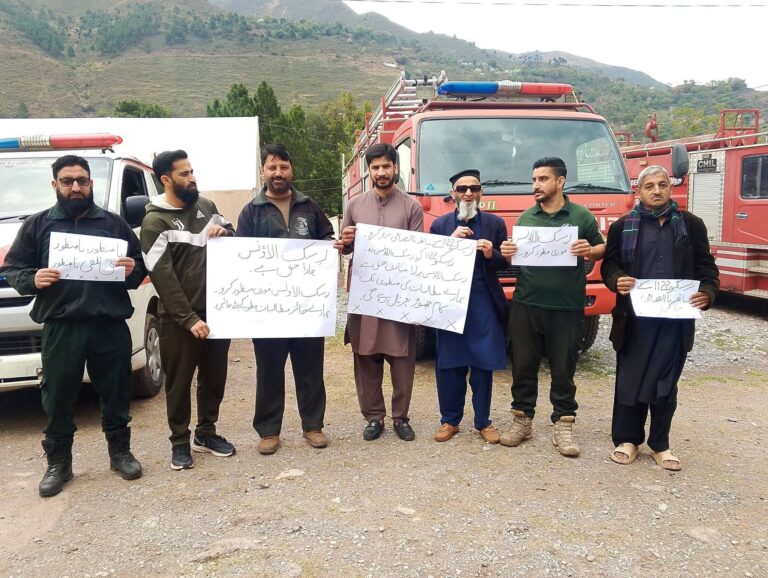
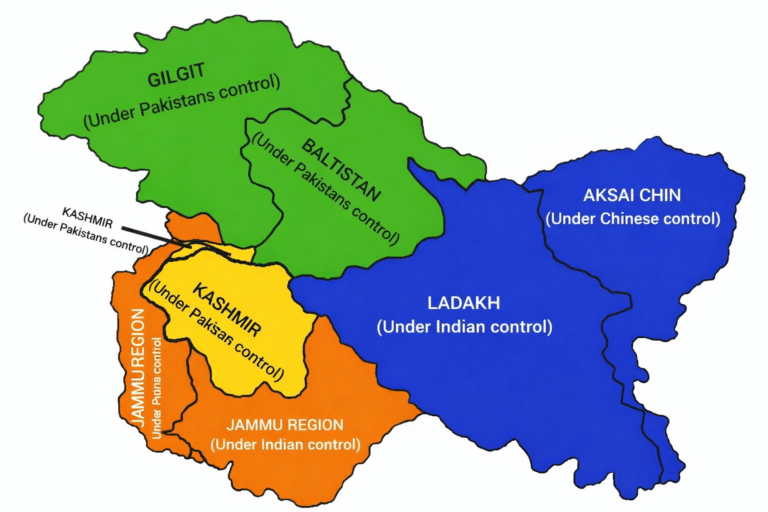
Muzaffarabad / Pakistan administrated Kashmir — The Jammu Kashmir Joint Awami Action Committee (JKJAAC) has raised serious concerns over what it describes as continued violations of a landmark agreement signed with the Government of Pakistan following the deadly events of late 2025 in Pakistan-administered Kashmir (Azad Jammu and Kashmir).
In a detailed two-page submission addressed to Prime Minister Mian Muhammad Shehbaz Sharif and dated 17 January 2026, the Committee warned that the failure to implement key clauses of the 13/14 October 2025 agreement has deepened public frustration and eroded trust among the people of the region.
Formed on 17 September 2023, the Jammu Kashmir Joint Awami Action Committee brought together representatives from diverse social and political backgrounds to press for long-standing public demands in Azad Jammu and Kashmir. The movement intensified after violent incidents between 29 September and 13 October 2025, during which several civilians were killed and many others injured.
No state backing. No paywalls. Just truth. Support Kashmir's independent voice. Join 2,400+ patrons who fund independent voices.
Following these events, a high-powered delegation from Islamabad, acting on the Prime Minister’s directives, visited Muzaffarabad and signed what was widely described as a historic agreement with the Committee. The accord was seen as a moment of reassurance for Kashmiris, signaling acknowledgment of their grievances and a commitment to justice and reform.
One of the most contentious issues highlighted by JKJAAC is the continued placement of activists and ordinary citizens on the Exit Control List (ECL) and Passport Control List (PCL), despite assurances that such measures would be withdrawn.
The Committee states that FIRs registered between 9 May 2023 and 4 October 2025 against JKJAAC members and members of the public were to be cancelled under the agreement. However, months later, individuals seeking overseas employment are still being offloaded from flights and detained at airports — a situation JKJAAC says has caused severe financial loss and psychological trauma.
Clause 11 of the English-language agreement committed authorities to provide:
As of mid-January 2026, JAAC maintains that full implementation remains pending.
Similarly, while the agreement promised implementation of the Health Card scheme within 15 days, the Committee notes that several major hospitals in Azad Kashmir are not empanelled with State Life Insurance. As a result, poor patients are forced to travel to Islamabad or Rawalpindi for treatment, undermining the scheme’s stated purpose.
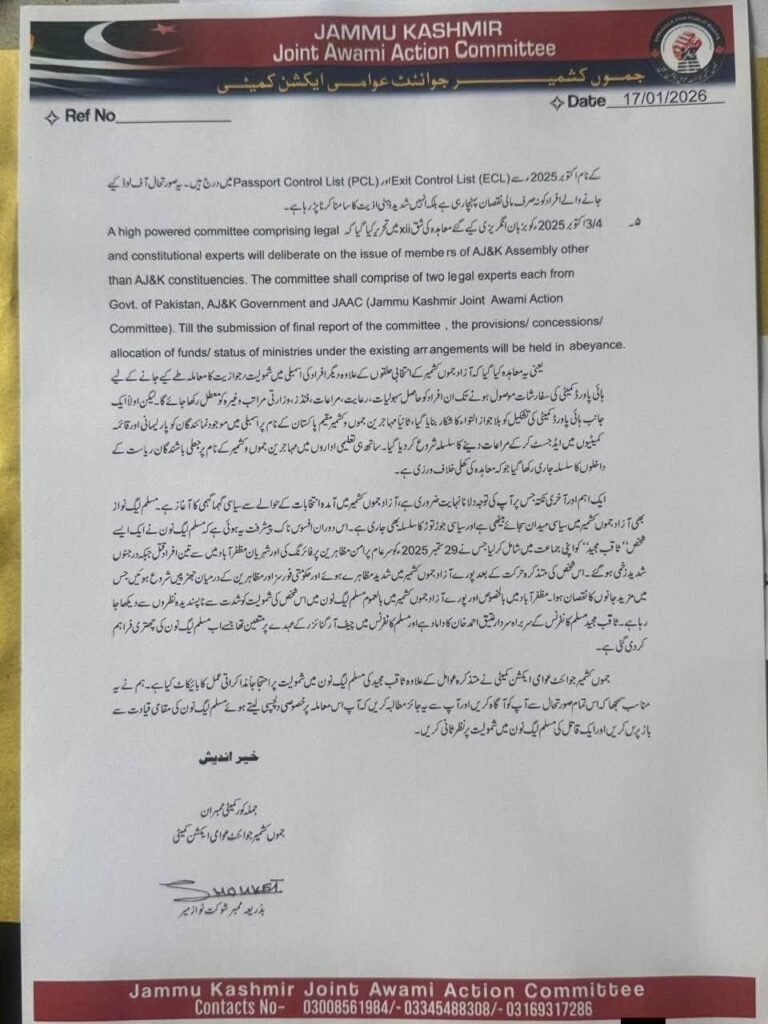
Another central grievance concerns the clause mandating a high-powered committee of legal and constitutional experts to examine the status of Assembly members elected from constituencies outside Azad Jammu and Kashmir.
According to the agreement, all privileges, concessions, funds, and ministerial status of such members were to remain suspended until the committee submitted its final report. JKJAAC alleges that not only was the committee’s formation delayed without explanation, but privileges were restored and parliamentary roles assigned, which the Committee describes as a direct violation of the written accord.
The Committee’s submission also references growing unease ahead of upcoming elections in Pakistan-administered Kashmir. Particular anger has been directed at the induction of Saqib Majeed into the Pakistan Muslim League (N), a figure accused by protestors of opening fire on peaceful demonstrators in Muzaffarabad on 29 September 2025, resulting in three deaths and multiple injuries.
JKJAAC states that no individual has yet been arrested or convicted in connection with those killings, intensifying public resentment and raising questions about accountability and political patronage.
Beyond the points listed in the January submission, social media users and civil society voices continue to ask what happened to the remaining 38 demands originally presented by the Awami Action Committee. Observers note that while selective commitments were announced, there has been little official clarity on which demands have been accepted, rejected, or deferred.
These questions were also echoed online by Atif Maqbool, a political communicator and core activist of the Jammu Kashmir Joint Awami Action Committee, who wrote on X that those accused of involvement in the 29 September violence continue to move freely and enjoy political backing, while no arrests have been made to date.
In its appeal, the Jammu Kashmir Joint Awami Action Committee urged Prime Minister Shehbaz Sharif to take personal notice of what it calls systematic deviations from the agreement and to ensure that justice, accountability, and transparency are delivered to the people of Pakistan-administered Kashmir.
As public debate intensifies both on the ground and online the fate of the October 2025 agreement is increasingly being viewed as a critical test of governance, credibility, and the state’s relationship with Kashmiris.
Trending Topics


The Azadi Times is an independent digital news platform based in Muzaffarabad, Kashmir, dedicated to credible journalism, in-depth reporting, and global analysis. We cover Kashmir, South Asia, and international affairs with a commitment to truth, editorial integrity, and public accountability.
Get important news delivered directly to your inbox and stay connected!
© 2026 The Azadi Times. All Rights Reserved.