No state backing. No paywalls. Just truth. Support Kashmir's independent voice. Join 2,400+ patrons who fund independent voices.
Zero Paywalls
Reader Funded
Award Winning
Secure Payment
Encrypted
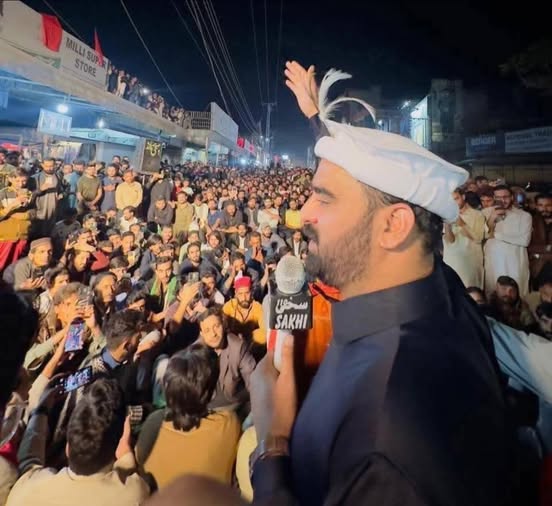
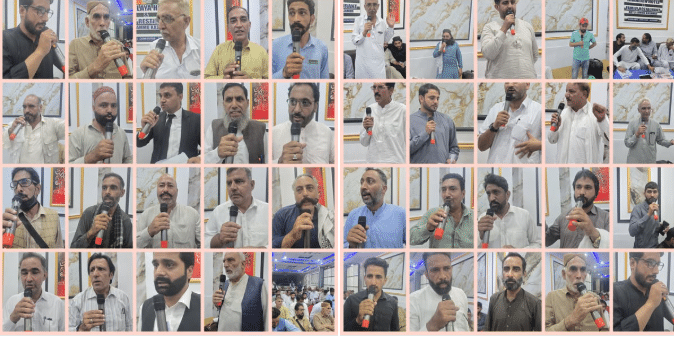
Special Report | The political landscape of Jammu and Kashmir continues to evolve under the weight of prolonged detentions, fractured leadership, and unresolved questions of sovereignty. In early January 2026, a zonal convention held in Kotli by the Jammu Kashmir Liberation Front (JKLF) brought these issues back into sharp focus, as the organization announced a renewed phase of political restructuring and resistance.
At the heart of the convention was a clear and uncompromising message: Jammu and Kashmir is not merely a “disputed territory” but the homeland of a living nation whose political will, the speakers argued, cannot be extinguished through incarceration or coercion.
The convention culminated in the election of Sardar Aman Khan as Zonal President of the JKLF faction aligned with the leadership tradition associated with Touqeer Gilani, marking what party leaders described as a critical step toward organizational revival.
No state backing. No paywalls. Just truth. Support Kashmir's independent voice. Join 2,400+ patrons who fund independent voices.
The Kotli convention was framed not as a celebratory gathering, but as a political statement shaped by decades of conflict and the continued imprisonment of pro-independence leaders. Central to the speeches and resolutions was the case of
Muhammad Yasin Malik,
the internationally known Kashmiri separatist leader and Chairman of the JKLF, who remains incarcerated in India.
Party representatives described Malik’s imprisonment, along with the detention of other political activists across Jammu, Kashmir, and Gilgit-Baltistan, as politically motivated and in violation of international human rights norms.
According to speakers at the convention, the continued detention of pro-freedom figures demonstrates a broader pattern: the use of state power to suppress political expression rather than address the root causes of the conflict.
In a departure from conventional binaries that frame Kashmir solely as a conflict between India and Pakistan, the JKLF’s statement criticized both states. The organization accused New Delhi and Islamabad alike of attempting to impose their respective political narratives on the region through force, legal constraints, and the marginalization of indigenous Kashmiri leadership.
This dual critique reflects a long-standing JKLF position—that the Kashmir issue is neither an internal matter of India nor a bilateral dispute to be negotiated exclusively between two nuclear-armed neighbors, but a question of the Kashmiri people’s right to self-determination.
Such framing places the organization at odds not only with Indian policy in Indian-administered Kashmir, but also with Pakistan’s governance model in Pakistan-administered territories.
Beyond rhetoric, the Kotli convention was notable for its emphasis on internal reorganization. JKLF leaders acknowledged years of pressure, restrictions on political activity, and internal fragmentation that have weakened the movement.
The election of zonal office-bearers, including Sardar Aman Khan, was presented as an effort to rebuild discipline, ideological clarity, and grassroots engagement—particularly in Azad Jammu and Kashmir and Gilgit-Baltistan.
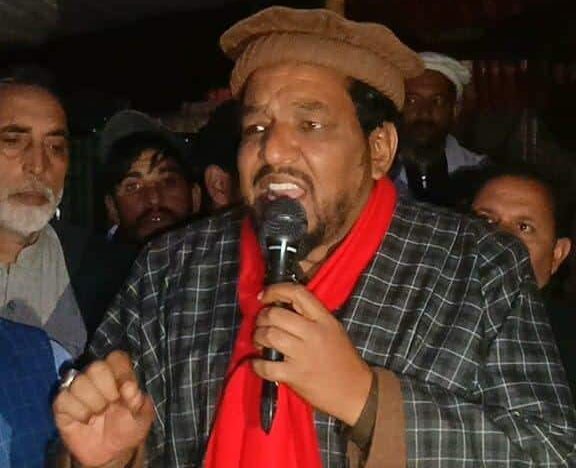
Addressing delegates, Aman Khan emphasized that the JKLF must evolve from a symbolic legacy movement into a structured, people-centric political organization capable of articulating a coherent political program.
“This struggle cannot survive on history alone,” he said, according to participants. “It must be rooted in the present realities and future aspirations of our people.”
The JKLF has long been characterized by internal divisions, reflecting broader debates within Kashmiri politics over strategy, leadership, and engagement with regional and international actors.
The Kotli convention represented the organizational line associated with
Touqeer Gilani,
whose faction advocates organizational revival while maintaining a firm ideological commitment to complete independence.
Observers note that while internal elections signal unity, the real test will be whether these factions can sustain coordination beyond symbolic conventions and translate internal cohesion into effective political mobilization.
In its concluding statement, the JKLF acknowledged the role of traders’ associations, transport unions, and journalists who, according to the organization, continued to amplify public grievances despite political pressure and economic risks.
Independent journalists in Kashmir operate in an increasingly constrained environment, where reporting on political dissent often invites scrutiny, restrictions, or worse. By explicitly recognizing their role, the JKLF sought to underline the importance of civil society as a pillar of political resistance.
For independent media outlets, the Kotli convention itself presented a challenge: how to report on deeply polarized political narratives without becoming instruments of state or non-state propaganda.
The political vision outlined at the convention rested on three core demands:
Right of Ownership – Control over land, natural resources, and economic assets by the people of Jammu and Kashmir.
Right to Governance – The authority of Kashmiris to determine their political future without external coercion.
A Classless Society – A social order rooted in economic justice rather than elite domination.
These demands echo broader anti-colonial and self-determination movements worldwide, situating the JKLF’s discourse within a global framework rather than a purely regional one.
Despite shifting geopolitical priorities, Kashmir remains a flashpoint where human rights, nationalism, and international diplomacy intersect. While global attention often fluctuates, political developments on the ground—such as leadership restructuring and continued detentions—suggest that the conflict is far from dormant.
The JKLF’s insistence that no peace process can be meaningful without the release of political prisoners challenges prevailing diplomatic approaches that prioritize stability over justice.
The Kotli zonal convention did not offer immediate solutions to one of the world’s longest-running political disputes. What it did offer was a renewed assertion of a political identity that refuses to be sidelined.
Whether the JKLF’s organizational revival will translate into tangible political influence remains uncertain. Yet the message from Kotli was unmistakable: the demand for self-determination in Jammu and Kashmir continues to evolve, adapt, and resist erasure.
As long as the fundamental question—who decides the future of Kashmir—remains unanswered, such gatherings will continue to shape the region’s political narrative.
Trending Topics


The Azadi Times is an independent digital news platform based in Muzaffarabad, Kashmir, dedicated to credible journalism, in-depth reporting, and global analysis. We cover Kashmir, South Asia, and international affairs with a commitment to truth, editorial integrity, and public accountability.
Get important news delivered directly to your inbox and stay connected!
© 2026 The Azadi Times. All Rights Reserved.