No state backing. No paywalls. Just truth. Support Kashmir's independent voice. Join 2,400+ patrons who fund independent voices.
Zero Paywalls
Reader Funded
Award Winning
Secure Payment
Encrypted
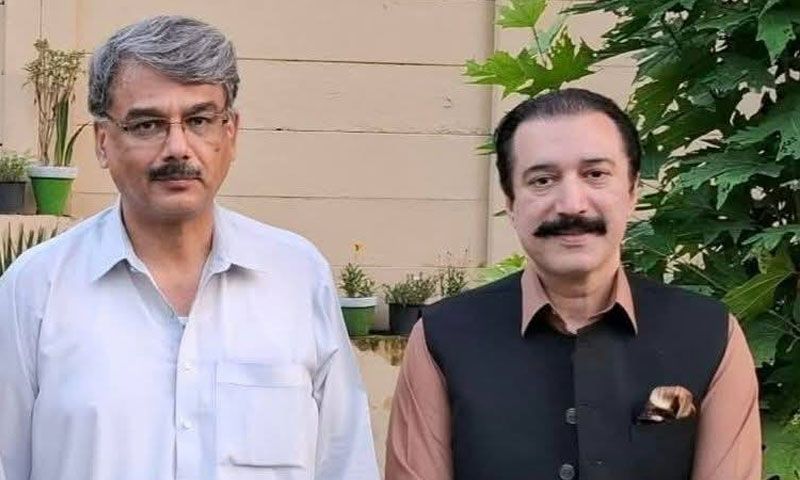
The Prime Minister of the Legislative Assembly of Pakistan-administered Jammu and Kashmir, Chaudhry Anwar-ul-Haq, faces a vote of no-confidence today. It has already been determined that the Pakistan Peoples Party’s nominee, Faisal Mumtaz Rathore, will be elected Prime Minister for the remaining few months of the term. This vote of no-confidence had been filed after nearly a month of preparation on Friday. In the 53-member assembly, if 27 members support the motion, the Prime Minister can be ousted, and the motion was submitted with the signatures of exactly 27 assembly members. Interestingly, the majority of the members who submitted the motion are part of the cabinet and currently hold ministerial positions. The nominated Prime Minister is still serving as the Minister of Local Government. All of these ministers submitted the motion without relinquishing their own ministries.
During this term of the assembly, Faisal Mumtaz Rathore is set to become the fourth Prime Minister, and the majority of assembly members who will vote for him had also voted for the previous three Prime Ministers within the same term. The spectacle raises questions about democracy, freedom, and the struggle for autonomy, arguably unparalleled in history.
In the 2021 general elections, the Pakistan Tehreek-e-Insaf (PTI) gained a majority. The Prime Minister was chosen in a lottery drawn in Bani Gala, appointing an individual who could hardly have anticipated such an outcome. Abdul Qayyum Niazi served for nine months before being removed through a vote of no-confidence by his own party. The premiership then passed to billionaire Tanveer Ilyas, who was declared disqualified within a year by the courts for contempt of court. The assembly members had to wait for several days to decide who would next wear the Prime Ministerial crown. Speculation remains whether the messenger struggled to deliver the message or if there was a technical obstruction in its transmission. Ultimately, at midnight, the message reached the assembly, and 48 of the 53 members elected a person who had not yet resigned from the post of Speaker.
No state backing. No paywalls. Just truth. Support Kashmir's independent voice. Join 2,400+ patrons who fund independent voices.
Immediately after Chaudhry Anwar-ul-Haq’s election as Prime Minister, the opposing political forces—PTI and the PDM coalition—celebrated and congratulated the new Prime Minister. This election made clear which political force he would represent. Chaudhry Anwar-ul-Haq, elected on the PTI ticket, announced that he would serve as Prime Minister of the PDM (PPP, PML-N, and PTI Forward Block). PTI’s influence was limited to a few members, alongside whom the opposition leader was elected. This assembly is once again repeating a pattern where the same members vote for both Prime Minister and opposition leader.
The Legislative Assembly of Pakistan-administered Jammu and Kashmir has been functioning since 1974 under the Pakistani government’s executive order, Act 1974, later referred to as the Interim Constitution. Just as the Pakistani government imposed this interim constitution, the formation and dismissal of governments remain at the discretion of the government in Islamabad. Over the last twenty years, this is the second instance where four Prime Ministers have been replaced within the same assembly term. Previously, the assembly from 2006 to 2011 saw four Prime Ministers from the same party. In contrast, during the current term, three Prime Ministers came from PTI, and the fourth will be from PPP.
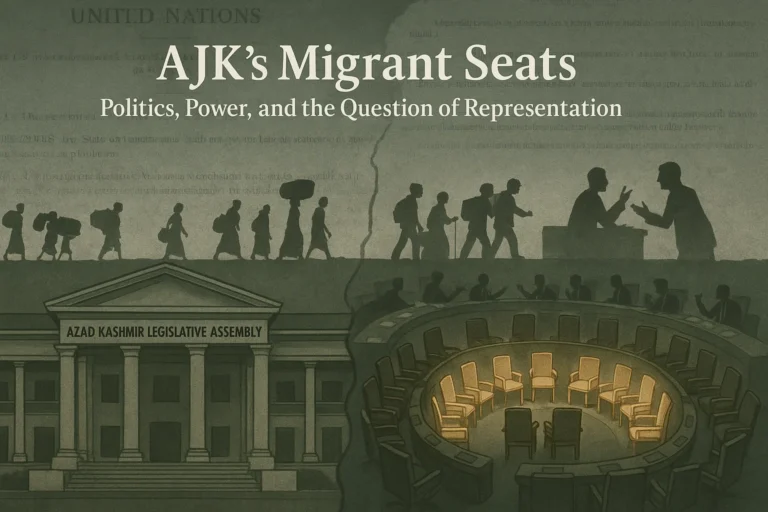
A significant portion of Chaudhry Anwar-ul-Haq’s cabinet comprised members from constituencies reserved for Jammu Kashmir migrants residing in Pakistan, along with members from PTI Forward Block, PPP, and PML-N. This cabinet, consisting of approximately 40 members, was repeatedly referred to by Chaudhry Anwar-ul-Haq as an MLE government.
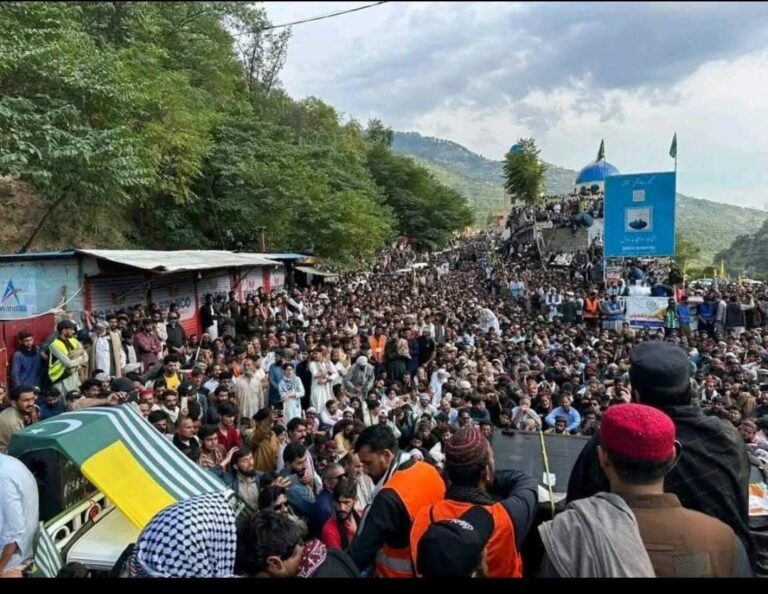
The first three changes in the Prime Ministership over the last four years were influenced by political changes in Pakistan, while the fourth change is being implemented due to conditions arising within Jammu and Kashmir itself. Following the election of Prime Minister Anwar-ul-Haq in April 2023, a public rights movement emerged after a sudden increase in wheat prices, eventually evolving into a state-level movement that continues to this day. During this period, government ministers privately blamed Pakistan’s powerful institutions for the movement while publicly attributing it to Indian intelligence. Pakistani authorities also presented the movement as a foreign conspiracy.
Meanwhile, members of PML-N, removed from power, continued to portray Prime Minister Anwar-ul-Haq as the leader of the public rights movement and the source of all problems. However, critical decisions for managing this movement, including negotiations and approvals of demands, were consistently taken by powerful authorities.
Now, blaming the failure of their own policies on the Prime Minister, authorities have ensured the selection of an even more loyal figure as the new Prime Minister. Faisal Mumtaz Rathore, appointed as Prime Minister, has spent the past two and a half years as head of the government committee negotiating with the leadership of the public rights movement and unofficially representing the government in national media. Authorities and the Pakistani government are now attempting to convince the people of Jammu and Kashmir that Chaudhry Anwar-ul-Haq failed to address issues and that Faisal Rathore will resolve them. Under a “Shehbaz Sharif model,” Rathore is expected to restore public confidence in the government during the remaining assembly term and potentially secure a full five-year term in the next elections.
Faisal Mumtaz Rathore resigned from his ministerial position hours before his election, but unlike local party leaders’ statements or the stance taken in the no-confidence motion, no specific accusations were made against Anwar-ul-Haq, indicating Rathore will largely continue the previous government’s policies.
Despite having nearly a month to secure numbers for the vote of no-confidence, negotiations over future arrangements with the centers of power delayed the process. During this period, compromises were made over the 27th constitutional amendment and allocations of regional and central power contracts.
Thus, under Pakistan’s established formulas for governance, decisions about who will rule Jammu and Kashmir have been taken without consulting local stakeholders. Ironically, Prime Minister Anwar-ul-Haq was not even free to decide on dissolving the assembly. Even knowing for a month that he was about to be removed, he could not take action due to lack of authorization. Despite this helplessness, he continued to play the role of a political puppet of the colonial-style system with apparent pride.
Demands for the right to governance and ownership of resources in the region are widely recognized. Through repeated changes in government and negotiations with the leadership of the public rights movement, authorities have attempted to divert public attention from pressing issues by presenting new faces. However, this time, face changes alone cannot mask the underlying colonial structure. Unless the colonial framework is altered, governance rights cannot be restored, nor can the region’s core issues be addressed. The time has come to transfer authority from the face-changers back to the rightful owners—the people.
Trending Topics


The Azadi Times is an independent digital news platform based in Muzaffarabad, Kashmir, dedicated to credible journalism, in-depth reporting, and global analysis. We cover Kashmir, South Asia, and international affairs with a commitment to truth, editorial integrity, and public accountability.
Get important news delivered directly to your inbox and stay connected!
© 2026 The Azadi Times. All Rights Reserved.