Wednesday, April 1, 2026
11.2 C
Srinagar
Home Blog Page 106

Solar-Powered Laptop: A Revolutionary Step Toward the Future of Mobile Workstations

MUZAFFARABAD: The future of mobile workstations has taken a significant leap forward, as a Chinese tech company unveiled a groundbreaking solar-powered laptop at the Mobile World Congress 2025. This innovative device eliminates the common concern of battery life, making it possible for users to work anywhere—from office spaces to remote beaches and mountain peaks.

The solar-powered laptop is designed to charge using solar energy, providing an impressive one hour of video playback after just 20 minutes of exposure to sunlight. With a slim profile of 15mm thickness and a lightweight body weighing just 1.22 kg, this laptop is highly portable. It features state-of-the-art solar panels integrated into its rear panel, allowing it to convert sunlight directly into energy.

This development addresses one of the most persistent challenges of mobile work—battery life—while opening the door to a new era of fully mobile work setups. The ability to work uninterrupted, even in areas without access to electricity, will greatly benefit individuals who prefer working in nature or those living in regions with unreliable power supply.

In addition to its practicality, this solar-powered laptop promises to revolutionize how professionals approach remote work, offering an eco-friendly solution that aligns with the growing demand for sustainable technologies.

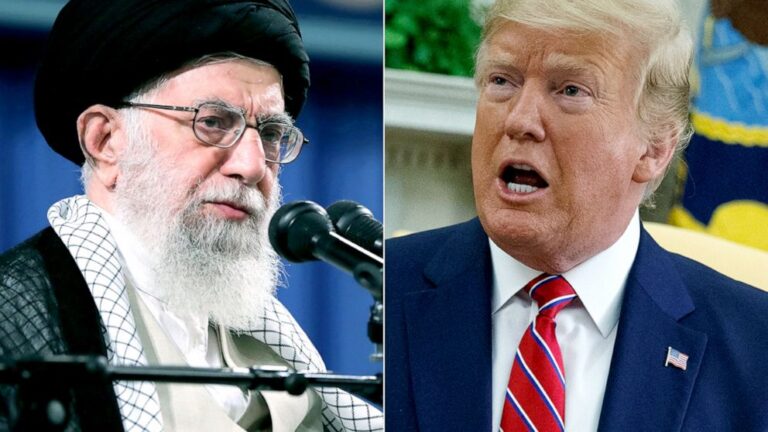
Trump Sends Letter to Iran’s Supreme Leader, Offers Talks on Nuclear Deal

Washington, Tehran (Monitoring Desk) – U.S. President Donald Trump has confirmed that he has sent a letter to Iran’s Supreme Leader Ayatollah Ali Khamenei, offering to engage in negotiations over the nuclear deal.

In an interview with U.S. media, President Trump stated that he wants to initiate talks with Iran regarding the nuclear agreement and has already sent a letter to the Iranian leadership to discuss the matter.

When asked if the letter was specifically addressed to Ayatollah Khamenei, Trump confirmed, saying, “Yes.” He went on to explain that there are two ways to engage with Iran: through war or through diplomacy. “I prefer the second option — diplomacy — because I don’t want to harm Iran. They are a great people,” Trump said.

The U.S. President further added, “I told them (Iran) that they should negotiate, because it would be better for Iran.”

However, Iranian officials have stated that they have not yet received the letter, and in the current climate, direct talks with the U.S. are not possible.

Iran’s Foreign Minister, Abbas Araghchi, remarked that as long as the U.S. maintains its “maximum pressure” policy, there is no possibility of direct negotiations between the two countries on the nuclear issue.

The Lahore Treaty and Jammu & Kashmir: A Lost History

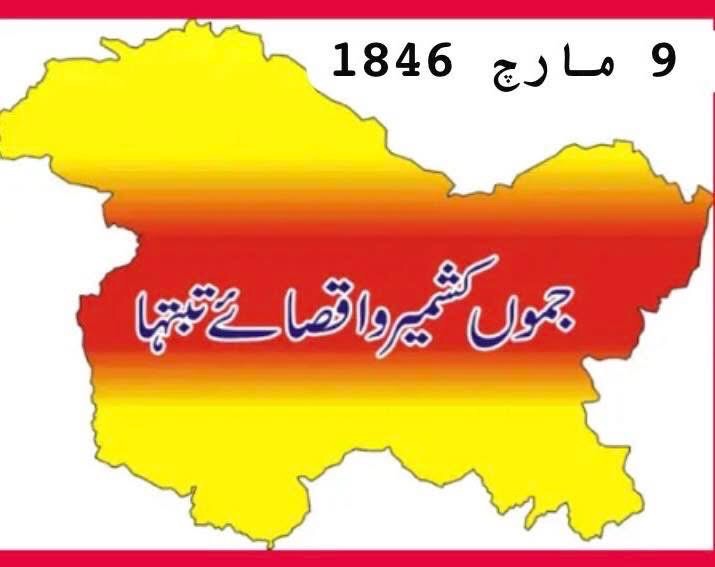
By: Sameena Raja, Jammu & Kashmir: For those unfamiliar with history or perhaps those who deliberately overlook it who call the Treaty of Amritsar a “deal for human trafficking,” what do they have to say about the Lahore Treaty of March 9, 1846? The Lahore Treaty, a significant turning point in the history of Kashmir, may not hold the same weight for them, but it was a pivotal agreement that shaped the future of the region.

To understand the context of the Lahore Treaty, it’s crucial to delve deeper into the complexities of history. After the Sikh forces took control of Kashmir in 1819, the administration of the region was under the rule of the Sikhs. This was during a time when the Sikh Empire, under Maharaja Ranjit Singh, had established considerable influence over large parts of northern India, including the lush and strategic region of Kashmir.

With the death of Maharaja Ranjit Singh in 1839, the Sikh Empire began to unravel, paving the way for instability within the state. In 1846, after the second Anglo-Sikh war, the British sought to resolve the Kashmir issue to their advantage, which led to the signing of the Lahore Treaty on March 9, 1846.

The Truth About the Lahore Treaty

On March 9, 1846, as a consequence of the Treaty of Lahore, the Sikhs handed over Kashmir to the British as part of the war indemnity. The British, who were keen to consolidate their political influence, aimed to not just gain control over Kashmir but also exploit its natural resources, strategic importance, and military value. The primary figure in this historical event was Maharaja Gulab Singh, the ruler of Jammu, who had already declared his independent sovereignty after the death of Ranjit Singh in 1842.

Maharaja Gulab Singh offered the British a proposition: he was ready to pay the war indemnity, provided the British relinquished Kashmir and handed it over to Jammu. The British, after brief negotiations, accepted his proposal, and the terms of this agreement were formalized in the Treaty of Amritsar on March 16, 1846. Gulab Singh, as the new ruler of Jammu and Kashmir, signed the treaty, while the British East India Company’s Governor-General also affixed his signature.

The Consequences of the Lahore Treaty

The Lahore Treaty changed the political and geographical landscape of Kashmir permanently. When Maharaja Gulab Singh signed the treaty, it marked the beginning of a new and unnatural form of governance in the region. The Kashmiris were handed over to a ruler who had no genuine interest in their rights or sovereignty, but whose primary aim was to solidify his own power and that of the British.

Under Gulab Singh’s rule, Kashmir was treated as personal property, and despite its natural wealth and strategic significance, the welfare of the people was not a priority. This laid the foundation for a political system where the welfare of the masses was ignored, and the region was governed according to the interests of the ruling elites and their foreign benefactors.

Kashmir’s People and Their Fate

It is important to recognize that the Lahore Treaty handed Kashmir’s fate to a ruler who was more concerned with consolidating his own authority than with the well-being of its people. During Gulab Singh’s reign, the collective interests of the people of Kashmir were never taken into consideration. The agreement did not just seal the region’s political fate, but it set the stage for decades of misrule, leaving the local population with little to no voice in the governance of their land.

When we look at the Lahore Treaty today, it is vital to understand that it wasn’t just a political agreement it was a critical moment in history that reshaped the destiny of Kashmir. This treaty, like many others of its time, was driven by the ambitions of imperial powers, and its impact was felt not only by the local rulers but by the entire population who were stripped of their rights and autonomy.

The Historical Significance of the Lahore Treaty

Today, when we reflect on the Lahore Treaty, we must acknowledge that it was more than just a formal agreement it was a reflection of how powerful nations manipulated local politics and reshaped entire regions for their own benefit. Kashmir’s people, their culture, and their future were reduced to mere bargaining chips in a game of imperial expansion.

The treaty is a stark reminder of how external powers have historically made decisions about Kashmir without considering the aspirations or rights of its people. For those who try to overlook or downplay its significance, understanding the full scope of the Lahore Treaty’s implications is essential for understanding the current situation in Kashmir.

Will we consider the Lahore Treaty as just another political agreement, or will we view it as a grave historical mistake that charted a course for the suffering of Kashmir’s people? This turning point in history must not be forgotten, for it teaches us the perils of ignoring the aspirations of local populations and the long-term consequences of external political maneuvering.

Sameena Raja
Jammu & Kashmir

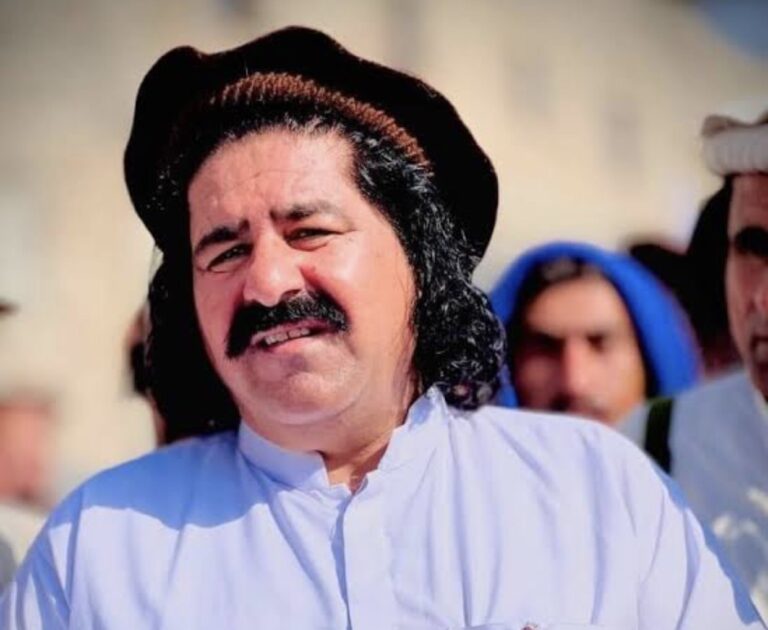
Pakistani Lawmaker Ali Wazir Re-Arrested Under New Terrorism Charges, Release

Ali Wazir, a former Member of Pakistan’s National Assembly and prominent leader of the Pashtun Tahafuz Movement (PTM), faces renewed detention after anti-terrorism authorities in Nowshera Feroze invoked a new case against him, blocking his release despite securing bail in multiple prior cases. The move has sparked accusations of systemic judicial harassment and state persecution of dissenting voices.

Key Developments

  • Re-Arrest Under New Case: On Thursday, hours after Wazir’s lawyers submitted bail documents for his release from Sukkur Jail, authorities revealed he had been arrested in a fresh anti-terrorism case registered in Nowshera Feroze, Punjab. This marks the latest in a series of detentions since August 2024, during which Wazir has faced over a dozen cases across Pakistan’s four provinces and Islamabad.
  • Health Crisis: Wazir, a diabetes patient with deteriorating kidney function, has been detained for eight months despite severe health risks. His lawyer, Sher Afzal Marwat, condemned the state’s treatment, stating, “Ali Wazir is being subjected to relentless state brutality. His life is in danger.”

Legal Persecution Pattern

Wazir, a vocal advocate for Pashtun rights, has been repeatedly jailed under Pakistan’s controversial Maintenance of Public Order (MPO) law, a colonial-era statute criticized for enabling arbitrary detention. Most recently, he was held at Gadani Jail in Balochistan under the MPO, while a separate terrorism case was filed against him in Sukkur in December 2024.

Despite securing bail in multiple cases—including the final First Information Report (FIR) in Sukkur’s anti-terrorism court on Wednesday—procedural delays and new charges have kept him behind bars. “Every time we secure bail, the state slaps him with another case,” Marwat said, announcing plans to challenge the “illegal detention” in the Supreme Court.

Broader Political Context

Wazir, elected as an MNA from South Waziristan, has long been targeted for PTM’s activism against enforced disappearances and military operations in Pakistan’s tribal regions. His previous 24-month imprisonment, while serving as a lawmaker, drew international condemnation from groups like Amnesty International.

Human rights organizations allege Pakistan’s establishment uses anti-terrorism laws and the MPO to silence dissent. “This is not about law—it’s about crushing dissent,” said a Karachi-based rights defender. “Wazir’s case exposes how the state weaponizes the judiciary against critics.”

Reactions and Next Steps

  • Marwat accused authorities of “judicial tyranny,” citing Wazir’s health crisis and the lack of medical care in custody.
  • PTM supporters protested outside Sukkur Jail, demanding his immediate release.
  • International watchdogs urge Pakistan to halt the “revolving door” arrests of political activists.

Global Implications

Wazir’s ordeal highlights shrinking civic space in Pakistan, where dissenters face escalating legal warfare. With general elections approaching, activists warn of intensified crackdowns on opposition figures.

Suspension of Health Endowment Fund Threatens Hundreds of Lives in Gilgit-Baltistan


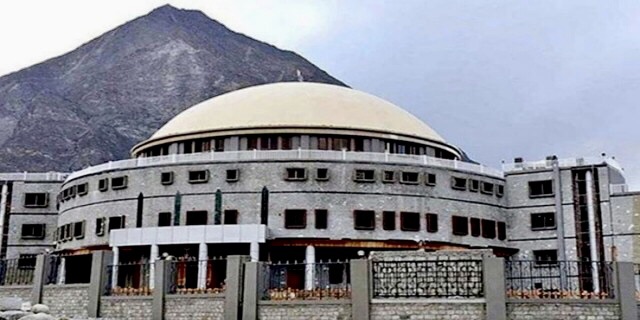
Gilgit (Shakeel Ahmed): In a disturbing development in Gilgit Baltistan, also known as Pakistan-administered Kashmir, the suspension of crucial funding has placed the lives of hundreds of vulnerable patients in jeopardy.

The provincial government, despite allocating an impressive 86 billion rupees in its non-developmental budget, has failed to release a modest 25 crore rupees for the Health Endowment Fund. This shortfall has left over 500 patients with life-threatening conditions facing an uncertain future.

The Health Endowment Fund, which plays a vital role in providing financial assistance for the treatment of life-threatening diseases, has been suspended since mid-February 2025. As a result, 442 patients who were already receiving ongoing treatment, along with 50 new patients, now find themselves unable to afford the necessary medical care to survive.

The Health Department of Gilgit-Baltistan is grappling with an alarming situation. While the provincial government can allocate almost 10 billion rupees for non-developmental expenses, it appears unable to allocate a mere 65 crore rupees annually for the treatment of critical patients suffering from conditions such as cancer, liver and kidney failure, and heart diseases.

According to sources, the lack of funding for the Health Endowment Fund has directly impacted the treatment of over 500 patients, including six waiting for liver transplants, 40 awaiting kidney transplants, 383 suffering from cancer, and 40 individuals battling severe heart conditions. Without the necessary funding, these patients are at risk of losing their lives due to the absence of medical intervention.

Over the past four years, the Health Endowment Fund has saved the lives of over 1,286 patients, with total expenditures surpassing 86 crore rupees. This fund has enabled life-saving procedures like liver transplants (costing up to 6 million rupees per patient), kidney transplants (5 million rupees per patient), bone marrow transplants (3.5 million rupees per patient), cancer treatment (over 2 million rupees per patient), and heart disease treatment (1 million rupees or more per patient).

However, the recent halt in funding has left patients and their families devastated, with many expressing deep frustration and hopelessness. These patients, who once had the faint hope of receiving life-saving treatment, now face a grim reality due to the government’s inability to allocate the necessary funds for essential medical services.

The suspension of the Health Endowment Fund highlights a glaring disparity in priorities. Despite the region’s financial resources being directed towards non-essential areas, the lives of countless patients are being put at risk due to the lack of adequate healthcare funding.

Gilgit-Baltistan, a region rich in natural beauty and strategic significance, deserves more attention from the international community. This crisis serves as a stark reminder of the urgent need for better healthcare infrastructure and the prioritization of health over political and economic interests.

The residents of Gilgit-Baltistan are calling for urgent intervention and the immediate release of the necessary funds to save lives and ensure the health and safety of the most vulnerable members of society. Without swift action, hundreds of patients may face irreversible consequences. The international community and human rights organizations are urged to take note of the plight of the people in this region and offer their support in ensuring that the basic right to life and healthcare is upheld.

End of Report

This tragic situation serves as a crucial reminder of the importance of international solidarity and support for the people of Gilgit-Baltistan, who continue to face immense challenges in the absence of adequate healthcare provision.

Two Arrested in Azad Kashmir for Blackmailing Women via Fake Gaming App in Cybercrime Scheme


Muzaffarabad, Azad Kashmir: Police in Pakistan-administered Azad Kashmir have arrested two suspects from Punjab province accused of blackmailing women through a fraudulent gaming app, exposing gaps in regional cybercrime laws and raising alarms over rising digital exploitation in conflict-affected areas.

Key Details of the Case:

The suspects, identified as residents of Lahore and Rawalpindi, allegedly lured women on a gaming app offering live streaming and rewards. Victims were promised “queen” status and convertible in-game dollars, only to be trapped into sharing personal details like phone numbers and WhatsApp accounts. Investigators said the perpetrators hacked these accounts, stole sensitive data, and blackmailed victims including two women from Muzaffarabad who later attempted suicide.

“This syndicate preys on vulnerable women, manipulates them emotionally, and weaponizes their private information,” said Muhammad Ashiq, the investigating officer at Muzaffarabad’s Saddar Police Station.

Legal Challenges and Police Action:

Azad Kashmir lacks a dedicated cybercrime law, forcing authorities to rely on sections of the Social Media Act (Sections 489-F, 489-S, 419, and 420) and Pakistan Penal Code (Section 171 for impersonation). Despite victims initially reporting the crimes to the Federal Investigation Agency (FIA) four months ago, their complaints were dismissed until local police intervened.

Using technical surveillance and mobile call data records (CDRs), officers tracked the suspects to Rawalpindi and arrested them within three days. However, critical evidence was erased remotely from their devices via Gmail accounts, complicating efforts to identify other victims. The phones have now been sent for forensic analysis.

Broader Syndicate Concerns:

SHO Wajahat Kazmi confirmed the arrested men are part of a larger interstate gang targeting women across Pakistan. “These criminals are tech-savvy and ruthless. They pose as officials to gain trust before striking,” he warned, urging the public to avoid unverified apps and links.

Victims’ Plight and Systemic Failures:

The two Muzaffarabad victims, whose identities remain protected, faced relentless harassment after their WhatsApp accounts were hijacked. “The trauma drove them to the brink of suicide,” Ashiq revealed, criticizing the FIA’s initial inaction.

Regional Context:

Azad Kashmir’s outdated legal framework leaves it vulnerable to cybercriminals exploiting its porous digital infrastructure. With no local cybercrime law, activists demand urgent reforms to protect women in a region already strained by geopolitical tensions.

The case underscores the dual threats faced by women in conflict zones: patriarchal exploitation and digital predation. As investigations continue, authorities fear more victims may emerge.

Students in Pakistan-Administered Kashmir Forced to Study on Ice Amid Government Neglect


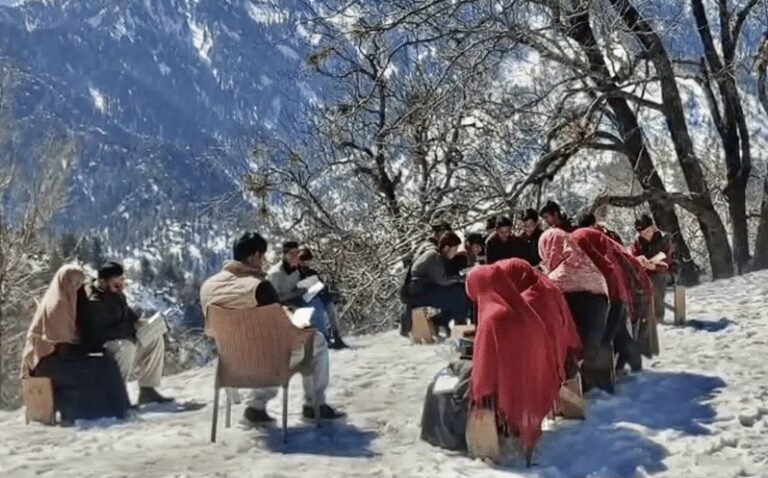
Leepa Valley, Pakistan-Administered Kashmir: In the remote village of Ghai Pura, nestled in the mountainous Leepa Valley near the Line of Control (LoC), students at the area’s sole high school are braving sub-zero temperatures and crumbling infrastructure to pursue an education. With no furniture, leaking roofs, and cracked walls, children as young as six sit on ice-covered floors during winter months, their classrooms reduced to precarious shelters in a region long neglected by authorities.

A School Forgotten

Established in 1935 as a primary school and upgraded to a high school in 1990, the Ghai Pura institution once prided itself on strong academic results. But after a devastating earthquake destroyed much of the structure, the government has yet to initiate repairs. Today, the building stands as a symbol of systemic neglect: walls riddled with cracks, ceilings leaking during rain and snow, and no desks or chairs for its 450 students 200 girls and 250 boys.

“We have no choice but to sit on the ice. Our hands go numb, but we keep studying,” said a female student, her breath visible in the freezing air. “We beg the government to rebuild our school and give us basic facilities.”

Proximity to Peril

The school’s location, just 100 meters from Indian military posts, adds another layer of danger. Parents and teachers describe constant anxiety over cross-border tensions, compounded by the lack of secure infrastructure. “Our children study under the shadow of enemy guns,” said a local elder. “Yet their greatest battle is against the cold and neglect.”

Community Outcry and Empty Promises

Villagers accuse the government of abandoning their children’s future. While an NGO has pledged to construct temporary shelters, residents demand permanent solutions. “A patchwork shelter won’t fix years of indifference,” said a community leader. “This isn’t just about one school it’s about the collapse of our entire education system.”

The school’s plight underscores broader struggles in Pakistan-administered Kashmir, where underfunded infrastructure and geopolitical tensions disproportionately impact border communities. Despite the region’s strategic sensitivity, schools like Ghai Pura’s lack electricity, heating, and even basic safety measures.

Call to Action

Students and activists are urging immediate government intervention:

  • Reconstruction of the earthquake-damaged building.
  • Provision of furniture, heating, and separate facilities for girls.
  • Upgrades to ensure safety amid harsh winters and security risks.

“How can we talk about progress when our children shiver in ruins?” asked a teacher. “The world must see their resilience and our leaders’ failures.”

Broader Implications

The Ghai Pura school highlights systemic issues in marginalized regions of Kashmir, where communities face dual burdens of geopolitical strife and administrative apathy. With literacy rates in the valley lagging behind national averages, advocates warn that neglecting education risks perpetuating cycles of poverty and instability.

The Azadi Times, a Kashmir based news agency, continues to spotlight stories of resilience and injustice in the region.

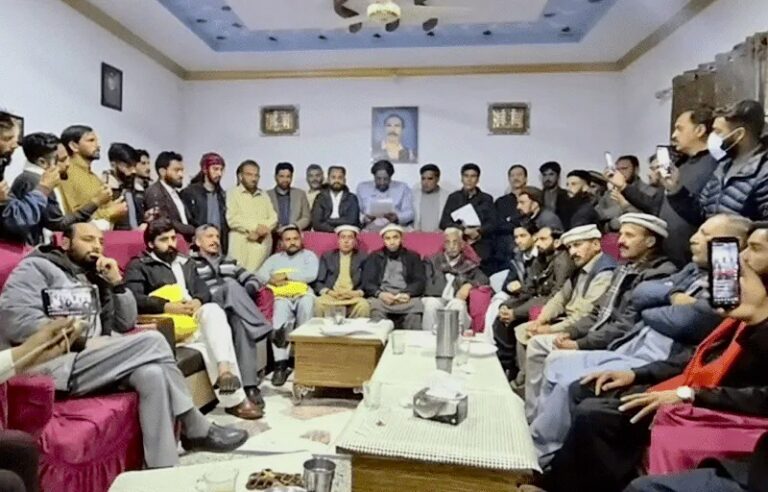
March 8th Meeting: What Does JK Joint Awami Action Committee Want Now?

Muzaffarabad, Azad Kashmir: Jammu Kashmir Joint Awami Action Committee (JKJAAC), a prominent civil society coalition in Pakistan-administered Azad Kashmir, has issued a sweeping declaration demanding immediate reforms across governance, public safety, and infrastructure. The group warned of “full-scale resistance” if its demands are ignored, escalating tensions in the politically sensitive region.

Key Demands and Criticisms:

  1. Governance Overhaul:
  • JPAC refuses to engage with assembly members not directly elected from Azad Kashmir, calling the current legislative body “interim” and illegitimate.
  • It rejected a motion to increase privileges for lawmakers, arguing that lavish benefits for an “interim assembly” violate public trust.
  1. Public Safety and Policing:
  • The committee accused police and administration of becoming “tools of elite oppression,” citing recent harassment cases against women in Mirpur, a Baloch woman, and student violence in Muzaffarabad.
  • It demanded an end to the “black law” Maintenance of Public Order (MPO) ordinance, condemning the arrest of activist Mujtaba Banday under the colonial-era statute.
  1. Food Security and Corruption:
  • JPAC criticized the government for deploying “inadequate mobile labs” to test food quality instead of establishing permanent facilities. It urged authorities to first test flour supplies and “expose big mafias” behind adulterated goods.
  1. Electricity and Infrastructure:
  • The coalition demanded an end to discriminatory load-shedding, repairs to dilapidated power lines, and crackdowns on electricity theft.
  • It called for restoring the 2017 policy for National Testing Service (NTS) candidates, alleging recent changes disadvantage local aspirants.
  1. Digital Demands:
  • JKAAC warned the Pakistan Telecommunication Authority (PTA) to improve internet services and roll out 5G in Azad Kashmir, threatening “direct action” if ignored.

Broader Political Standoffs:

  • The group backed a High Court ruling to implement the Local Government Act, vowing to resist any “unconstitutional” amendments.
  • It rejected the Tourism Act 2021 and demanded a ban on “green tourism” projects, which activists claim threaten local ecosystems.

Ultimatum and Mobilization:

JKJAAC set a May 10 deadline for its ward-level committees to organize protests, signaling preparations for a prolonged campaign. “If the government continues its oppressive policies, we will respond decisively,” the declaration stated.

Context and Implications:

Azad Kashmir, a disputed region between Pakistan and India, has seen rising civil society activism amid allegations of administrative neglect and centralized control from Islamabad. The JKJAAC’s demands reflect broader frustrations over governance, economic inequality, and infrastructure gaps.

The region’s government has yet to respond to the ultimatum. Observers warn that unmet demands could trigger widespread unrest, particularly as the committee gains traction among students, traders, and grassroots organizations.

Police Officer Killed in Targeted Shooting by Wanted Criminal in Rawalakot, Pakistan

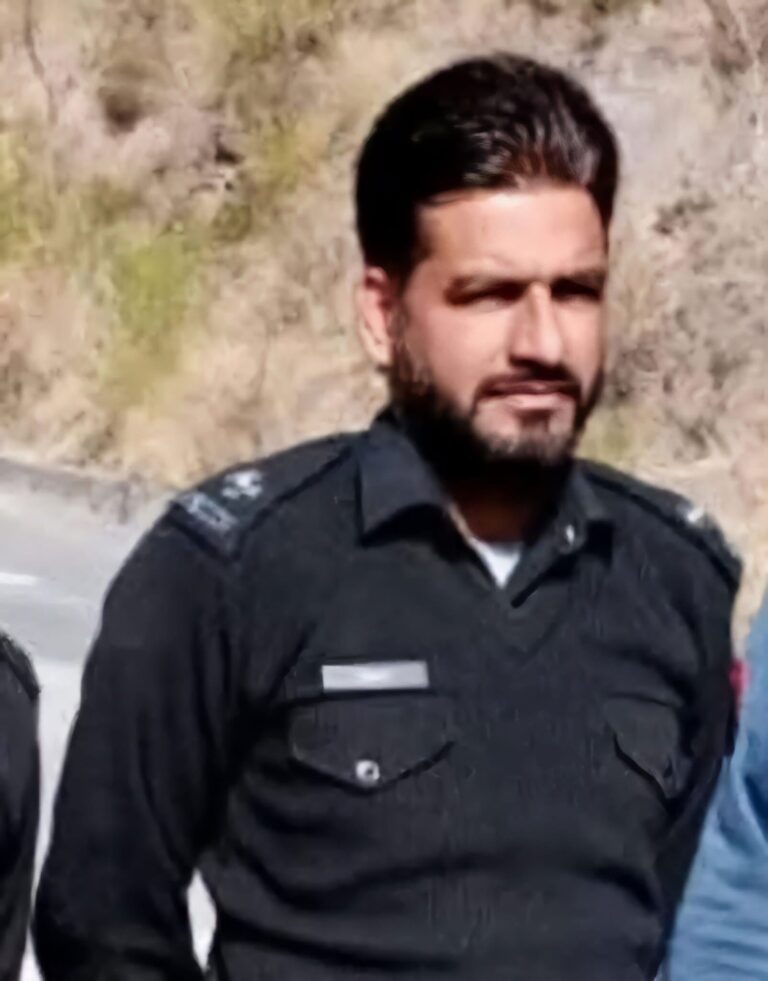
Rawalakot, Azad Jammu Kashmir: A police officer was shot and killed by a wanted criminal in the remote village of Tain Dhalkot, located 25 kilometers from Rawalakot. The incident occurred near a police checkpoint, sending shockwaves through the region and highlighting the ongoing challenges of law enforcement in rural Azad Kashmir (Pakistan administered Kashmir).

Key Details of the Incident:

The victim, Assistant Sub-Inspector (ASI) Abdul Rauf, was responding to a complaint filed by a local resident, Waqas Riaz, who alleged that he was being threatened by the accused, Imran, son of Gulzaman, and his accomplices. Riaz claimed he had installed petrol and diesel nozzles on Imran’s land two months ago but was now being prevented from removing them.

When ASI Rauf arrived at the scene with a police team to mediate the dispute, Imran allegedly opened fire, critically injuring the officer. Despite being rushed to the Combined Military Hospital (CMH) in Rawalakot, Rauf succumbed to his injuries due to excessive blood loss.

Background of the Accused:

Imran, a resident of Tain Dhalkot, is reportedly a notorious criminal with multiple cases registered against him. He was accompanied by his accomplices, Kamran, Qamar-ul-Zaman (also sons of Gulzaman), and Shehzad, son of Azmat, during the attack. Local police sources indicate that the group has been terrorizing the area for some time, with prior warrants issued for their arrests.

Police Response:

Following the shooting, police launched a manhunt and set up checkpoints across the region. However, as of late evening, no arrests had been made. Authorities have vowed to intensify efforts to bring the perpetrators to justice.

Community Reaction:

The killing of ASI Rauf has sparked outrage among locals, who have long complained about the lack of security in rural areas. Many residents accuse the police of being under-resourced and unable to effectively combat criminal elements.

Broader Implications:

This incident underscores the persistent challenges faced by law enforcement in Azad Kashmir’s remote regions, where criminals often operate with impunity. It also raises questions about the adequacy of measures to protect police officers, who frequently confront armed suspects without sufficient backup or equipment.

Next Steps:

  • A post-mortem examination of ASI Rauf’s body has been completed, and his remains have been handed over to his family for burial.
  • Police have pledged to continue their search for Imran and his accomplices, urging the public to cooperate with authorities.

This is a developing story. Stay tuned for updates.

Pakistani Model Nadia Hussain’s Husband Arrested in $2.3 Million Embezzlement Scandal

Islamabad, Pakistan – Atif Muhammad Khan, the husband of renowned Pakistani model and actress Nadia Hussain, has been arrested by the Federal Investigation Agency (FIA) on charges of embezzling 540 million Pakistani rupees (PKR) approximately $2.3 million USD – during his tenure as CEO of Bank Al-Falah Securities. The arrest follows a months-long investigation into corporate financial fraud linked to his role at the financial institution.

Key Details of the Case:

The FIA’s Corporate Crime Circle took Khan into custody after the Bank Al-Falah Securities Board of Directors filed a formal complaint. Investigators allege Khan orchestrated a complex scheme involving:

  1. Misuse of Company Funds: Diverting 80 million PKR ($342,000 USD) from corporate accounts for personal trading activities.
  2. Illegal Third-Party Transactions: Acquiring 654 million PKR ($2.8 million USD) through fraudulent deals with third parties. These funds were allegedly funneled back to Khan’s accounts using company money at inflated markups.

Authorities claim Khan was aided by former Bank Al-Falah CFO Faisal Sheikh and associate Imtiaz Ahmed, who reportedly facilitated the transactions. The FIA stated the total embezzlement exceeds 540 million PKR, with further forensic audits underway to trace additional discrepancies.

High-Profile Fallout:

The case has drawn intense media scrutiny due to Khan’s marriage to Nadia Hussain, a household name in Pakistan’s fashion and entertainment industries. Hussain, a former L’Oréal Paris ambassador and star of popular TV dramas, has not publicly commented on her husband’s arrest.

Broader Implications:

This scandal highlights Pakistan’s ongoing struggles with corporate governance and financial fraud. In recent years, the FIA has ramped up efforts to combat white-collar crime, particularly in the banking sector. Legal experts suggest Khan could face up to 10 years in prison if convicted under Pakistan’s Anti-Money Laundering Act.

Reactions and Next Steps:

  • The Bank Al-Falah Board emphasized its “zero-tolerance policy toward financial malpractice” in a press statement.
  • The FIA confirmed the investigation is ongoing, with potential charges against Sheikh and Ahmed pending.
  • Social media in Pakistan remains divided, with some users expressing sympathy for Hussain’s family while others demand stricter accountability for corporate leaders.

International Context:
The case underscores vulnerabilities in emerging-market financial systems, where lax oversight often enables elite fraud. Pakistan ranks 144th out of 180 countries in Transparency International’s 2023 Corruption Perceptions Index.