Tuesday, March 31, 2026
11.4 C
Srinagar
Home Blog Page 121

Why Additional Funds for Wheat in AJK Budget? Senior Journalist Raises Questions

0

Every year, the government of Azad Jammu and Kashmir (AJK) purchases 300,000 tons of wheat, which costs approximately Rs. 32.25 billion. However, in the new budget, Rs. 41 billion has been allocated for wheat, raising concerns from senior journalist Zulfiqar Ali.

Sharing his investigative report, Zulfiqar Ali has raised some critical questions. He asks, if Rs. 32.25 billion was sufficient in previous years, why has the budget been increased to Rs. 41 billion? This reflects an increase of Rs. 8.75 billion. The key question now is: where will this additional amount be spent? Will wheat prices increase, or is there some other project for which these funds are reserved? The public is already struggling with inflation, and if wheat becomes more expensive, it will further burden them. The journalist urges the government to clarify the purpose of these extra funds.

The wheat procurement process in AJK works as follows: the government purchases wheat from PASCO, the organization responsible for selling both locally produced and imported wheat. International market fluctuations also impact wheat prices. Additionally, wheat procurement costs include not only the price of wheat but also transportation costs, interest on loans PASCO takes from banks, and milling expenses.

It is important to note that in the 2024-25 budget documents submitted by the AJK government to the Government of Pakistan, Rs. 41 billion has been mentioned for wheat, which is a significant increase compared to previous years.

Prince Harry and Meghan Markle’s Divorce Rumors Resurface Amid Secret Agreement Claims

0

London: For quite some time, rumors regarding the divorce of Prince Harry and Meghan Markle have been making rounds. Despite the couple repeatedly denying these speculations, the discussions continue to persist.

A new report has now claimed that there is a secret agreement between Meghan Markle and Prince Harry concerning their potential divorce. According to the report, Meghan has outlined several conditions in this confidential agreement if the couple ever separates.

As per the alleged agreement, if Prince Harry decides to part ways with Meghan, he would be required to meet several of her demands. Speaking to Radar Online, sources from the British royal palace revealed that Meghan Markle has made it clear to Prince Harry that in case of a separation—whether now or in the future—her royal title will remain intact, and she will receive substantial financial compensation.

The report further states that in the event of a divorce, the couple’s home in Montecito, California, would become Meghan Markle’s sole property.

According to the report, Meghan Markle has asserted, “I will not leave until I have secured my royal title, property, and a significant financial settlement.”

Speculations regarding their possible divorce emerged last year as well. At that time, during a public event, Prince Harry dismissed all such rumors.

He sarcastically remarked, “If we go by these reports, we have already divorced multiple times. But as you can see, we are still together.”

Interestingly, on February 8, 2025, Prince Harry and Meghan Markle indirectly dismissed the ongoing divorce rumors once again.

Foundation Laid for Maqbool Bhat Shaheed Chowk in Rawalakot: Tributes and Resolve for Kashmir’s Freedom Continue

0

The foundation stone for Maqbool Bhat Shaheed Chowk in Rawalakot has been laid, and ceremonies continued on the second day.


The design for Maqbool Bhat Shaheed Chowk in Rawalakot has been finalized, and its foundation stone was laid in a dignified ceremony yesterday. The event, organized by the Watan Dost Ittehad, also included a gathering to mark the martyrdom anniversary of Kashmiri leader Maqbool Bhat. During the ceremony, leaders announced the commencement of the chowk’s construction.

According to details, thousands of people attended the event in Rawalakot, where they paid tribute to Maqbool Bhat’s struggle and sacrifices. Speakers highlighted his vision and efforts, reiterating their commitment to continue the struggle for the complete freedom of Jammu and Kashmir and the establishment of a prosperous society.

The construction of Maqbool Bhat Shaheed Chowk aims to preserve his memory and educate future generations about his sacrifices. The chowk will serve as a prominent landmark in Rawalakot, symbolizing the ongoing struggle for freedom.

On this occasion, protest rallies and gatherings were held in various cities across Kashmir, including Muzaffarabad, Kotli, Hajira, Bagh, Mirpur, Pallandri, Tararkhal, Qilaan, Bhimber, Dadyal, Chakswari, Thorar, Dheer Kot, Nakyal, Khai Gala, Forward Kahuta, and Khurshidabad. Thousands of men, women, youth, and children participated in these events.

In the UK, the Watan Dost Ittehad, along with other pro-freedom and progressive organizations, organized a protest demonstration outside the Indian High Commission in London. Hundreds of Kashmiri expatriates participated, paying tribute to Maqbool Bhat. Meanwhile, in the Neelum Valley, the second day of ceremonies commemorating Maqbool Bhat’s martyrdom continued. A central event was held at the district headquarters in Athmuqam, attended by Gilgit-Baltistan Legislative Assembly member Nawaz Khan Naji, alongside hundreds of pro-freedom leaders from Azad Kashmir and Pakistan.

The ceremonies reiterated the resolve of the Kashmiri people to continue their struggle for freedom and rights, honoring Maqbool Bhat’s sacrifices and reaffirming their commitment to achieving his mission.

Engineer Rashid Raises Civilian Killings in First Speech in Indian Parliament

0

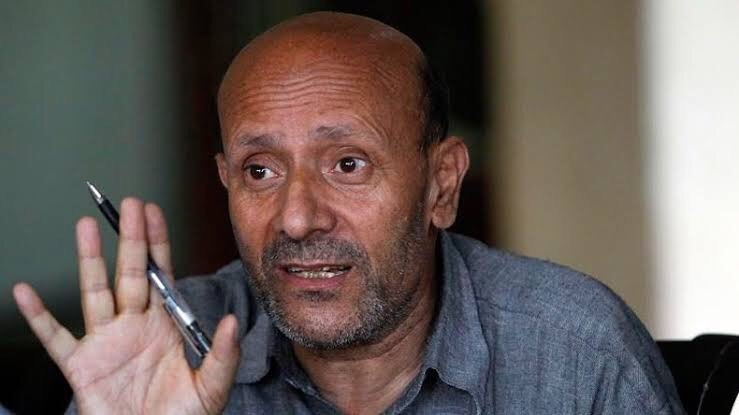
Srinagar: During his maiden speech in the ongoing budget session, Engineer Rashid, the Member of Parliament from Baramulla Lok Sabha seat, raised the issue of the recent killings of civilians in Kathua and Baramulla districts of Jammu Kashmir. He stated that Kashmiri blood is not cheap and demanded an impartial investigation into the deaths. Engineer Rashid was granted a two-day custodial parole by the Delhi High Court on Monday to attend the parliamentary session.

While addressing the Indian parliament, Rashid called for a fair probe into the killing of Waseem Ahmad Mir, who was shot dead by the army during a checkpoint inspection in Baramulla, and the alleged suicide of Makhan Din in Kathua due to police brutality. He urged the house to take these deaths seriously, asserting, “Our blood is not cheap; we have the right to live.”

He also questioned the role of security forces, stating, “Do our forces need Waseem Mir’s blood every day?” He pressed the government to conduct a thorough investigation into both cases.

Additionally, Rashid highlighted the challenges faced by the residents of remote areas in North Kashmir, including Karnah, Keran, and Machil. “These people survive for six months solely by the grace of God,” he said, urging the government to construct a tunnel to improve connectivity to these regions.

The Delhi High Court had granted him parole with certain restrictions, including a ban on using the internet or speaking to the media during his attendance at the parliamentary session. Meanwhile, the court has scheduled Engineer Rashid’s bail plea hearing in the NIA case for February 24, following clarification from the Supreme Court.

On Tuesday, Justice Vikas Mahajan deferred the hearing after being informed by the High Court administration’s lawyer that the Supreme Court clarified that the NIA court handling the case has the jurisdiction to hear the bail plea. In light of this, Justice Mahajan advised Engineer Rashid’s lawyer to approach the NIA court for bail.

Jammu Kashmir’s Fruit Industry in Crisis: Causes and Solution

0

Peerr Muhammad Amir Qureshi

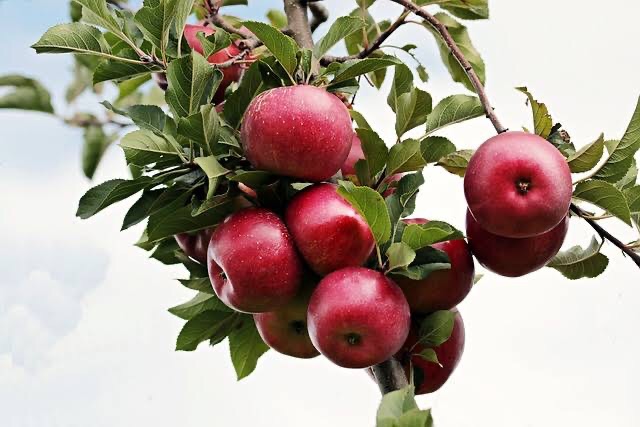
Agriculture has been a major economic resource for the majority of the people in Jammu and Kashmir. It serves as the backbone of the region’s economy, providing employment to around 64% of the population, either directly or indirectly. The fruits of Kashmir, particularly apples, apricots, cherries, walnuts, and saffron, are famous across the country. Despite the valley’s significant production of apples and walnuts, orchard owners, farmers, and others associated with these fruits continue to face various challenges year after year.

While Kashmir produces high-quality apples and walnuts, the demand and prices of these local fruits have decreased due to the growing consumption of Iranian and Turkish apples and Californian walnuts in the country. As the demand for Kashmiri apples and walnuts drops in the domestic markets, the Kashmiri fruit industry is struggling for survival. The orchard owners and farmers face increasing difficulties, with labor wages, transportation charges, and fruit prices contributing to heavy losses. To make matters worse, the prices of cardboard and wooden boxes are soaring, yet the price per box of apples remains the same as it was five or six years ago.

This problem doesn’t end there, as trucks loaded with apples often get stuck on the Srinagar-Jammu National Highway for days, causing the apples to rot. The entire burden of this situation falls on the orchard owners, farmers, and traders, many of whom have taken loans from banks. In September, due to delays on the highway, the apple industry suffered losses of approximately 500 crores. Mudasir Ahmed Bhatt, President of the Fruit Market Association of Sopore, mentioned that the apple industry in Kashmir is worth about 6,000 crores.

The continuous closure of the highway has led to the destruction of apples stored in trucks. This has caused significant distress among the traders, who have also borrowed money from markets in Delhi. Former Jammu and Kashmir Chief Minister Mehbooba Mufti expressed her frustration, stating that she would collaborate with fruit truck drivers to block the Srinagar-Jammu National Highway if their vehicles were not allowed to pass. She urged the current UT government to open the passage for trucks loaded with Kashmiri fruits so that the traders and transporters could avoid further economic ruin. She criticized the central government for not facilitating the development and prosperity of the region, despite the end of militancy in Kashmir.

Ghulam Muhammad, a resident of Sopore, explained that due to continuous losses in the fruit industry, he had to cut down all the apple trees on his five-kanal land, which he had spent almost 20 years cultivating. He shared that despite his best efforts to increase production, he was unable to achieve any significant gains. Furthermore, the walnut industry in Kashmir has also suffered due to the influx of Californian walnuts in the Indian market.

There are three types of walnuts in Kashmir: Wonth, Paper, and Burzol. Wonth walnuts are hard to break and are mostly sold locally, while Paper walnuts are large with a thin outer shell. Burzol walnuts are medium-sized and of high quality. According to government statistics, in 2021-22, Jammu Kashmir produced 2.82 lakh tons of walnuts, with Jammu and Kashmir contributing nearly 92%. However, the production of walnuts is shrinking year by year due to the lack of scientific intervention, GST implementation, climate change, population growth, drought, and the widespread availability of Californian walnuts in the country’s major cities.

It takes more than 15 years to get the first harvest from a walnut tree, which is a significant factor contributing to the decline in production. In light of this situation, the government must take steps to introduce high-quality apple and walnut tree varieties to save these industries. Farmers should be provided with standardized equipment on a subsidy basis, and training camps should be organized through agricultural research institutes and universities. Soil testing should also be conducted to introduce suitable fruits or crops.

Additionally, the government should ensure that fruits from producing districts reach other states without any hindrances, so that they do not spoil in the markets or on national highways. A diversified export strategy and land reforms should be introduced in favor of farmers. Programs like PM Kisan Yojana should be expanded to benefit those involved in agricultural activities.

To save the struggling fruit and walnut industries, the government must introduce high-quality grafted plants and take action to preserve Kashmir’s legacy, which is an important source of livelihood for the people.

(The columnist is an official member of the JKIFTS Columnist Council and is currently pursuing an MSc in Zoology.)

Kashmiri Artisans Striving to Keep the Mughal-Era Leather Industry Alive

0

The leather craftsmanship in Kashmir dates back to the Mughal era when the region gained fame for its high-quality leather products.

In an age of modernization, declining demand, and the increasing preference for alternatives, Kashmiri artisans are striving to keep the leather industry alive.

Once a thriving trade, this industry is now in decline. Historically, it provided employment to hundreds of skilled artisans, but today, it faces significant challenges.

Kashmir’s leather craftsmanship began during the Mughal era, a time when the region was renowned for its premium leather products.

From shoes, bags, and belts to traditional items like Gurgabi (Kashmiri leather shoes), every product reflects intricate craftsmanship and cultural pride.

The process involves labor-intensive techniques that are passed down orally or through apprenticeships.

Artisans meticulously prepare raw hides, using natural dyes and shaping the leather into various forms.

A leather craftsman, Ghulam Nabi, told Independent Urdu, “Our market is not doing well this time, and we earn only a small profit, just enough to make a living.”

Ghulam Nabi further explained, “We used to buy leather from Madras, but the Indian government shut down those factories. Some are still operating, but most leather factories have closed.”

He added, “There are around 12,000 leather artisans in Jammu and Kashmir who survive on this limited work, but business is very slow.”

“This work is deteriorating day by day. Market prices are dropping, and the decline in work is destroying our livelihoods,” he lamented.

Despite all the challenges, the hard work and creativity of Kashmiri artisans highlight their unwavering commitment to preserving this heritage.

What is Special About Kashmir’s Famous Folk Dance Rouf? Rouf’s Connection with Eid?

0

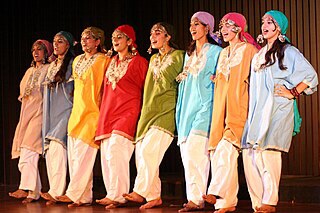
Rouf (pronounced ‘Ruf’) is one of the most famous traditional dance forms of Jammu and Kashmir. This folk dance was historically performed to celebrate the beginning of Ramadan and later on Eid-ul-Fitr and Eid-ul-Adha. However, in modern times, Rouf has become limited to wedding ceremonies, as the younger generation of Kashmiri women shows little interest in learning or performing it.

Sirjit, a young woman from Srinagar’s central area, recalls stories from her mother about women who once gathered in large numbers to perform Rouf on festive occasions. In the 1990s, dozens of women in Pulwama, South Kashmir, would assemble in their courtyards during Eid celebrations and perform Rouf, marking the festive spirit of the region.

The Unique Charm of Rouf Dance

Many people in Kashmir believe that the movements of Rouf are inspired by the motion of honeybees hovering around flowers. The dance is performed by a group of women standing in two rows facing each other, engaging in synchronized movements.

One of the most distinctive features of Rouf is its intricate footwork, known as Chakri, a complex sequence of steps that adds elegance to the performance. Another remarkable aspect is the singing style accompanying the dance one group poses a question through song lyrics, and the other group responds in the form of a melodic answer.

For example, in a popular Rouf song, one group sings:
🟢 “Eid Aayi Ras” (Eid has come slowly).
To which the other group replies:
“Eidgah Wasay Wi” (Let’s go to Eidgah).

This call-and-response singing style enhances the rhythmic beauty of Rouf and adds to its cultural significance.

The Decline of Rouf

Despite its historical importance, Rouf is gradually fading from Kashmir’s cultural landscape. While it was once an integral part of Eid celebrations, today it is mostly confined to wedding events. The younger generation of Kashmiri women shows less interest in learning or performing it, leading to a decline in its popularity.

However, some cultural organizations and enthusiasts in Kashmir are working towards reviving Rouf by promoting it at festivals, schools, and cultural events, ensuring that this beautiful heritage dance does not disappear.

Rouf remains a symbol of Kashmiri tradition, reflecting the grace, rhythm, and collective spirit of Kashmiri women, and continues to be cherished by those who strive to keep it alive.

Kashmiri Calendar: History, Evolution, and Cultural Significance

0

The Kashmiri Calendar is an important traditional timekeeping system used in the Kashmir region. It is a blend of the Hindu Solar Calendar (Saptarishi Samvat) and the Islamic Lunar Calendar (Hijri Calendar), making it a unique system that reflects the region’s diverse cultural and religious heritage.

In this article, we will explore the origins, structure, and importance of the Kashmiri Calendar, its historical background, and how it is still relevant today in cultural, religious, and agricultural contexts.

Historical Background of the Kashmiri Calendar

The Kashmiri Calendar has been in use for centuries and is deeply rooted in the history of Kashmir. The primary influence on this calendar comes from Saptarishi Samvat, an ancient Hindu calendar system, which is said to have begun in 3076 BCE. However, over time, the calendar has incorporated aspects of the Islamic Hijri Calendar and the Gregorian Calendar, particularly in the modern era.

Saptarishi Samvat Influence

The Saptarishi Samvat is an ancient calendar system that has played a significant role in shaping the traditional Kashmiri Calendar. This era is believed to have begun in 3076 BCE, making it one of the oldest continuously used calendar systems in the world. The name Saptarishi (meaning “Seven Sages”) refers to a group of revered sages in Hindu mythology who are believed to guide humanity through different ages (Yugas). It is said that this calendar was started when the Saptarishi constellation (Ursa Major) was in a particular position in the sky, which marked the beginning of a new time cycle.

  • The Saptarishi Era, which dates back to 3076 BCE, is believed to be the basis of the traditional Kashmiri Calendar.
  • This calendar follows the solar system, where the movement of the sun determines the months.
  • It is still used by Kashmiri Pandits for religious festivals and traditional agricultural practices.

Islamic Hijri Calendar Influence

The Islamic Hijri Calendar has played a crucial role in shaping the cultural and religious life of Kashmir, influencing the way time is recorded and festivals are observed. Introduced with the spread of Islam in the region, the Hijri calendar continues to be significant, especially among the Muslim population. It was introduced in 622 CE when Prophet Muhammad (PBUH) migrated from Makkah to Madinah, an event known as the Hijrah, marking the beginning of the Islamic calendar.

With the arrival of Islam in Kashmir, particularly during the 14th century, the Hijri Calendar became widely adopted for religious and administrative purposes. Important events such as Ramadan (fasting month), Eid-ul-Fitr, Eid-ul-Adha, Muharram, and Shab-e-Barat are all determined using the Hijri calendar. Many Kashmiri Muslims follow both the Hijri and Gregorian Calendars for religious and official purposes.

Gregorian Calendar Integration

During British rule and post-independence, the Gregorian Calendar became the official system for administration and business. However, Kashmiri cultural and religious traditions still rely on the traditional Kashmiri Calendar for various ceremonies and agricultural practices.

Months of the Kashmiri Calendar

The Kashmiri Calendar consists of 12 months, similar to the Hindu and Gregorian calendars. The names of the months are derived from Sanskrit and Persian influences.

Kashmiri MonthEquivalent Gregorian Months
Chet (چیت)March – April
Vaisakh (وۍساکھ)April – May
Jeth (جیتھ)May – June
Har (ہار)June – July
Sawan (ساوُن)July – August
Bhadoon (بهاڏوں)August – September
Asuj (اسوج)September – October
Kartik (کارتيک)October – November
Mangir (منگھر)November – December
Poh (پوھ)December – January
Magh (ماغھ)January – February
Phagun (پھَگُن)February – March

Kashmiri Festivals Based on This Calendar

  1. Navreh (New Year in Kashmiri Calendar – March/April)
  2. Herath (Shivratri – February/March)
  3. Mela Kheer Bhawani (June)
  4. Urs of Sufi Saints (Throughout the Year)
  5. Islamic Festivals (Eid, Shab-e-Barat, Muharram, etc.)

Cultural Importance of the Kashmiri Calendar

The Kashmiri Calendar holds immense cultural significance, deeply rooted in the traditions, festivals, and daily lives of the people of Kashmir. It serves as a guide for religious, agricultural, and social events, reflecting the unique blend of Hindu, Buddhist, and Islamic influences in Kashmiri history.

1. Role in Kashmiri Festivals and Traditions

  • The Kashmiri Calendar determines the dates for major festivals and celebrations that have been observed for centuries.
  • For Hindus: The calendar sets the timing for Navreh (Kashmiri New Year), Herath (Kashmiri Shivratri), Zyeth Atham, and other religious ceremonies.
  • For Muslims: The Hijri calendar, which coexists with the traditional Kashmiri calendar, determines Ramadan, Eid, and Urs festivals of Sufi saints, which are widely celebrated in Kashmir.
  • Many seasonal fairs, such as Mela Kheer Bhawani and Shivratri celebrations, are planned according to the lunar and solar calendars.

2. Agricultural and Seasonal Significance

  • The rhythms of the Kashmiri calendar align with seasonal changes, guiding farmers in sowing and harvesting crops.
  • Traditional Kashmiri farmers follow the Bikrami (Vikram Samvat) calendar to determine the best time for planting rice, saffron, apples, and walnuts.
  • Even today, many rural Kashmiri families consult Panchangs (Hindu almanacs) to track weather cycles, solstices, and eclipses before making major farming decisions.

3. Influence on Kashmiri Folk Traditions and Rituals

  • Kashmiri folklore, poetry, and Sufi traditions are closely tied to the Kashmiri calendar.
  • Traditional Kashmiri weddings follow specific auspicious dates (Saath) set by local astrologers using the Kashmiri calendar.
  • Important fasting and prayer days for both Hindus and Muslims are determined using the calendar’s guidance.

4. Importance in Kashmiri Literature and Historical Records

  • Ancient Kashmiri texts, such as Rajatarangini (The River of Kings) by Kalhana, reference the Kashmiri calendar to document the reigns of kings and historical events.
  • Many historical inscriptions, land records, and manuscripts from medieval Kashmir are dated using traditional calendar systems, helping historians understand the region’s past.

5. Coexistence with Other Calendars

  • Over the centuries, the Kashmiri Calendar has evolved, influenced by the Hindu, Buddhist, and Islamic timekeeping systems.
  • Today, Kashmiris use a mix of calendars:
    • Traditional Kashmiri Calendar for cultural and religious events.
    • Hijri Calendar for Islamic observances.
    • Gregorian Calendar for official and administrative purposes.
  • This unique blend of calendar systems reflects Kashmir’s rich and diverse heritage.

6. Revival and Digital Preservation

  • With the advent of technology, the Kashmiri calendar is being preserved digitally through mobile apps, Panchang websites, and online heritage projects.
  • Scholars and cultural organizations are working to document and revive the traditional Kashmiri way of tracking time.

Modern Usage and Digital Adaptations

With the advancement of technology, Kashmiri Calendar apps and digital tools are now available. These apps provide: ✅ Daily Panchang (Hindu Almanac)Islamic Prayer TimingsGregorian Calendar IntegrationSeasonal Weather Predictions

Comparison with Other Calendars

FeatureKashmiri CalendarHindu Vikram SamvatIslamic HijriGregorian Calendar
SystemSolar & LunarSolarLunarSolar
Start of YearMarch/AprilMarch/AprilMuharramJanuary
Religious SignificanceHindu & IslamicHinduIslamicSecular
Official UseCultural & ReligiousReligiousReligiousGovernment & Business

Important Kashmiri Festivals in 2025

The Kashmiri Calendar marks several cultural and religious festivals, celebrated by different communities.

Kashmiri Hindu Festivals

  • Navreh (Kashmiri New Year) – March 30, 2025
  • Herath (Maha Shivratri) – February 26, 2025
  • Zyeth Atham – June 6, 2025
  • Mela Kheer Bhawani – June 13, 2025
  • Janmashtami – August 16, 2025
  • Diwali – October 21, 2025

Islamic Festivals (Based on the Hijri Calendar)

  • Ramadan Begins – February 28, 2025 (subject to moon sighting)
  • Eid-ul-Fitr – March 30, 2025
  • Eid-ul-Adha – June 7, 2025
  • Muharram (Islamic New Year) – June 27, 2025
  • Milad-un-Nabi – September 5, 2025

Buddhist Festivals in Ladakh

  • Losar (Tibetan New Year) – December 30, 2024
  • Buddha Purnima – May 12, 2025

Types of Calendars Used in Jammu & Kashmir

Jammu and Kashmir, with its diverse cultural and religious landscape, follows multiple calendar systems for religious, social, and administrative purposes. The primary calendars used in the region include the Kashmiri Hindu Calendar (Saptarishi Samvat), the Islamic Hijri Calendar, the Vikram Samvat, the Gregorian Calendar, and the Buddhist Calendar. Each of these plays a unique role in the lives of the people.

Kashmiri Calendar Today Date

As of Wednesday, February 12, 2025, the corresponding dates in various calendars are:

  • Kashmiri Hindu Calendar: Shukla Paksha Purnima in the month of Magha, Vikram Samvat 2081.

  • Islamic Hijri Calendar: 13th Sha’ban 1446 AH.

In the Kashmiri Hindu Calendar, today is Magha Purnima, a full moon day considered auspicious for various religious observances. In the Islamic Hijri Calendar, it is the 13th day of Sha’ban, the eighth month of the Islamic lunar calendar.

Conclusion

The Kashmiri Calendar is an important part of Kashmir’s cultural and religious identity. While the Gregorian Calendar is used for official and administrative purposes, the traditional Kashmiri Calendar remains relevant in agriculture, festivals, astrology, and spiritual practices.

Today, efforts are being made to preserve this calendar through digital tools, mobile apps, and cultural awareness programs. Whether it’s planning a wedding, celebrating Navreh, or aligning agricultural activities, the Kashmiri Calendar continues to play a vital role in the lives of the people of Kashmir.


Pakistan Tehreek-e-Insaf Flag Discovered in Kashmir’s Doda District, Police Probe Underway

0

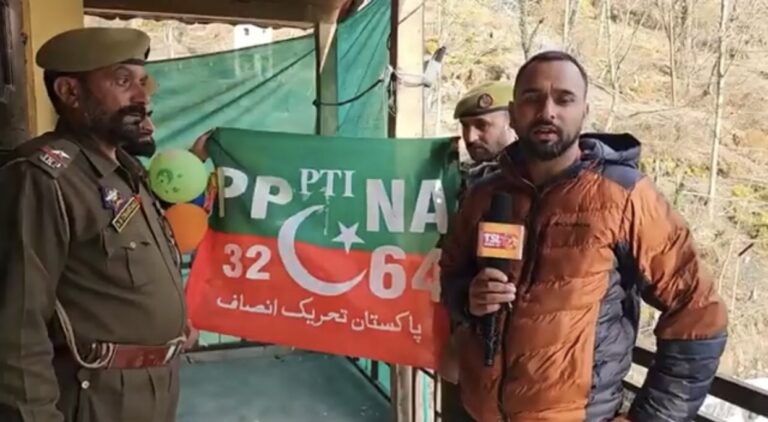
Doda, Kashmir: A political flag of Pakistan Tehreek-e-Insaf (PTI), the political party led by former cricketer Imran Khan, was recently found hanging from a tree in the Gurera Panchayat area of Doda district. The flag, along with several colorful balloons, caused alarm among the local population, prompting the Jammu and Kashmir Police to launch an immediate investigation into the matter.

The situation began when local civilians contacted the police around 4:00 PM on 10 February, reporting that a flag was hanging from a large tree in the area. Police arrived at the scene to find the flag and several balloons caught in the branches of a walnut tree. The presence of the PTI flag raised immediate concerns among the residents, given the region’s sensitive security situation.

According to Jammu Kashmir police officials, the tree was too large for anyone to easily climb, and it took several hours to coordinate a safe response. By morning, after conducting a thorough investigation of the area, the police were able to safely retrieve the flag and inspect the balloons. The balloons were also checked for any hidden messages or devices, but nothing unusual was found. Despite the thorough search, no letters, explosives, or devices were discovered within the balloons or the flag.

The flag’s design, which prominently features the PTI logo and symbols, immediately indicated it was a political banner associated with Pakistan’s current political scenario. The presence of the flag raised questions about how it ended up in this remote region of Kashmir. The police have not ruled out the possibility that it might have been carried here by the wind, although investigations are ongoing to determine whether it was intentionally placed there by someone.

The PTI flag found in Doda bore no other markings except the party’s logo and some regional symbols. The balloons, which were brightly colored and scattered around the tree, did not contain any letters, explosives, or devices, further confirming the situation was not an immediate security threat.

However, after conducting a thorough search and investigation, the police found no evidence supporting this theory.

The Jammu and Kashmir Police have assured the public that the situation is under control. Authorities are continuing their investigation into how the flag came to be in the area, and have promised to keep the community informed of any developments.

Local leaders have expressed concern about how such incidents could affect the delicate communal harmony in the region. The Gurera Panchayat, which includes both Hindu and Muslim residents, has long been known for its strong sense of brotherhood. The residents worked together overnight to ensure that no harmful elements were hidden within the flag or the balloons, demonstrating solidarity in the face of potential unrest.

As investigations continue, the local community remains vigilant, and authorities are keen to ensure that the peace is maintained. The police are also exploring whether the wind could have carried the flag into the area from another region, or if it was deliberately placed as part of a larger political statement.

In the meantime, residents and officials are urging calm, and the Jammu Kashmir Police are taking all necessary precautions to prevent any further escalation. The case remains under investigation, and more information will be shared with the public as it becomes available.

Jammu: Yuva Rajput Sabha Warns Indian Government Over Statehood Demand, Tension Rises at Tawi Bridge

0

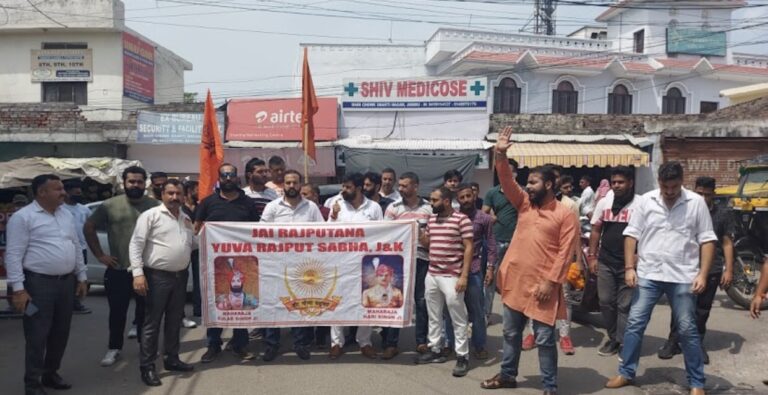
Jammu, Jammu Kashmir: The Yuva Rajput Sabha has once again intensified its demand for the restoration of statehood for Jammu and Kashmir, issuing a stern warning to the government of India. In a dramatic turn of events, Sabha members gathered in large numbers near Tawi Bridge, raising slogans and expressing their frustration over the delay in restoring Jammu and Kashmir’s statehood.

According to sources, tensions escalated near Tawi Bridge, prompting a swift response from the police. Security forces were deployed to the area to prevent any untoward incidents and to maintain law and order.

The Yuva Rajput Sabha has been vocal about its demands, stating that the people of Jammu have been sidelined, and their rights must be restored. They warned that if the government fails to take immediate action, they will escalate their protests in the coming days.

Tensions remain high in the area, and authorities are closely monitoring the situation. The key question is whether the government will respond to the Sabha’s demands or whether the protests will escalate further. Stay tuned for more updates.