Sunday, March 29, 2026
12.4 C
Srinagar
Home Blog Page 135

Astore Master Plan Under Review: Stakeholders to Provide Input

0

The Deputy Commissioner of Astore, Muhammad Tariq, has announced that the draft of the master plan for the region will undergo another review. He emphasized that input from all stakeholders will be sought, and any feasible suggestions will be incorporated into the final plan.

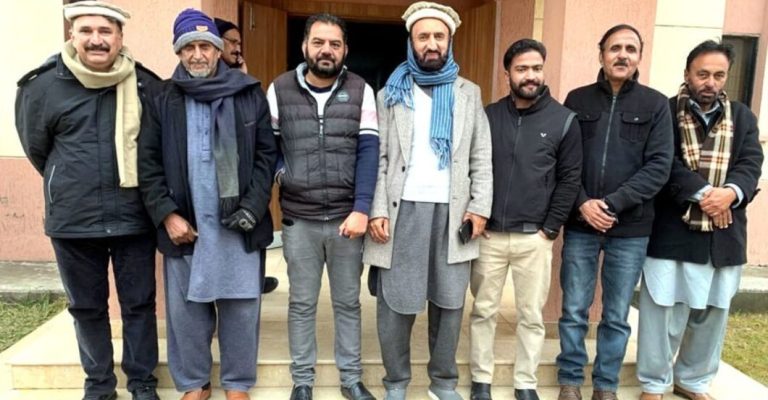
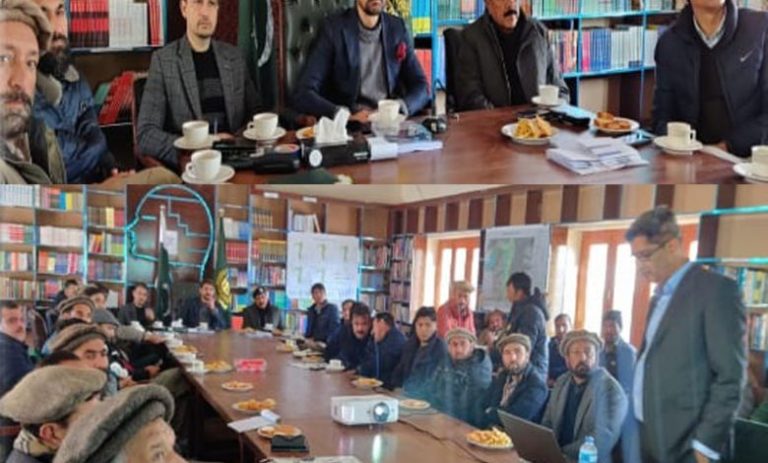
The meeting included key participants such as Deputy Commissioner Muhammad Tariq, SP Astore Wazir Neik Alam, Assistant Commissioner Astore Dr. Wajahat Saleem, Assistant Commissioner Shounter Tanveer Ahmed, department heads, journalists, and local leaders. During the session, stakeholders raised questions and expressed their satisfaction with the ongoing work on the master plan.

Deputy Commissioner Tariq also proposed the inclusion of a water complex in the master plan to ensure the availability of clean drinking water for residents.

He stressed that this master plan will be a key step in the development of Astore, which lies in the disputed region of Jammu and Kashmir. The plan aims to address essential infrastructure needs, improve services, and enhance the quality of life for the people living in this strategically important area.

The Mysterious Killing of Hamas Leader Ismail Haniyeh: A Deep Conspiracy Unveiled

0

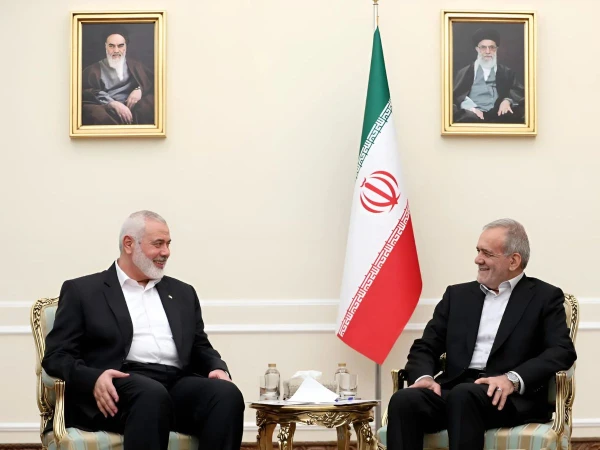
On July 31, 2023, Hamas leader Ismail Haniyeh was killed in a mysterious explosion at a state guest house in the highly sensitive area of Tehran, shortly after President Masoud Pzeshkian’s swearing-in ceremony.

International news agencies reported that both Iran and Hamas blamed Israel for the assassination, though Israel never officially confirmed or denied the claims. However, a few days ago, Israeli Foreign Minister Eli Cohen revealed that Israel was behind Haniyeh’s death.

Following this revelation, Israeli media released details about the plans to assassinate Haniyeh and the delays that had occurred. Israeli reports suggest that the operation was postponed to avoid embarrassing Iran further before the inauguration of its new president. Had the assassination been carried out earlier, Haniyeh could have been targeted before the ceremony.

Initially, after the assassination, Iran’s Revolutionary Guard had misinformed Supreme Leader Ayatollah Ali Khamenei, claiming that Haniyeh’s death was due to an Israeli missile strike. Israeli media later disclosed that the assassination plot was hatched after Hamas’s October 7, 2023, attack on Israel.

Haniyeh, who was residing in Qatar at the time, was not targeted there to avoid disrupting ongoing negotiations for the release of hostages. Israel considered options in Turkey, Russia, and Iran, where Haniyeh often traveled. However, Turkey’s response could have been problematic, and Israel did not want to risk angering Russian President Vladimir Putin.

According to Israeli intelligence, Iran was chosen as the most feasible location for the operation. Haniyeh frequently stayed in a guest house in the upscale Saadatabad neighborhood of northern Tehran, making the assassination plan more straightforward.

Initially, Israel intended to strike during Haniyeh’s visit to Tehran on May 19 to attend the funeral of former Iranian president Ibrahim Raisi, who died in a helicopter crash. However, the large number of civilian attendees at the funeral prompted Israel to delay the operation to avoid civilian casualties.

It was later decided that the assassination would take place on the morning of the swearing-in ceremony of President Pzeshkian. Israeli agents planted an improvised explosive device (IED) in Haniyeh’s room before the ceremony. Despite the explosive being larger than planned, it was not strong enough to damage nearby rooms but had enough power to kill Haniyeh on the spot.

After the ceremony, Haniyeh returned to his room, and everything seemed normal until his air conditioner malfunctioned. He moved to a different room, far enough from the explosion that he was not harmed. Israeli agents, thinking the operation had failed, waited for Haniyeh to return to his original room. Once he did, the IED was detonated at 1:30 AM, causing significant damage to the wall of the room but ultimately achieving its purpose — Ismail Haniyeh was dead.

Within seconds, a medical team from the Revolutionary Guard arrived at the scene but found Haniyeh already dead. Haniyeh’s deputy, Khalil al-Hayya, also arrived at the scene and collapsed in grief, seeing the bloodied body of his leader.

Experts on security matters have suggested that such a complex operation could not have been carried out without the help of an Iranian, a member of the Revolutionary Guard, or a Hamas official. Israeli media reports confirm that Iran, Hamas, and Israeli intelligence agencies have all thoroughly investigated these three possibilities.

Following the assassination, Iran faced significant embarrassment. The incident caused widespread panic, and Quds Force commander Ismail Qaani disappeared from public view for several weeks while investigations were underway to determine why he failed to prevent the plot.

Hours after the assassination, Qaani reportedly called Supreme Leader Khamenei, crying and falsely claiming that Haniyeh had been killed by an Israeli missile strike. This led Khamenei to call for an immediate retaliatory strike against Israel, but further complications arose as Iran’s initial claims were debunked.

Eventually, on October 1, Iran launched a retaliatory attack against Israel, which was largely thwarted by the Israeli Defense Forces (IDF) in coordination with U.S. and Jordanian forces.

Following Haniyeh’s death, his position was taken over by Yahya Sinwar, but he too was killed in a skirmish with Israeli forces in the southern Gaza city of Rafah on October 16, just weeks after assuming leadership.

The assassination of Ismail Haniyeh and the subsequent events continue to raise questions about the intricate web of Middle Eastern politics and Israel’s strategic operations in the region.

International Pheran Day: A Celebration of Kashmiri Culture and Identity

0

In the Indian-administered part of Kashmir, known as “Occupied Kashmir,” the celebration of “Pheran Day” on December 21st continues to grow in significance, particularly since 2022. This traditional Kashmiri attire has faced resistance from Hindu extremist organizations with the support of the Modi government. The observance of Pheran Day has become a defiant stand against efforts to undermine Kashmiri cultural identity.

The Pheran: A Symbol of Kashmiri Identity The Pheran, a traditional Kashmiri garment, is a long gown worn by both men and women. It consists of two layers of robes, typically reaching down to the feet. Over time, the Pheran’s length has decreased to knee-length, paired with a loose-fitting “Suthan” (a type of loose pants). Traditionally, the Pheran was worn as part of daily attire in Kashmir until the late 19th century, but the garment still holds cultural significance.

The Controversy and the Resistance The controversy surrounding the Pheran began in 2018 when the Hindu extremist group, Bajrang Dal, demanded a ban on the garment, claiming that militants were using it to hide explosives. This unfounded claim stirred a new wave of resistance in the region. The following years saw increased demands from other groups, accusing the Pheran of being a security threat. The government’s support for these claims was evident when, in 2022, security forces were seen subjecting Pheran-wearing individuals to more intensive searches, further validating suspicions of state-backed discrimination.

Prime Minister Modi’s Remarks In a public speech in 2019, Indian Prime Minister Narendra Modi hinted at identifying protestors based on their clothing, an apparent reference to Kashmiris wearing Pherans as a symbol of their resistance and identity. This statement was seen as an attempt to label Kashmiri cultural expressions as acts of defiance against the government, intensifying the ongoing protests.

Pheran’s Role in Kashmiri Society Despite the challenges, the Pheran remains an essential aspect of Kashmiri culture, now widely appreciated across Jammu and Kashmir. It is worn by people of all ages and backgrounds, transcending religious and ethnic boundaries. In the colder regions of Kashmir, the Pheran is particularly cherished as a warm, comfortable garment during the harsh winter months, often paired with the traditional Kangri (a heated pot) for extra warmth.

Government’s Efforts to Ban Pheran In 2018, the Jammu and Kashmir Education Department issued a controversial notification banning the Pheran in government offices, a move that was met with public outrage. Due to widespread protests, the government was forced to retract the order, highlighting the strong resistance to such moves that sought to suppress Kashmiri culture.

International Pheran Day: A Symbol of Unity Each year, “International Pheran Day” is celebrated in Srinagar, where individuals from diverse backgrounds come together to don the Pheran in solidarity. This event not only promotes Kashmiri culture but also serves as a protest against the attempts to undermine it. The celebration is marked by political activists, social workers, and citizens who carry placards advocating for cultural preservation and condemning the propaganda of extremist groups. The celebration reflects unity among Kashmiris, both in the region and across the globe.

A Global Movement Over the years, Kashmiri diaspora communities worldwide have also embraced Pheran Day, sharing their images on social media to express solidarity with Kashmir’s struggle for cultural and political identity. This movement represents a powerful statement of resistance against cultural erasure, with the Pheran becoming an enduring symbol of Kashmiri identity.

Pheran in Azad Kashmir In recent years, Pheran has found its way into Azad Kashmir, where it is increasingly popular, particularly in the Muzaffarabad region. With trade routes between Jammu and Kashmir and Pakistan closed, Pheran is now imported from Dubai and sold in Azad Kashmir, contributing to a rise in prices. Local production of Pherans in Pakistan exists, but the quality often falls short of the traditional Kashmiri standard. However, with increased attention to this industry, the production of Pherans could provide economic benefits while preserving a vital cultural heritage.

Conclusion The celebration of International Pheran Day is a poignant reminder of the resilience of Kashmiri culture in the face of adversity. As the garment grows in popularity worldwide, it remains an enduring symbol of Kashmiri identity, heritage, and the ongoing struggle for cultural and political recognition. Kashmiris, both in the region and in the diaspora, continue to wear the Pheran with pride, ensuring that their cultural legacy remains strong for future generations.

Raolakkot Press Club Elections 2025: New Leadership Elected

0

Rawalakot (The Azadi Times) – The Ghazi Millat Press Club (Registered) Rawalakot successfully completed its elections for the year 2025. The newly elected office-bearers include Shafqat Zia as President, Umar Khayyam as General Secretary, Sajid Mahmood Anwar as Senior Vice President, Amir Javed as Vice President, Mohammad Riaz Khan as Deputy General Secretary, Mohammad Farooq Khan as Secretary Finance, and Mohammad Ikhlaq as Secretary Information.

The elections, held yesterday, saw a total of 28 voters, with two panels contesting the positions. Shafqat Zia secured the President’s position by winning 17 votes, defeating his opponent, Sardar Riyaz Shahid, who received 11 votes. Similarly, in the General Secretary race, Umar Khayyam triumphed with 15 votes, narrowly beating Zafar Nazir, who garnered 13 votes.

For the Senior Vice President position, Sajid Mahmood Anwar won with 17 votes, while his opponent, Amir Hanif, received 11 votes. Amir Javed won the Vice President position with 16 votes, defeating Ihsan ul Haq, who obtained 12 votes.

In the Deputy General Secretary race, Mohammad Riaz Khan won with 15 votes, while Khurram Zulfikar received 13 votes. Mohammad Farooq Khan secured the position of Secretary Finance with 15 votes, ahead of his rival, Tasneem Akhtar, who garnered 13 votes. Lastly, in the contest for Secretary Information, Mohammad Ikhlaq triumphed with 15 votes, defeating Muneeb Aziz Kiani, who received 13 votes.

The elections were conducted under the supervision of the Election Commissioner, Information Officer Nasir Latif, with the polling agents’ duties handled by Imran Ayub and Ejaz Qamar.

These elections mark a new chapter for the Ghazi Millat Press Club, as the newly elected leaders are expected to continue the club’s legacy of serving the journalistic community and representing the press in the region.

Lamnian Residents Protest Against Unjust Power Outages, Threaten Powerhouse Shutdown

0

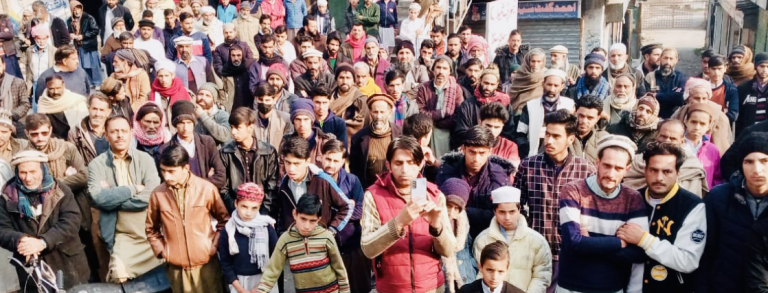
Hattian Bala (The Azadi Times) – The residents of Lamnian, a significant locality in the district Jhelum Valley, have once again taken to the streets in protest against the ongoing unannounced and harsh power outages. The locals have warned of shutting down electricity transmission from the Sharrian and Neeli Powerhouses on December 24 if the unjust load-shedding continues, citing their growing frustration over prolonged power cuts.

The protest, which was organized by the community members, saw fierce slogans and speeches targeting the Department of Electricity and the Power Development Organization (PDO). Leaders including Sajid Abbasi, former district council candidate Sajjad Akash Abbasi, Chaudhry Ameer Hussain, Fazail Maqsood Awan, Qazi Nazaqat, Manzoor Awan, Chaudhry Shaukat, Iftikhar Chak, and Gulraiz Abbasi voiced their anger at the power crisis.

The protestors highlighted a particularly distressing incident in which the entire 50,000-strong population of Lamnian was left in darkness, while a single household hosting a wedding event was provided uninterrupted electricity. The demonstrators condemned this stark inequality, calling it a grave injustice.

The speakers demanded urgent intervention from the Minister for School Education, Dewan Ali Khan Chughtai, Deputy Commissioner, and the XEN of the Electricity Department for Jhelum Valley. They emphasized that the people of Lamnian would not tolerate the ongoing power cuts any longer.

“If these unjust power outages are not immediately stopped, we will take matters into our own hands. On December 24, we will cut off power transmission from Sharrian and Neeli Powerhouses. We will not let anyone trample on our rights,” said the protest leaders.

Despite several complaints and repeated appeals to the Jhelum Valley administration, no significant action has been taken to address the issue. The residents are now determined to escalate their protests until their demands are met. “We will not remain silent. We will fight for our rights,” they declared.

The situation in Lamnian highlights the growing resentment among local communities in the region, underscoring the urgent need for a resolution to the ongoing power crisis that is impacting thousands of families. If the authorities fail to act promptly, the situation may escalate further.

Poonch Police Crack Down on Drug Trafficking, Arrest Major Dealer with 14kg Marijuana

    0

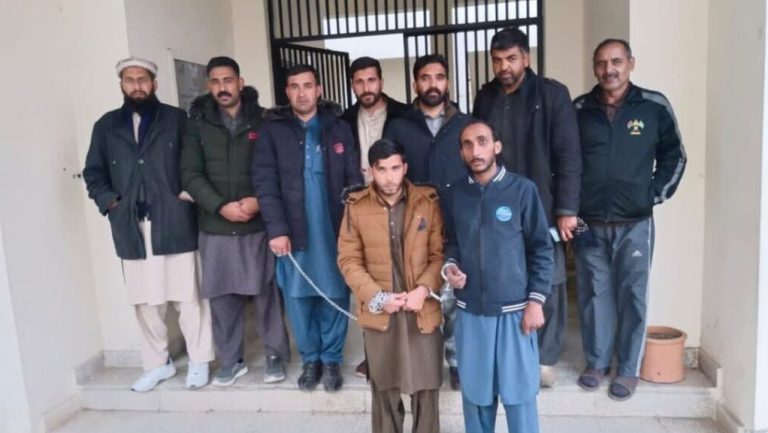
    Rawalakot ( The Azadi Times) – In a significant operation against drug trafficking, Poonch police successfully arrested a notorious drug dealer and his accomplice, recovering 14 kilograms of hashish. This operation highlights the department’s commitment to combating the drug menace in the region.

    According to police reports, Usman, son of Ism Dad and a resident of Chamiyati, Dheerkot, was apprehended during a targeted raid. The accused had modified a Suzuki Carry vehicle with concealed compartments to smuggle drugs. Acting on intelligence gathered during the arrest, law enforcement officers also detained Sadaqat, son of Sharafat, from Chamiyati in the Bagh district.

    The operation was led by DSP Sardar Tariq Mehmood and carried out by a specialized team including Sub-Inspector Muhammad Idrees (CIA Incharge), ASI Muhammad Arbab, and constables Abdul Waheed, Muhammad Zahid, and Sajid. The team recovered 12 kilograms of hashish in 10 sealed packets from the hidden compartments of the vehicle. The vehicle was seized, and further investigations led to the recovery of additional drugs.

    This arrest is part of a larger campaign against drug dealers in the region. Over the past 15-20 days, Poonch police have conducted multiple successful operations, seizing large quantities of hashish and crystal meth (ice). SSP Poonch reiterated the department’s “zero tolerance” policy towards narcotics and assured the public that these efforts will continue until the region is free of drug trafficking networks.

    Local residents have praised the police for their relentless efforts and proactive approach in combating drug-related crimes. This operation marks another milestone in the fight against drugs in the region.

    Tragic Incident: Youth from Jhelum Valley Shot Dead After Love Marriage

      0

      Hattian Bala (Bureau Report): A shocking incident unfolded in the Jhelum Valley district of Azad Kashmir, where Muhammad Haseeb Awan, a young resident of Darra Batangi, was brutally murdered after a love marriage with a girl from Shinkiari, Mansehra. The youth was shot three times, and his body was found abandoned in the Terlai area under the jurisdiction of Shehzad Town Police Station, Islamabad. The tragedy has left the local community in mourning.

      The Details of the Incident

      Three weeks ago, Haseeb married Rabia, a girl from Shinkiari, in a ceremony held on December 9 in Khanda Bela, an area near Hattian Bala. Following their marriage, the couple initially stayed in Darra Batangi before moving to a rented house in Terlai, Islamabad.

      On December 26, Haseeb’s lifeless body was discovered in a deserted plot by Shehzad Town Police. The body was taken to Polyclinic Hospital, where a post-mortem confirmed he had been shot three times. Without any identification documents on the victim, police used NADRA’s fingerprint database to identify him and trace his family.

      Family’s Call for Justice

      After the body was handed over to the family, Haseeb’s funeral prayers were held on Sunday in Darra Batangi, where he was later laid to rest. Speaking to journalists, the deceased’s brother, Muhammad Naseeb Khan Awan, demanded swift justice and called on authorities to arrest the killers. He specifically requested the arrest of Rabia, claiming her interrogation could uncover crucial facts about the murder.

      Police Investigation Underway

      The Islamabad Police have registered a case against unknown assailants and expanded the investigation to uncover the motive and identify the perpetrators. The tragic murder has sparked demands for justice and safety for individuals involved in love marriages, raising questions about societal and familial dynamics that often lead to such heartbreaking outcomes.

      This tragic event serves as a grim reminder of the challenges faced by those who marry for love in the region, highlighting the urgent need for societal and legal reforms.

      December Ki Gawahi

      0

      Yeh December hai, magar qissa badal chuka,
      Ishq ke khwabon ka charagh bujh chuka.
      Naujawan jo kabhi ghazlein sunate the,
      Ab huqooq ki dehai lagate hain.

      Mahboob ke tazkire kahin gum ho gaye,
      Inqilab ke nare har soo bikhar gaye.
      Woh jo honton pe mohabbat ke geet late the,
      Ab insaaf ke maidan sajate hain.

      Qalam jo kabhi gulaab ke liye uthte the,
      Ab baghawat ke ash’aar likhte hain.
      Yeh December hai, jahan sard hawaien chalti hain,
      Magar dilon mein azadi ki garmi palti hai.

      Yeh mausam hai huqooq ke sawalon ka,
      Yeh waqt hai zanjeeron ke dhamakon ka.
      December ne sikhaya ishq ki haqeeqat,
      Ke sab se bara ishq hai zulm ki mukhalifat.

      Yeh naujawan, jo kabhi khwab dekhte the,
      Ab taqdeer badalne ka hosla rakhte hain.
      December gawah hai is shuoor ka,
      Yeh inqilab hai, ishq ke dastoor ka.

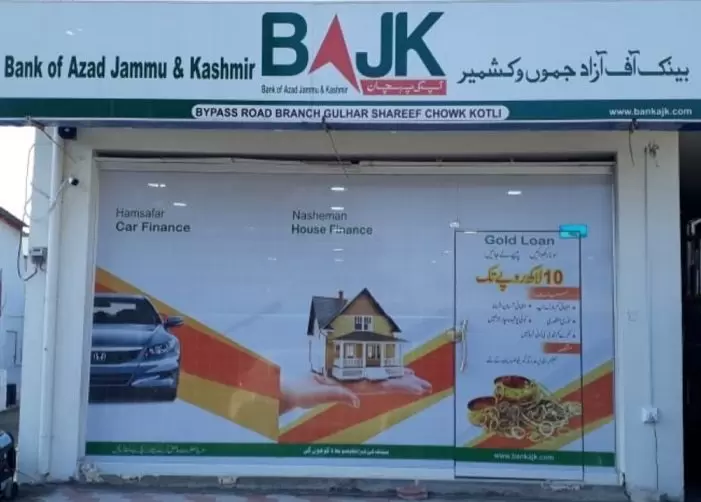
      AJK’s Official Bank BAJK Partners with Faysal Bank to Modernize Financial Transactions

      0

      MIRPUR (AJK): The state-run Bank of Azad Jammu and Kashmir (BAJK) has entered into a strategic partnership with Faysal Bank Limited (FBL) to modernize and revolutionize financial transactions. This collaboration will focus on integrating the International Bank Account Number (IBAN) system and enhancing cash management operations for improved efficiency and security.

      Key Benefits of the Partnership:

      The media wing of BAJK highlighted several advantages of this partnership, which are expected to benefit the bank, its customers, and the broader financial sector.

      1. Enhanced Efficiency:
        The implementation of the IBAN system will streamline domestic and international fund transfers, reducing processing times and minimizing errors.
      2. Improved Security:
        The standardized format of IBAN ensures greater security, minimizing the risk of fraudulent activities.
      3. Global Recognition:
        As an internationally recognized standard, IBAN facilitates seamless cross-border transactions.

      Enhanced Cash Management Solutions:

      Through this collaboration, BAJK will gain access to Faysal Bank’s advanced cash management tools, including:

      • Cash Collection: Secure and efficient collection of cash from various sources.
      • Cash Disbursement: Timely and accurate distribution of funds to designated payees.
      • Cash Forecasting: Predicting cash flow needs to ensure optimized liquidity management.
      • Cash Pooling: Centralizing cash balances to maximize interest income and minimize borrowing costs.

      Signing Ceremony:

      The signing ceremony was attended by senior representatives from both banks, including BAJK’s Chief Compliance Officer, DH Risk Management Division, and DH Treasury Management Division. Faysal Bank was represented by its Head of Cash Management and Regional Head, Islamabad.

      A Step Towards Modernization

      This partnership marks a significant milestone in the adoption of modern banking technologies in the region. BAJK, through this strategic alliance, aims to elevate customer experience and strengthen its financial operations.

      Also Read: How to get AJK Bank car Lone

      The collaboration is expected to contribute positively to the financial sector of Pakistan-administered Kashmir, enhancing efficiency, transparency, and security in financial transactions.

      How to Save Yourself During a Heart Attack When Alone?

      0

      Heart attacks are sudden and life-threatening. What would you do if you’re alone, experiencing intense chest pain, and the nearest hospital is miles away? While most people are familiar with CPR (Cardiopulmonary Resuscitation), very few know how to apply life-saving techniques on themselves during such a critical moment.

      Imagine this: You’re alone, driving home, or perhaps sitting quietly when suddenly a sharp pain grips your chest. The discomfort radiates to your arms and jaw. You break into a cold sweat and find it difficult to breathe. You recognize the symptoms of a heart attack, but the nearest hospital is miles away, and there’s no one to help you. In such a situation, what can you do to survive?

      Recognizing the Symptoms of a Heart Attack:

      1. Severe chest pain that spreads to the arms, jaw, or neck.
      2. Shortness of breath, sweating, and dizziness.
      3. Feeling weak, faint, or a sense of impending doom.

      Immediate Self-Help Steps – “Cough CPR”:

      If you are alone and suspect a heart attack, take these steps immediately to increase your chances of survival:

      1. Take Deep Breaths: Start by taking deep, long breaths to fill your lungs with oxygen.
      2. Forceful Coughing: After each deep breath, cough forcefully as if trying to clear your lungs. The cough must be strong enough to create pressure in your chest.
      3. Repeat the Process: Continue this cycle (one deep breath followed by a strong cough) every 2 seconds until help arrives.

      Why This Technique Works:

      • Deep breathing supplies oxygen to the lungs, which is critical during a heart attack.
      • Forceful coughing squeezes the heart and helps maintain blood circulation, preventing cardiac arrest until medical assistance arrives.

      Important Reminder:

      While this method may temporarily help maintain heart function, it is not a replacement for medical care. Immediately contact emergency services or head to the nearest hospital for proper treatment.

      Share to Save Lives:

      Heart specialists emphasize that spreading this knowledge can save countless lives, especially in emergencies where immediate medical help isn’t available.

      By sharing this message with your loved ones, you could play a role in saving someone’s life. Small actions can make a big difference!

      Note: This article is for informational purposes only. Always consult a medical professional for advice and treatment.