Sunday, March 29, 2026
17.5 C
Srinagar
Home Blog Page 139

Affair news with Abhishek, video of Nimrat Kaur’s reaction goes viral

0

After the news of the affair with Bollywood actor Abhishek Bachchan, the video of actress Nimrat Kaur’s reaction went viral on social media.

Bollywood actress Nimrat Kaur is in the news these days due to the rumors of her relationship with Abhishek Bachchan and now she has also shared a meaningful video on her Instagram account.

In her video, she says in Punjabi that ‘friendship should be so ripe that people burn at the sight of it’.

View this post on Instagram

A post shared by Nimrat Kaur (@nimratofficial)

In the caption of his video, he wrote that my friendship with KC (Karam Chand) is like this.

 It should be noted that on the one hand, the news of separation between Aishwarya Rai and Abhishek Bachchan is circulating in the Indian media, on the other hand, there are also speculations about Abhishek’s relationship with actress Nimrat Kaur.

Although Abhishek has denied the rumors of his divorce from Aishwarya and Aishwarya has kept quiet on all the news, the two have been seen separately in public over the years, fueling the rumors.

Van Carrying Wedding Guests Falls into Ravine in Gilgit-Baltistan’s Astore District, Six Dead: Government Spokesperson

0

Gilgit Baltistan: At least six people were killed and several went missing after a wedding party van met with an accident in the Astore district of Gilgit-Baltistan.

According to government spokesperson Faizullah Firaq, the van, carrying around 23 people, was traveling from Astore’s Parishing village to Rawalpindi when it fell into a ravine near the Thalichi bridge.

Six bodies, including four women, and one injured woman were recovered, while the search for others, believed to have been swept away in the river, is ongoing. Rescue operations are underway with boats assisting in the search.

Hundreds of Years-Old ‘Khalsa Sarkar’ Law: A Barrier to Land Rights in Gilgit-Baltistan

0

What justification does the government have to come to the northern regions and occupy people’s wilderness lands? There is no place to grow crops here. Not a home place. So what else should we talk about?’

This is said by a resident of the Haramosh area of ​​Gilgit. I met him in Shuta village of Haramush, where the conflict between the government and local people over land ownership is raging.

Thus, the areas of Gilgit-Baltistan are famous for tourism, but apart from tourism, this area is surrounded by many problems, the most prominent of which is the issue of land ownership.

After talking to the local people, it was found that the dispute is not about one or two villages but many areas that want the law of lands taken in the name of ‘Khalsa Sarkar’ to be abolished.

Let’s talk about what Khalsa Sarkar is later, but first, we talk about the problems faced by the residents of Gilgit, these villages of Gilgit have been settled here for decades, but as a result of the development work done in the last few years, now the people claim They are being removed from their native lands without compensation.

Whether it is a degree college or a cancer hospital, locals claim that it is land taken from the people on which these structures are now built, resulting in protests every few months.

The biggest protest in Gilgit took place in January this year, but even after that, people continued to put forward their demands through protests.

To understand the land issue, I first visited Shuta, a village in Haramush. Residents of Shuta village are currently involved in a legal battle with the government.

Gilgit

‘We were pushed back from our lands and placed in the mountains’

The way to reach Shuta is very difficult and narrow and there are people living in the middle of this mountain. In these narrow streets, there is limited space for people to live and cultivate.

An example of this is that most of the houses have a deep moat right below them and the locals say that it is getting a little bit deeper every day, which may cause the houses to collapse after some time.

People say that they were evicted by the government from the places where they had settled before saying that they did not have the papers of those places.

‘In earlier times there were no documents. Our forefathers settled here and had pastures for their animals. Then the government said that all these lands belonged to the government under the law of ‘Khalisa Sarkar’.

What justification does the government have to occupy the lands settled by the people? The situation has become that now our living space has become narrow because we have been pushed back from our lands and brought here in the mountains.’

Now the only demand of these people is that they should be given ownership of their lands and until that happens, they will continue to fight through the courts.

But this story is not only limited to this area but also in Hunza and Skardu the land ownership dispute has increased.

What is Khalsa Sarkar?

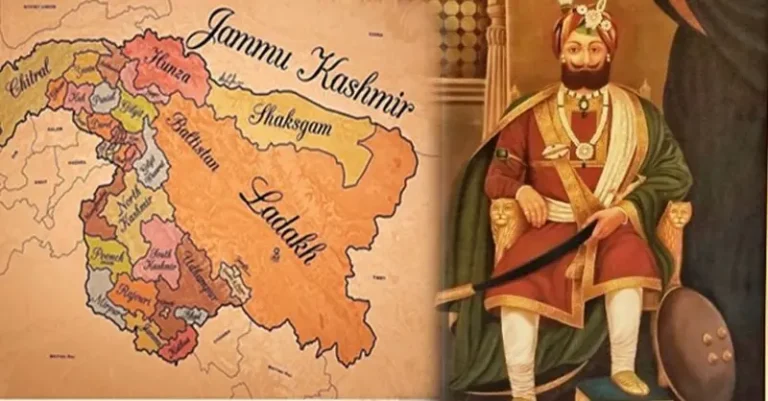
The term Khalsa Sarkar is used for the Sikh government in Gilgit-Baltistan that lasted from 1799 to 1849.

The lands occupied by the Sikh Empire within and outside Gilgit are known as ‘Khalsa Sarkar Zameen’.

Under the law of Khalsa Sarkar, the Government occupied the Ganjanabad (or vacant) land, and since the partition of the subcontinent, this law is still prevalent in Pakistan.

Currently, there is a land ownership dispute in Chilas, Maqpondas, Das, Konodas, and Dongdas, while the people have forgotten the land disputes among their villages and united and now their aim is to get ownership of their land from the government. have to do

Now, decades later, the locals want to abolish this law.

This land dispute has been prolonged to such an extent that Hramosh has forgotten his enmity with another village, Chammogarh, and has included it with him.

Ehtishamul Haque of Chammogarh village says that as a result of the development works on his ancestral lands, the land became narrow for him.

‘We have a lot of wastelands. On this, we can bring water and settle it, but on the one hand, the government is not leaving us because Section 144 has been imposed on Khalsa government lands.

‘For this reason, the lands we are sitting on are now our limited lands. Since our ancestors came here 200 years ago, only a thousand families have remained here.’

Ehtisham said that he has no objection to the land that the government wants, but he should be compensated instead.

In this regard, lands have been taken by the federal government for projects related to CPEC, for which we contacted the Minister of Planning Ahsan Iqbal in the previous government to know his position, but so far there has been no response from him.

Gilgit

Ehtisham said that the government is not compensating them “and now this law should be abolished.”

This is the question when I asked the Minister of Law of Gilgit Sohail Abbas whether should the law of Khalsa Sarkar be abolished? So, instead of opposing it, he said, ‘Yes, God willing, because in our current draft of land reforms, two types of land have been identified. Accordingly, if people’s land has been acquired illegally, we will vacate it and distribute it among the people.

He said that the law of the Khalsa government is being used in a wrong way and as a result, all the land ownership issues end up on the Khalsa government.

Recently, local people also forced politicians to submit a resolution to the Gilgit-Baltistan Legislative Assembly. Under the resolution, the local people have demanded the abolition of neo-population laws, giving people the right to own their lands and participate in the CPEC projects for Gilgit.

But whether doing so will save their lands or get them compensation in return is not guaranteed at this time.

Jameel Ahmed, who is associated with the Pakistan People’s Party, helps the people of the area to submit documents under the ownership rights.

He said that ‘we can call this region an administrative province, it is not a constitutional province. It is an administrative province in which the administrative setup of the province is complete. There is an assembly. Earlier, matters continued to deteriorate because legislative authority was not here, Kashmir Affairs was with it. The Prime Minister had it.

This power came to this assembly for the first time in the year 2009, but I will try my best to highlight the problems of the people through the assembly.

Ehtishamul Haque said that these politicians are also responsible for this deteriorating situation. Those who talk one thing while in the opposition and talk another thing when they come to the government. Whether they are with us or not, we will take our lands from them.’

By the way, this region of Gilgit-Baltistan is very important for Pakistan, but the local people say that they will oppose with every possible platform to stop the development works on the lands of their ancestors and now it is clear that as long as the land Unless a lasting solution to ownership is found, this conflict will continue to flourish in the region.

Gilgit-Baltistan: Historical, Linguistic, Ethnic, and Religious Background

0

Gilgit Baltistan, which is located in the extreme north of Pakistan, has a unique geographical, historical, cultural, political, and strategic position. This region has been called by different names in different periods of history.

In the early period, this area was known as Dardastan, Baluristan in the Middle Ages, and Gilgit from the middle of the nineteenth century to the seventh decade of the twentieth century. It was known as Baltistan.

In 1972, the then government of Pakistan named it Northern Areas (Northern Areas) for administrative purposes. On August 29, 2009, the then federal government issued a Presidential Ordinance called “Gilgit. Baltistan Empowerment and Self Governance Ordinance 2009”. It was named Gilgit-Baltistan instead of the northern region by the patronage of.

Gilgit Baltistan covers an area of ​​27,188 square miles. This region is located between 32 to 37 latitude and 71 to 75 longitude. The climate in these regions varies from region to region and from season to season. In the upper regions, winters are very cold, the high mountains are covered with white blanket of snow all the time and in summers, pleasant hot weather is observed in these upper regions. While in the lowlands there is intense heat in summer and cold weather in winter also shows its strength. Gilgit Rainfall in Baltistan is less than normal with an average rainfall of about six (6) inches per year.

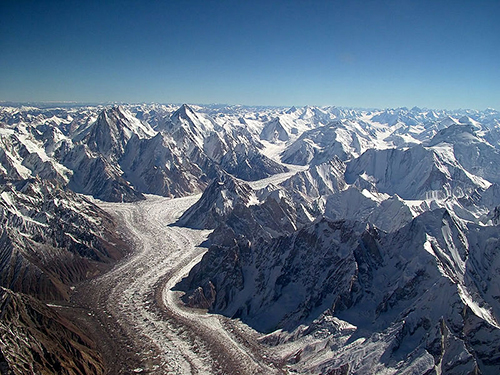
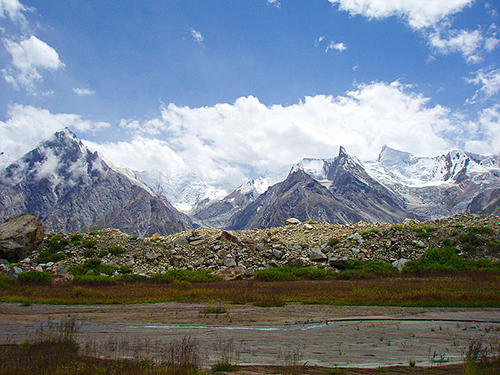
Gilgit This vast region of Baltistan is located between three of the world’s highest mountain ranges, which include the Karakoram, Himalaya, and  Hindu Kush ranges. Dozens of snow-capped peaks rise in these mountain ranges, including the world’s second and third-highest peaks, K. Two (K 2 ), and the highest peaks of Raka Poshi and Mushar Brom including Nanga Parbat are more famous. Similarly, Siachen (72 km), the longest glacier in the world outside the poles, has other long glaciers like Biafo (62 km), Hesper (61 km), Balturo (58 km), Batura (58 km), Gushar Brom. (38 km) and Chogo Lungma (38 km) are also spread in this peninsula.

Also, the historical passes of Babusar, Barzal, Qumri, Karakoram, Mastagh, Haspar, Khanjrab, Muntaka, Kulq, Irshad, Qarambar, Darkot, Brughal and Shandur also connect this land with other lands. Similarly, the beautiful lakes here, like Sadpara, Kachora, Deosai, Rama, Naltar, Phandar, and Attabad lakes invite the tourists. It is also important to mention the famous rivers here, whose names are: the Indus River, Shivok River, Shigar River, Hunza River, and Gilgit River etc.

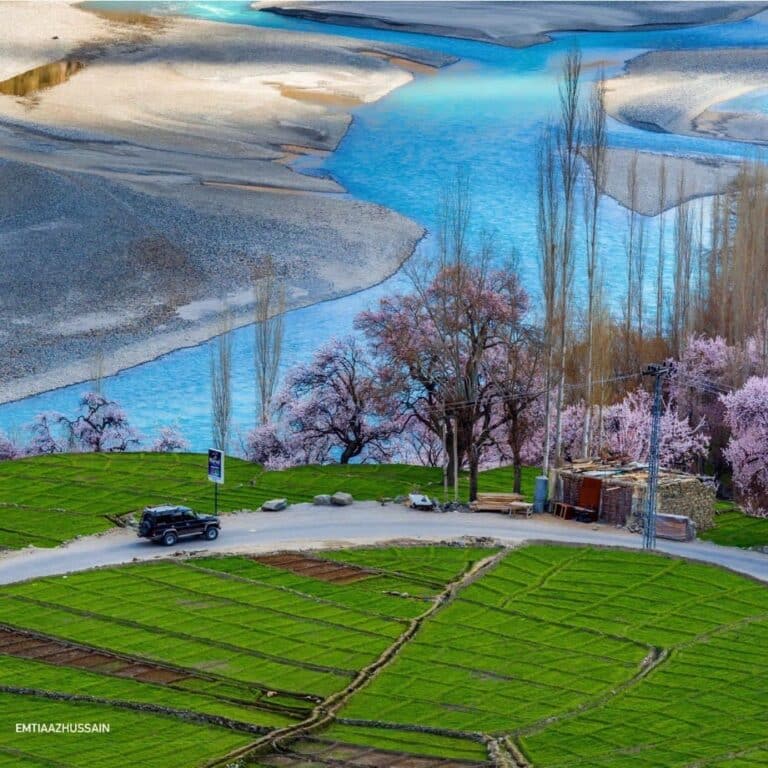
Apart from them, other small rivers, bill-feeding rivers, swinging streams, and beautiful and heart-warming waterfalls around the green fields, glaziers, and rows of green trees enhance the beauty of this land. If any skilled tourist sees them, he will surely hum this Persian poem.

If Firdaus is on the earth, it is the same, and the same is the same, and the same is the same

As far as  Gilgit. As far as the history of Baltistan is concerned, its history is very ancient. Archaeological studies show that its history spans millennia. Rather, Razul Kohistani, who has written excellent works on the history, culture, linguistics, and sociology of this northern region, while determining the ancient history of the north, writes that “geologists date the oldest man of northern Pakistan from 15,000 BC.” 150,000 years ago when it used to live in caves and rock lairs. The age of later man is estimated to be 3000 to 6000 years based on ancient rock formations, which is evidenced by various ancient rock formations. 1

However, the known political history shows that between the 5th and 7th centuries CE, Tibetan rule was established here. Then, after the defeat of the Tibetans by the Chinese in the 8th century AD, the local Shen Dard Shahi government was established with the support of the Chinese, until in the first quarter of the twelfth century, the Tarakhans abolished the Dard Shahi government and established their own dynastic government. Gilgit There were more or less a dozen dynastic governments in other areas of Baltistan.

Then in the fourth decade of the nineteenth century, the governments of the Sikhs of Punjab (1842) and then the Dogars of Kashmir (1846) were established. However, Gilgit. The local dynastic states of Baltistan also continued to exist. In the closing years of the seventeenth decade of the nineteenth century, the British Government of India established a British agency in Gilgit to stop the Russian advance, and in 1876, Major John Biddulph, as an officer on special duty, reached Hunza and Nagar in Gilgit. In the second year i.e. 1877, he was appointed as the British agent in Gilgit.

In 1881, he was recalled from Gilgit, and the agency was reduced. Then in 1889, Gilgit Agency was established for the second time and Colonel Algernon Durand was appointed as the Political Agent. In 1891, under the leadership of Durand, the conquest of Hunza and Nagar took place. In 1893, a boundary between Afghanistan and British India was determined in the Hindu Kush, which is called the Durand Line. This line stretches for a long distance of 1200 miles from the Srikol mountain range in the Pamirs in the north to the Iranian border in the southwest.

Then in 1935, under an agreement, British India took Gilgit and its adjoining area from Maharaja Kashmir Hari Singh on a sixty-year lease. As a result, administrative affairs and military affairs came out of the hands of the Maharaja of Jammu and Kashmir and came under the control of the Government of British India. Then the whole of Gilgit. British rule was established in Baltistan and Chitral.

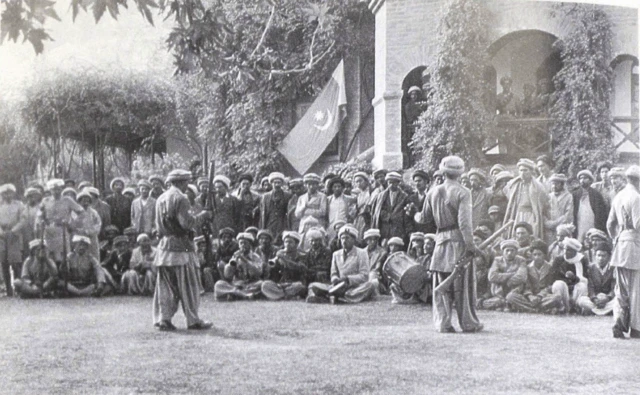
After the establishment of Pakistan in 1947, Gilgit Scouts liberated this region from the domination of Dogars with the help and cooperation of the people and annexed it to Pakistan. From that time till now the government of Pakistan has been running here. Improvement of governance has been partially done and now a provincial setup has also been created, but there is a need to imbue this administrative structure with the spirit of the constitution and make it a full-fledged constitutional province.

 Gilgit ​The ethnic history of Baltistan is also important. Gilgit Baltistan is inhabited by the Sheen, Yashkan, and Balti ethnic groups. The Shen, also known as Dard, belong to the Aryan race that took over and defeated the Brushu, also known as Yashkin. The conquerors called the conquered Broshu as Yashkin. But those Brushus who fled from Gilgit and settled in Hunza, Nagar, and Yasin were called Brushus and kept their language and culture alive.

As far as the ethnic background of the Baltis is concerned, they belonged to the Tibetan and Mongol races. It is said that the present Balti race and nationality were formed as a result of intermarriage between Mongols, Tibetans, and Dardas and their mutual cultural and ethnic relations and mixing. In this way, people of Chitrali, Wakhi, Kashmiri, Badakhshani, Kashghari, Iranian, and Arab origin have been settling here in different periods of history.

The land of the North is extremely diverse and diverse in terms of race and nationality. Along with different races, nations, and tribes, different languages ​​were also formed. So at that time Gilgit. A dozen local and non-local languages ​​are spoken in Baltistan. Among the local languages ​​are Sheena, Balti, Brushski, Khowar, Vakhi, and Domaki while the non-local languages ​​are Kashmiri, Gujri, Kashghari, Pashto, and Persian. All the people here understand Urdu as the national language of our country Pakistan and in our educational institutions i.e. schools, colleges, and universities, Urdu is also the academic language of the country as a medium of education and learning. Read and write.

A large number of educated people and especially a large number of the new generation also understand, read and speak English. Now the trend of learning the Chinese language is also increasing rapidly and Chinese language centers have also been established here. However, Shina has the status of a contact language or common language (lingua franca) among local languages.

Now Gilgit. The pre-Islamic religious history of Baltistan is referred to. The history of pre-Islamic religions is also very ancient, but it is as ancient as human history here. Among the ancient religions here, the first religion was Bonism. As a Pakistani writer, Nadira Zaidi, in her essay “Balti Adab”, which was published in the “History of Muslims of Pakistan and India”, writes about Baltistan: “Before Islam, the people of Baltistan were followers of Buddhism.”

Before that, goddesses were worshiped and the religion of that time was called Bon Chhos [i.e. Bon Mutt].” 2 According to Kachu Sikandar Khan Sikandar, the author of the book ‘Qadim Ladakh’ written in Urdu, the founder of Bon Mutt. “Shen Lord Meidu” was a person who belonged to the Shen race. 3 In this sense, Bonism is considered to be the local religion of Shen Dardas and the center of this religion is Gilgit. While the early religion of Tibet is also said to be Bon Mat.

Therefore, a Western writer and thesis writer L. Oh, Waddell (L. A. Waddell) writes that: “The aboriginal pre. The Buddhist religion of Tibet is called by the people Bon; and those who profess it are called Bon. pa, i. e. ‘The Bones’. 4 That is, “The native religion of Tibet before Buddhism is called by the people Bon, and those who believe in it are called Bon Pa, i.e. followers of the Bon religion. “

In Badi-Nazar, though, there is a difference of opinion as to whether the original homeland of Bonism is Gilgit or Baltistan (Tibet Khurd) or  Ladakh (Tibet Kalan)? But a cursory look at history shows that Bonism was the early religion of the Shindars, as claimed by Kachu Sikandar Khan Sikandar. Also, A. H. A study of the book A History of Ladakh by A. H. Francke shows that when the Dardas migrated from Gilgit to Tibet in the early period of history, they took their native religion with them to Tibet and practiced Buddhism there. Keep it in practice till arrival.

5 From this, the hypothesis can be established that Bon Mat reached Tibet Kalan (Ladakh) with the Shen Dards and from there spread to Tibet Khurd i.e. Baltistan. The other situation was that in the early periods when the Dardas migrated from Gilgit to Ladakh, they also went from Gilgit to Baltistan. They also took with them the religious beliefs of Bonism.

As Colonel Muhammad Zakir writes in his book ‘Siachen Glacier’, “According to historical evidence, the human population in Baltistan began before the birth of Gautama Buddha by those nations who migrated from Gilgit through the Indus Valley into the Skardu Valley or through the Hunza. / Nagar settled in the Sugar Valley and from Ladakh in the Navam Valley.” 6 This is confirmed by Colonel John Biddulph’s book ‘Tribes of Hindukush’. Entries also occur. So from this evidence, it is known that Gilgit. The early and indigenous religion of Baltistan was Bonism and its birthplace was Gilgit, from where it was propagated in Tibet and Tibet clans through Shen Dards.

Also, the early history of the Dard tribes is very old. Modern archaeological research dates it to the Bronze and Iron Ages. So Mr. Nazir, a scholar of the Department of Archeology of Pakistan. Oh In 1994, a team led by Khan.

Gilgit in 1995. Prepared a detailed report on the archeology of Baltistan, according to which, in the areas of the northern regions where people of the Dard race live today, traces of such graves have been found, which belong to the Bronze and Iron Age, and there is little doubt in this. There is a possibility that these graves were built by the ancestors of Dardas. 7 The Bronze Age spans several millennia, and it expanded to Europe in the 5th century BC. So, in view of these facts, it would be correct to say that the history of pain and religion goes back to the unknown history of BC.

After Bon Buddhism, Buddhism spread in this region. Buddhism, according to Alexander Cunningham, spread to Tibet in the middle of the 7th century AD. 8 And from here it spread to Gilgit. It started happening in Baltistan too. Because at that time these areas were under the control of Tibet. This is also confirmed by the statement of the German researcher Dr. Karl Zetmar, in which he writes that:

It is quite possible because the area had remained under Tibetan overlordship.
Translation: “This is possible because the area was under the control of Tibet.”

Similarly, the British Political Agent in Gilgit, Colonel Algernon Durendas, while describing the status of Buddhism in the Dardastan region, writes: “It seems that Buddhism would have gained a lot of power during this period. As is evident from the abundance of tall altars and other Buddhist temples throughout the Hindu Kush’s dimensions. Chitral, Pinyal, Gilgit, Nagar, and Baltistan have a large number of Buddhist stupas and statues of Gautama Buddha, which means that this religion flourished in the region for centuries.” 10

The Hunza Valley in particular has been a center of Buddhism due to its geographical location which is evidenced by history. In this regard, a Pakistani researcher Iqbal M. Shafi writes:

“Before the advent of Islam towards the end of the eighth century, Hunza had been a stronghold of Buddhism, preceded by Hinduism.” 11

Translation: Before the arrival of Islam in the late 8th century, Hunza had been under the stronghold of Buddhism, which was furthered by Hinduism.

Because the route from Taxila, the center of Buddhism, to China, was through Hunza. Chinese pilgrims used to go to Taxila and Gandhara to preach and teach Buddhism through this route. While Buddhism was spreading widely in China at that time. Therefore, Iqbal M. Shafi’ writes: “Buddhism traveled to China through this route and famous early travelers such as Fahyan (400 AD) and Hien Tsang (7th century AD) during their visits to the centers of Buddhist learning at Taxila, Chandra and Narada visited them. used to travel from the regions.” 12

After Buddhism, the beliefs of Hinduism also spread here. Hinduism was the religion of the Shandars in particular. As John Biddulph opines on the basis of some evidence: “The Shins introduced Hinduism into Gilgit and the surrounding valleys during their reign.”13 While Durand elaborates on this point of view. What is described by He writes: “The fact that the religion of the Shin tribes was Hinduism does not require any explanation or proof.” Their sanctity of the cow, their strict caste distinction, and their carelessness in preserving the ancient relics of Buddhism are clear proofs that the Shin people were Hindus.” 14

Apart from these religions, traces of Zoroastrianism, Magi, and Shamanism are also found here. There is also evidence of paganism, pluralism, or pantheism. According to historians, in the ancient era, not only Iran but also Central Asia, Wakhan, Gilgit. The entire region up to Baltistan and Chitral was once the cradle of Zoroastrianism. Thus John Biddulph writes: “The Amu Valley has been the cradle of Zoroastrianism, and the valleys south of the Hindu Kush are unlikely to have escaped its influence.

In Wakhan there are many towers and structures attributed to fire-worshippers, and the tradition of this worship is also present in Yasin.” 15 Biddulph, on the same page of his book, describes Gilgit’s ritual of tilini (charaghan or torch-carrying procession) in December. Nos) writes that: “In the part of the tilini [ritual] in the festival of Nos, we probably see traces of the Magian worship in these countries.” While Prof. Also determines the era of Zoroastrianism.

He writes that 500 BC. Around 1000 BC, our region was engulfed by occultism, and at the same time, the Zoroastrian culture and civilization spread. 16 The above opinion of the said professor regarding the determination of the history of Zoroastrianism and Zoroastrianism in these areas seems to be correct. Before the invasion of Alexander the Greeks over all of India and Central Asia but also Gilgit. Baltistan was also ruled by the Achaemenids of Iran, whose official religion was Zoroastrianism. As the well-known Pakistani historian and archaeologist Dr. Ahmed Hassan Dani writes:

This region of  Gilgit was a territorial part of the Achaemenid. 17 That is, “This region of Gilgit was part of the Achaemenid Empire.”

Gilgit Shamanism has also been dominant in Baltistan and its surroundings. Because the land from here to the Mongolian region has been a place of shamanic ideas and culture for centuries if not millennia. Shaman is called Kahan in Urdu, Dhinal in Shina, and Bitan in Brushski. In the past, priests were strong in Gilgit, Hunza, Nagar, and other adjacent areas. Local traditions say that fairy palaces are built on great snow-capped peaks like Nanga Parbat and Rakha Poshi, from where fairies visit nearby human settlements and exert their influence on human beings, whether male or female. Due to this those humans gradually take the form of priests and through these fairies, they bring news from the world of jinn, which can also be called the invisible world or in a sense spiritual presentation. They make predictions.

This is the reason why priests have had a profound influence on the political, social, religious, and even health and economy of this region. In the past, the shaman or priests here used to tell the fate of people, but also the news of life and death. Rajas Maharajas Mirans and Mehtarans also consulted priests for their military campaigns. There have been many famous priests in this region, among which Dhinal Khimto in Gilgit and Shon Gukur in Hunza are more famous. According to elders, many of his predictions have come true.

Similarly, pluralism, which should also be called pantheism, was also common in these areas. Sometimes animals were worshipped, sometimes stones and trees were worshiped and prayers were sought from them. So in each valley of Diamar, there were gods with different names who were worshipped. According to Carl Jutmar, Taiban was worshiped in Gor and Naron in Chilas. 18

The Hunza Valley, as mentioned above, like other valleys, was dominated by Buddhism but also had traces of Hinduism and Manifestism. Places where the dead were cremated are also identified here. The people of Hunza used to worship a special animal called “Boyo” in the local language. People used to ask for their needs from these animals. These animals were similar in shape to a dog’s paw.

Those who worshiped them used to take offerings of ghee and milk etc. to the appointed place, the sign of acceptance of the need was that these animals would leave this place and lick the needs of those who offered the need, and the need was not accepted. In this case, these animals did not come out of this particular place and did not meet the needs of the needy. 19 According to Müller, the book is a juniper, a spring-like tree [called “chili” in Sheena and “gal” in Burushski], growing out from under the rocks.

These loud trees were also called ‘boyo junipers’. According to Müller Hay, cutting down these trees was considered very unlucky. 20 According to this tradition, along with animal worship, tree worship was also prevalent in this region. This is also confirmed by a tradition from Biddulph. Regarding the beliefs of  Gilgit and the surrounding Dard areas, he writes: “The Shin people introduced tree worship along with Hinduism. 21

Not only in the regions of Gilgit and Hunza, the practice of tree worship was common, but in the Himalayan country as a whole, this ritual was prevalent and the juniper tree was considered sacred. Because this evergreen tree grows and thrives on the tops of mountains. Similarly, a local flower called “Mir Mukhuti”, which grows and blooms on the high peaks of the mountains was also considered sacred. In the context of this sanctity lies the secret that on the tops of high mountains, there is the abode of fairies i.e. Prastan and these fairies are said to be invisible beings and are pure and free from physical luxuries and impurities. And are holy.

Their sacred tree is juniper and their favorite flower is “Mir Makhoti”. Thus, in this entire Himalayan region, the sanctity and sanctity of trees and flowers is Muslim. A European tourist. T. G. T. Vine, who visited these regions in the first half of the nineteenth century AD, writes that Dr. Royle (Dr. Royle) named a particular type of juniper as juniper religiosa. is given So generally the inhabitants of the Himalayas consider it sacred. Because it grows and flourishes at a very high altitude, where, according to the imaginations of these natives, the abodes of jinns and spirits reside. 22

Gilgit With the advent of Islam in Baltistan, the above religions, which were all uninspired religions, became extinct. Currently, four sects of Islam are prevalent here: Ahle-e-Sunnah wa-ul-Jamaat, Twelver Shia, Ismaili Shia, and Noor Bakhshiya Shia. Brief accounts of these four Muslim sects will be described in chronological order in another paper.

References

1. Razol Kohistani. “Archaeology of Northern Pakistan.” A Brief Review”, ‘Sarbuland’, Volume: 1, Issue No: 1, Editor: Zubair Torwali, Institute of Education and Development, Swat, March 2021, p. 29

2 Nadira Zaidi. “Balti Adab”, “History of Muslim Literature of Pakistan and India”, Volume 14, Regional Literature of West Pakistan, (Volume II), Editor: Syed Faiz Mahmood, Punjab University, Lahore, p. 12; Syed Alam Astori. ‘Linguistic Review of Northern Regions’, Islamabad, 1990, p. 32

3. Kachu Sikandar Khan Sikandar. ‘Ancient Ladakh: History and Civilization’, Kacho Publishers, Leh, Ladakh, 1987, p.

4. L. A. Waddell. “Tibet”, Encyclopaedia of Religion and Ethics, edited by James Hastings, volume xii, T & T. Clark, Edinburgh, second edition, 1934, p. 333

5. A. H. Franke. A History of Ladakh, Book Traders, Lahore, 1995, pp. 27. 38

6. Muhammad Zakir ‘Siachen Glacier’, Skardu, Baltistan, 1991, p. 29; June Biddulph. ‘Tribes of Hindu Kush’, translated by Javed Shaheen, Sang-e-Mail Publications, Lahore, 1991, p. 67. 75

7. Ahmad Hasan Dani. History of Northern Areas of Pakistan, Sang. e. Meel Publications, Lahore, 2007, p. 422

8. Alexander Cunningham. Ladakh, London, 1954, pp. 356. 359
9. Karl Jettmar. Bolor and Dardistan, Islam Abad, 1980, p. 5

10. Colonel Algernon Durand. ‘The Search for Borders’, Translator: Lt. Col. (Rtd) Ghulam Jilani Khan, Dost Publications, Islamabad, 2009, p. 209. 210

11. Iqbal M. Shafi. Silk Road to Xinjiang, Lahore, 1988, p. 41
12. Also, p. 42
13. June Biddulph. ‘ Tribes of  the Hindu Kush ‘, p. 147

14. Durand. ‘Searching for Frontiers’, p. 210; Jon Biddulph also seems convinced of the same point of view. She writes: There are good reasons for believing that the religion of the Shinas was Hindu in nature. (John Biddulph. Tribes of the Hindu Kush, translated by Javed Shaheen, Sang-e-Mail Publications, Lahore, 1991, p. 145)

15. J. Biddulph. Tribes of Hidukush, Karachi, reprint, 1977, originally published in 1880, p. 108. 109

16. Usman Ali “Karakoram Region: Languages ​​and Society”, Maqbool Academy, Lahore, 1996, p. 18

17. A. H. Dani. History of Northern Areas of Pakistan, Sang. e. Meel Publications, Lahore, reprinted 2007, p. 123

18. Karl Jettmar. Bolor and Dardistan, Islam Abad, 1980, p. 64; This is described by Biddulph. See Biddulph. Tribes of Hidukush, p. 15

19. Fida Ali Isar. ‘Ismaili Dawat in the Northern Regions: A Historical Review’, Atrab, Karachi, 1991, p. 17; Müller. Hunza, p. 211

20. Müller. Hunza, p. 211
21. Biddulph. ‘Tribes of the Hindu Kush’, p. 147

  1. GT Vigne. Travels in Kashmir, Ladakh, Iskardo, vol. 2, London, 1872. First published in 1845, pp. 222. 223

Bibliography
Astori, Syed Alam. ‘Linguistic Review of Northern Regions’, Islamabad, 1990.
Itsar, Fida Ali. ‘Ismaili Dawat in the Northern Regions: A Historical Review’, Atrab, Karachi, 1991.
Buddulf, June. Tribes of the Hindu Kush’, translated by Javed Shaheen, Sang-e-Mail Publications, Lahore, 1991.
Zakir, Muhammad. ‘Siachen Glacier’, Askrid, Baltistan, 1991

Durand, Colonel Algernon. ‘In Search of Frontiers’, Translator: Lt Col (Rtd) Ghulam Jilani Khan, Dost Publications, Islamabad, 2009

Zaidi, Nadira. “Balti Literature”, “History of Muslim Literature of Pakistan and India”, Volume 14, “Regional Literature of Western Pakistan”, (Volume II), Editor: Syed Fayyaz Mahmood, Punjab University, Lahore

Sikandar, Kachu Sikandar Khan. ‘Ancient Ladakh: History and Civilization’, Kacho Publishers, Leh, Ladakh, 1987
Ali, Usman. “Karakoram Region: Languages ​​and Society”, Maqbool Academy, Lahore, 1996

Kohistani, Razol. “Archaeology of Northern Pakistan.” A Brief Review”, ‘Sarbuland’, Vol:1, Issue No:1, Editor: Zubair Torwali, Institute of Education and Development, Swat, March 2021

Biddulph, J. Tribes of Hidukush, Karachi, reprint, 1977, originally published in 1880

Corbin, H. “Nasir-i-Khusrow and Iranian Ismailism”, Cambridge History of Iran. Vol. 4, Cambridge University Press, Cambridge, 1975

Cunningham, Alexander. Ladakh, London, 1954
Dani, AH History of Northern Areas of Pakistan, Sang-e-Meel Publications, Lahore,
reprinted 2007
Francke, AH A History of Ladakh, Book Traders, Lahore, 1995
Jettmar, Karl. Bolor and Dardistan, Islam Abad, 1980
Mullar, SJ Hunza, Graz, 1979
Shafi, Iqbal M. Silk Road to Snkiang, Lahore, 1988
Vigne, GT Travels in Kashmir, Ladakh and Skardu, Vol. II., London, 1872. first Published in 1845

Waddell, LA “Tibet”, Encyclopaedia of Religion and Ethics, edited by James Hastings, volume xii, T & T. Clark, Edinburgh, second edition, 1934


The Truth of Gilgit-Baltistan’s War of Independence: History and Facts

A rumor had spread in Gilgit that the Maharaja of the state of Kashmir was about to join India. Along with this, there was talk about a possible rebellion of the scouts. Slogans of Pakistan Zindabad and Maharaja of Kashmir Dead were written on the walls everywhere, even at the gate of the Governor House. I saw him, the governor, himself erasing the slogan. But the next morning they were written again, even on the gate of my house.’

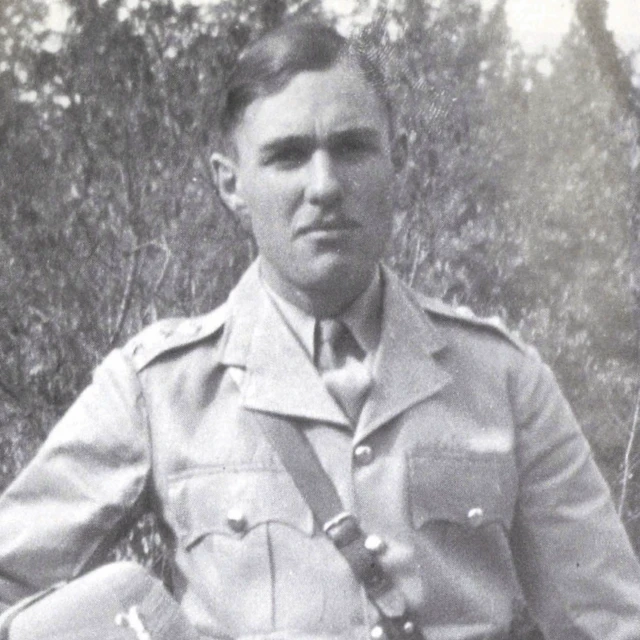
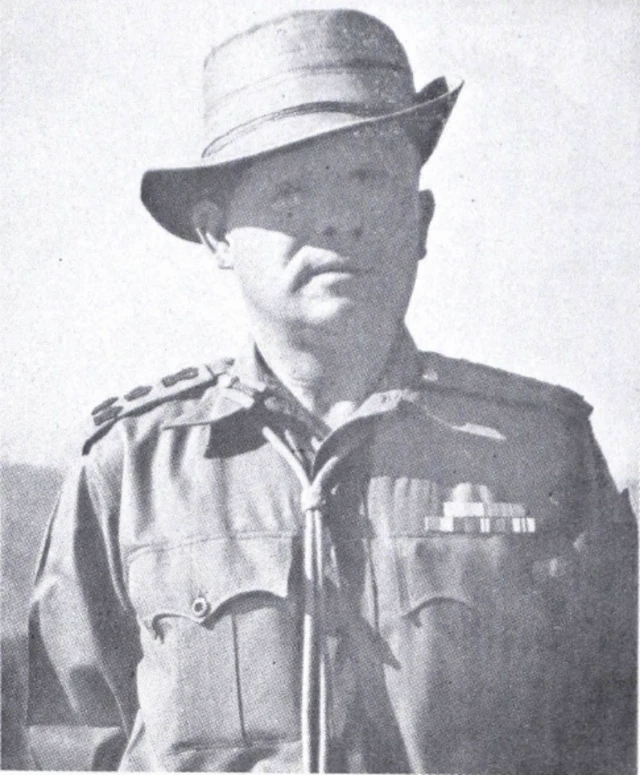
These are the words of Major William Brown who was the British commander of the Gilgit Scouts in 1947 and was about to be part of a coup that resulted in the newly independent state of Pakistan becoming a major part of the state of Jammu and Kashmir.

Along with Gilgit, this area also included the city of Skardu, which is now Pakistan-administered Gilgit-Baltistan. But this story begins in Gilgit in 1947.

This was the time when Pakistan and India had become independent, but the issue of accession of some other states, including the state of Jammu and Kashmir, had become controversial.

In such a situation, Major Brown, who is in Gilgit, writes in his book ‘Gilgit Rebellion’ i.e. ‘Gilgit Uprising’ that on the evening of October 25, 1947, ‘it was learned from the news that the Indian government has decided to send troops to Kashmir.’

A few days ago, tribal fighters had invaded Kashmir via Muzaffarabad and had reached near Srinagar.

It was then a part of present-day Gilgit-Baltistan, the state of Jammu and Kashmir. In his book ‘The Gilgit-Baltistan Conundrum: Dilemmas of Political Integration’, sociologist Saeed Ahmed writes that the state of Jammu and Kashmir had four units: Jammu Province, Kashmir Province, Gilgit District, and Ladakh District.

However, in 1935, the British took over the management of the Gilgit Agency from the Dogra ruler on a 60-year lease, while the Baltistan region remained directly under the Dogra rule.

Major Brown
Major Brown

Gilgit Mutiny, Governor Ghansara Singh and Major Brown

In ‘The Gilgit-Baltistan Conundrum: Dilemmas of Political Integration’, sociology teacher Saeed Ahmed writes that two weeks before the independence of India and Pakistan, the British suddenly canceled this lease, and on July 30, 1947, the British Commander-in-Chief of the Kashmir Army. Major General Scott arrived in Gilgit accompanied by Brigadier Ghansara Singh who was sent to Gilgit by the Maharaja of Kashmir as Governor.

Until then, the Maharaja had not decided to join Kashmir with Pakistan or India, but with the end of British rule, resistance against the Maharaja started in different parts of Kashmir and after the advance of the tribals towards Srinagar, the Maharaja on October 27 In 1947, it declared its accession to India.

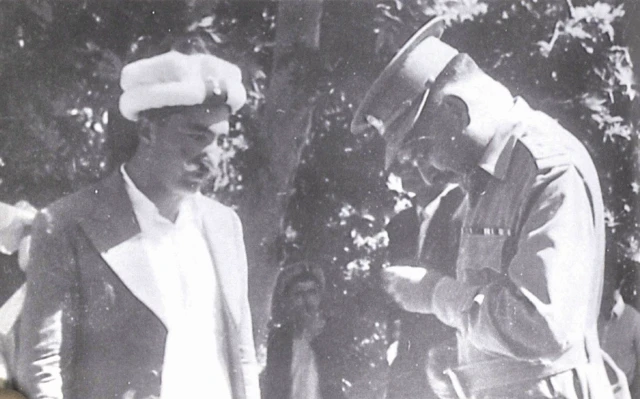
According to Major Brown’s book, the Gilgit Scouts, who had already formed a Revolutionary Council, launched a mutiny under these circumstances on 31 October 1947 under the name ‘Operation Datta Khel’.

The mutiny began at Bunji near Gilgit where Muslim soldiers of the Kashmir State Army led by Mirza Hasan Khan attacked the Sikh companies of the Sixth Kashmir Infantry.

Meanwhile, Governor Ghansara Singh in Gilgit surrendered to Subedar Major Babur after some resistance. Major Brown also claims to have signed this document.

On November 1, 1947, a Provisional Government was established in Gilgit, which unconditionally acceded to Pakistan, and on November 16, 1947, the representative of the Government of Pakistan, Sardar Muhammad Alam Khan, arrived in Gilgit as a political agent.

Battle of Skardu
Governor Ghansara Singh and Subedar Major Babar

Battle of Skardu

Retired Pakistani Brigadier Masood Ahmad Khan writes that at that time Major Aslam Khan (later Brigadier) was posted in Gilgit, anticipating the coming situation, started training volunteers including local scouts, and prepared four different armies One of them was named ‘Ibexforce’.

Aslam Khan was one of eight siblings, including Asghar Khan, who later became Air Chief Marshal and Chief of the Pakistan Air Force.

According to Masood Ahmad Khan, Skardu was located at an altitude of 7400 feet above sea level on the banks of the Indus River and was also of strategic importance. In such a situation, both Pakistan and India realized that control over Skardu was necessary. In those days, though the distance from Gilgit to Skardu was 160 miles, it used to be a 20-day journey.

It should be noted that Skardu was the political center of Baltistan and the headquarters of a tehsil of the Ladakh Ministry of Kashmir State where the administration of the Ministry spent six months every year while the remaining six months were posted in Leh.

According to S. Kumar Mahajan, the author of the book ‘Debacle in Baltistan’, a company of six battalions under the command of Major Sher Jang Thapa was present in Leh, who was promoted to the rank of lieutenant colonel and promoted to the rank of lieutenant colonel to defend Skardu as soon as he got the news of the mutiny in Gilgit. Ordered to depart.

Gilgit Scouts
Gilgit Scouts

Siege of Skardu

According to Mahajan, when Sher Jang Thapa reached Skardu on December 3, 1947, he realized that his position was not strong. He requested more reinforcements, which were rejected, and told to ‘fight to the last man and the last round.’ Sher Jang Thapa established a defensive enclosure outside the city.

Earlier, according to Mahajan, the District Magistrate of Ladakh, Amarnath, who was in Skardu at the time, had marked where the planes could land to immediately transport Indian troops to Ladakh, Kargil, and Skardu. However, the Indian Army was busy on other fronts of Kashmir at that time and one of the problems according to Mahajan was that the planes of the Indian Air Force could not land at these places.

According to Ahmed Hasan Dani’s book ‘History of Northern Areas’, Major Aslam Khan also realized that if the Indian Army reached Skardu by planes like Srinagar, this city would be out of their hands. Time was short.

However, with the help of the Raja of Rondo near Skardu and organized planning, the IBEX force under the leadership of Major Ehsan managed to cross the first defensive line and reach Skardu. Troops of the 6th Jammu and Kashmir Light Infantry Battalion who escaped from Bunji were stationed at Kharpochu Fort in Skardu city, at ground point 8853 and in and around the cantonment.

In such a situation, the Indian High Command sent two additional companies from Srinagar to Skardu as reinforcements headed by Brigadier Faqir Singh.

The first formal attack on the Skardu cantonment was made on 11 February 1948 in which there was a fierce exchange of fire and according to the book ‘Stories of Heroism’ by author B Chakraborty, a six-hour standoff between the IBEX force and the entrenched troops took place on 11 February 1948. After a fight, the attackers retreated.

Further attacks were carried out during February and March, during which half of the positions, including Point 8853, were captured according to Masood Khan. Meanwhile, news came that a brigade-sized reinforcement led by Brigadier Faqir Singh was coming to rescue the besieged force in Skardu.

Sher Jang Thapa
Sher Jang Thapa

In such a situation, two platoons were sent towards the Kargil-Skardu road, where they ambushed and fired at the army of Indian soldiers and also pelted heavy stones from a height. Brigadier Faqir Singh and his advisers managed to escape with some soldiers due to low light while many others jumped into the river Indus and drowned.’

According to Mahajan, both the morale and supplies of Indian troops and their commander Sher Jang Thapa, who were besieged in Skardu, were decreasing. Meanwhile, the Indian Air Force airlifted some supplies to the fort.

Meanwhile, however, Major Ihsan sent a few troops beyond Skardu towards Kargil and Zojila, and in May 1948, elements of the Ibex Force succeeded in capturing Kargil and Drass through the Eskimo Force. Later they had to retreat as a result of operations by the Indian Army.

When Sher Jang Thapa surrendered

Meanwhile, 300 young men of Chitral Scouts and Chitral Body Guards under the leadership of Prince Muta-ul-Mulk and Major Burhanuddin reached Skardu where Muta-ul-Mulk sent a message to surrender but got no response.

Chandra B. Khanduri writes that by mid-August 1948, the Skardu garrison was in bad shape.

On August 13, 1948, the Kashmiri and Indian troops in Skardu left the fort in small pieces, and on August 14, 1948, after a long siege of 5 months, Lt. Col. Thapa, Capt. Ganga Singh, Capt. Prahadal Singh, Lt. Ajit Singh with 250 men. Surrendered with.’

According to historian Dr. Ahmad Hasan Dani, ‘The final victory was achieved with the help of the Chitral soldiers who gave the last blow under the command of Colonel Muta-ul-Mulk.’

At 1 am on 14 August 1948, the Pakistani flag was hoisted at the historic hilltop fort Kharpochu and Skardu became part of the Pakistan-administered Northern Territory along with South Baltistan.

Major Ehsan Ali was awarded the Star of Valor by the Government of Pakistan while Lt Col Sher Jang Thapa was later awarded the Mahavir Chakra by India.

After the war, he and other prisoners of war were sent back to India

Gilgit-Baltistan: History, Culture, and Tourism

0

Gilgit-Baltistan has a unique history of its own. Located in the north of Pakistan, this region is famous all over the world for its high mountains, charming rivers, and pleasant climates. The people of Gilgit-Baltistan are very brave and hardworking. Who played an important role in freeing their region from Indian occupation along with Azad Kashmir.

The history of this region goes something like this. When the Chinese traveler Fahyan entered this region, there was a state called Pulula which spread over the entire Gilgit-Baltistan and its capital was the present-day Naveem region. Then in the 7th century, some parts of it were included in the royal government of Tibet, after which in the 9th century it was divided into various local kingdoms, among which the Moqpon of Skardu and the Tarkhan dynasty of Hunza are famous.

Also Read: Gilgit Baltistan Land Reform Bill Rejected: State Subject Rule to be Activated; Gilgit-Baltistan Awami Action Committee

The kings of the Maqpun dynasty ruled the territories including Baltistan up to Ladakh, Gilgit, and Chitral. Ahmad Shah Maqpun was the last king of this dynasty. Gilgit-Baltistan is also the northern region of the state of Jammu and Kashmir and Aqsa-Tibet. Before 1840 these areas were divided into different states. In addition to Baltistan and Gilgit, Hunza, and Nagar were separate autonomous regions.

These areas were later conquered by General Zorawar Singh and included in the state of Jammu and Kashmir. At the time of the division of the sub-continent, in the middle of the nineteenth century, like other states, the candle of independence started to burn here.

On the occasion of the establishment of Pakistan, this area was included in the state of Jammu and Kashmir and Aqsa Tibet. The people of this region gained independence by fighting themselves. This independence started from Gilgit and on November 1, 1947, Gilgit was occupied by the Muslim officers of the state forces and declared the independent Republic of Gilgit. Sixteen days after this independence, Pakistan.

The independent state was abolished and the FCR was implemented. Since independence, this region was considered as an anonymous region which was called the Northern Territory, but in 2009, the Pakistani government gave this region semi-provincial powers.

It is the only region whose borders meet with four countries and Pakistan has fought three wars with the neighboring country India, the 1948 war, the Kargil war, and the Siachen war in the same region, while in the 1971 war, there were clashes in some of its border areas. Many villages went under Indian occupation, therefore this area is an important area for defense and the historic Silk Road passes through here.

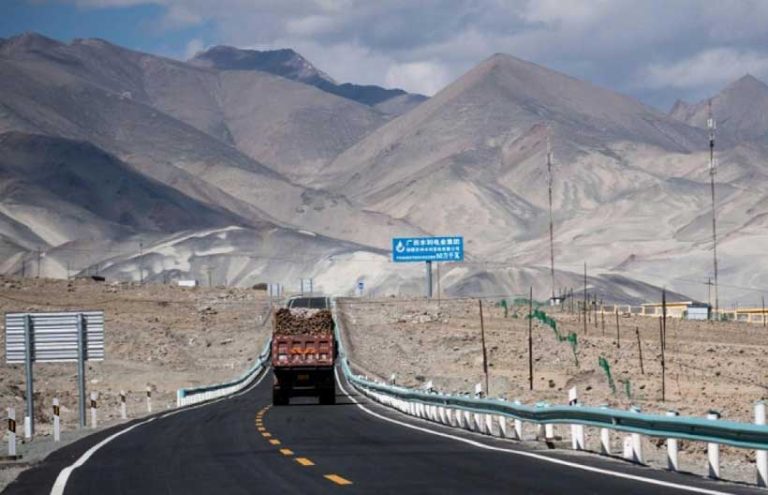
In 2009, this area was given semi-provincial status and elections were held here for the first time. As a result, Syed Mehdi Shah belonging to the Pakistan People’s Party was elected as the first Chief Minister of Gilgit-Baltistan. After the construction of the CPEC between Pakistan and China, the importance of this region increased. The China-Pakistan Corridor is entering Pakistan through this region. 

 Gilgit-Baltistan has a population of 2 million people while its total area is 72971 square kilometers. 9 languages ​​are spoken in Gilgit-Baltistan while Balti and Sheena are the popular languages ​​here. Gilgit and Baltistan consist of three divisions Baltistan, Daya Mira, and Gilgit, and 14 districts.

Baltistan Division consists of the districts of Skardu, Shagar, Khurmang, Rondo, and Ganche. Gilgit Division consists of the districts of Gilgit, Ghazar, Hunza, Yasin, and Orangar. The Dia Mir Division consists of the districts of Dariel, Tanger, Astor and Dia Mir. To the northwest of Gilgit-Baltistan is Afghanistan’s Wakhan Belt, which separates Gilgit-Baltistan from Tajikistan, while to the northeast lies the Uighur region of China’s Muslim-majority Xinjiang province.

Indian Occupied Kashmir is located in the southeast, Azad Kashmir in the south, and Khyber Pakhtunkhwa province in the west. There are 50 peaks above seven thousand meters in this region. Three of the world’s highest and most difficult mountain ranges, the Karakoram, the Himalayas, and the Hindu Kush meet here. Two of the world’s second-highest peaks are also located in the same region, while Nanga Parbat, known as the hardest killer mountain in the world, is also located in the same region.

Tourist Places of Gilgit Baltistan

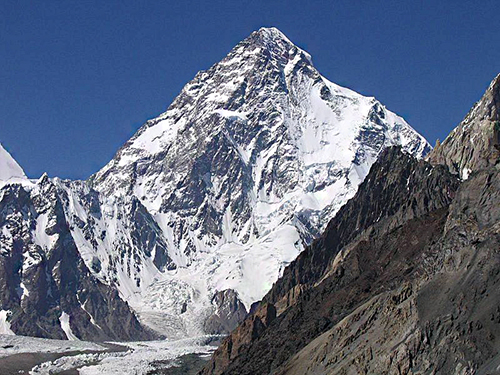
1-K-2: K2 is the second-highest peak in the world. This range is located in the Karakoram Mountains, Gilgit-Baltistan, Pakistan. Its elevation is 8611 m/28251 ft. It was first climbed on July 31, 1954, by two Italian mountaineers, Lissadelli and Campanoni. K2 is also called Mount Goodwin Austin and Shahguri.

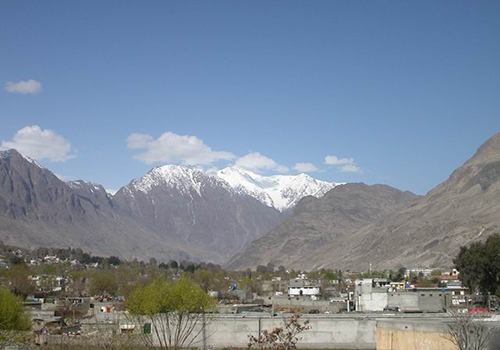
2- Gilgit: Gilgit is the largest city in the Gilgit-Baltistan province of Pakistan. It is located near the Karakoram Highway. The Gilgit River passes by it. To the east of Gilgit Agency is Kargil to the north, China to the northwest, Afghanistan to the west, Chitral to the west, and Baltistan to the southeast. The confluence of the world’s three great mountain ranges, the Himalayas, the Karakoram, and the Hindu Kush, is close to Gilgit.

The language here is Sheena but Urdu is considered common. Gilgit is also a center of trade with China. Climbers of K To, Nanga Parbat, Rakaposhi, and other high peaks of the north come here. The special thing here is the high mountains and the flowing rivers and greenery here.

There are more than three sects of people living in Gilgit City, including Sunni, Shia, Ismaili, and Noorbakhshiya. Gilgit is the capital of Gilgit-Baltistan Province, which was annexed to Gilgit-Baltistan, Pakistan on November 1, 1947, after gaining independence from the Dogra Raj.

3- Skardu: Skardu is an important city and district of Gilgit-Baltistan. Skardu City is a beautiful city surrounded by the Karakoram mountains. The beautiful places here include Shangri-La, Sadpara Lake Kat Panah Lake, etc. Millions of domestic and foreign tourists visit Skardu every year. The people living in Skardu speak Balti language which is a branch of the Tibetan language while the people of Skardu are very friendly, cheerful, peaceful, and hospitable.

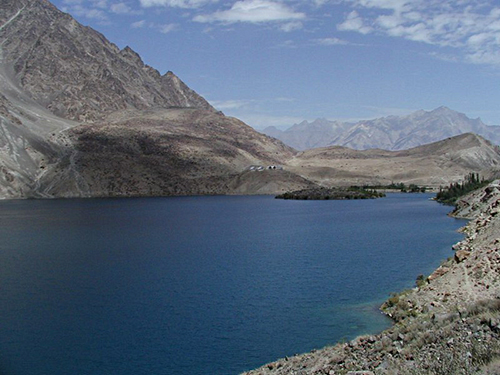
4- Sudpara Lake: Sudpara Lake is located at a height of 8500 feet above sea level, some distance from Skardu city. This beautiful lake is full of fresh water and has rocky cliffs on two or three sides. Snow falls on these mountains in winter and when this snow begins to melt in early summer, not only the snow but also the water from the natural streams coming out of the Deosai National Park, which is a few hours away, flows into it. All these fall scenes bring a refreshing sensation to the eyes.

5- Kachora Lake: This lake is 8200 feet wide. This lake is called Farooq Jhu in the Balti language. In summer, local and foreign people come to see this place and enjoy pick-up

6- Shigar: Shigar is a very wide and beautiful valley located in Baltistan, the northern region of Pakistan. It is larger than any other district in the Baltistan Division both in terms of area and population. The population of Shagar starts from a village called Lamsa, two kilometers from here comes Shagar Khas, which is called the headquarters of the entire district. Sugar Khas is the confluence of the Basha River and Baraldo River.

The road leading to Baraldu Nala from Sugar Khas ends at the last village of Baraldu Nala. Between Shagar Khas and Taste are the union councils of Chorkah, Ulchori, and Dasu. This area is located on the right side of Sugar, at the end of which is the second-highest peak in the world, apart from Tou, the peaks like Gasha Brom 1, Gasha Brom 2, Trang, and Tower also attract climbers and tourists from all over the world in Baraldo area. They are a means of bringing.

7-Deosai National ParkIn addition to the world’s highest peaks and the widest glacier, Gilgit-Baltistan also has the world’s highest and widest plateau Deosai. The special feature of Deosai is the rare brown bears found here. Bears of this species are not found anywhere else in the world. Here too they are facing extinction. The highest peak in Deosai is Hastapang which is 16000 feet high.

7- Baltoro Glacier: Baltoro Glacier is the longest glacier after the poles, which is located in the Baltistan region of the Gilgit-Baltistan province of Pakistan, its length is up to 62 km, where the famous To Pahar is also located. I fall. This glacier can be accessed from Skardu town itself.

8- Biafo Glacier: Biafo Glacier is a 63 km long glacier located in the Karakoram Mountains in Baltistan Division. It is next to the Hesper Glacier which is located in Hunza and is the third largest glacier after Baltoro. This area is famous for Markhor, Snow Leopard, and Brown Bear.

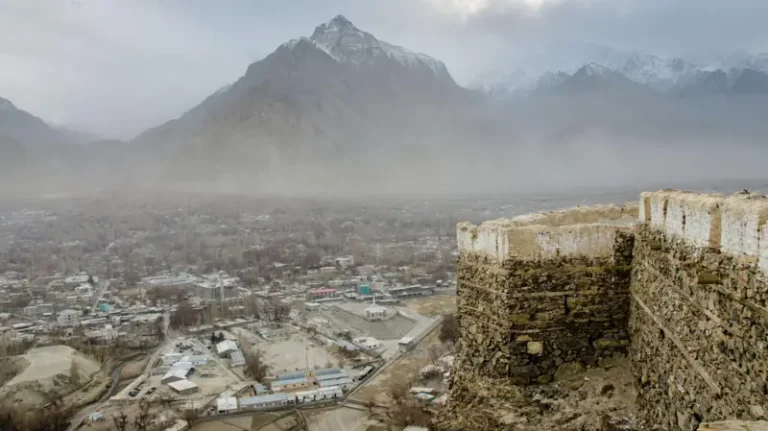
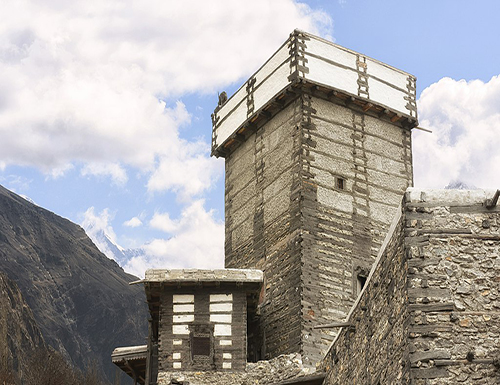
9- Fort Altit: Altit Fort is an ancient fort located on Upper Karimabad in the Hunza Valley of Gilgit-Baltistan. It was originally the home of the ancestral rulers of the Hunza state, whose name sounded like Mir, although after three centuries they moved to a nearby small fort, Baltit. Altit Fort and especially the Shikari Tower has a history of almost 900 years and is the oldest monument in Gilgit-Baltistan.

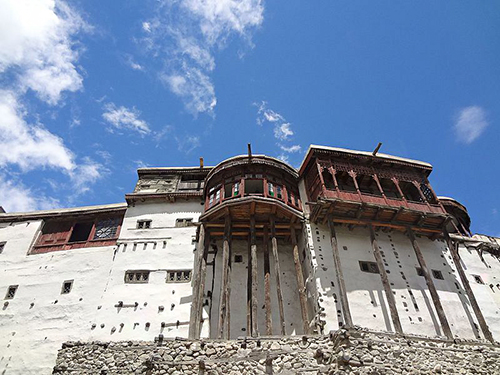
10- Baltat Fort: Baltat Fort is located in the Hunza Valley of Gilgit-Baltistan province of Pakistan and is a very beautiful tourist spot.

Glimpses of the Political History of Azad Kashmir

0

Under the 1974 Act, the establishment of two chambers took place, known as the Legislative Assembly and the Azad Jammu and Kashmir Council.

In 1975, the Azad Jammu Kashmir assembly was established under an interim constitution (Act of 1974), marking the beginning of a parliamentary system of government.

Under Act 74, two houses were formed, known as the Legislative Assembly and the Azad Jammu and Kashmir Council. The Legislative Assembly held limited legislative powers, while the Council possessed legislative and financial powers. In 2018, the 13th Amendment was made to Act 74, transferring limited legislative and financial powers to the government of Azad Kashmir.

However, the Act’s scope was limited to Azad Kashmir rather than representing the entire state of Jammu and Kashmir. From 1970 to 1975, a presidential system of governance prevailed in Azad Kashmir for five years. Prior to that, a ‘President of the State’ was once elected through Ayub Khan’s ‘Basic Democracy,’ and in other times, the President was nominated by the Muslim Conference’s Executive Committee in consultation with Pakistan’s Ministry of Kashmir Affairs.

Azad Jammu and Kashmir’s political history has been filled with significant events. When a revolutionary government was established after the declaration of independence in 1947, its purpose was outlined as follows:

“A temporary government is taking charge of the state’s administration; it is not a sectarian government. Non-Muslims will also participate in this provisional cabinet alongside Muslims. The government’s immediate goal is to restore law and order in the state so that the people can choose a democratic constituent assembly and a representative government. The temporary government is committed to maintaining the territorial integrity and political individuality of the state. The question of affiliation with Pakistan or India will be decided through a free plebiscite by the people here.”

Sardar Ibrahim was appointed as the first president of the revolutionary government. All the matters of the new government were overseen by Pakistan’s Ministry of Kashmir Affairs, headed by Mushtaq Ahmed Gurmani. Following the presentation of the Kashmir issue at the United Nations, this ministry acted as the liaison between Pakistan and the Azad government.

The Azad government was initially seen as a mere joke, and no notable figures were willing to become part of this provisional system. However, as it became a reality, the ministries and positions grew more attractive, sparking a struggle for power.

Conflicts soon escalated between the leadership of the Muslim Conference and Sardar Ibrahim’s government over sharing power. In 1948, Chaudhry Ghulam Abbas, released from prison in Jammu (Occupied Kashmir), arrived in Pakistan and was appointed as the Chief Administrator of the Azad government. He was given full authority to reconstitute the government and cabinet.

The appointment of Chaudhry Ghulam Abbas as Chief Administrator became a topic of debate. Many historians, including Yusuf Saraf and Pandit Prem Nath Bazaz, considered this action undemocratic and unlawful. Around this time, a stipend of one lakh rupees was set for a dozen political workers in Azad Kashmir, distributed through Chaudhry Ghulam Abbas.

Instead of general elections, the Muslim Conference’s Executive Committee was regarded as the ‘Electoral College,’ and on March 2, 1949, it passed a resolution on restructuring the Azad government. Following orders from Prime Minister Liaquat Ali Khan of Pakistan, Sardar Ibrahim resigned with the assurance of being re-elected, which Chaudhry Ghulam Abbas, as President of the Executive Committee, accepted. Subsequently, on April 1, 1949, a new cabinet was announced, and Sardar Ibrahim was reappointed as president.

To address the mistrust between the two major political factions, a decision was made to draft a written agreement to divide powers. This agreement was signed by Sardar Ibrahim as President of Azad Kashmir, Chaudhry Ghulam Abbas as President of the Muslim Conference, and Nawab Mushtaq Ahmed Gurmani as Pakistan’s representative. Under this agreement, the governance of Gilgit and Ladakh was handed over to Pakistan, while the Azad government was given advisory powers in certain areas. This was the first written agreement between the governments of Azad Jammu and Kashmir and Pakistan.

On May 26, 1949, Sardar Ibrahim and Chaudhry Ghulam Abbas were summoned to Karachi, where, with their consultation, the Ministry of Kashmir Affairs was established.

Around this time, Chaudhry Ghulam Abbas’s health deteriorated, leading him to nominate Allah Rakha Sagar as the party president, which sparked disagreements. In response, Mirwaiz Yusuf Shah held a meeting with 200 members and announced a parallel cabinet to the Muslim Conference. Approximately eight months later, Chaudhry Ghulam Abbas resumed leadership of the Muslim Conference. In the midst of this political turmoil, Sardar Ibrahim left for a United Nations session in the United States but was stopped in Karachi upon his return.

Meanwhile, a session of the Muslim Conference’s Executive Committee was called, where Sardar Ibrahim was removed from power and Syed Ali Ahmed Shah was named the new President of Azad Kashmir. In his public statement, Sardar Ibrahim mentioned his differences with Chaudhry Ghulam Abbas and demanded governance based on universal suffrage.

This political struggle led to a rebellion, sparking a civil disobedience movement in Poonch. To suppress this rebellion, the army was called in to assist the police. Mirza Shafiq Hussain writes, “The political crisis continued as Chaudhry Ghulam Abbas issued guidelines for the Azad Kashmir government and the Chief Administrator’s powers, granting him authority over the nomination of the president and cabinet, the appointment and dismissal of judges, and final legislative authority.”

Thus, Chaudhry Ghulam Abbas became an absolute authority, which led to significant backlash, and the Muslim Conference’s representative status was once again challenged. Colonel Sher Ahmed Khan formed a parallel faction of the Muslim Conference. The rebel faction approached the Minister of Kashmir Affairs, Mushtaq Gurmani, to address the situation, but no resolution was reached, leading them to announce the formation of a parallel government. This alarmed the central government, and Mirwaiz Yusuf Shah was proposed as an interim president.

Both factions rejected this proposal, and the situation in the state continued to deteriorate. In an attempt to resolve the crisis, Liaquat Ali Khan tried to bring both factions of the Muslim Conference to the negotiating table, where they demanded either the abolition of the Ministry of Kashmir Affairs or the removal of its minister. However, Liaquat Ali Khan’s assassination prevented any progress in the negotiations.

After prolonged negotiations between Chaudhry Ghulam Abbas and Sardar Ibrahim, the Azad government resigned, and Mirwaiz was appointed as interim president. This administration lasted for six months, after which Colonel Sher Ahmed Khan was named president. Sardar Ibrahim termed this appointment a conspiracy by the Minister of Kashmir Affairs, while Chaudhry Ghulam Abbas remained silent.

During this period, Sardar Ibrahim’s group continued its struggle to restore democracy. In February 1955, this movement took a new turn when there was an attempted shooting on Colonel Sher Ahmed, leading the police to raid the Pulandri Mosque to apprehend a suspect. This sparked public outrage, a confrontation ensued, and people seized all government offices. Martial law was imposed in Poonch, and the Punjab Constabulary was called in. Although the movement had begun with Sardar Ibrahim’s demand for universal suffrage, he eventually abandoned the cause and resumed his legal practice in Rawalpindi.

During this time, a ‘Kashmir Conference’ was held in Karachi, where the establishment of a Legislative Assembly and elections based on universal suffrage were decided. However, this was not implemented. After peace was restored, an interim government was formed with the consensus of the Pakistan government and the Muslim Conference, but it lasted only seven months, largely due to political inexperience. Later, President of Pakistan Sikander Mirza offered Sardar Ibrahim the presidency, which was confirmed through a session of the Muslim Conference’s Executive Committee.

When martial law was imposed in Pakistan, detained leaders were released, intensifying challenges for Sardar Ibrahim’s government. Eventually, in April 1959, Sardar Ibrahim was asked to resign, and K.H. Khurshid was appointed president of Azad Kashmir. Upon assuming office, Khurshid demanded the recognition of the Azad government as the representative government of Jammu and Kashmir. Shortly after Khurshid’s administration began, Ayub Khan’s ‘Basic Democracy’ was introduced in Pakistan, leading to elections in Azad Kashmir and the implementation of the 1961 Act. Under this act, 2,400 elected members were to elect the president of the state, with K.H. Khurshid emerging victorious.

The struggle to gain recognition for the Azad Kashmir government as a representative body unfolded at a time when the Sino-Indian border conflict was at its peak. In 1963, Khurshid revealed that “several countries, including Algeria, Iran, Turkey, Saudi Arabia, and Portugal, had assured their recognition of the Azad Kashmir government once Pakistan accorded it as the representative government.” However, the leadership of the Muslim Conference deemed this act of declaring Azad Kashmir an independent or representative government as a betrayal of the martyrs’ blood. Consequently, Khurshid founded the Jammu Kashmir Liberation League.

Khurshid, Sardar Ibrahim, and Sardar Abdul Qayyum launched a campaign against the termination of the refugee representation, demanding that the president of Azad Kashmir be elected through the direct votes of the people of Azad Kashmir, Kashmiri refugees residing in Pakistan, and the people of Gilgit-Baltistan, and called for the establishment of a Legislative Assembly. When elections were held under the 1968 Act, Khurshid’s nomination papers were rejected. Sardar Ibrahim and Sardar Abdul Qayyum jointly issued a statement, expressing shock that “the man who served as president for five years is now deemed ineligible to contest because his name is not on the voter list.”

In these circumstances, a protest movement began in Azad Kashmir, and riots ensued. During this time, Ayub Khan announced his separation from power in Pakistan and declared that elections would be held based on universal suffrage. President Yahya Khan held separate meetings with Sardar Ibrahim, K.H. Khurshid, and Sardar Abdul Qayyum, and an interim government was formed to work on the constitution. In September 1970, the Act was implemented, which, in addition to including Gilgit-Baltistan, accepted all the demands of the people of Azad Kashmir.

The 1970 Act lasted only five years, and the system, which was shaped according to public desires, could not move forward.

Before the parliamentary system established under Act 74, the elected Prime Minister was Khan Abdul Hamid Khan, who belonged to the Pakistan People’s Party. After that, martial law remained in place until 1985. In the 1985 elections, Sardar Sikander Hayat of the Muslim Conference became the Prime Minister. In 1990, Mumtaz Hussain Rathore became Prime Minister, but within a year, he dissolved the assembly, and new elections were held in 1991, after which Sardar Abdul Qayyum Khan became Prime Minister.

In 1996, Barrister Sultan Mehmood Chaudhry from the Pakistan People’s Party became Prime Minister, while in 2001, the Muslim Conference won again, and Sardar Sikander Hayat became Prime Minister. In 2006, the Muslim Conference formed a government again, but due to internal differences, Raja Farooq Haider, a member of the Muslim Conference, expressed no confidence in them, and Raja Farooq Haider became Prime Minister. After some time, Sardar Muhammad Yaqub moved a no-confidence motion, removing Farooq Haider and taking the office of Prime Minister. In the same assembly, a third no-confidence motion was moved, and Sardar Atiq Khan became Prime Minister once again.

In the 2011 elections, the Pakistan People’s Party emerged victorious, and Chaudhry Abdul Majid was elected Prime Minister. During this time, for the first time, the Pakistan Muslim League-Nawaz also participated in the elections. Due to differences with the Muslim Conference, Raja Farooq Haider formed the Pakistan Muslim League-Nawaz by joining the dissatisfied faction of the Muslim Conference. In the 2016 general elections, the Pakistan Muslim League-Nawaz secured a two-thirds majority, and Raja Farooq Haider became Prime Minister.

Nationalist Kashmiri Leader Launches ‘Back to Home’ Journey, Crossing LOC from AJK to J&K with White Flag

0

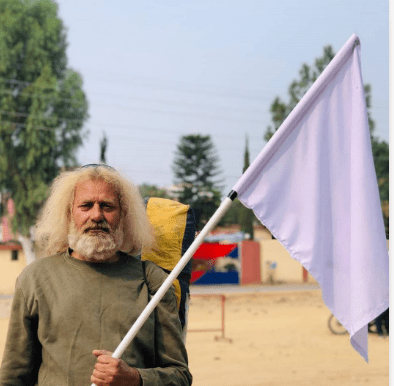
Nationalist Leader Mohammad Zubair Bhatti Embarks on ‘Back to Home Journey’ from Kotli to Mahinder

Kotli, Azad Jammu and Kashmir – Mohammad Zubair Bhatti, a nationalist leader from Kotli, has commenced a symbolic journey from Kotli Courthouse to Mahinder, a city in Indian-administered Jammu and Kashmir, naming it the Back to Home Journey.

Holding a white flag, widely recognized as a symbol of peace, Bhatti set off with a message underscoring the right of Jammu and Kashmir’s people to travel freely across their homeland.

At the start of his journey, Bhatti expressed his belief that, as a citizen of Jammu and Kashmir, he has the inherent right to move unrestricted within the state. “We, the citizens of Jammu and Kashmir, should be free to travel wherever we wish within our state without barriers,” he stated.

He also extended a message of hope to the Pakistani and Indian forces stationed along the Line of Control (LoC), expressing his optimism that they would not obstruct his journey. Bhatti urged both forces to cooperate in ensuring a smooth and peaceful completion of his journey.

The Back to Home Journey has also been shared on Bhatti’s Facebook profile, where he called for unity and peace, advocating for unrestricted movement across Jammu and Kashmir as a basic right for its people.

Jammu & Kashmir Assembly Passes Resolution for Restoration of Article 370 Amid BJP Protests

    0

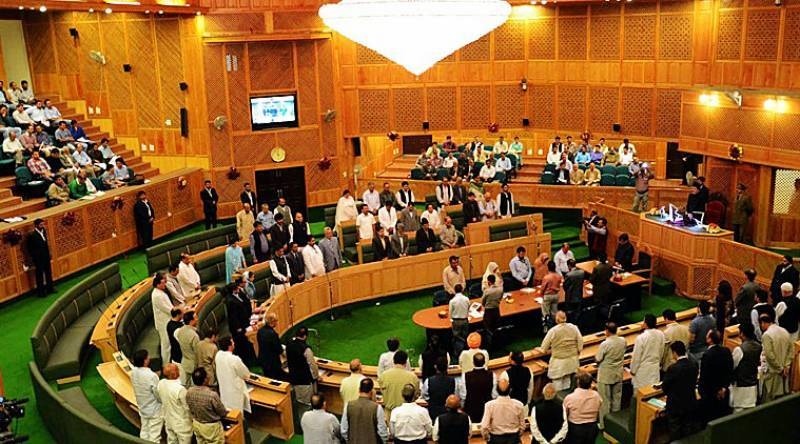
    Srinagar – In a significant move, the Jammu and Kashmir Assembly has passed a resolution calling for the restoration of Article 370, which previously granted special autonomy to the region.

    According to Kashmir Uzma, the resolution, presented by Deputy Chief Minister Surinder Chaudhary, was passed with a majority vote on Wednesday, the third day of the Assembly session.

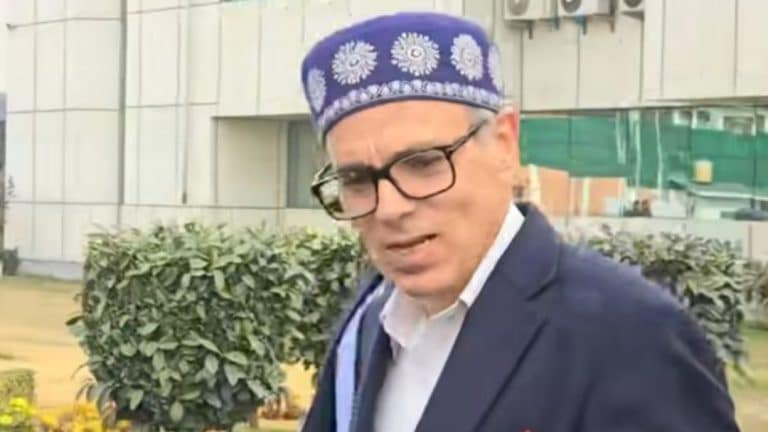
    Chief Minister Omar Abdullah, when asked about the development, remarked, “The Assembly has done its job; that’s all I’ll say on this matter.” His response indicates a focus on letting the legislative process speak for itself without further commentary.

    However, the decision sparked strong opposition from BJP leaders within the Assembly, who staged a protest, calling the resolution an “anti-national agenda.” They stated, “We reject this resolution, as it is against the interests of India.

    Martyrs’ Day of Jammu: The Massacre of November 6, 1947 Motivations and Facts

    0

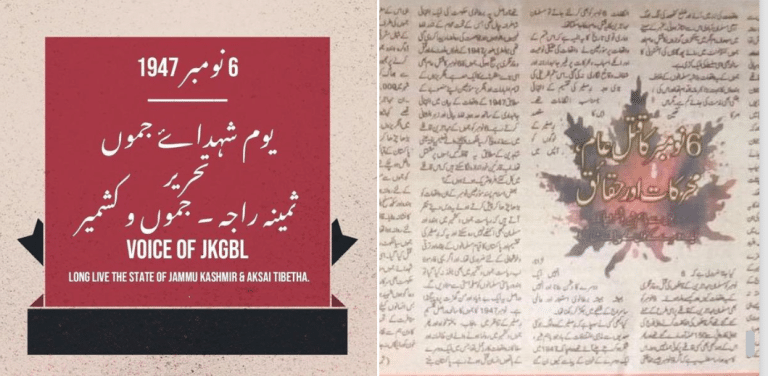
    Today is November 6, on this day in 1947, a caravan of Muslim refugees from Jammu set out for Sialkot. This caravan, consisting of women, children, and the elderly, departed from Jammu with dreams of a bright future and hopes in their hearts. However, the caravan never reached Sialkot.

    Sheikh Abdullah, the Chief Executive of Jammu and Kashmir and commander of the Indian forces in the region failed to provide any military security for the caravan. Taking advantage of this situation, armed Hindu and Sikh militants stopped the caravan between Deghiana and Samba, separated the young women, and then killed all the other members of the caravan—including the elderly, men, and children—with bullets and axes.

    A few people managed to survive, hiding amidst the dead and injured, and when the attackers believed all were dead, they took the women and fled. The surviving individuals managed to reach Sialkot after hiding and avoiding further attacks.

    According to the testimonies of the survivors, this ill-fated caravan consisted of thirty buses. This incident of mass killings, looting, and abduction marked the peak of the attacks by armed Hindu militias on the Muslim refugees from Jammu, which had been occurring sporadically since September. In remembrance of the Muslims killed during these attacks, November 6 is observed as Martyrs’ Day of Jammu in Pakistan and the so-called Azad Kashmir. The day condemns the massacres of Muslims in Jammu, highlighting the widespread violence and the abduction of many women.

    These killings were not limited to the refugee caravans alone, as many villages and towns in Jammu were also targeted by the terrorists. Nearly half of the Muslim population in the Kathua district was affected. The killings of hundreds of Gujjars in Mohala Ram Nagar and the burning of the Raipur village in the Jammu Cantonment area in September are part of this ongoing violence. The massacres of Jammu are undoubtedly a criminal act by the Hindus against the Muslims and should be condemned in the strongest terms.

    The responsibility for this massacre also lies with the Jammu and Kashmir administration, led by Sheikh Abdullah, who failed to provide protection for the Muslim refugee caravans on November 6. It is essential to understand why and how these horrific incidents of killing and violence occurred on November 6. When these events took place, Sheikh Abdullah was the head of the administration.

    He cannot absolve himself from responsibility for the massacre. On November 9, a similar attack on a Muslim refugee convoy was repelled by the army, resulting in the death of 150 attackers. After this, no such attacks occurred on any convoy. This clearly means that if the protective measures of November 9 had been implemented on November 6, the massacre could have been prevented.

    However, in the tragedy of our national history, historians have written about these events with extreme bias, without making any effort to analyze the actual nature of these events and their causes. This is a significant flaw, as the partition of the Indian subcontinent was an extremely ill-conceived and impractical step, intended to sow discord among the people of the subcontinent and keep them divided, perpetually under British colonial control and global imperialism.

    Has anyone ever wondered why, in 1947, people who had lived peacefully together for centuries, despite their religious differences, suddenly became bloodthirsty enemies of each other? The answer lies in a British conspiracy, which created an atmosphere of misunderstandings, rumors, and hostility among the public, leading to the violence, looting, and massacres of 1947.

    The November 6 massacre in Jammu was part of this larger narrative. When the British decided to partition the subcontinent, Maharaja Hari Singh, the last ruler of Jammu and Kashmir, rejected the partition plan and proposed an independent and fully sovereign Jammu and Kashmir. The British disagreed with his plan, fearing that an independent state of Jammu and Kashmir could thwart their grand scheme. To undermine the Maharaja’s proposal, the British began conspiring against him. They orchestrated “Operation Gulmarg” under the supervision of General Frank Messervy, the British Army Chief of Pakistan, which resulted in the tribal invasion of Jammu and Kashmir on October 22, 1947.

    The massacre of November 6, 1947, was also a consequence of the British divide-and-rule strategy. The British were extremely biased in their actions, manipulating the narrative in the media and by historians to distort the events of 1947. British newspapers like The London Times twisted the events of November 6, while editors like Ian Stephen and Harris Alexander, in their works, also presented a biased view of the massacre. Harris Alexander and Ian Stephen both reported the death toll in the Jammu massacre as 200,000, while *The London Times* claimed it to be 237,000. Many Muslim and Pakistan-affiliated historians have suggested that the actual number of victims was more than 500,000, but this remains a controversial claim due to the political agendas of different factions during the partition.

    The survivors who managed to reach Sialkot after the massacre described the caravan as consisting of thirty buses. Based on this, readers can estimate how many people were part of the caravan. Muslim and Pakistan-oriented historians often exaggerate the scale of the massacre to support the idea that Hindus and Muslims could never live together in Jammu and Kashmir and that the partition and creation of Pakistan were essential for the survival and progress of Muslims. However, this is a baseless and fabricated propaganda aimed at dividing Jammu and Kashmir on religious lines and ultimately annexing its Muslim-majority areas to Pakistan.

    In reality, the root cause of the massacres in Jammu in November was the incompetence of the Jammu and Kashmir administration. Had the government ensured proper protection for the refugee caravans, such massacres could have been avoided. The November 1947 massacre in Jammu was part of a larger pattern of violence that occurred in the aftermath of partition, particularly in areas such as Western Punjab, Khyber Pakhtunkhwa, and Jammu and Kashmir, where Muslims perpetrated violence against non-Muslims in retaliation for earlier attacks. Since April 1947, Hindu refugee caravans fleeing from the violence in Rawalpindi, Attock, Murree, Bannu, and Hazara began arriving in Jammu, fueling further animosity.

    Following the creation of Pakistan, over 160,000 Hindus from Pakistan’s western districts migrated to Jammu, and by mid-September 1947, over 65,000 Hindu refugees had arrived in Jammu city alone. These refugees brought with them tales of Muslim atrocities, which were amplified by the media as part of the British strategy to incite hatred and division. This created a deep-seated animosity among Hindus towards Muslims, which played a significant role in the violence that ensued. Another contributing factor was the presence of Sikh military units from the Indian army who fled to Jammu, bringing arms with them, which were used to seize land and property from Muslims.

    Written by: Sameena Raja, Jammu and Kashmir