Wednesday, April 15, 2026
11.5 C
Srinagar
Home Blog Page 9

Israeli Army Mobilises 100,000 Reservists Amid Escalating Iran Tensions

0

The Israeli military announced plans to call up nearly 100,000 reservists as part of its ongoing operations against Iran. According to the army, the mobilization is intended to increase readiness across multiple fronts under the codename Operation ‘Roaring Lion’, Israel’s designated name for the assault carried out in coordination with the United States.

Currently, around 50,000 reservists are already on active duty, reported The Times of Israel. The heightened military activity comes amid rising tensions in the region, following US-backed strikes and retaliatory measures.

In Gaza, the past 24 hours have seen Israeli attacks result in at least one death and seven injuries, according to the Health Ministry. Since the US-declared ceasefire took effect in October, at least 629 Palestinians have been killed. The ongoing conflict, which began in October 2023, has claimed more than 70,000 lives, highlighting the enduring humanitarian crisis in the region.

The army’s mobilization underscores the escalating nature of Israel-Iran hostilities and signals a potential intensification of military operations, raising concerns among international observers about further regional instability.

US Authorises Departure from Qatar Amid Rising Tensions

0

The US State Department has authorised the departure of non-emergency government personnel and their families from Qatar, citing escalating safety concerns in the Gulf state. The move comes amid growing regional tensions following recent missile attacks reportedly launched by Iran.

The United States currently maintains a Level 3 travel advisory for Qatar, advising its citizens to reconsider travel to the country. Officials emphasised that the decision to allow departures is precautionary, aimed at ensuring the safety of American personnel abroad.

The heightened alert follows a series of missile strikes in Qatar, which reportedly occurred after joint operations by the US and Israel earlier this week. While the full extent of the damage remains unclear, the strikes have intensified international concerns over stability in the Gulf, a region crucial to global energy and trade.

Analysts warn that the situation could further strain already fragile regional dynamics, as countries in the Gulf navigate the fine line between security and escalation. For now, the US action underscores the seriousness with which Washington is monitoring developments in Qatar and the surrounding region.

Tensions Rise as IRGC Claims Missile Strikes on US and UK Oil Tankers

0

In a dramatic escalation in the Gulf region, the Islamic Revolutionary Guard Corps (IRGC) announced that three oil tankers, operated by the United States and the United Kingdom, were hit by missile strikes in the strategic waters of the Gulf and the Strait of Hormuz. According to the statement, the vessels caught fire following the attacks, though independent verification of the incident remains pending.

The Gulf, a critical artery for global energy supplies, has long been a flashpoint for regional tensions. The IRGC’s announcement adds to fears of further instability, raising concerns among international observers about potential disruptions in maritime trade routes that power economies around the world.

While details remain scarce, the strikes underline the delicate balance of power in the region. The world watches closely, aware that even a single miscalculation could trigger broader consequences.

Hezbollah Supporters Pay Tribute to Iran’s Khamenei in Lebanon

0

Hundreds of Hezbollah supporters gathered south of Beirut to mourn the death of Iranian Supreme Leader Ali Khamenei. The gathering saw participants chanting anthems and slogans in tribute to Khamenei and Iran, while waving the flags of both Iran and Hezbollah. Some attendees were seen beating their chests as part of the mourning rituals.

Hezbollah, widely recognized as Iran’s most powerful proxy in the region, has recently endured significant losses during a months-long conflict with Israel in 2024. Despite these losses, the group has not launched any military action in solidarity with Tehran. Lebanon’s political leadership has been cautious, aiming to keep the country out of the conflict due to concerns over potential regional spillover.

The event highlights the continued ideological and political alignment between Hezbollah and Iran, even as Lebanon navigates a delicate balance to avoid escalation in the region.

Trump Confirms Willingness to Engage With Iran’s New Leadership

0

Washington, D.C. — Former U.S. President Donald Trump has confirmed that he plans to engage with Iran’s new leadership, following their reported interest in opening a dialogue with his administration.

“They want to talk and I have agreed to talk, so I will be talking to them,” Trump was quoted as saying by The Atlantic magazine.

Trump criticized the timing of Iran’s initiative, suggesting that the country should have approached the United States sooner. “They should have done it sooner. They should have given what was very practical and easy to do sooner. They waited too long,” he added.

His remarks reflect his longstanding view that earlier engagement could have helped address practical issues more efficiently, while avoiding unnecessary delays.

Dialogue Plans Remain Unclear

Despite confirming his willingness to talk, Trump did not provide details on when these conversations might take place. The absence of a timeline leaves observers uncertain about the next steps, though the acknowledgment itself signals a potential thaw in communication between the former U.S. president and Iran’s new leadership.

Trump’s statement has already drawn attention from international analysts, who note that even preliminary discussions could have implications for regional diplomacy and U.S. foreign policy. The prospect of direct engagement between Trump and Iran’s officials highlights the continued focus on West Asia, where tensions remain sensitive.

While the exact format or timing of the talks is yet to be revealed, Trump’s confirmation indicates a willingness to explore dialogue with Iran’s new leaders. Observers will be watching closely as developments unfold and as the former president’s statements shape expectations of potential engagement.

Kashmir Expands Renewable Energy Infrastructure With Hydro and Solar Projects

0

Srinagar, Indian-administered Kashmir — The Jammu & Kashmir government has informed the assembly that significant progress has been made in expanding renewable energy infrastructure across the territory. Under the Independent Power Producer (IPP) mode, seven small hydro projects with a total capacity of 35.25 megawatts (MW) have been launched, while rooftop solar panels with a combined capacity of 76.17 MW have been installed on 7,425 government buildings.

The announcements were made during discussions on budget grants, highlighting Kashmir’s push toward sustainable energy and self-reliance.

Small Hydro Projects Boost Local Employment

The Jammu & Kashmir Energy Development Agency (JAKEDA) confirmed that the seven operational hydro projects under IPP mode have a combined capacity of 35.25 MW. Two additional projects, totaling 4.65 MW, are expected to become operational in the current fiscal year.

A total of 60 project sites with an estimated capacity of 129.80 MW are at various stages of implementation in remote areas. Detailed Project Reports (DPRs) for 61 hydro projects ranging from 2–10 MW, totaling 340 MW, have been finalized, and these will be developed in phases under the IPP mode.

During construction, a large number of skilled and unskilled workers are employed. Upon commissioning, each project generates 15–20 direct jobs, including civil, electrical, and mechanical engineers, technical experts, support staff, and labor, while also creating indirect employment in surrounding areas.

Rooftop Solar Expansion Across Government Buildings

Under the rooftop solar initiative, JAKEDA has solarized 7,425 government buildings, providing 76.17 MW of installed capacity. Installation work is ongoing in approximately 1,200 additional buildings. The campaign, implemented under CAPEX and RESCO models, aims to reduce conventional electricity consumption and increase energy self-reliance in public infrastructure.

In the domestic and institutional sectors, 34 MW of rooftop solar capacity has been installed under the Ministry of New and Renewable Energy’s early schemes.

PM Surya Griha Scheme Benefits Thousands of Households

Under the Indian PM Surya Griha Yojana, data as of 19 February 2026 shows that 23,598 households in Kashmir have installed rooftop solar systems with a total capacity of 84.41 MW. Direct Benefit Transfer (DBT) subsidies worth ₹172 crore have been provided to beneficiaries.

The scheme offers up to ₹85,800 central financial assistance for a 3 kW rooftop system, in addition to ₹3,000 per kW subsidy for capacities up to 3 kW. A target coverage of 83,500 residential users has been set under the initiative.

Solar-Powered Agricultural Pumps for Farmers

Under Pradhan Mantri Kisan Urja Suraksha evam Utthan Mahabhiyan (PM-KUSUM) Component B, JAKEDA approved 5,000 solar agricultural pumps for farmers in Kashmir. Of the 4,891 applications received, 4,104 pumps have been installed across districts, providing 50% central and 30% territorial subsidy support.

The government emphasized that these initiatives reflect a significant expansion of renewable energy infrastructure, contributing to environmental sustainability, local employment, and energy independence in Kashmir. With continued deployment of hydro and solar projects, the territory is positioning itself as a leader in renewable energy development in the region.

Kashmir Leader Farooq Abdullah Calls Khamenei Killing ‘Destabilizing’ for Region

0

Srinagar, Indian-administered Kashmir — National Conference President and former Jammu and Kashmir Chief Minister Farooq Abdullah on Sunday expressed profound grief over the reported killing of Iran’s Supreme Leader, Ayatollah Ali Khamenei, describing the development as “deeply troubling” and potentially destabilizing for regional peace.

In a strongly worded statement issued by the Jammu & Kashmir National Conference, Abdullah termed the alleged joint U.S.–Israeli strike that reportedly led to Khamenei’s death as “regrettable and provocative,” warning that such actions risk escalating tensions across an already fragile geopolitical landscape.

‘Grave Blow to Regional Stability’

Abdullah characterized the incident as an “anguishing tragedy” with far-reaching implications beyond West Asia. He cautioned that actions of this magnitude not only erode global trust but also intensify pre-existing regional tensions.

“Developments of this nature deepen uncertainty and sorrow across communities and nations,” the statement quoted him as saying. He urged the international community to respond with wisdom, restraint, and a firm commitment to international law and justice.

Appeal for Calm and Respect for Public Sentiment

The veteran Kashmiri leader also appealed to the administration in Indian-administered Kashmir to manage the prevailing public sentiment with sensitivity. He emphasized that citizens expressing grief should be allowed to do so peacefully and without fear, provided that public order is maintained.

“All stakeholders must avoid provocation and work seriously toward restoring stability,” Abdullah said, stressing the importance of de-escalation at both the regional and global levels.

Iranian State Media Confirms Death

According to Iranian state media reports on Sunday morning, Ayatollah Khamenei was killed in what was described as a U.S.–Israeli strike. The reports also claimed that members of his family, including his son-in-law and daughter-in-law, were among those killed.

International observers note that the reported development could have significant diplomatic consequences, with governments across the region closely monitoring the evolving situation.

Further updates are expected as more verified information emerges.

Schools Shut for Two Days in Kashmir Amid Protests Over Reports of Ayatollah Khamenei’s Death

Srinagar, Indian-administered Kashmir — Authorities have ordered the closure of all educational institutions across parts of Jammu and Kashmir for two days following widespread protests triggered by reports of the death of Iran’s Supreme Leader, Ayatollah Ali Khamenei.

The decision was announced by Education Minister Sakina Itoo, who said the precautionary measure was taken to ensure the safety of students amid ongoing demonstrations in several districts of the Kashmir Valley.

“We have decided, as a precautionary step, to suspend classes in schools, colleges, and universities for two days,” the minister said in a statement, adding that the government is closely monitoring developments on the ground before making any further decisions regarding reopening.

Precautionary Shutdown Across Educational Institutions

According to officials, the temporary closure applies to government and private schools, colleges, and higher educational institutions in areas affected by protest activity. The administration described the move as preventive, aimed at avoiding disruption and ensuring student safety during a period of heightened public mobilization.

Protests erupted in Srinagar and other towns after unverified reports circulated claiming that Ayatollah Khamenei had been killed in a joint U.S.–Israeli operation. While no independent confirmation has been issued by Iranian state authorities, the reports sparked large gatherings and demonstrations across parts of the Valley.

Demonstrations Continue in Several Districts

Over the past 24 hours, protest marches have been reported in Srinagar and other districts of Indian-administered Kashmir, with demonstrators voicing anger over the reported development. Security deployments have been increased in sensitive areas, though officials maintain that the overall situation remains under observation.

Political analysts note that regional responses in Kashmir to developments in West Asia often carry strong emotional and symbolic dimensions, particularly when prominent religious or political figures are involved.

Government Monitoring Situation

The Education Minister stated that authorities are continuously assessing the security situation and will take a call on reopening institutions based on ground reports.

“We are reviewing the situation regularly. A decision regarding the resumption of classes will be taken after evaluating conditions,” she added.

The developments come amid growing international attention over the reports from Iran, with global diplomatic circles awaiting verified confirmation.

Further updates are expected as authorities reassess conditions in Indian-administered Kashmir.

Massive Protests Erupt in Srinagar After Reports Claim Assassination of Iran’s Supreme Leader

0

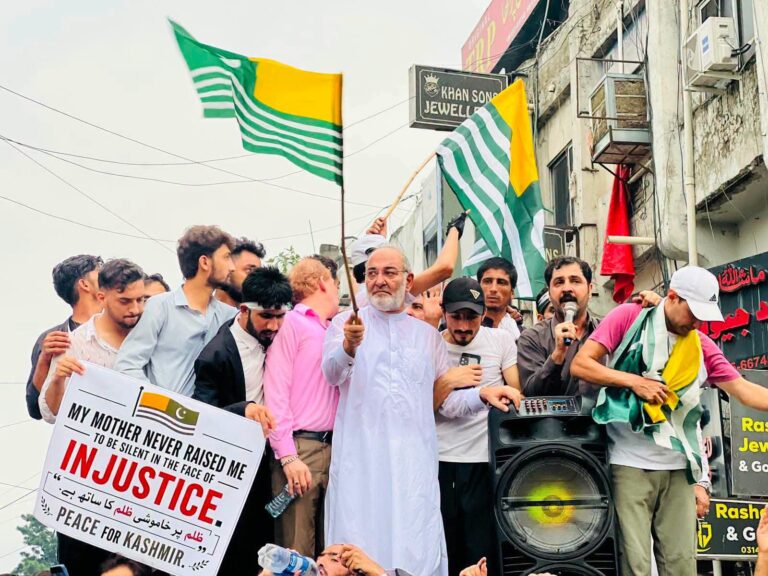
Srinagar, Indian-administered Kashmir — Unverified reports alleging the assassination of Iran’s Supreme Leader, Ayatollah Ali Khamenei, sparked widespread protests across the Kashmir Valley early Sunday, drawing thousands into the streets of Srinagar in one of the largest spontaneous mobilizations seen in recent months.

Shortly after dawn prayers, news of the reported killing began circulating through local neighborhoods via social media and messaging platforms. Within hours, groups of residents — including men, women, and youth — marched toward Lal Chowk, the symbolic political heart of Srinagar, where the historic clock tower has long stood as a backdrop to moments of regional unrest and political expression.

By mid-morning, thousands had gathered at the square, raising slogans against the United States and Israel while holding placards and portraits of the Iranian leader. Protesters described the reported assassination as a “grave attack on the Muslim world,” calling for international accountability and urging global powers to prevent further escalation in West Asia.

A Rapidly Expanding Mobilization

Eyewitnesses told The Azadi Times that processions began forming in multiple Srinagar localities shortly after news of the alleged assassination spread. Many participants walked long distances to reach Lal Chowk, chanting slogans along the way.

Demonstrators hold portraits of Iran’s Supreme Leader during protests in Srinagar over assassination reports.

Parallel demonstrations were also reported from several neighborhoods across Srinagar and from predominantly Shia-majority areas in other districts of Indian-administered Kashmir. Community leaders described the atmosphere as one of deep grief and anger, though organizers repeatedly appealed for calm and peaceful conduct.

“Our protest is a message to the world,” one demonstrator said. “We want justice, but through peaceful means.”

Security Tightened Across the City

In response to the sudden mobilization, local authorities deployed additional security personnel at key intersections and around sensitive installations in Srinagar. Barricades were placed along major approach roads leading to Lal Chowk to regulate movement and prevent overcrowding.

Officials stated that while the situation remained tense, it was largely under control at the time this report was filed. No major incidents of violence had been confirmed.

Regional and Geopolitical Sensitivities

Indian-administered Kashmir, a Muslim-majority region at the center of a long-running territorial dispute between India and Pakistan, has historically witnessed strong public reactions to geopolitical developments in the Middle East. Political observers note that transnational solidarity movements often resonate deeply in the Valley, particularly in moments involving prominent Islamic figures.

As of publication, there has been no official confirmation from Iranian state authorities regarding the reported assassination. International media outlets and diplomatic sources have urged caution, emphasizing the need for verified information amid rapidly evolving claims.

The situation remains fluid, with further updates expected as more credible details emerge.

Breaking: Iran Launches Dozens of Drones Toward Israel — A Night That Could Redraw the Middle East

0

It began with a statement — brief, forceful, and heavy with implication.
Late into the evening, Iran’s military announced that dozens of attack drones had been launched toward Israel. The claim, carried by Tasnim News Agency, described the operation as the first large-scale drone offensive carried out directly from Iranian territory against the Israeli state.

For years, the confrontation between Iran and Israel simmered in the shadows — covert operations, cyber warfare, precision airstrikes in distant territories, and warnings delivered through intermediaries. Tonight, according to Tehran’s own narrative, the shadow war may have stepped into the open.

From Shadow Conflict to Open Skies
The Middle East has grown accustomed to tension between Tehran and Tel Aviv. Israeli airstrikes in Syria. Iranian-backed groups flexing their reach across Lebanon and Iraq. Cyberattacks blamed but rarely acknowledged.

But a direct drone launch from Iranian soil changes the geometry of confrontation.
Military analysts describe such a move as more than symbolic. It is a statement of capability — and of intent. Unlike proxy operations, a direct launch carries fingerprints that are difficult to obscure. It signals ownership of the action and acceptance of the consequences that may follow.

Silence in the Skies — and on the Other Side
As the news broke, Israeli authorities had yet to issue a detailed public response. In previous confrontations, Israel’s multilayered air defense systems have been activated swiftly against incoming aerial threats. Whether those systems were already tracking objects across regional airspace remains unclear.
Airspace across parts of the region could become tense within hours, particularly along potential flight corridors stretching across neighboring territories. Regional governments will be watching closely, aware that escalation rarely stays contained.

The Risk of Retaliation
If confirmed, this development places both nations at a critical juncture.
Israel has historically responded forcefully to direct threats against its territory. Iran, for its part, has repeatedly warned that it would answer perceived aggression in kind. Each side frames its actions as defensive. Each sees itself as deterrent.
But deterrence is a fragile equilibrium.
A single miscalculation — a misidentified target, an interception failure, civilian casualties — could transform a controlled show of force into a broader military confrontation.

A Region Holding Its Breath
Diplomatic channels between Tehran and Tel Aviv have long been frozen. Global powers, including the United States and European nations, are likely monitoring developments in real time. Any confirmed strike on Israeli territory would carry global implications — not only militarily, but economically and politically.
Oil markets, regional security alliances, and ongoing conflicts in Gaza, Lebanon, and Syria all form part of the wider chessboard.

For now, much remains unverified beyond the Iranian military’s statement carried by Tasnim. The number of drones, their type, their trajectory, and their intended targets remain unclear.

But one fact stands out: if this launch is confirmed as described, it marks a historic moment in one of the Middle East’s most dangerous rivalries.
A rivalry that may no longer be confined to the shadows.

This is a developing story. Updates will follow as further confirmation and official responses emerge.