Wednesday, April 1, 2026
17.4 C
Srinagar
Home Blog Page 95

India and Pakistan Hold Military Talks Along Kashmir’s Line of Control

0

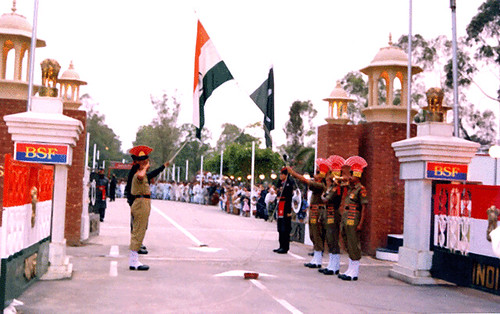
Poonch, Indian-Administered Kashmir: Senior military officials from India and Pakistan convened for a rare brigade-level flag meeting Thursday at the Chakan-da-Bagh crossing point along the Line of Control (LoC), aiming to address escalating tensions and recurring ceasefire violations on Kashmir’s contested frontier. The talks, described as “cordial” by sources, underscored fragile attempts to stabilize one of the world’s most militarized borders.

The meeting followed weeks of heightened hostilities, including exchanges of fire and allegations of cross-border provocations. Both sides reaffirmed commitments to uphold the 2003 ceasefire agreement, though India lodged formal protests over what it termed “unprovoked aggression” by Pakistani forces, including alleged infiltration attempts, use of improvised explosive devices (IEDs), and recent mortar fire targeting forward posts.

Context of Escalating Hostilities
The dialogue comes amid a surge in violence along the LoC this year. On April 1, a landmine explosion in Poonch triggered accusations of unprovoked firing, with New Delhi blaming Islamabad for violating the ceasefire. Earlier incidents include a February 13 exchange of heavy weaponry and a February 11 IED attack in Akhnoor sector that killed two Indian soldiers, including a captain. These clashes mark a troubling resurgence of violence after a brief lull in 2021-22.

Thursday’s meeting marked the second high-level military engagement in less than a month. On April 2, officials from both armies met for 75 minutes at the same location, emphasizing the need to prevent civilian casualties and maintain communication channels.

Statements and Skepticism
A defense spokesperson described the talks as “routine coordination” under existing protocols between the Director Generals of Military Operations (DGMOs) of both nations. However, analysts remain cautious. “Such meetings offer temporary de-escalation but fail to address root causes,” said Srinagar-based security expert Aasim Khan. “The LoC remains a tinderbox, with political tensions and historical grievances fueling the cycle of violence.”

Broader Implications
The LoC, which divides Kashmir between India and Pakistan, has witnessed near-daily skirmishes since 2019, when New Delhi revoked Jammu and Kashmir’s semi-autonomous status. International observers have repeatedly flagged the risk of uncontrolled escalation, particularly given both nations’ nuclear capabilities. Thursday’s discussions avoided political rhetoric, focusing instead on tactical measures like enhancing hotline communications and restraining frontline troops.

Looking Ahead
While both armies pledged to “prioritize peace,” skepticism lingers among border communities. Residents in Poonch’s Mendhar sub-district reported intermittent shelling hours after the meeting concluded—a stark reminder of the gap between diplomatic assurances and ground realities.

For now, the LoC’s fate hinges on whether military confidence-building measures can outpace the region’s entrenched cycle of distrust.
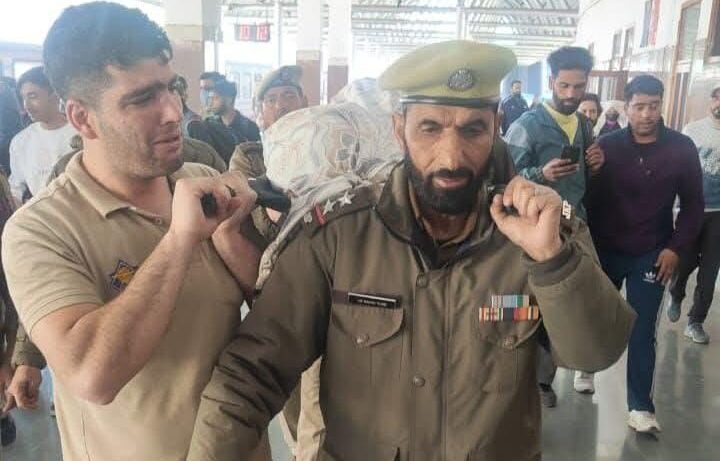

Heartbreaking Final Journey: Cancer Patient Passes Away on Srinagar-Sangaldan Train as Son Watches On

0

Srinagar, Indian-Administered Kashmir – In a heartbreaking incident, a terminally ill cancer patient, Bashir Ahmed Shan, passed away during a journey on the Srinagar-Sangaldan train. His son, Waseem Ahmed Shan, was by his side during his final moments.

Details of the Incident

Bashir Ahmed Shan, a resident of Sangaldan (Famrote Panchayat) and son of Mohammad Sultan Shan, had been battling advanced-stage cancer for a long time. The tragic incident occurred while he was traveling with his family.

Shan was also the uncle of SP West Srinagar, Imtiyaz Ahmed Shan, who was immediately informed after the incident.

Railway Authorities Show Respect & Dignity

When the train arrived at Nowgam’s Srinagar Railway Station, it was halted as a mark of respect. The body of Bashir Ahmed Shan was carefully disembarked with full honors. Police and railway officials completed all formal procedures, ensuring the family’s dignity was upheld throughout the process.

The mortal remains were then respectfully transported from the railway station, reflecting the gravity of the somber moment.

Condolences from Railway Police

The Railway Police expressed deep condolences to the grieving family and shared their sorrow over the irreparable loss.

This tragic event highlights the emotional challenges faced by families dealing with terminal illnesses, even during travel. Authorities handled the situation with sensitivity, ensuring the bereaved family received the utmost respect.

Widespread Shutdown in Tarar Khel Over Disappearance of Son of Prominent Awami Action Committee Member

0

Tarar Khel, Sudhanoti – Pakistan-administered Kashmir: A complete shutter-down strike has been observed in Tarar Khal, a town in Sudhanoti district of Pakistan-administered Jammu and Kashmir (AJK), following the reported disappearance of Hafiz Talha Shabbir, son of a prominent local leader affiliated with the Jammu Kashmir Joint Awami Action Committee.

Alleged Abduction Sparks Protest

According to initial reports, Talha Shabbir, son of Qari Shabbir, a core member of the Joint Action Committee, was allegedly abducted during the early hours of April 12 between 2:00 AM and 3:00 AM from Khanna Pul, Rawalpindi, where he had been staying at his maternal uncle’s residence.

Talha’s father, Qari Shabbir, is also the President of the Traders’ Union (Anjuman-e-Tajiran) Tarar Khal and Poonch Division, and a key figure in the ongoing socio-political movements for rights and transparency in AJK.

The alleged abduction has triggered significant unrest and outrage in the region, with the Anjuman-e-Tajiran Tarar Khal immediately calling for a complete shutdown in protest. By midday, shops and businesses in Tarar Khal had closed their shutters in solidarity, demanding immediate action and safe recovery of the missing youth.

Public Reaction and Political Voices

The incident has caused widespread concern, particularly among civil society groups and political activists in AJK. The disappearance is being viewed as a serious blow to the safety of activists and their families amid rising tensions over rights-related activism in the region.

Sardar Umar Nazir Kashmiri, a senior member of the Jammu Kashmir Joint Awami Action Committee, shared a video message on his official social media pages, expressing deep concern over the incident and calling for urgent efforts to locate and recover Talha Shabbir.

In his message, Sardar Umar emphasized, “The silence on this matter will only embolden those responsible. The people of Jammu and Kashmir will not tolerate such disappearances. Talha must be found and returned safely without delay.”

Growing Tensions and Demands for Action

Protests in Tarar Khal and surrounding areas are expected to escalate if authorities do not respond swiftly. Civil society leaders, local traders, and action committee members are demanding a transparent investigation into the incident.

This is not the first time political activists or their families have reported intimidation or disappearance. Human rights observers have repeatedly highlighted the need for stronger protections and oversight in politically sensitive regions of Pakistan-administered Kashmir.

So far, there has been no official confirmation or statement from Rawalpindi police or federal authorities regarding the reported abduction. Attempts to reach family members have been met with silence as they await any news about Talha’s whereabouts.

International Attention Urged

Independent observers and diaspora Kashmiris are calling on national and international human rights bodies to take notice of the incident. Concerns are growing that political affiliations may be putting young Kashmiris and their families at risk, and many are urging for urgent intervention to prevent enforced disappearances in the region.

The Azadi Times will continue to follow this story and provide updates as new information becomes available.

For tips or confidential submissions related to this story, contact our newsroom directly.

AJK Elementary Board Announces Class 5 & 8 Results – How to Check Online

AJK Elementary Board Website Result Announced: Online Access for Bagh District Only

Muzaffarabad, (PaJK): The Azad Jammu and Kashmir (AJK) Elementary Education Board has officially announced the results for Class 5 and Class 8students for the 2025 session. In a move that has brought both relief and concern, the AJK Elementary Board Website Result is currently available only for students in the Bagh district, while students from other regions such as Muzaffarabad, Mirpur, and Poonch must rely on traditional, physical methods to access their academic results.

Bagh Students Can Check Results Online

Students and parents in the Bagh district can now check their AJK Five Class Result and AJK Eight Class Result online through the official website of the Elementary Board http://bagh.ebmis.gok.pk. This initiative aims to streamline the result-checking process and provide timely access to academic records.

Local authorities confirmed that the online portal has been successfully activated for Bagh, allowing thousands of students and their families to access the results without having to visit school offices or education departments physically.

Limited Online Access Sparks Discontent in Other Districts

While the online facility has been welcomed by students in Bagh, the lack of access for other districts has raised concerns. Parents and students from Muzaffarabad and Mirpur divisions have expressed frustration over the continued reliance on physical result sheets and manual distribution.

Speaking to The Azadi Times News Desk, a parent from Muzaffarabad said, “In an age of digital transformation, it’s disheartening that only one district is given access to online results. The rest of us are left waiting in long queues at schools.”

The AJK Elementary Board has not provided a timeline for expanding the online services to other districts.

Why These Results Matter

The Class 5 and Class 8 board exams are considered pivotal milestones in a student’s academic journey in AJK. Performance in these exams determines not only academic progress but also future educational opportunities.

  • AJK Five Class Result: Often a student’s first experience with formal board examinations, laying the foundation for higher education.
  • AJK Eight Class Result: Crucial for determining eligibility for admission into secondary schools and serves as a performance benchmark.

Good results can enhance a student’s confidence and open doors for scholarships, academic competitions, and preferred institutions.

Advice for Students and Parents

With results now available either online or in physical format educational experts advise both students and parents to take a proactive approach:

  • Double-check accuracy: Verify personal details such as name, roll number, and marks obtained. Discrepancies should be reported immediately.
  • Review performance: Understand areas of strength and weakness. This reflection is key to academic growth.
  • Seek guidance: Parents should discuss results openly with their children and encourage a growth mindset.
  • Explore re-evaluation: For those unsatisfied with their results, re-evaluation or appeal options are available through the Elementary Board.

Call for Digital Expansion

Education activists and local NGOs have urged the AJK government to expand online result services across all districts. Digital inclusion in education is no longer a luxury but a necessity, especially in regions prone to weather disruptions, political instability, and remote access challenges.

“Equal access to digital tools in education will bridge the urban-rural divide and improve transparency,” said Zahid Mir, an education rights advocate based in Rawalakot.

Summary of AJK Elementary Board Result Access

Details Information Website Official AJK Elementary Board site https://ese.gok.pk/ Districts with Online Access Bagh only Classes Class 5 and Class 8Result Availability Online (Bagh); Physical (Other Districts)

Bagh Azad Kashmir Elementary Board Result Access

Students in the Bagh district of Pakistan administrated Kashmir can now check their AJK Five Class Result and AJK Eight Class Result online through the official website of the Elementary Board http://bagh.ebmis.gok.pk

The announcement of the AJK Elementary Board Website Result marks an important academic milestone for thousands of students across the region. While Bagh district benefits from online access, other districts remain dependent on conventional systems. As the region continues to evolve, there is an urgent need for wider digital integration in the education sector to ensure equitable access to academic resources and information.

Headline: Crisis in Azad Kashmir’s Public Service Commission as Chairman Resigns, Alleging Judicial Interference

0

Protracted Court Battles Over Merit-Based Recruitment Paralyze Key Institution, Fuel Youth Despair and Allegations of Nepotism

MUZAFFARABAD, (PaJK) — The Public Service Commission (PSC) of Pakistan-administered Azad Kashmir has been thrown into chaos after its Chairman, Gen. (Retd.) Hidayat ur Rehman, resigned abruptly this week, citing “systemic interference” by the region’s judiciary. His departure, coupled with the PSC Secretary’s request for a month-long leave, has rendered the commission fully non-functional, deepening frustrations among thousands of educated youths awaiting competitive exam results and job opportunities.

Chairman’s Resignation and Clash with Judiciary
Gen. Rehman publicly announced his resignation outside the Azad Kashmir Supreme Court on Wednesday, refusing to use his official vehicle and departing in a private car after a heated standoff. The final trigger, he said, was the Supreme Court’s directive to issue recommendations for pending senior teacher recruitment cases—a move he rejected, accusing the court of misunderstanding basic logical operators (“OR” vs. “AND”) in legal contexts. “If they don’t grasp such distinctions, they have no right to sit on these benches,” he declared.

His resignation caps months of tension between the PSC and the judiciary. The Azad Kashmir High Court and Supreme Court have repeatedly issued stay orders since early 2023, halting all new PSC job advertisements and recruitment processes, including tests and interviews. A critical Open Merit Case, challenging alleged irregularities in recruitment, has languished in the High Court for six months without a hearing, effectively freezing the PSC’s operations for nearly a year.

Youth in Limbo, Ad-Hoc “Mafia” Thrives
The paralysis has devastated aspirants like 27-year-old graduate Saqib Ahmed, who told [News Outlet], “I’ve prepared for years, but there’s no clarity. Our futures are stuck in legal limbo.” With over 10 months of inactivity, the PSC’s collapse has amplified allegations of an “ad-hoc mafia” exploiting the vacuum. Critics claim influential figures, including relatives of judges, are securing temporary government posts through nepotism rather than merit.

“Every time the PSC tries to schedule exams, the courts block them. Meanwhile, backdoor appointments flourish,” said education rights activist Ayesha Khan. Local media reports allege that children and close relatives of several High Court and Supreme Court judges hold ad-hoc positions, raising concerns about conflicts of interest.

Prime Minister Urged to Intervene
Prime Minister Anwar ul Haq has reportedly engaged in last-ditch efforts to convince Gen. Rehman to retract his resignation, but sources indicate the Chairman remains steadfast. The opposition has demanded urgent legislative and administrative reforms to “depoliticize the PSC and judiciary.”

“The Prime Minister must prioritize reactivating the PSC. Our youth’s despair is a ticking time bomb,” said Amna Malik, a lawmaker from the region’s People’s Party.

Broader Implications
The crisis underscores systemic challenges in Azad Kashmir’s governance, where judicial overreach and institutional gridlock threaten merit-based recruitment. With the PSC’s collapse, the region risks further brain drain and erosion of public trust.

As debates over judicial accountability intensify, all eyes are on PM Anwar ul Haq’s next steps. For now, Azad Kashmir’s aspirants wait increasingly hopeless, increasingly angry.

Background Note:
Azad Jammu and Kashmir (AJK), administered by Pakistan since 1947, is a semi-autonomous region with its own elected government and judiciary. The PSC is constitutionally mandated to oversee civil service recruitment through competitive exams, a process now mired in controversy.

Top Shia Cleric Warns Against Exploitation of Gilgit-Baltistan’s Natural Resources

0

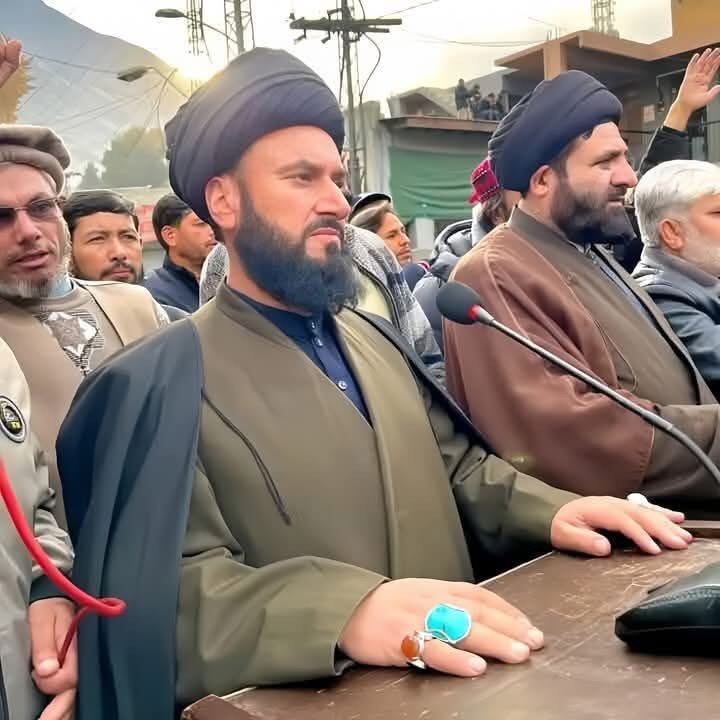
Gilgit: Leading Shia scholar of Gilgit-Baltistan, Agha Rahat Hussain Al-Hussaini, has issued a strong statement warning against any attempts to exploit the region’s vast natural resources without the consent of its people. His remarks come days after Pakistan’s Prime Minister highlighted the mineral wealth of Gilgit-Baltistan and Azad Jammu & Kashmir, (Pakistan administrated Kashmir) iprompting widespread concern and backlash on social media platforms.

In a fiery address, Agha Rahat stated:
“Let every young man—Shia, Sunni, Ismaili—in Gilgit-Baltistan be ready. If anyone dares to lay a hand on our resources, they will face consequences. No one’s child is brave enough to touch the minerals of Gilgit-Baltistan.”

The comments are being widely seen as a direct response to recent statements made by the Pakistani Prime Minister, who, during a speech earlier this month, referred to the “immeasurable mineral reserves” in Gilgit-Baltistan and AJK. While the remarks were framed in the context of economic development, they sparked fears among local populations of unchecked exploitation and centralization of control over the region’s wealth.

Local Backlash Growing

The Prime Minister’s comments went viral, drawing strong reactions from social media users, civil society members, and local political figures in Gilgit-Baltistan and Azad Jammu Kashmir. Many viewed the statement as a continuation of Islamabad’s long-standing policy of resource extraction without due representation or autonomy for the region.

Agha Rahat’s strong words have resonated with many in Gilgit-Baltistan, who see in his message a call for unity and resistance in the face of perceived external threats to local sovereignty.

Historical Context and Regional Sensitivities

Gilgit-Baltistan, a region of strategic importance bordering China, Afghanistan, and Indian-administered Kashmir, has long grappled with political limbo. Despite its significance, it remains constitutionally undefined within Pakistan and lacks full provincial status. While the region is rich in natural resources—ranging from gemstones to minerals and hydropower potential—its people have often voiced concerns over being sidelined in decision-making processes.

Religious scholars like Agha Rahat Hussaini hold considerable influence in the region, and his statement is likely to escalate calls for greater autonomy and rights over local assets.

A Call for Unity

Agha Rahat’s address also emphasized inter-sectarian unity, calling upon Shia, Sunni, and Ismaili youth to stand together in protecting their homeland.
“This is not a sectarian issue—it is about our collective rights. Every youth must be ready,”he declared.

His message is being seen not only as a warning to authorities but also as a rallying cry for the people of Gilgit-Baltistan to remain vigilant and united.

“Jihad Now Obligatory”: Mufti Taqi Usmani Urges Muslim Governments to Defend Gaza

0

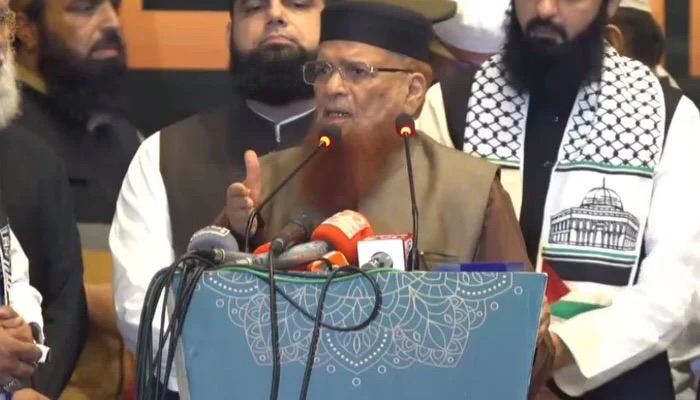
Islamabad: Renowned Pakistani Islamic scholar and President of Wifaq-ul-Madaris Al-Arabia, Mufti Taqi Usmani, has declared that material, physical, and financial support for the Palestinian people is now an obligation upon the entire Muslim Ummah. Addressing the National Palestine Conference in Islamabad, Mufti Usmani asserted that the scale of atrocities being committed in Gaza renders armed resistance a religious duty, not only for individuals but for all Muslim governments, including Pakistan’s.

“Over 55,000 believers have been slaughtered before our eyes. If this is not enough to make jihad obligatory, what is?” he questioned passionately, criticizing what he described as the Muslim world’s silence and inaction.

Mufti Usmani lamented that despite previous conferences, such as one held at Islamabad’s Convention Centre a year ago where vows were made to support Palestine, no meaningful steps have been taken. “The real demand was not just gathering here, but to stand in Gaza with our brothers and sisters,” he said.

“Redirect Voluntary Umrah Funds to Palestine”: Mufti Usmani Urges

In a powerful appeal to the Muslim public, Mufti Usmani called on those planning to perform nafl (voluntary) Umrah to instead donate those funds to support the Palestinian cause, especially the resistance in Gaza. He condemned the complacency of the Muslim world, stating, “The Ummah today is a mere spectator, limited to issuing condemnations and organizing conferences.”

“The time for statements is over. We must move beyond lip service. When tens of thousands of Muslims are being brutally killed, how can we stay silent?” he asked.

“Ummah Has Failed to Protect Al-Aqsa”: Scholar Criticizes Global Inaction

Mufti Usmani voiced deep concern over the lack of international Muslim response to the ongoing aggression against Palestinians. “The defenders of Al-Quds (Jerusalem) have received no real help from the Muslim world. The obligation of jihad now rests upon all Islamic nations. Our governments cannot escape this responsibility.”

He also condemned ongoing violations of ceasefire agreements by Israel, stating, “Israel neither respects moral values nor international law. The Zionist regime recognizes no faith, no covenant, and no humanity.”

“Pakistan Must Uphold Founder’s Vision on Israel”

Reaffirming Pakistan’s long-standing stance on Israel, Mufti Usmani reminded the audience of the position taken by the country’s founder, Muhammad Ali Jinnah, who referred to Israel as an illegitimate entity. “Pakistan cannot and will not backtrack. No matter how powerful Israel becomes, our principles will remain unchanged,” he said.

He also referenced an emotional message from a doctor in Gaza: “We waited for you, but you didn’t come. Now we say goodbye.”Highlighting the dire situation in the besieged enclave, Mufti Usmani warned of plans by global powers to depopulate Gaza and turn it into a leisure zone. “It appears that Trump and his allies now view the entire world as their property,” he remarked.

Call for Peaceful Boycott of Israeli Products

Mufti Usmani called on Muslims worldwide to engage in a complete and peaceful boycott of Israeli products and the companies that support Israel. “Let us boycott, but without causing harm to lives or property. Shariah prohibits violence and destruction of public or private property, even in protest,” he emphasized.

Police Halt PDP Protest Against Controversial Waqf Law in Srinagar, Accuse Authorities of Suppressing Dissent

0

Srinagar: Jammu and Kashmir police on Friday blocked a demonstration organized by the opposition Peoples Democratic Party (PDP) against the recently enacted Indian Waqf (Amendment) Act, 2025, confining protesters to the party’s headquarters in Srinagar. The move has sparked accusations of authoritarian overreach and intensified political tensions in the disputed region of Jammu Kashmir.

Protest Suppressed:
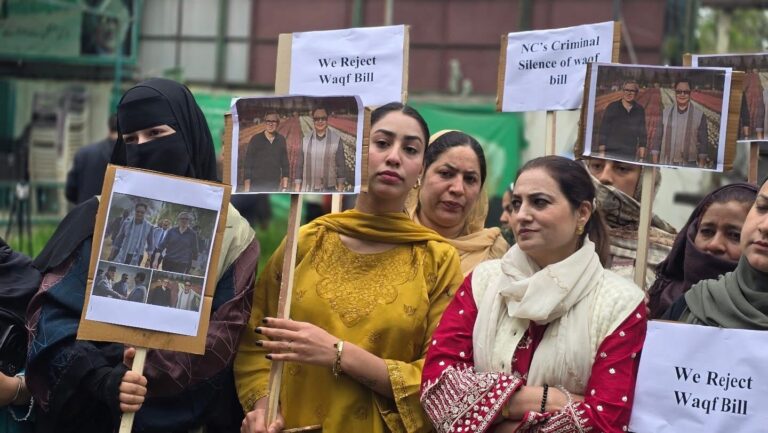
Led by PDP General Secretary Khurshid Alam, party workers gathered at their headquarters near Sher-e-Kashmir Park, brandishing placards with slogans such as “We Reject the Waqf Bill” and “NC’s Silence is Criminal.” As protesters attempted to march toward the city center, police barricaded the gates, preventing them from leaving the premises. The demonstration concluded peacefully after an hour, with no reports of violence.

PDP’s Stance:
Speaking to reporters, Alam condemned the police action, stating, “Our protest was entirely peaceful, yet the authorities chose to stifle democratic dissent. This law, pushed through Parliament under opaque circumstances, threatens the autonomy of Muslim institutions in Kashmir.” He criticized the ruling Bharatiya Janata Party (BJP) for its “anti-Muslim agenda” and lambarked the regional National Conference (NC), a rival political group, for its “criminal silence” on the issue.

Controversy Over the Waqf Act:
The Waqf (Amendment) Act, 2025 amends laws governing Islamic charitable endowments (waqf), which manage religious properties and assets. Critics argue the revisions grant the central government undue control over these institutions, undermining their traditional community-led governance. The bill’s passage during a late-night parliamentary session has fueled allegations of procedural impropriety.

Political Context:
The PDP, a key regional party advocating for Kashmir’s autonomy, has positioned itself as a vocal critic of the BJP-led central government’s policies. Meanwhile, the NC’s muted response to the law has drawn ire from opponents, highlighting fractures within Kashmir’s political landscape. Analysts suggest the BJP’s push to centralize control over waqf bodies aligns with its broader agenda to integrate Kashmir more closely with India, a move resisted by many in the Muslim-majority region.

International Implications:
The incident underscores ongoing tensions in Kashmir, a disputed territory between India and Pakistan, where concerns over religious rights and political autonomy remain acute. The suppression of dissent, coupled with legislative changes perceived as targeting Muslim institutions, risks exacerbating regional instability.

Response from Authorities:
Police officials have not yet commented on the restrictions imposed on the protest. The BJP has previously defended the Waqf amendments as “reforms to ensure transparency,” though critics dismiss this as a pretext for consolidating power.

Looking Ahead:
The PDP has vowed to escalate opposition to the law, signaling potential unrest. As debates over religious autonomy and central governance intensify, the episode reflects the delicate balance between security measures and civil liberties in Kashmir.

  • Waqf: A legal endowment under Islamic law, typically governing religious or charitable assets.
  • The NC (National Conference) and PDP are prominent political parties in Jammu and Kashmir, historically advocating varying degrees of autonomy from Indian governance.
  • The BJP, India’s ruling party, has faced criticism for policies perceived as marginalizing Muslims, including in Kashmir, where special constitutional status was revoked in 2019.

Global Pahari Literary Gathering to Celebrate World Pahari Day on April 14 in Muzaffarabad

0

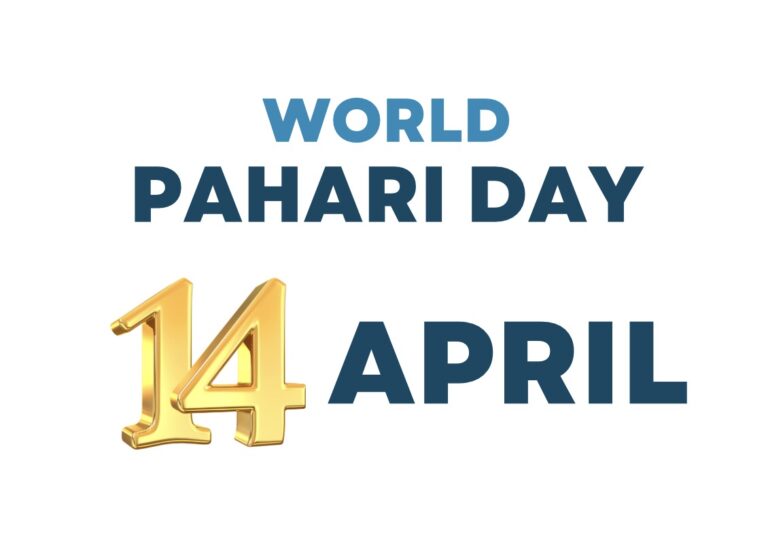
Muzaffarabad, Pakistan administrated Jammu & Kashmir – In a heartfelt tribute to linguistic heritage and cultural identity, the Global Pahari Literary Sangat in collaboration with Pahari Connections is set to host a vibrant cultural event on April 14, 2025, to mark World Pahari Day.

The event, scheduled to begin at 3 PM, will celebrate the richness of the Pahari language and culture, inviting language lovers and cultural advocates to join in honoring their mother tongue.

Prominent literary and musical personalities from Azad Jammu and Kashmir are slated to participate, including renowned poet and writer Babar Sanwal, celebrated artist Rehmat Bano, and other well-known Pahari singers and performers.

E-Challan System to Launch in Kashmir: AJK Police and JS-Zindigi Bank Sign Agreement

0

Muzzaffarabad, Pakistan administrated Jammu & Kashmir– A major step towards digitizing traffic enforcement is underway in Pakistan-administered Jammu and Kashmir, as the regional police department has signed an agreement with JS-Zindigi Bank to implement an electronic challan (e-challan) system.

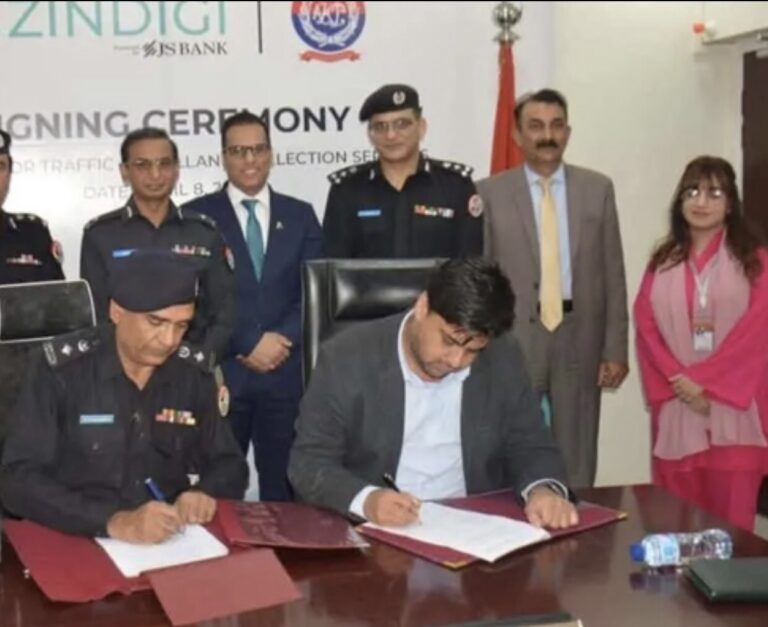
The Memorandum of Understanding (MoU) was officially signed at the Central Police Office in Muzaffarabad in the presence of senior officials from the Jammu and Kashmir Police and executives from JS-Zindigi Bank and Beagle Aid, a digital solutions partner.

The upcoming system aims to phase out the traditional manual challan process by introducing a streamlined, transparent, and digitized method of issuing and paying traffic fines. Under the agreement, fines will soon be payable through digital platforms such as Zindigi mobile wallets, bank accounts, and credit or debit cards via SBP’s Raast QR system.

JS-Zindigi Bank will supply the necessary equipment and gadgets to traffic wardens and will also provide technical training to ensure the effective rollout of the system. The new initiative is expected to not only enhance convenience for the public but also improve transparency and accountability in traffic law enforcement across the region.

Officials expressed confidence that the system would modernize traffic management in AJK and provide a model for other regions seeking to embrace digital governance tools.

With preparations actively underway, the digital transformation of traffic enforcement in Jammu and Kashmir marks a significant stride toward e-governance and public service innovation.