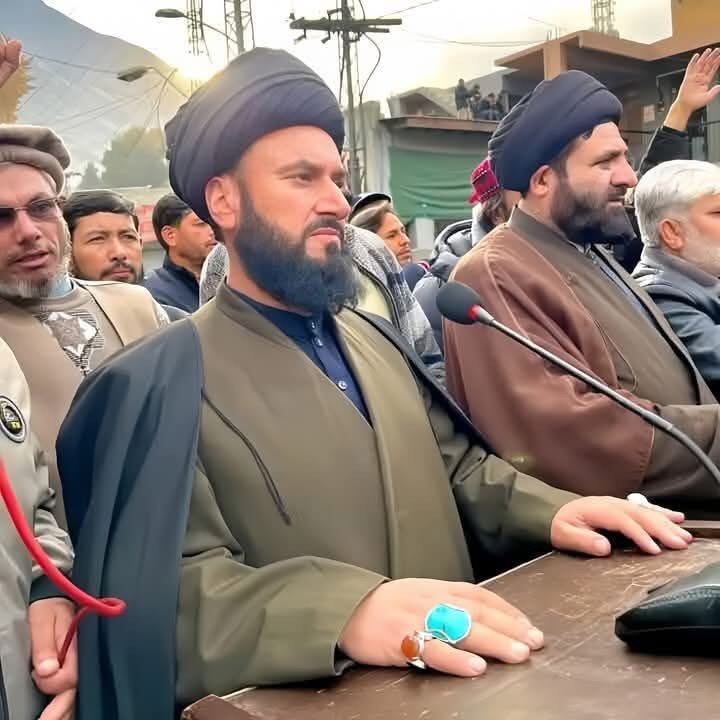

Gilgit: Leading Shia scholar of Gilgit-Baltistan, Agha Rahat Hussain Al-Hussaini, has issued a strong statement warning against any attempts to exploit the region’s vast natural resources without the consent of its people. His remarks come days after Pakistan’s Prime Minister highlighted the mineral wealth of Gilgit-Baltistan and Azad Jammu & Kashmir, (Pakistan administrated Kashmir) iprompting widespread concern and backlash on social media platforms.
In a fiery address, Agha Rahat stated:
“Let every young man—Shia, Sunni, Ismaili—in Gilgit-Baltistan be ready. If anyone dares to lay a hand on our resources, they will face consequences. No one’s child is brave enough to touch the minerals of Gilgit-Baltistan.”
The comments are being widely seen as a direct response to recent statements made by the Pakistani Prime Minister, who, during a speech earlier this month, referred to the “immeasurable mineral reserves” in Gilgit-Baltistan and AJK. While the remarks were framed in the context of economic development, they sparked fears among local populations of unchecked exploitation and centralization of control over the region’s wealth.
Local Backlash Growing
The Prime Minister’s comments went viral, drawing strong reactions from social media users, civil society members, and local political figures in Gilgit-Baltistan and Azad Jammu Kashmir. Many viewed the statement as a continuation of Islamabad’s long-standing policy of resource extraction without due representation or autonomy for the region.
Agha Rahat’s strong words have resonated with many in Gilgit-Baltistan, who see in his message a call for unity and resistance in the face of perceived external threats to local sovereignty.
Historical Context and Regional Sensitivities
Gilgit-Baltistan, a region of strategic importance bordering China, Afghanistan, and Indian-administered Kashmir, has long grappled with political limbo. Despite its significance, it remains constitutionally undefined within Pakistan and lacks full provincial status. While the region is rich in natural resources—ranging from gemstones to minerals and hydropower potential—its people have often voiced concerns over being sidelined in decision-making processes.


Religious scholars like Agha Rahat Hussaini hold considerable influence in the region, and his statement is likely to escalate calls for greater autonomy and rights over local assets.
A Call for Unity
Agha Rahat’s address also emphasized inter-sectarian unity, calling upon Shia, Sunni, and Ismaili youth to stand together in protecting their homeland.
“This is not a sectarian issue—it is about our collective rights. Every youth must be ready,”he declared.
His message is being seen not only as a warning to authorities but also as a rallying cry for the people of Gilgit-Baltistan to remain vigilant and united.

