

By Sardar Anwar | Special Editorial
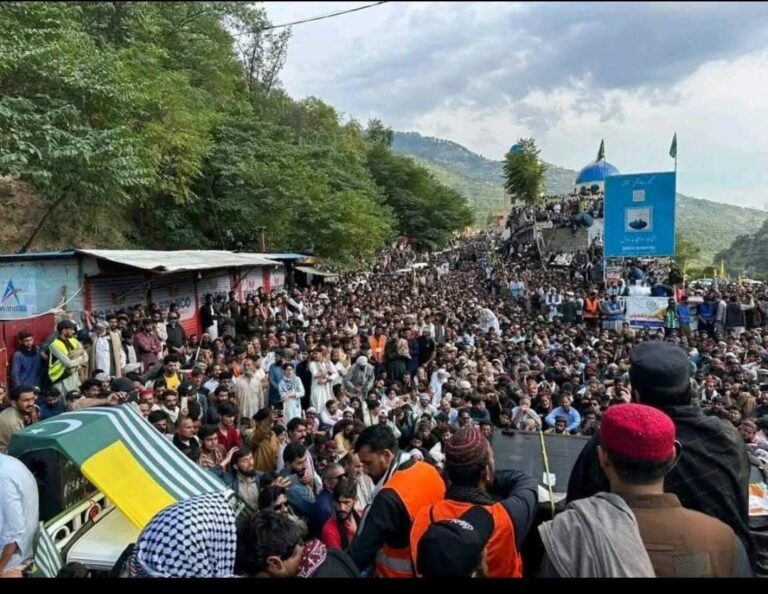
MUZAFFARABAD – In the political landscape of Azad Jammu and Kashmir, the Joint Awami Action Committee (JKJAAC) has emerged as a leading force driving the ongoing people’s rights movement. This movement, which has mobilized thousands of citizens across towns and villages, represents years of struggle, sacrifice, and collective aspirations. Yet, it now faces a dangerous narrative: the attempt to pit “people’s movements” against “nationalist ideologies,” framing one as a threat to the other.
Such framing, however, is not only misleading—it risks dividing the people and derailing the very struggle for justice and dignity that JKJAAC embodies.

People’s Rights Movements vs Freedom Movements
At first glance, people’s rights movements and freedom movements may appear similar. Both involve mass mobilization, popular demands, and the language of justice. But the two differ significantly in scope and objective.
People’s rights movements seek reforms within an existing state or system. Their central aim is the restoration of basic socio-economic and political rights—whether it be fair wages, access to education, farmers’ rights, or community-level reforms. These movements are not necessarily anti-state; rather, they often seek to transform the state through accountability and justice.
Freedom movements, in contrast, reject the prevailing system altogether. Their goal is national independence, self-determination, and complete sovereignty often against colonial, occupying, or external powers. Such struggles are defined by their insistence on creating a new political order, separate from the existing state.

While the distinction is clear, history has shown that these struggles often overlap. A sustained denial of rights within a system can evolve into a demand for complete freedom. Conversely, freedom movements frequently embed socio-economic justice as part of their long-term vision.
The Situation in Azad Jammu and Kashmir
In Azad Jammu and Kashmir, the JKJAAC-led people’s rights movement is being unfairly cast as a conspiracy against nationalist ideals. This narrative not only oversimplifies but also distorts reality. The truth is that the current leadership of JKJAAC includes some of the most prominent nationalist figures who have dedicated their lives to the Kashmiri cause.
The JKJAAC core committee its highest decision-making body features leaders with deep nationalist roots, such as:
Arbāb Advocate
Khan Ilyas Khan
Abid Shaheen
Raja Mujtaba
Anwar Baig
Naeem Khan (progressive voice)
Saad Ansari Advocate
Khawaja Mehran Advocate
Tauseef Jarral Advocate
Raja Amjad Advocate
Each of these individuals, known personally by the author, represents strands of nationalist, progressive, and pro-people thought. Far from being sidelined, nationalists are at the very heart of the people’s rights movement.
A Manufactured Divide
To portray the JKJAAC’s struggle for basic rights—electricity tariffs, wheat subsidies, and livelihood protections—as somehow hostile to nationalist ideals is both intellectually shallow and politically reckless. It risks playing directly into the hands of those who benefit from division.
The reality is this: people’s rights movements and nationalist movements are not enemies. They are often two parallel streams of resistance. One focuses on immediate survival and dignity within the present framework; the other envisions long-term freedom and sovereignty. Together, they sustain the larger struggle of oppressed peoples.
The Danger of Internal Division
History is unforgiving when popular movements are divided. When leaders confuse disagreement with disloyalty, or when differences of strategy are weaponized into personal or ideological enmity, the result is disintegration.
A people’s rights movement, by its very nature, is accountable to its base. Its leadership must answer for every decision before the masses. Disagreements are natural. Mistakes are inevitable. But to translate these disagreements into accusations of betrayal or conspiracy is to weaken the entire movement.
As the old adage reminds us: “When moments make mistakes, centuries pay the price.”
A Call for Dialogue, Not Division
The way forward is neither suppression of dissent nor questioning the commitment of nationalists. Instead, the path must be one of dialogue, reason, and mutual respect. Differences must be debated openly, within the framework of shared struggle, not exploited as tools for division.
The JKJAAC-led movement in Azad Jammu and Kashmir is at a critical juncture. It has the potential to achieve reforms that will materially transform people’s lives. To weaken it now by framing it as a threat to nationalism is not only unjust—it is a betrayal of both people’s rights and the Kashmiri freedom cause.
The movement must remain united, disciplined, and deeply rooted in the aspirations of ordinary people. Its leaders—whether nationalist, progressive, or rights-focused—owe it to history to rise above factionalism.
Because history’s court delivers harsh sentences to those who squander the sacrifices of their people.