


The last time Shabir Shah saw the soil of the Kashmir valley as a free man, dial-up internet was still a novelty and the Line of Control was just a term in school textbooks. That was 2017. On a cold morning last week, the septuagenarian pro-independence leader was taken off a plane at Jammu airport—handcuffed, escorted by National Investigation Agency (NIA) officers, and driven to a courtroom he had not seen in nearly three decades.
For seven years, he had languished in Delhi’s Tihar Jail. Now, he was back in the region he fought ideologically for, not as a political figure, but as a man on remand. The NIA court in Jammu granted the agency ten days of custody over Shah, in connection with a case first registered against him in 1996—a year when many of today’s young Kashmiri protestors were not yet born.
To understand the haunting persistence of this moment, one must rewind to 2017. Shabir Shah, the veteran chairman of the Democratic Freedom Party (DFP) and a well-known face of the Hurriyat Conference’s hardline faction, was arrested by the Enforcement Directorate (ED) in a money laundering case linked to alleged hawala transactions funding separatist activities in Kashmir. He was sent to Tihar Jail in Delhi and has remained there, with brief interruptions for court appearances, ever since.
Last month, in a rare legal victory, a Delhi court granted him bail in that money laundering case. But freedom did not follow. Before he could walk out of Tihar’s iron gates, the NIA intervened. They had another case—dormant for years—that they wanted to revive. A case dating back to 1996, registered at the police station in Karan Nagar, Srinagar. The charges are tied to alleged “anti-national” speeches and acts of sedition. For the past week, Shah has been held in NIA custody in Delhi before being transported to Jammu for formal remand proceedings.
On April 18, dressed in a simple kurta and shawl, Shah was produced before the NIA court in Jammu. His appearance was fleeting. The courtroom was packed with lawyers, journalists, and a handful of curious onlookers. According to sources present, Shah appeared frail but composed. He did not raise his voice. He did not make political statements. He listened as the NIA argued that he needed ten days of custody for “confrontation and recovery of incriminating material” related to the 1996 case.
His legal team opposed the remand, arguing that Shah is a 72-year-old man with known medical conditions, including diabetes and hypertension. They pointed out that the case is nearly three decades old and that he had already spent seven years in jail on related matters. But the court was not persuaded. The judge granted the ten-day remand, ordering the NIA to produce him again on April 28.
For Shah, this journey—from Delhi’s Tihar to a court in Jammu—marked his first return to the territory of Jammu and Kashmir since his arrest in 2017. But it was not a homecoming. He was taken directly from the airport to the court and then to an undisclosed NIA facility in Jammu. He has not seen Srinagar. He has not seen his family.
In a modest residential lane in downtown Srinagar, Shah’s family has learned to live with absence. His wife, Dilshada, has visited him in Tihar Jail more times than she can count. His daughter was a teenager when he was arrested; she is now a working professional. When news of the ten-day remand reached Srinagar, the house fell silent.
“My husband is not a criminal. He is a political thinker,” Dilshada told a local news agency over the phone, her voice measured but heavy. “If there was a case from 1996, why was it not pursued properly for 21 years before 2017? Why now, when he was about to be released?”
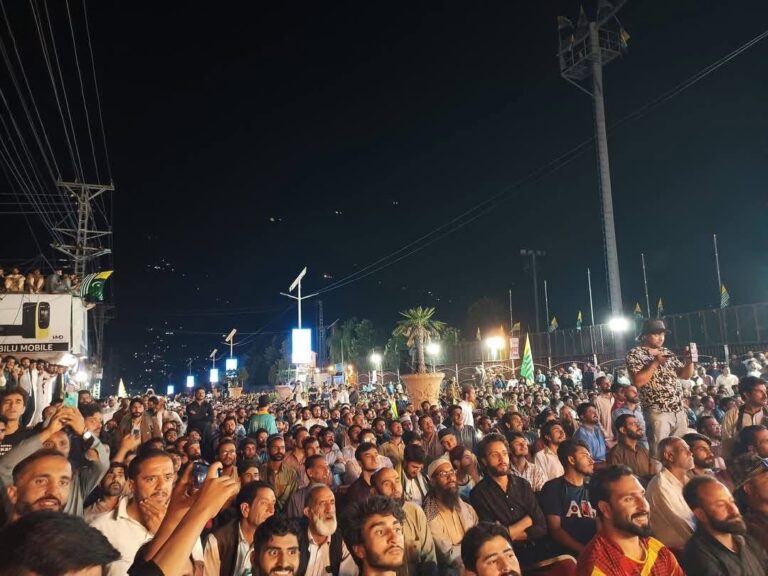

Neighbours recall Shah as a man who rarely left his library. Unlike many separatist leaders who commanded street power, Shah was an intellectual—a man who wrote long letters, gave measured interviews, and spoke of peaceful resistance. His absence has left a vacuum in that corner of Srinagar that no rally or slogan has filled.
Political commentators in the valley note that Shah’s continued detention, even after bail in the primary case, sends a chilling message. “It tells every dissenting voice in Kashmir that there is always another case waiting,” said a retired professor from the University of Kashmir, who requested anonymity for fear of reprisal. “You may win one battle, but the state has an infinite number of files.”
The timing of Shah’s remand is layered. Kashmir has been relatively quiet since August 2019, when the region’s special status was revoked and it was bifurcated into two Union Territories. Mass arrests of separatist leaders in the weeks following that decision emptied the political landscape of organized dissent. Many of Shah’s contemporaries—Yasin Malik, Masarat Alam, and others—remain either in jail or under house arrest.
Bringing Shah physically to Jammu, rather than conducting proceedings via video link (as is common for Tihar inmates), is seen by legal observers as a strategic move. It allows the NIA to interrogate him in a controlled environment, away from the political atmosphere of Delhi. It also serves as a symbolic reminder: no leader, no matter how long they have been incarcerated, is beyond the reach of new legal tangles.
The 1996 case itself is rooted in the peak years of the armed insurgency in Kashmir. That year saw some of the highest levels of violence. By reviving a case from that era, the state is effectively arguing that the ideological battle Shah waged then is legally indistinguishable from actions requiring custody today.
As of today, Shabir Shah is in a secure NIA guesthouse in Jammu, flanked by armed officers. His legal team is preparing a bail application for the 1996 case, but given the remand order, that process will take at least another two weeks. The NIA has not disclosed the specifics of what they hope to recover during the ten-day custody, nor have they named any other individuals they intend to confront Shah with.
In Tihar Jail, his cell remains empty. His personal belongings—books, a prayer mat, some medicines—still sit on the shelf. Whether he will return to Delhi to collect them is uncertain.
In Srinagar, life continues its uneasy rhythm. Shops open late and close early. Security forces patrol the streets. And in the Shah household, the telephone rings frequently—friends, former colleagues, and activists calling to offer support, but careful not to say too much over the line.
Shabir Shah’s journey from Tihar to Jammu is a story about the elasticity of the law in conflict zones. It is not a tale of innocence or guilt—that is for the courts to decide. It is, rather, a portrait of how time bends differently for political prisoners in Kashmir. A case from 1996 can feel like yesterday when the state decides to revive it. A seven-year sentence can become indefinite when one legal proceeding folds seamlessly into the next.
For the man himself, now in his 70s, the fight is no longer about street power or political relevance. It is about breathing air that does not smell of prison disinfectant. It is about seeing the mountains of his homeland from a window that is not barred.
As his wife put it, before hanging up the phone: “He wanted to come home. Not to politics. Just home. I don’t know when that will happen now.”
— The Azadi Times, reporting from Jammu and Srinagar.