No state backing. No paywalls. Just truth. Support Kashmir's independent voice. Join 2,400+ patrons who fund independent voices.
Zero Paywalls
Reader Funded
Award Winning
Secure Payment
Encrypted
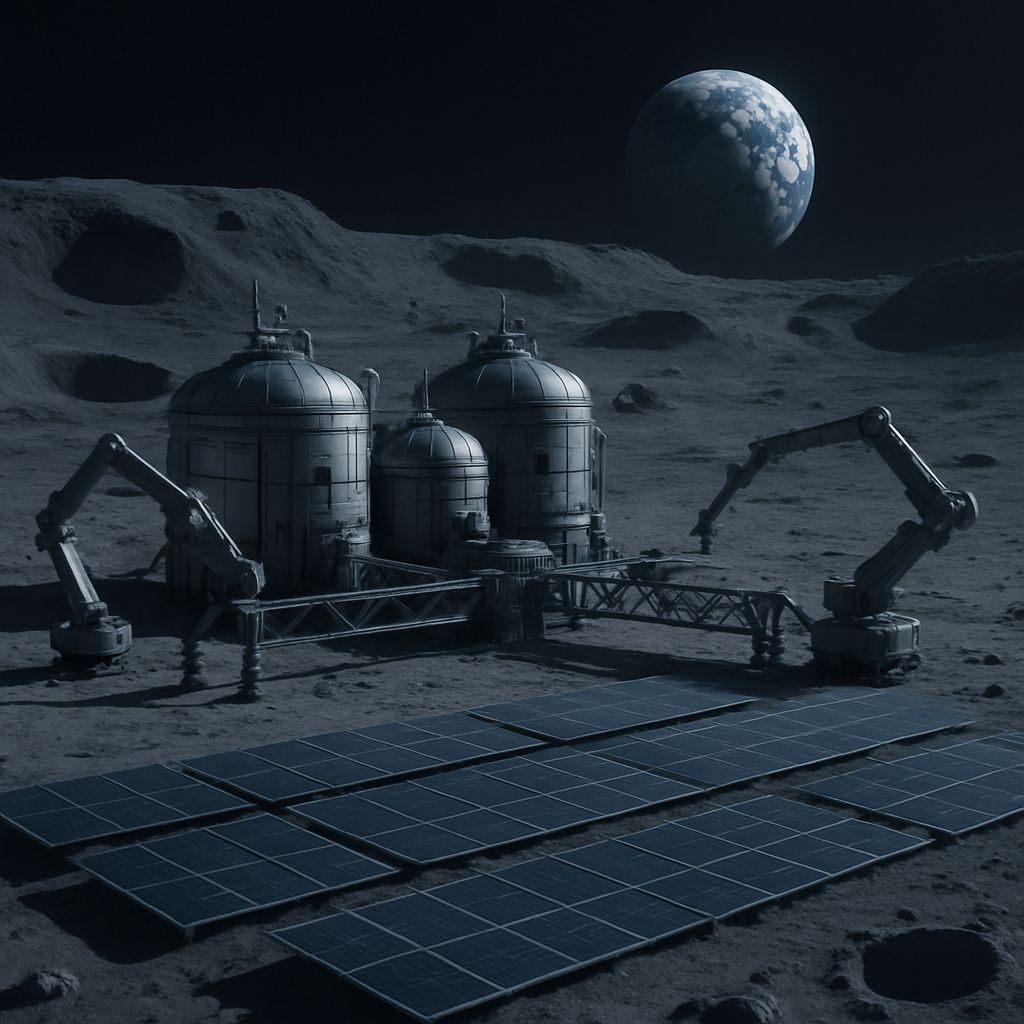
China and Russia have quietly agreed to construct an automated nuclear power plant on the lunar surface by 2036, after signing a memorandum of cooperation earlier this month (Live Science, Reuters). The facility will form the backbone of the International Lunar Research Station (ILRS), offering a continuous power source alongside solar arrays and enabling long‑term uncrewed—and eventually crewed—operations near the Moon’s south pole (www.ndtv.com, South China Morning Post). The project follows multiple precursor missions, including China’s Chang’e‑8 in 2028 and a series of heavy‑lift rocket launches through 2035 to deliver modular components (Reuters, GreekReporter.com). Experts warn that the move accelerates a new space race, challenging NASA’s scaled‑back Lunar Gateway ambitions and redefining geostrategic dynamics in outer space (The Times, China Academy).
China’s space agency and Roscosmos formalised the deal in early May, detailing a phased timeline: initial robotic deployment in the mid‑2030s, followed by incremental power‑plant assembly and activation by 2036 (www.ndtv.com, Reuters). The ILRS, conceived as a multinational research hub, will leverage this reactor to support scientific experiments, communication relays, and life‑support systems in bitter‑cold lunar nights (South China Morning Post, Live Science).
This initiative signals the dawn of state‑led nuclear energy beyond Earth, raising complex questions about lunar governance, non‑proliferation, and resource rights (The Times, China Academy). The reactor’s placement at the south pole—home to suspected water‑ice reserves—underscores broader ambitions for in‑situ resource utilisation and long‑term human presence (Reuters, South China Morning Post). Observers note the move may spur rival programmes and reshape collaboration frameworks under the Outer Space Treaty (Live Science, China Academy).
No state backing. No paywalls. Just truth. Support Kashmir's independent voice. Join 2,400+ patrons who fund independent voices.
The ILRS partners have invited over a dozen nations, including emerging spacefaring states, to join the project. This consortium aims to share data, technology, and research findings, potentially broadening access to lunar science and technology development (South China Morning Post, Reddit). However, the memorandum’s opaque details leave key questions unanswered, from environmental safeguards to decommissioning plans.
Meta Description:
Tags (comma‑separated):
Focus Keywords:
Lunar nuclear power plant, China Russia ILRS, Moon south pole energy, automated reactor on the Moon
Trending Topics


The Azadi Times is an independent digital news platform based in Muzaffarabad, Kashmir, dedicated to credible journalism, in-depth reporting, and global analysis. We cover Kashmir, South Asia, and international affairs with a commitment to truth, editorial integrity, and public accountability.
Get important news delivered directly to your inbox and stay connected!
© 2026 The Azadi Times. All Rights Reserved.