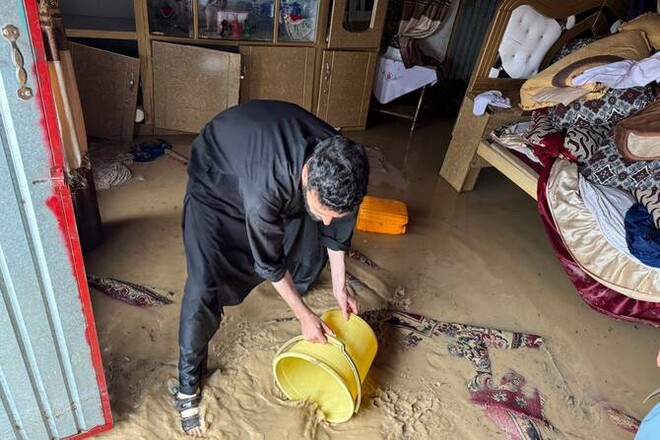
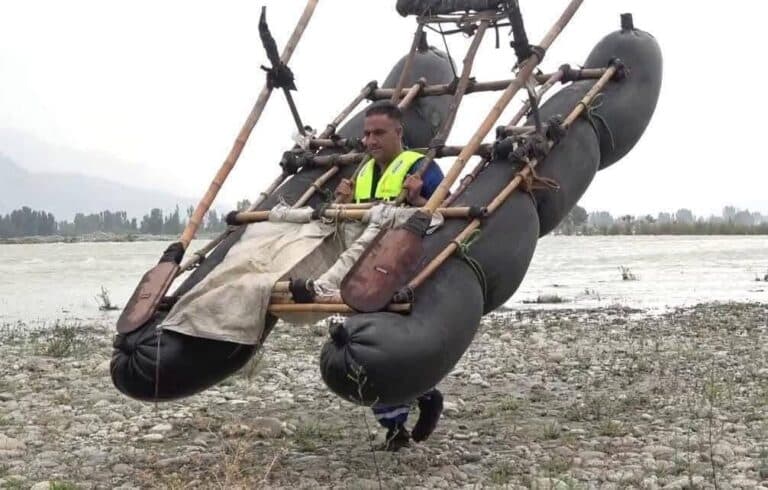
Afghanistan: At least 17 people have been killed and 26 others injured across multiple regions of Afghanistan in the past 24 hours, as torrential rains triggered severe flash floods, landslides, and lightning strikes. The casualties mark the latest in a series of deadly weather events to strike the impoverished nation this season.
Citing Afghan officials, the Associated Press reported that authorities have warned the death toll may rise as assessment teams from the National Disaster Management Authority continue surveying affected areas.
According to authority spokesperson Yousuf Hamad, 13 of Afghanistan’s 34 provinces have been impacted, with the majority concentrated in western, central, and northwestern regions. The damage assessment reveals extensive infrastructure collapse:
147 homes completely or partially destroyed
80 kilometers of roads washed away
Agricultural land and irrigation systems severely damaged
The destruction of roads and irrigation infrastructure threatens longer-term food security in a country where rural livelihoods remain precarious and conflict-displaced populations already face acute hunger.
This latest disaster follows a deadly pattern. Earlier this year, heavy snowfall and sudden flooding claimed dozens of lives nationwide. In spring 2024 alone, flooding killed more than 300 people—demonstrating the accelerating lethality of extreme weather events.
Afghanistan ranks among the most climate-vulnerable nations globally. Decades of protracted conflict have degraded early warning systems and emergency response capacity.
Economic collapse following the Taliban’s 2021 return to power has further hollowed out institutional resilience. Deforestation—driven by poverty and illegal logging—has stripped hillsides of natural flood protection, while climate change intensifies precipitation variability.
The convergence of these factors transforms routine seasonal rains into mass-casualty events. Where developed nations deploy flood barriers and evacuation protocols, Afghan communities often face rising waters with little more than advance warning from failing infrastructure.
The timing compounds crisis upon existing crisis. Afghanistan’s humanitarian emergency—characterized by widespread food insecurity, collapsed healthcare, and mass displacement—leaves little margin for disaster recovery. International aid flows, already constrained by political complications surrounding Taliban governance, struggle to reach remote affected areas where roads have dissolved into mud.
For the 26 injured, medical access remains uncertain. Afghanistan’s healthcare system, dependent on foreign funding and expertise, has contracted dramatically. Trauma care in flood-isolated provinces may prove impossible, converting survivable injuries into preventable deaths.
The 147 destroyed homes displace families into temporary shelters precisely as temperatures drop and winter approaches. Without reconstruction assistance, these displacements risk becoming permanent—adding to Afghanistan’s estimated 3.4 million internally displaced persons.
Afghanistan exemplifies the climate-conflict nexus with brutal clarity. Four decades of war destroyed the governance institutions that might have managed water resources, enforced building codes in floodplains, or maintained forest cover. The resulting vulnerability means that climate change impacts arrive not as gradual adaptation challenges but as sudden, deadly shocks.
International climate finance mechanisms—designed primarily for stable developing nations with functioning bureaucracies—struggle to engage with Taliban-administered Afghanistan. This exclusion leaves one of the world’s most climate-vulnerable populations without the adaptation resources that might mitigate future disasters.
Meanwhile, regional geopolitics complicate cross-border cooperation. Tensions with Pakistan over border fencing and alleged shelling—reported separately by Afghan officials—divert attention from shared water management challenges that affect flood risk across the region.
The 17 dead of this 24-hour period will likely multiply as assessments continue. For Afghanistan’s disaster management authority, operating with depleted resources and international isolation, each flood season tests the limits of institutional capacity.