No state backing. No paywalls. Just truth. Support Kashmir's independent voice. Join 2,400+ patrons who fund independent voices.
Zero Paywalls
Reader Funded
Award Winning
Secure Payment
Encrypted
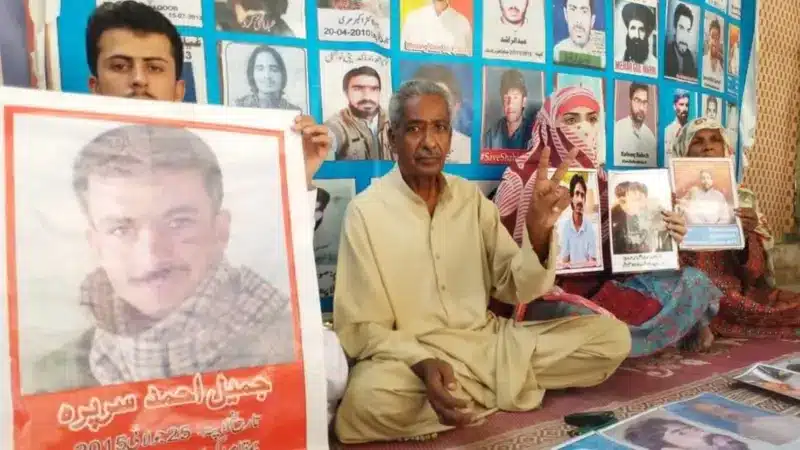
Mama Qadir Baloch, a lifelong advocate for the recovery of missing persons in Balochistan, passed away on Saturday at the age of 85. Known as the relentless voice for families whose loved ones were forcibly disappeared, he dedicated decades of his life to fighting injustice in Pakistan’s restive province of Balochistan. He remained steadfast in his mission despite personal tragedy, threats, and health challenges, making him a symbol of courage for human rights defenders worldwide.
His death was confirmed by his son, Bajar Reki, who shared that Mama Qadir’s burial will take place in his ancestral town of Surab, as per his last wishes. Over the past year, he had been battling severe illnesses, including asthma, tuberculosis, and liver complications. For the last few days of his life, he was on a ventilator at a private hospital in Quetta.
Mama Qadir Baloch was born on June 6, 1940, in Surab, a town in the Qalat division of Balochistan. He completed his early schooling in Surab, matriculated in Khuzdar, and pursued intermediate education in Quetta. From a young age, he was drawn to nationalist politics and social activism, aligning himself with the National Awami Party (NAP) during his youth.
No state backing. No paywalls. Just truth. Support Kashmir's independent voice. Join 2,400+ patrons who fund independent voices.
In 1974, he joined United Bank Limited (UBL) as a cashier and eventually retired in 2009 as a Grade Three officer. While retirement often brings respite, for Mama Qadir it marked the beginning of a profound personal and political struggle that would define the remainder of his life.
In 2009, Mama Qadir’s elder son, Jaleel Reki, was forcibly disappeared in Quetta. According to Mama Qadir, security forces abducted his son, and his whereabouts remained unknown for years. Jaleel, a double MA graduate and a former bank officer, was expected to be Mama Qadir’s support in old age. Tragically, three years later, his body was recovered under circumstances suggesting torture and abuse.
This personal loss transformed Mama Qadir into a relentless activist. He joined forces with other families of missing persons, advocating for accountability and justice in Balochistan. His work highlighted the broader issue of enforced disappearances in Pakistan, particularly in the context of Balochistan’s longstanding human rights challenges.
Mama Qadir Baloch played a pivotal role in establishing Voice for Baloch Missing Persons (VFBMP), serving as its vice-chairman. The organization was created by families whose loved ones had been forcibly disappeared and sought to address a systemic human rights crisis. Under his guidance, VFBMP became the leading platform advocating for transparency, accountability, and the safe return of missing persons.
He was known for his unwavering presence at protest camps and hunger strikes, often described as the soul of these movements. Even after the tragic recovery of his son’s body, Mama Qadir remained at the forefront, demonstrating his commitment to the cause and solidarity with other families.
One of Mama Qadir’s most remarkable achievements was the establishment of a continuous hunger strike camp in Quetta, aimed at demanding the recovery of missing persons. According to VFBMP, this camp has been ongoing for more than 6,035 days, making it the longest-running protest camp globally.
Mama Qadir’s personal dedication to the camp was unparalleled. Despite multiple attempts by authorities to intimidate him, including threats, physical attacks, and efforts to disrupt the camp, he remained steadfast. His presence symbolized hope and resilience for families who had lost contact with their loved ones.
In October 2013, Mama Qadir led what would become Pakistan’s longest protest march for missing persons, traveling from Quetta to Karachi and eventually to Islamabad. The march, which took approximately four months to complete, was a landmark event in the history of human rights activism in Pakistan.
Throughout the march, participants faced numerous challenges, including harassment and threats. Yet Mama Qadir’s leadership ensured that the march remained peaceful, organized, and highly visible. The march brought national and international attention to the crisis of enforced disappearances in Balochistan, highlighting the urgent need for government accountability.
Mama Qadir’s activism extended beyond Pakistan. In 2018, he traveled to Geneva to participate in United Nations meetings addressing enforced disappearances. He also visited the United States, where he engaged with political leaders and human rights advocates, raising awareness about the plight of missing persons in Balochistan.
He had planned another long march to Geneva to internationalize the struggle, but his name was placed on Pakistan’s Exit Control List, preventing him from traveling. Nevertheless, his prior efforts ensured that the issue remained on the global human rights agenda.
Mama Qadir’s activism was not without risk. According to reports, he faced repeated attempts to intimidate him, including:
Arson attacks on the hunger strike camp
Physical assaults near his home
Harassment and threats to end the protest
Despite these challenges, Mama Qadir continued his advocacy, emphasizing that his grief mirrored the suffering of all families with missing loved ones. His unwavering commitment became a symbol of courage for activists across the region.
Mama Qadir Baloch leaves behind a legacy of resilience, courage, and justice. As the face of Voice for Baloch Missing Persons, he elevated the struggle of countless families to both national and international platforms. His work has inspired a generation of human rights defenders and advocates in Pakistan and abroad.
His life exemplified the power of personal loss transformed into collective action. Mama Qadir’s relentless advocacy ensured that the voices of the disappeared were heard, and that their families were never forgotten.
In recognition of his contributions, VFBMP has announced a three-day mourning period, pausing all protest activities in Quetta. His death is mourned by activists, human rights organizations, and communities across Balochistan, highlighting the immense respect he commanded for his unwavering dedication.
Mama Qadir Baloch’s story is not just a tale of personal grief; it is a testament to courage, resilience, and the fight for human dignity. His activism reminds the world that even in the face of systemic injustice, one individual’s determination can ignite change and give hope to countless others.
Trending Topics


The Azadi Times is an independent digital news platform based in Muzaffarabad, Kashmir, dedicated to credible journalism, in-depth reporting, and global analysis. We cover Kashmir, South Asia, and international affairs with a commitment to truth, editorial integrity, and public accountability.
Get important news delivered directly to your inbox and stay connected!
© 2026 The Azadi Times. All Rights Reserved.