


Continuous suspension of 3G and 4G services across Mirpur, Poonch, and Muzaffarabad divisions hits students, freelancers, and businesses hard, sparking widespread calls for immediate restoration.
In the modern era, the internet is no longer a luxury or a pastime. It serves as the backbone of the economy, a core pillar of education, and a vital lifeline for healthcare and emergency communication. Yet, across all three divisions of Pakistan-administered Kashmir—Mirpur, Poonch, and Muzaffarabad—the prolonged suspension of mobile internet services (3G/4G) for over four months has severely disrupted daily life for millions of residents.
Beginning on June 5, the blackout has now crossed 124 days. Despite the heavy toll on the region, mobile data remains largely inaccessible, drawing sharp criticism from citizens, business owners, and students over official inaction.

Economic Collapse and Administrative Contradictions
The prolonged digital blackout has paralyzed the region’s economic and educational framework. Thousands of students, independent freelancers, journalists, and online entrepreneurs in Azad Kashmir face mounting unemployment and severe financial distress. Meanwhile, the disruption of online banking and digital financial services has left ordinary citizens struggling just to access their own deposited funds.
With cash transactions restricted at many bank counters, residents are forced to rely heavily on ATMs. However, numerous ATMs remain non-functional due to down links or cash shortages. While private banks continue to profit from trapped public capital, ordinary citizens and small-scale traders suffer heavy financial losses. Wholesalers and commercial sectors across Pakistan also face billions in losses as the supply chain and online order networks within the region remain at a standstill.



A central irony highlighted by critics is the justification provided for the communication shutdown. Authorities initially cited security concerns and protests called by the Jammu Kashmir Joint Awami Action Committee (JKJAAC) as the reason for suspending mobile data. Yet, critics note that the activities and coverage of the Action Committee continue actively on social media, while ordinary citizens relying on the internet for their livelihood and education remain entirely cut off from a fundamental utility.
Growing Ramifications and Future Risks
Experts warn that if the suspension continues, Azad Kashmir faces severe long-term consequences, including a digital brain drain as IT professionals and youth migrate to other cities or abroad, the derailment of academic sessions for students unable to access online classes or research, and a deep erosion of trust among overseas investors and the Kashmiri diaspora. Furthermore, prolonged communication restrictions risk deepening public alienation and frustration rather than resolving underlying political grievances.
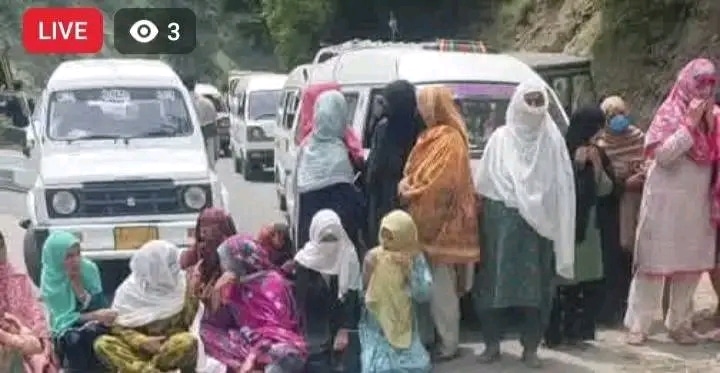

Calls for Judicial Intervention and Policy Review
Civil society representatives, trade bodies, and commentators are urging authorities to take immediate corrective steps.
1. **Judicial Oversight:** Calls have been mounted for higher courts, including the High Court of Azad Kashmir, to prioritize hearings regarding the restoration of communication rights, directing the Pakistan Telecommunication Authority (PTA), local authorities, and the Special Communications Organization (SCO) to reinstate 3G and 4G services without further delay.
2. **Financial Relief:** Regulatory bodies and the State Bank are being urged to compel commercial banks to ensure fully operational counter transactions and reliable ATM availability to ease public financial hardship.
3. **Constructive Dialogue:** Observers maintain that public grievances and administrative disputes should be addressed through transparent dialogue with representative groups like the Jammu Kashmir Joint Awami Action Committee rather than blanket technological restrictions.
4. **Telecommunication Support:** Relief measures regarding taxes and operational constraints are also being sought for telecom operators and local traders to help mitigate months of accumulated economic losses.
As the shutdown persists, residents and business owners continue to emphasize that restricting digital access in the 21st century undermines both regional development and the fundamental rights of the population.