
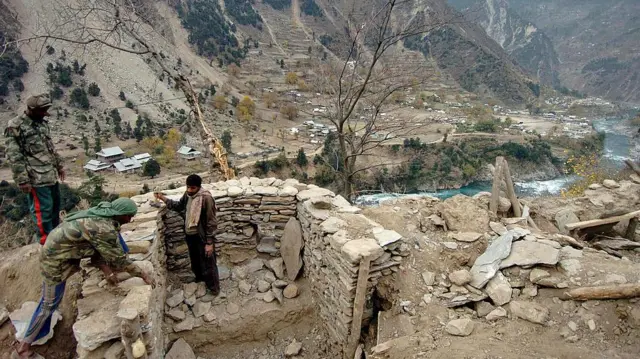


Muzaffarabad, Leepa Valley, Kupwara, LoC (Jammu & Kashmir): In the wake of a deadly attack on Indian tourists in Pahalgam, located in Indian-administered Kashmir, cross-border tensions between India and Pakistan have reignited, with residents along the Line of Control (LoC) fearing a return to violence. Recent nights have seen intense exchanges of fire in the Leepa Valley (Pakistan-administered Kashmir) and the Uri sector (Indian-administered Kashmir), disrupting the fragile calm established by a 2021 ceasefire agreement.
Renewed Hostilities and Civilian Anguish
Over the past week, heavy gunfire and shelling have kept communities on both sides of the LoC awake through the night. While no casualties have been reported in the latest skirmishes, the psychological toll is palpable. Sohail Ali ul Mughal, a lawyer and resident of Leepa Valley, described the terror of recent nights: “The firing began suddenly around midnight. We moved our elderly family members to underground bunkers immediately. Everyone here lives in constant dread.”
Leepa Valley, home to approximately 40,000 people, lies just 5 kilometers from the LoC. Mughal’s own home suffered damage during the 2019 shelling, a grim reminder of the vulnerability of border communities. Similar anxieties grip villages in Kupwara, a highly sensitive district in Indian-administered Kashmir, where authorities recently mandated permits for entry into LoC-adjacent areas. Residents like Peerzada Syed in Karnah have begun reinforcing personal bunkers, fearing a repeat of past tragedies. “We’ve seen shelling destroy lives and livelihoods. We pray for peace but must prepare for the worst,” Syed shared.
Bunkers and Broken Promises
Following the 2021 ceasefire, both governments pledged to shield civilians from cross-border violence. However, the surge in hostilities has exposed the fragility of these assurances. In Leepa Valley and Uri, decades-old underground bunkers—some government-built, others makeshift—are being hastily cleared and reinforced. Yet, many lack basic amenities like electricity or water, leaving residents to question their efficacy.
On the Indian side, villages such as Tod in Kupwara’s “zero line” have endured repeated shelling. A local resident recalled the 2017 death of a relative in crossfire, lamenting, “Four years of peace let us farm and send children to school. Now, that feels threatened.”
Economic Fallout and Lost Opportunities
The resurgence of violence also threatens economic stability. Leepa Valley, once emerging as a tourist destination after road improvements in 2022, now faces uncertainty. Over 30 new hotels and guesthouses had sprung up, capitalizing on the region’s natural beauty. Bashir Alam Awan, a local council member, warned, “Tourists won’t come if firing continues. Livelihoods are at stake.”
Similarly, in Uri’s Bhatgraan and Churanda villages, government-built bunkers remain ill-equipped, forcing residents to rely on personal savings for safety measures. “The poor can’t afford bunkers. We pray India and Pakistan resolve this,” said Mohammed Qadoos, a shopkeeper.
Historical Context and Diplomatic Strain
The LoC, spanning 744 kilometers in Kashmir, has been a flashpoint since India and Pakistan’s 1947 partition. A 2003 ceasefire, periodically violated, saw brief success in 2021 before recent events undermined it. Analysts suggest the Pahalgam attack has strained diplomacy further, with both armies accusing each other of provocations.
While the 2021 agreement reduced casualties significantly, its collapse risks a humanitarian crisis. Experts warn that military escalations could mirror the 2019 Balakot strikes, which brought the nuclear-armed neighbors to the brink of conflict.
Voices from the Ground
Amid the turmoil, civilians cling to resilience. “We won’t leave our homes,” asserted Awan, reflecting a sentiment common in Leepa Valley. Yet, nights are punctuated by fear, as families monitor the skies for jets and bunker down. Sohail summarized the exhaustion: “No one sleeps when the firing starts. We check on neighbors, hoping the morning brings quiet.”
As India and Pakistan trade accusations, border communities remain caught in the crossfire their lives suspended between hope for peace and preparations for war. With bunkers readied and prayers whispered, the people of Leepa Valley and Kupwara await a resolution that seems increasingly elusive.