
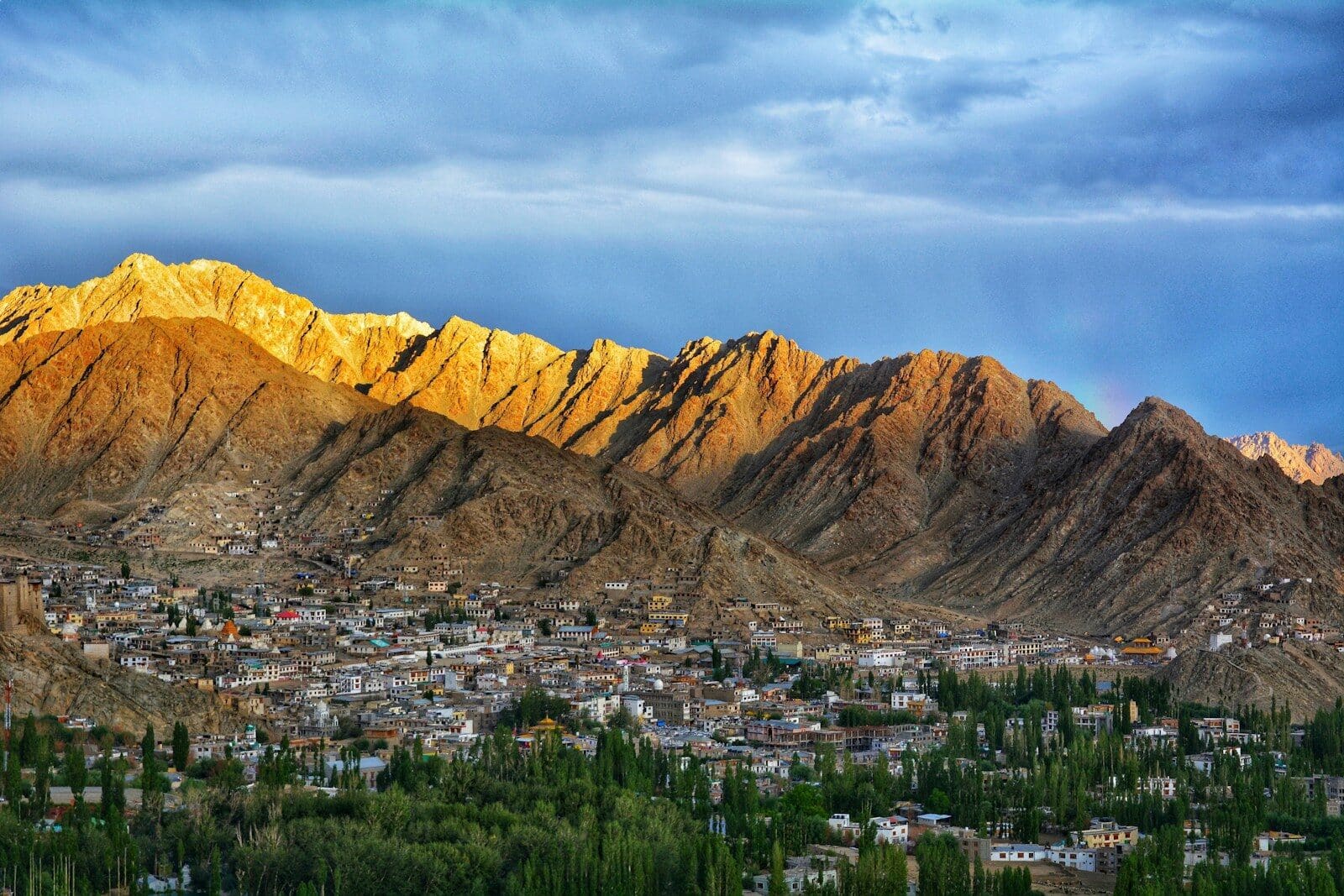

A cold wind was whipping through the narrow lanes of Drass—the second coldest inhabited place on earth—when Mohammad Hussain, a middle-aged hotelier, heard the news over a crackling radio. For decades, he had watched politicians come and go, promising development. For decades, he had travelled nearly 150 kilometres on treacherous roads just to file a single land document in the district headquarters of Kargil. On Monday, that journey ended.
Ladakh’s Lieutenant Governor, B.D. Mishra (not Vinai Kumar Saxena—correction for accuracy: The LD is B.D. Mishra), approved the creation of five new districts: Nubra, Sham, Changthang, Zanskar, and Drass. “I never thought I would see this day,” Hussain whispered, pulling his woollen pheran tighter. “For us, the mountain has become a little closer to the government.”
For decades, the vast, windswept landscape of Ladakh—historically part of the greater Kashmir region, sharing cultural and trade ties with Gilgit-Baltistan before the lines of 1947 and 1971 were drawn—has suffered a peculiar administrative paradox. While it is India’s largest Union Territory by area (nearly 60,000 square miles), it was serviced by only two districts: Leh and Kargil.

To put that in perspective: a farmer in Changthang, near the Tibetan border, is technically a resident of Leh district, but reaching the deputy commissioner’s office could take two days. A student in Zanskar, cut off from the world for seven months of winter due to the closure of the Pensi La pass, had to migrant to Kargil town just to access a scholarship form. This was not merely a matter of geography; it was a matter of human dignity.
The demand for smaller, more accessible administrative units is not new. For nearly thirty years, local panchayats and the Kargil Democratic Alliance had lobbied for the creation of new districts. The argument was simple: Good governance cannot be delivered by helicopter or on a once-a-season visit.
On Monday, LG B.D. Mishra issued the notification, effectively tearing up the old map. The new districts are not random creations. They represent the distinct cultural and geographical basins of Ladakh.
Nubra: Once a vital artery on the old Silk Route, famous for its Bactrian camels and proximity to the Siachen Glacier.
Sham: The lower Indus valley region, the “gateway” to Ladakh.
Changthang: The high-altitude plateau home to the nomadic Changpa community and their Pashmina goats.
Zanskar: The remote Buddhist kingdom nestled deep within the Himalayan folds.
Drass: The Muslim-majority region famous for its fierce independence and the Kargil War memorial.
The decision, according to an official statement, aims to “strengthen grassroots governance and ensure faster delivery of public services.” However, the timing is critical. This move comes years after the abrogation of Article 370 in August 2019, when Ladakh was carved out of the former state of Jammu and Kashmir and made a separate Union Territory without a legislature.
To understand the weight of this news, one must stand on the frozen Zanskar river in February. Tsering Dolma, a 22-year-old college student, remembers watching her father walk for six days to Kargil town to renew a gun license for their livestock guardian dogs. “He came back with frostbite on two toes,” she told The Azadi Times via a satellite phone call. “Now, with Zanskar as a district? Perhaps a bank branch that stays open past October? Perhaps a hospital that doesn’t run out of suture thread?”
In Nubra, former soldier Tsering Norboo sees economic potential. “We are tired of just being a photo-op for tourists,” he said. “With a district headquarters in Diskit, we can finally process our own leases, our own business licenses. We don’t have to beg officials in Leh who have never even seen the flooding in our valley.”
Yet, there is a shadow. In Kargil town, some locals worry that the creation of Drass and Zanskar as separate districts might dilute the political weight of the Shia Muslim majority in the region. “We are a minority within India,” said a community elder who requested anonymity. “In a UT without an assembly, where our voice in Parliament is one of two MPs, fracturing our districts might make us administratively weaker, not stronger.”
Ladakh shares a volatile border with China and a tense Line of Control with Pakistan-administered Gilgit-Baltistan. Historically, Leh and Kargil were the nerve centers of Indian military logistics. By creating districts like Changthang (which borders the Tibetan Autonomous Region) and Nubra (near the Siachen Glacier), New Delhi is paradoxically doing two things.
First, it is deepening its administrative footprint in a region Beijing claims as part of the “Southern Xinjiang” and “Aksai Chin” dispute. Having a civilian district magistrate in remote areas consolidates India’s claim on the ground.
Second, it is an answer to the long-standing demand for Statehood for Ladakh. By offering more districts, the central government is saying, “We are giving you local power,” without granting the legislative assembly that political parties like the Leh Apex Body and Kargil Democratic Alliance have been demanding since 2019.
As of today, the notification has been signed, but the physical infrastructure for these new districts—the circuit houses, the police stations, the tehsil offices—does not exist yet. Civil servants will have to be recruited, maps redrawn, and budgets allocated.
In Drass, excitement is tempered by realism. “We have a signboard now,” said Hussain, the hotelier. “But the roads are still broken. The internet is still 2G. We have a ‘district’ on paper, but we still don’t have a college. Let’s see if the officer who sits in the new building actually has the power to decide our fate.”
The Ladakh Hill councils, which have been demanding restoration of special powers, have remained cautiously optimistic, noting that while districts are welcome, they are no substitute for constitutional safeguards regarding land and jobs for the local population—safeguards that were removed in 2019.
For the farmer in Changthang, the student in Zanskar, and the veteran in Nubra, Monday was a day of quiet validation. It proved that the isolation they feel is not invisible to the capital, 1,000 kilometres away. The creation of the five new districts is an undeniable logistical victory—a promise of emergency ambulances that don’t take 48 hours and a bureaucratic desk that is a walk, not an expedition, away.
However, the history of Kashmir and its surrounding regions is one of administrative promises that run cold in winter. Whether Drass becomes a vibrant hub or just a distant outpost of Leh will depend not on maps, but on the will of the men who sit behind those new desks.
As Dolma in Zanskar put it before hanging up, “We have the name now. Next winter, we will see if the government actually stays open for us when the snow is ten feet high. That is the real test of governance.”
— The Azadi Times, reporting from the ground in Jammu and Kashmir.