
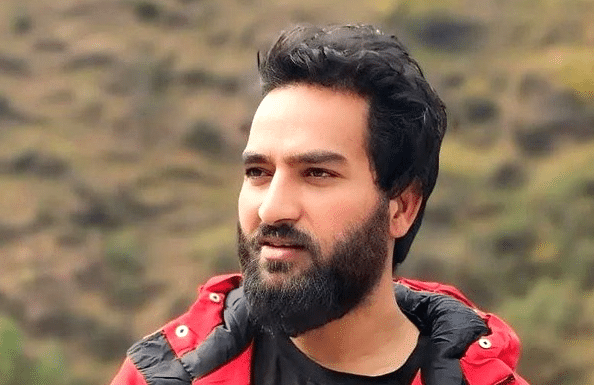

Doda, Indian Administered Kashmir: The narrow lanes of Kahra village in Doda district have not seen drums and firecrackers for a long time. For seven months, the house of Mehraj Malik, the sitting Member of Legislative Assembly (MLA) from Doda, remained locked. His supporters walked past it in silence, their leader taken away under the stringent Public Safety Act (PSA) on allegations of disturbing public order.
On Tuesday, that silence shattered into celebration. The Jammu and Kashmir High Court quashed the detention order against Malik, ruling that the administration had failed to provide sufficient evidence to justify the curtailment of an elected representative’s personal liberty. As word spread from the courtrooms of Jammu to the orchards of Doda, a wave of joy swept through the constituency, with hundreds taking to the streets not just to celebrate a political victory, but to reclaim a voice they felt had been stolen.
The Public Safety Act is a preventive detention law that allows authorities to hold an individual for up to two years without trial, based on the assessment that they are a threat to “public order.” Unlike ordinary criminal law, the burden of proof in PSA cases is exceptionally low for the state. Over the past three decades, thousands in Kashmir—from street protesters to political leaders—have been detained under the act, often for months or years without ever seeing a charge sheet.
Mehraj Malik, an MLA from the Doda constituency in the Chenab region of Jammu province, was detained seven months ago. The administration accused him of creating obstacles in the maintenance of public peace and order—a broad charge often invoked against vocal political figures. He was sent to jail, cut off from his family, his legislative duties, and the 100,000-plus constituents who had voted him into office.
For the people of Doda, a region that has historically felt neglected by both the former state government and now the Union Territory administration, Malik’s detention was not just a personal blow. It was a message: the elected voice of the Chenab region could be silenced with the stroke of a pen.
Malik’s legal team filed a habeas corpus petition in the High Court, challenging the grounds of his detention. The case was heard by a bench that carefully scrutinized the administration’s dossier of evidence. What they found, according to legal sources, was thin.


The administration had argued that Malik’s speeches and public gatherings “had the potential” to disrupt communal harmony in Doda—a district with a complex demographic history scarred by the militancy of the 1990s. However, the High Court noted that the material provided did not contain specific instances of incitement to violence or actual disturbance of public order.
In its ruling, the court observed—as paraphrased by legal experts present—that the personal liberty of a public representative cannot be curtailed on the basis of vague apprehensions. The judges reportedly remarked that if every strong political speech were deemed a threat to public order, democracy itself would become impossible. The detention order was quashed, and authorities were directed to release Malik immediately.
Outside the court, Malik’s lawyers addressed a small group of reporters. “This is a victory for the rule of law,” one of them said, reading a brief statement. “The High Court has reaffirmed that even under special laws, the state must provide proof, not just suspicion.”
In Doda town, the news travelled through mobile phones like wildfire. By late afternoon, crowds had gathered at the clock tower intersection. Young men, many of whom had campaigned for Malik in the last election, distributed sweets. Women leaned out of balconies, clapping as processions passed below.
“We spent seven months without our voice in the assembly,” said Rashid Ahmed, a fruit grower from Thathri, speaking above the din of drums. “They took him for no reason. Every time we tried to ask an official about road repairs or electricity, they said ‘your MLA is not here.’ Now he will be.”
In Chilhi, a remote village in the upper reaches of the Doda district, an elderly woman who gave only her first name—Fatima—recalled how Malik had helped her family get a pension after her husband died. “He is not just a politician. He comes to our homes. He sits on our floor and drinks our tea. When they took him, we felt orphaned,” she said, tears in her eyes.
Not everyone in Doda is a supporter of Malik’s political ideology. But even among his critics, there is a recognition that the PSA was an excessive tool. “I did not vote for him, but I also do not believe an MLA should be in jail for seven months without a proper trial,” said a shopkeeper near the bus stand who requested anonymity. “This sets a bad precedent. Today it is him, tomorrow it could be anyone.”
The quashing of Malik’s detention comes at a sensitive political moment in the Union Territory of Jammu and Kashmir. Since the abrogation of Article 370 in August 2019, the region has been without an elected government. Power lies with the Lieutenant Governor, advised by bureaucrats. The assembly exists only on paper, as elections have not yet been announced for the newly delimited constituencies.
In this vacuum, MLAs like Malik—elected before the 2019 reorganisation—occupy an awkward space. They are technically representatives of the people, but with no assembly to sit in, their role is largely performative: raising issues, meeting officials, and acting as a bridge between citizens and the administration. Detaining such figures under the PSA has been a common strategy, critics argue, to demoralize political opposition without the messiness of a public trial.
Malik’s case is also significant because he hails from the Chenab region—a predominantly Muslim-populated area of Jammu province that has long been overlooked in favor of the Hindu-dominated Jammu city and the Kashmir valley. His release is seen by local political observers as a small but important rebalancing. “The High Court has reminded the administration that the Chenab region’s voice matters,” said a political analyst based in Jammu, speaking on condition of anonymity. “You cannot erase an elected leader from a distant district just because it is easier to do so.”
As of Tuesday evening, the administrative machinery was preparing to comply with the court’s order. Malik is expected to be formally released from jail either later tonight or by Wednesday morning. His family, which has maintained a low profile during his detention, has reportedly begun preparing for his return.
In his home village of Kahra, supporters have been gathering since noon. A large welcome banner has been strung across the main road. Sheep have been bought for a communal feast. Local leaders are organizing a procession from the village entrance to Malik’s house, hoping that he will address the crowd upon his arrival.
However, legal experts note that while the High Court has quashed this particular detention order, the administration could theoretically file a fresh case or issue a new detention order under different provisions. Whether that happens will depend on the political calculations in Srinagar and Delhi. For now, Malik’s team is focused on securing his physical release and ensuring he is not immediately re-arrested.
Mehraj Malik’s seven months in detention will likely become a chapter in the larger story of law and democracy in Kashmir and Jammu. It is a story about a law designed for “rare and exceptional” cases becoming a routine tool of political management. It is also a story about a community in the Chenab Valley that refused to forget its elected representative, even when the state tried to make him invisible.
As the drums beat in Doda and the firecrackers echo off the mountains, the celebrations are not just for one man’s freedom. They are for the principle that an elected voice should not be silenced by suspicion alone. Whether that principle will hold in the months to come—whether Malik will be allowed to speak, to travel, to question the administration without fear of another midnight knock—remains to be seen.
For now, a constituency breathes again. And a 72-year-old law, designed for an era of emergency, has been pushed back, at least for one day, by the weight of a judicial ruling.
As one young supporter in Doda town put it, his voice hoarse from shouting slogans: “The court has spoken. Now let’s see if they listen.”
— The Azadi Times, reporting from Doda and Jammu.