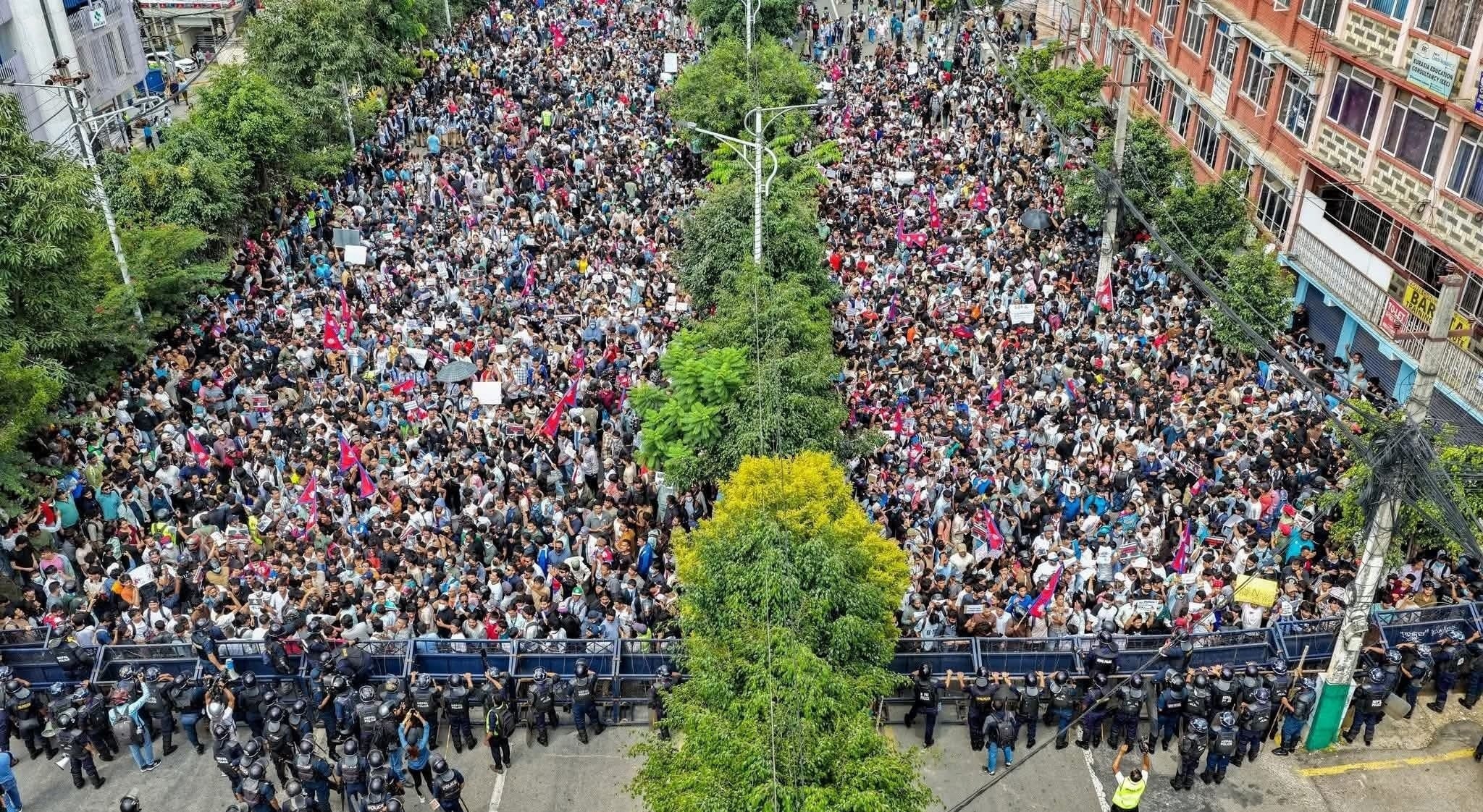


On September 8, 2025, the streets of Kathmandu, Pokhara, and Biratnagar turned into battlegrounds as thousands of young demonstrators staged sit-ins, rallies, and flash marches. Many were teenagers and university students, some still dressed in their school uniforms, symbolizing the generational nature of the protests. Their chants—“Shut down corruption, not social media” and “We want freedom, not silence”—echoed through Nepal’s narrow streets and city squares.
In Summary
Trigger: Ban on 26 social media platforms.
Casualties: 19 killed, 100+ injured in police crackdown.
Government Response: Ban lifted, compensation announced, investigation launched.
Political Fallout: Prime Minister K.P. Sharma Oli resigns.
Significance: Gen Z emerges as a powerful political force in Nepal.
The government initially deployed riot police armed with shields and batons to disperse the crowds. But as protests swelled, authorities escalated their response. Tear gas and water cannons were fired into densely packed gatherings, sending panic through the crowds. Witnesses reported that some protesters threw stones and blocked roads with burning tires, while security forces retaliated with rubber bullets.
By late afternoon, the crackdown had intensified to the use of live ammunition in several hotspots. According to medical officials, at least 19 people were killed, many of them young men in their late teens and early twenties. Hospitals across Kathmandu reported receiving over 100 injured protesters, suffering from gunshot wounds, head injuries, and tear gas exposure.
Local journalists described scenes of chaos: students carrying the wounded on motorbikes, volunteer medics treating injuries on sidewalks, and terrified parents rushing to find their children. Social media—even while restricted through VPNs and proxy servers—was flooded with images and videos of bloodied demonstrators, further fueling anger against the state.
The use of deadly force drew immediate condemnation from human rights organizations, both in Nepal and abroad. Amnesty International and Human Rights Watch accused the government of using “excessive and unlawful force against peaceful protesters”, while the UN Human Rights Office called for an independent investigation into the killings.
Observers say the crackdown, far from silencing dissent, has only hardened the resolve of Nepal’s youth, turning what began as opposition to a digital restriction into a broader political movement demanding justice, accountability, and systemic reform.
Government’s U-Turn
As public anger reached its peak and pressure mounted from civil society, opposition parties, and the international community, the government was forced into a dramatic reversal. Within hours of the September 8 crackdown, authorities announced the lifting of the social media ban, restoring access to platforms like Facebook, Instagram, WhatsApp, and YouTube for millions of users.
But for many Nepalis, the gesture came too little, too late. The damage—both in terms of human lives and political credibility—had already been done. Protesters accused the government of only bowing to pressure after blood had been spilled. Facing mounting calls for accountability, Prime Minister K.P. Sharma Oli resigned, ending his tenure in the face of unprecedented public dissent.
In an attempt to calm the crisis, officials pledged a relief package for victims’ families, free medical treatment for the injured, and the establishment of a 15-day independent investigation panel to examine the use of force by security agencies. However, activists remain skeptical, warning that without real accountability and systemic reforms, such promises risk being seen as symbolic damage control rather than genuine change.
Why These Protests Matter
While the immediate trigger was a ban on 26 social media platforms, analysts agree the crisis is about far more than access to digital networks. It has quickly evolved into what many are calling Nepal’s first Gen Z uprising—a mass mobilization led by young people who have grown up in an era of global connectivity but remain disillusioned with their country’s governance.
The protesters’ grievances highlight long-standing frustrations:
Corruption scandals eroding trust in government institutions.
Rising unemployment and lack of economic opportunities for youth.
Inflation and cost-of-living pressures straining households.
Weak accountability mechanisms and persistent political instability.
“This movement is about more than Facebook or TikTok,” said a Kathmandu-based political analyst. “It represents a generation that feels excluded from decision-making and is now demanding accountability, transparency, and a role in shaping Nepal’s future.”
Observers note that unlike past political movements dominated by traditional parties, this uprising is organic, leaderless, and digitally coordinated—a reflection of how activism is changing in the 21st century.
Regional & Global Implications
The unrest in Nepal carries significance far beyond its borders. It highlights the growing political influence of digitally connected youth movements across South Asia, where governments often struggle to balance regulation, free speech, and political control in the age of social media.
For neighboring countries, the events in Nepal serve as a cautionary tale: restrictions on digital freedoms can quickly escalate into full-scale political crises if combined with public discontent over governance and corruption. Analysts suggest the fallout could reshape Nepal’s political landscape, forcing traditional parties to engage with a generation that has long been sidelined.
Globally, Nepal’s protests add to a wave of youth-driven uprisings seen in places like Hong Kong, Iran, and Sri Lanka, underscoring how Gen Z is emerging as a transformative political force. In Nepal’s case, their mobilization may mark the beginning of a new chapter in the country’s democratic journey, where young voices can no longer be ignored.