

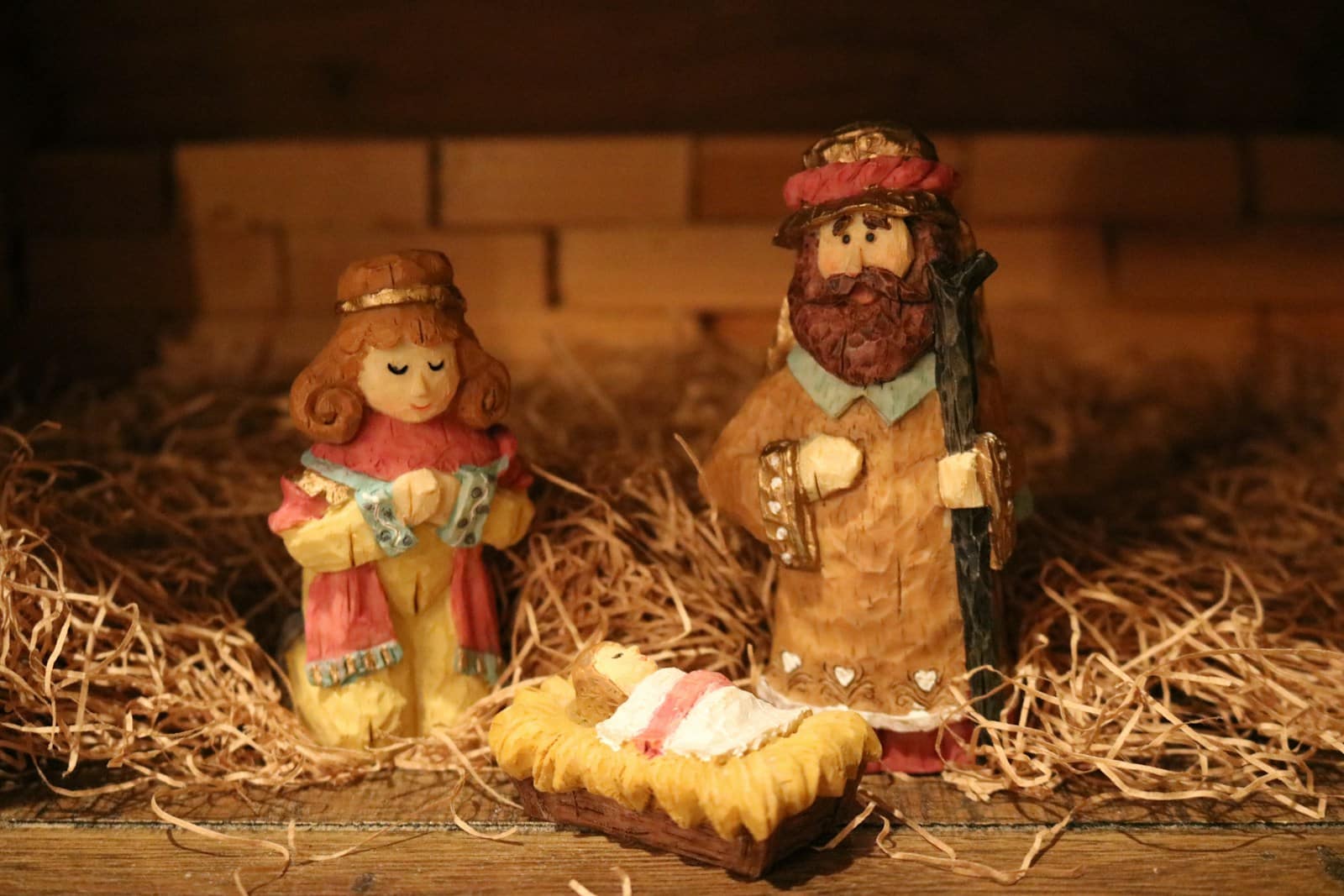

On a cold night in Bethlehem, as the story goes, there was no space in the inn. A young mother gave birth to her first child and placed him not in a cradle, but in a manger — a rough feeding trough meant for animals.
That single image has echoed across centuries, retold in scripture, hymns, paintings, and Christmas traditions around the world. The manger, ordinary in its purpose, extraordinary in its symbolism, became inseparable from the story of Christianity.
But what is a manger, really? Beyond its religious associations, it is an object from daily farming life, with a history in agriculture, culture, and language. To understand its meaning today, we must look both at its practical roots and at the symbolic weight it has carried across history.

The Azadi Times
No state grants. No corporate lobby. Just ground‑truth reporting from Kashmir & beyond
You make this possible.
The word manger sounds poetic today, but its origin is practical. It comes from the Old French mangier — “to eat” — itself derived from the Latin manducare.
In simple terms, a manger is a trough or open box, traditionally made of wood or stone, where livestock such as cattle, sheep, or donkeys feed. Farmers built them to keep food off the ground, reduce waste, and allow multiple animals to eat at once.
In villages of the ancient Mediterranean, a manger was as common as a cooking pot or a water jar — an unremarkable object of everyday life.

And yet, precisely because it was ordinary, the manger became so powerful as a symbol in Christian tradition: a reminder that the extraordinary often begins in the simplest of places.
The Biblical Manger
The Gospel of Luke describes Mary laying the infant Jesus in a manger “because there was no room for them in the inn.” That detail transformed the word forever.
For Christians, the manger is not just a feeding trough. It represents:

Humility: The savior of the world born in poverty, not in a palace.
Accessibility: Shepherds were the first to see the child in the manger, underscoring that faith was for the ordinary and the poor.
Divine Paradox: That the holy could be found in the most mundane of objects.
The manger, then, is more than furniture. It is a theological symbol. Christmas carols such as Away in a Manger and nativity scenes across the world retell this detail, embedding it in cultural memory.
To grasp the impact of the biblical image, it helps to step back into its original context.
In the ancient world, most people were tied to farming or herding. Mangers were carved out of stone or built from timber in stables and caves where animals were sheltered. Archaeologists in Israel and Palestine have uncovered limestone feeding troughs remarkably similar to those described in scripture.
To ancient farmers, a manger was about efficiency. Food stayed cleaner, animals gathered in one place, and caretaking became easier. No one would have considered it special.
That is what makes its role in the nativity so striking: an object of daily life becomes, in the Christian telling, the cradle of God.
Over centuries, the manger was reimagined through art and culture. Medieval paintings portrayed it glowing with divine light. In European cathedrals, carved cribs adorned altars at Christmas. Poets and preachers used it to symbolize humility, poverty, and new beginnings.
Its very ordinariness became its power. A feeding trough, after all, is not glamorous. But in the nativity, it becomes the meeting point between heaven and earth.
The Nativity Across Cultures
What began as a detail in Luke’s gospel spread into one of the most replicated scenes in the world: the nativity. And everywhere it went, the manger was at the center.
Europe: In Italy, the presepe tradition builds entire villages around the manger. In France, small clay figurines called santons crowd around the Christ child.
Latin America: Mexican nacimientos place the manger within elaborate displays that grow throughout Advent.
Africa: Nativity scenes often incorporate local life — placing the manger in huts, with goats, camels, or elephants nearby.
Asia: In the Philippines, the belen is decorated with tropical designs. In India, nativity cribs are displayed outside churches and homes, often with local cultural motifs.
Middle East: In Bethlehem itself, pilgrims gather at the Church of the Nativity, which commemorates the spot where, according to tradition, the manger once stood.
The manger, once a farmer’s tool, became a global cultural artifact, reshaped by local traditions yet carrying the same core image.
The manger also survives in the way we speak and write. Hymns and carols keep the word alive every December. In poetry, it appears as a metaphor for beginnings or for the coexistence of poverty and greatness.
Writers have used the image of the manger to remind readers of social justice — that greatness can come from humility, and that wealth does not define worth.
Its resonance continues even for those outside Christianity, as an enduring symbol of simplicity, vulnerability, and hope.
Outside Christmas, the word manger is less common. It sometimes gets confused with:
Manager: An entirely unrelated word from Latin manus (hand) + agere (to lead).
Manga: Japanese comics, phonetically different but visually similar.
Such confusions highlight how closely the word manger has become tied to one story — the nativity — and how rarely it is used otherwise.
Archaeological discoveries give weight to the biblical story’s details. Excavations in the Bethlehem region have uncovered stone troughs used for animals, similar to those described in Luke. Some were found in caves, consistent with traditions that Jesus may have been born in such a shelter.
While historians debate the specifics, these findings confirm that the manger described in scripture was no invention: it was a real and ordinary object of daily life in Judea.
What makes the manger enduring is its duality. On one hand, it is practical: a farmer’s trough. On the other, it is spiritual: a symbol of humility, poverty, and divine presence.
For believers, it anchors Christmas celebrations. For artists, it provides a canvas for cultural expression. For historians, it illustrates the overlap of daily life and sacred narrative.
And for farmers, it remains a reminder that the objects of ordinary life can hold extraordinary meaning.
So, what is a manger? At its most literal, it is a feeding trough, built to hold hay or grain for animals. But in the Christian imagination, it became something greater — the bed of Jesus, the symbol of divine humility, the centerpiece of global nativity traditions.
From Bethlehem to Mexico City, from Provence to the Philippines, the manger remains both an agricultural artifact and a cultural icon. Its power lies in its paradox: a rough, ordinary box that came to represent hope, humility, and the possibility that the extraordinary can begin in the simplest of places.