Home Blog

Industry, Economy and Structural Contradictions in Pakistan‑Administered Azad Jammu & Kashmir (AJK)

0
Editorial illustration of Azad Jammu & Kashmir industrial landscape showing small factories, workshops, and marble cutting units, with AJK map highlighting Mirpur, Kotli, Bhimber, and Muzaffarabad, electricity connections, and abstract representations of workforce and trade, professional muted color palette.

Pakistan‑administered Azad Jammu & Kashmir (AJK) presents a complex economic and industrial landscape shaped by geography, demographics, political subordination, and historical under‑development. While official records indicate a modest industrial presence, broader socio‑economic dynamics reveal contradictions that constrain meaningful economic growth and employment for its nearly 4.5 million people.

Limited Industrial Base and Electricity Connections

Government data shows that AJK has 2,312 industrial electricity connections, with the highest concentration in Mirpur (930 connections), followed by Kotli (556), Bhimber (413), and Muzaffarabad (182). Other districts such as Poonch (105), Bagh (62), Sudhnoti (43), Neelum (11) and Jhelum Valley (10) have far fewer industrial connections. Notably, Haveli district had one industrial connection in the past, which has since been discontinued. (Data source: local industrial registry)

Despite these connections, most linked activities are small‑scale or block factories, such as wood workshops, marble cutting, printing presses, and local cottage enterprises. Relatively few units operate with more than four workers, indicating a prevalence of micro‑enterprises rather than industrial hubs.

According to broader development profiles, the total number of industrial units historically recorded in AJK was about 1,743, with potential sectors including food processing, furniture, textiles, plastic products, and hydro‑power related activities being encouraged under government policy to boost local industry. This includes the establishment of industrial estates across multiple districts with basic infrastructure support.

Economic Structure and Employment Patterns

AJK’s economy remains heavily reliant on remittances, services, and agriculture, with industrial activity remaining a smaller, supplementary contributor. Small manufacturing, handicrafts, and cottage industries form a crucial part of rural livelihoods, with many units focused on food and beverage processing, textiles, woodworking, and artisan crafts—a pattern corroborated by independent economic surveys.

While official records may highlight thousands of registered industrial units, the reality on the ground often reflects low employment density and limited productivity. Many registered units exist only on paper or operate informally, and reliance on imported raw materials and unstable electricity supply hinders expansion of local manufacturing.

Across AJK, only a small fraction of the population engages in formal industrial employment, with the majority working in services, agriculture, or seeking overseas work—especially in Gulf and European labour markets. Trade, private education, health services, and government jobs remain the most consistent employment sources for local residents.

Fiscal Limitations, Taxation and Budget Dependence

AJK has a constrained fiscal base. Of an estimated 4.5 million population, only about 84,044 individuals are documented as direct taxpayers. Much of the tax collection regime is complicated by the region’s constitutional and political status: major tax streams, such as income tax and sales tax, are collected by Pakistan’s Federal Board of Revenue (FBR), with only limited revenue retained locally. Tax returns to AJK under budgetary transfers lack predictability due to controversial status debates and financial dependencies on Islamabad.

Local budgets are heavily reliant on federal transfers and aid, particularly to cover salaries and administrative expenditures. If these transfers are interrupted, basic governance functions, including public sector wages, become unsustainable—a reality that underscores the extent to which AJK’s economic sovereignty is limited.

Social and Structural Contradictions in Development

The dominant narrative in AJK’s political economy reflects an undeveloped, import‑dependent society in which local elites and trading intermediaries often capture economic rents with limited trickle‑down. While some local capitalists have earned wealth through recruitment agencies, overseas labour placement, and property speculation, the broader workforce remains marginalized, receiving low wages or working in informal, unregulated conditions.

This pattern reflects what some political analysts describe as a dual character of the working class—caught between being part of remittance‑dependent labour abroad and partially complicit in local exploitation when returning as middle‑class actors. Such contradictions reveal deeper structural challenges rather than simple economic stagnation.

Hydropower and Potential for Growth

AJK’s geography offers significant hydropower potential, with rivers such as the Jhelum and Neelum, and major projects like the upcoming Azad Pattan Hydropower Plant indicating latent capacity for energy supply and export. Yet, converting this potential into broad‑based industrial growth and value‑added manufacturing remains an obstacle given existing infrastructure bottlenecks and dependency dynamics.

Beyond Industrial Numbers: Political Economy and Objectives

Some activists and scholars argue that the dominant power structures in AJK are not defined by the local legislative assembly but by external geopolitical and economic influences that shape resource allocation and political leverage. In this view, asserting “people’s rule” requires not only institutional reform but also a fundamental reconfiguration of power away from colonial‑era dependencies toward local autonomy—an emphasis on socio‑economic empowerment rather than symbolic political gestures.


Conclusion

AJK’s industrial landscape offers a mixed picture: while official records point to thousands of registered units and multiple sectoral presences, the reality is one of small scale, low employment density, and structural dependency. Economic vitality, therefore, hinges less on raw industrial statistics and more on integrated policy reform, infrastructure investment, and shifting power dynamics that can translate human potential into sustainable, equitable growth.

How to Join Jammu Kashmir Joint Awami Action Committee: Muzaffarabad Division Committee Formation Begins

0
Official logo of Jammu Kashmir Joint Awami Action Committee (JKJAAC)

Muzaffarabad: A process has been initiated to constitute the Muzaffarabad Division Committee of the Jammu Kashmir Joint Awami Action Committee (JKJAAC), marking a renewed push to broaden grassroots political and civic mobilisation across Pakistan-administered Azad Jammu & Kashmir.

According to an announcement circulated from an official Facebook account attributed to Shoukat Nawaz Mir, a core member of the committee, active political and social workers from Muzaffarabad district, Jhelum Valley district, and Neelum Valley district are being invited to become part of the newly forming divisional structure.

The call is open to a wide cross-section of society, including students, traders, transporters, lawyers, local government representatives, civil society members, and overseas Kashmiris originating from the Muzaffarabad Division. The inclusive approach, organisers say, is aimed at strengthening representative participation and ensuring that diverse social and professional voices are reflected within the committee’s organisational framework.

Grassroots Expansion and Organisational Re-structuring

Political observers view the move as part of a broader organisational restructuring intended to enhance coordination at the divisional level and consolidate public engagement around socio-economic and governance-related demands in the region. By forming a Muzaffarabad Division Committee, the leadership appears to be prioritising decentralised organisation and district-level mobilisation, particularly in areas that have historically played a central role in political activism in Azad Jammu & Kashmir.

In the public notice, prospective members are advised to contact either their respective district core members or the central office in Muzaffarabad to complete the membership process. For coordination and information, contact details have been shared for Syed Hafiz Hamdani, whose phone number accompanies the announcement.

Political Context in Pakistan-Administered Kashmir

The announcement comes at a time when civic movements and issue-based alliances in Pakistan-administered Kashmir have gained renewed visibility, particularly around matters of governance, public services, and economic pressures. Analysts note that such committees often function as platforms for collective bargaining, peaceful protest, and dialogue, especially in regions where public trust in traditional party politics has fluctuated.

By explicitly inviting professionals, traders, and members of the diaspora, the committee signals an attempt to bridge local concerns with broader networks of influence and resources. Overseas Kashmiris, in particular, have increasingly been seen as key stakeholders in advocacy, remittances, and international awareness campaigns.

As the formation process continues, further details regarding the committee’s structure, leadership roles, and forthcoming activities are expected to be announced in the coming weeks.

Nokia 1100: The World’s Best-Selling Mobile Phone That Redefined Global Connectivity

0

Launched in 2003, the Nokia 1100 occupies a historic and unmatched position in global technology history. With over 250 million units sold worldwide, it remains the most sold mobile phone model of all time—a record no smartphone has yet been able to surpass.

At a time when the mobile industry was still evolving, the Nokia 1100 proved that simplicity, durability, and accessibility could outperform cutting-edge innovation at a global scale.

A Phone Built for the World, Not Just the West

The success of the Nokia 1100 was not driven by luxury or advanced features, but by practical design choices that directly addressed real-world needs—especially in emerging and developing markets across Asia, Africa, Latin America, and parts of Eastern Europe.

Its key strengths included:

  • Exceptional battery life, often lasting several days on a single charge
  • Shock-resistant and dust-proof design
  • Easy-to-read monochrome display
  • Physical keypad optimized for everyday use
  • Built-in flashlight, a feature that became iconic in rural and low-electricity regions

In areas with unstable power supply and harsh environmental conditions, the Nokia 1100 was not just a phone—it was a lifeline.

Durability That Became a Cultural Symbol

The Nokia 1100 quickly earned a reputation as nearly indestructible. Stories of the device surviving falls, extreme weather, and years of heavy usage became common, turning it into a cultural symbol of reliability.

In many households, it served multiple generations, passed down as a trusted tool rather than discarded as outdated technology.

Redefining Success in the Mobile Industry

While modern smartphones compete on innovation, speed, and artificial intelligence, the Nokia 1100’s legacy highlights a different metric of success: impact at scale.

It connected hundreds of millions of first-time users to mobile communication, enabling:

  • Affordable personal connectivity
  • Access to emergency communication
  • Growth of small businesses
  • Expansion of digital inclusion in underserved regions

In doing so, it quietly reshaped the global communications landscape.

Why the Nokia 1100 Still Matters Today

More than two decades later, the Nokia 1100 remains a powerful reminder that technology does not need to be complex to be transformative.

As the tech industry increasingly revisits ideas of sustainable design, long-lasting hardware, and accessibility, the Nokia 1100 stands as an early and successful model of these principles.

Its legacy continues to influence discussions around:

  • Digital equity
  • Sustainable consumer electronics
  • Human-centered technology design

A Lasting Icon of Simplicity and Trust

In an era defined by rapid upgrades and planned obsolescence, the Nokia 1100 represents a rare achievement: a device that earned global trust, endured the test of time, and left a permanent mark on technological history.

The phone’s record-breaking success proves a timeless lesson—sometimes, simplicity is the most powerful innovation of all.

JKLF Restructures Its Leadership Amid Detentions and Political Deadlock in Jammu and Kashmir

0
Sardar Aman Khan, newly elected Zonal President of the Jammu Kashmir Liberation Front (JKLF), addressing delegates during the zonal convention in Kotli, with party leaders and activists gathered in the background.

Special Report | The political landscape of Jammu and Kashmir continues to evolve under the weight of prolonged detentions, fractured leadership, and unresolved questions of sovereignty. In early January 2026, a zonal convention held in Kotli by the Jammu Kashmir Liberation Front (JKLF) brought these issues back into sharp focus, as the organization announced a renewed phase of political restructuring and resistance.

At the heart of the convention was a clear and uncompromising message: Jammu and Kashmir is not merely a “disputed territory” but the homeland of a living nation whose political will, the speakers argued, cannot be extinguished through incarceration or coercion.

The convention culminated in the election of Sardar Aman Khan as Zonal President of the JKLF faction aligned with the leadership tradition associated with Touqeer Gilani, marking what party leaders described as a critical step toward organizational revival.

A Convention Held Under the Shadow of Detention

The Kotli convention was framed not as a celebratory gathering, but as a political statement shaped by decades of conflict and the continued imprisonment of pro-independence leaders. Central to the speeches and resolutions was the case of
Muhammad Yasin Malik,
the internationally known Kashmiri separatist leader and Chairman of the JKLF, who remains incarcerated in India.

Party representatives described Malik’s imprisonment, along with the detention of other political activists across Jammu, Kashmir, and Gilgit-Baltistan, as politically motivated and in violation of international human rights norms.

According to speakers at the convention, the continued detention of pro-freedom figures demonstrates a broader pattern: the use of state power to suppress political expression rather than address the root causes of the conflict.

Criticism of Both India and Pakistan

In a departure from conventional binaries that frame Kashmir solely as a conflict between India and Pakistan, the JKLF’s statement criticized both states. The organization accused New Delhi and Islamabad alike of attempting to impose their respective political narratives on the region through force, legal constraints, and the marginalization of indigenous Kashmiri leadership.

This dual critique reflects a long-standing JKLF position—that the Kashmir issue is neither an internal matter of India nor a bilateral dispute to be negotiated exclusively between two nuclear-armed neighbors, but a question of the Kashmiri people’s right to self-determination.

Such framing places the organization at odds not only with Indian policy in Indian-administered Kashmir, but also with Pakistan’s governance model in Pakistan-administered territories.

Organizational Restructuring as Political Strategy

Beyond rhetoric, the Kotli convention was notable for its emphasis on internal reorganization. JKLF leaders acknowledged years of pressure, restrictions on political activity, and internal fragmentation that have weakened the movement.

The election of zonal office-bearers, including Sardar Aman Khan, was presented as an effort to rebuild discipline, ideological clarity, and grassroots engagement—particularly in Azad Jammu and Kashmir and Gilgit-Baltistan.

Addressing delegates, Aman Khan emphasized that the JKLF must evolve from a symbolic legacy movement into a structured, people-centric political organization capable of articulating a coherent political program.

“This struggle cannot survive on history alone,” he said, according to participants. “It must be rooted in the present realities and future aspirations of our people.”

The Touqeer Gilani Faction and Internal Dynamics

The JKLF has long been characterized by internal divisions, reflecting broader debates within Kashmiri politics over strategy, leadership, and engagement with regional and international actors.

The Kotli convention represented the organizational line associated with
Touqeer Gilani,
whose faction advocates organizational revival while maintaining a firm ideological commitment to complete independence.

Observers note that while internal elections signal unity, the real test will be whether these factions can sustain coordination beyond symbolic conventions and translate internal cohesion into effective political mobilization.

The Role of Civil Society and Independent Media

In its concluding statement, the JKLF acknowledged the role of traders’ associations, transport unions, and journalists who, according to the organization, continued to amplify public grievances despite political pressure and economic risks.

Independent journalists in Kashmir operate in an increasingly constrained environment, where reporting on political dissent often invites scrutiny, restrictions, or worse. By explicitly recognizing their role, the JKLF sought to underline the importance of civil society as a pillar of political resistance.

For independent media outlets, the Kotli convention itself presented a challenge: how to report on deeply polarized political narratives without becoming instruments of state or non-state propaganda.

Core Demands: Ownership, Governance, and Social Justice

The political vision outlined at the convention rested on three core demands:

  1. Right of Ownership – Control over land, natural resources, and economic assets by the people of Jammu and Kashmir.

  2. Right to Governance – The authority of Kashmiris to determine their political future without external coercion.

  3. A Classless Society – A social order rooted in economic justice rather than elite domination.

These demands echo broader anti-colonial and self-determination movements worldwide, situating the JKLF’s discourse within a global framework rather than a purely regional one.

An Unresolved Conflict in a Changing World

Despite shifting geopolitical priorities, Kashmir remains a flashpoint where human rights, nationalism, and international diplomacy intersect. While global attention often fluctuates, political developments on the ground—such as leadership restructuring and continued detentions—suggest that the conflict is far from dormant.

The JKLF’s insistence that no peace process can be meaningful without the release of political prisoners challenges prevailing diplomatic approaches that prioritize stability over justice.

The Kotli zonal convention did not offer immediate solutions to one of the world’s longest-running political disputes. What it did offer was a renewed assertion of a political identity that refuses to be sidelined.

Whether the JKLF’s organizational revival will translate into tangible political influence remains uncertain. Yet the message from Kotli was unmistakable: the demand for self-determination in Jammu and Kashmir continues to evolve, adapt, and resist erasure.

As long as the fundamental question—who decides the future of Kashmir—remains unanswered, such gatherings will continue to shape the region’s political narrative.

Solar Panel Prices, Brands, and Buying Guide: A Comprehensive Energy Explainer for Kashmir, Pakistan, and India

0

As energy insecurity deepens across South Asia, solar power has moved from being an alternative solution to a practical necessity. Rising electricity costs, unstable grids, fuel shortages, and climate pressures have pushed households, businesses, and institutions toward solar energy at an unprecedented pace.

From Pakistan-administered Kashmir to Pakistan, and from India-administered Kashmir to mainland India, solar panels are increasingly viewed not only as a cost-saving investment but as a pathway to energy independence. This comprehensive guide explains solar panel prices, major brands, system costs, technologies, and user concerns, answering nearly every question people search for on Google before installing solar power.

This article is written from an independent Kashmiri editorial lens, focusing on information, not state narratives, and prioritizing accuracy, neutrality, and public utility.

Why Solar Energy Is Expanding Rapidly Across the Region

Electricity demand in South Asia has surged over the past decade, while conventional power generation has struggled to keep pace. Load shedding, tariff hikes, and unreliable supply remain common in many areas.

Solar energy offers several advantages:

  • It is renewable and environmentally sustainable
  • Operating costs are extremely low after installation
  • Panels have a lifespan of 25–30 years
  • It reduces dependence on centralized grids
  • It provides energy resilience in politically and economically unstable environments

For Kashmir, where geography and climate create unique infrastructure challenges, decentralized solar systems have become especially attractive.

Understanding Solar Panel Pricing: How Costs Are Calculated

Solar panel pricing is often misunderstood. Users typically encounter prices in three formats:

1. Price Per Watt

This is the most accurate way to compare panels. It reflects how much you pay for each watt of electricity capacity.

2. Price Per Panel

Most modern panels range between 400 watts and 600+ watts, so panel prices vary accordingly.

3. Complete Solar System Cost

This includes:

  • Solar panels
  • Inverter
  • Mounting structure
  • Wiring and protection equipment
  • Installation and labor

Batteries are usually optional and priced separately unless the system is fully off-grid.

Solar Panel Prices in Pakistan-Administered Kashmir and Pakistan

Solar panel markets in Pakistan and Pakistan-administered Kashmir are largely import-driven, with prices influenced by exchange rates, demand cycles, and panel grade.

Average Solar Panel Prices (Per Watt)

  • PKR 27 – PKR 37 per watt for high-quality A-grade panels
  • Lower-grade panels may be cheaper but often compromise on lifespan and efficiency

Average Solar Panel Prices (Per Panel)

  • 500–580 watt panels: PKR 18,000 – PKR 23,000+
  • Price varies by brand, efficiency, and warranty

Complete System Cost Estimates

System Size PKR (Approx) USD (Approx) 1 kW 90,000 – 120,000 $320 – $430 3 kW 450,000 – 600,000 $1,600 – $2,150 5 kW 800,000 – 1,000,000 $2,850 – $3,570 10 kW 1,800,000 – 2,000,000 $6,400 – $7,140

These systems are typically grid-tied or hybrid. Battery backup increases total cost significantly.

Solar Panel Prices in India-Administered Kashmir and India

India has developed one of the world’s largest solar manufacturing ecosystems, resulting in broader brand availability and more standardized pricing.

Average Residential Solar Costs

  • ₹24 – ₹35 per watt for residential solar panels
  • Complete systems cost more due to installation, inverter, and structure

Average System Costs

System Size INR (Approx) USD (Approx) 1 kW ₹75,000 – ₹85,000 $900 – $1,020 3 kW ₹1,90,000 – ₹2,15,000 $2,280 – $2,600 5 kW ₹3,15,000 – ₹3,57,000 $3,800 – $4,300

Costs vary depending on whether the system is grid-connected, hybrid, or off-grid.

Solar Panel Prices Compared in PKR, INR, and USD

Region Per Watt (Local) USD Equivalent Pakistan / PaK PKR 27 – 37 $0.09 – $0.13 India / IaK INR 24 – 35 $0.30 – $0.43 Global Average — $0.09 – $0.14

Exchange rates, import duties, and domestic manufacturing capacity strongly influence these differences.

Leading Solar Panel Brands Available in the Region

International Tier-1 Brands (Widely Available)

  • Longi Solar
  • Jinko Solar
  • JA Solar
  • Trina Solar
  • Canadian Solar

These brands are known for:

  • High efficiency
  • Long performance warranties
  • Better heat tolerance

India-Based Manufacturers

  • Adani Solar
  • Waaree Energies
  • Vikram Solar
  • RenewSys
  • Emmvee

These brands dominate India’s domestic market and are increasingly exported.

Types of Solar Panels Explained

Monocrystalline Panels

  • Highest efficiency
  • Best for limited roof space
  • Higher price but better long-term output

Polycrystalline Panels

  • Slightly lower efficiency
  • More affordable
  • Less common in new installations

Bifacial Panels

  • Generate power from both sides
  • Higher yield in reflective environments
  • Increasingly popular for large installations

What Else Affects Solar System Cost?

Solar panels are only one part of the equation.

Inverter

  • Converts DC electricity into usable AC
  • Central, string, and hybrid inverters vary in price and quality

Batteries

  • Required for off-grid or backup systems
  • Lithium batteries are expensive but long-lasting

Installation Quality

  • Poor installation reduces efficiency and lifespan
  • Professional design and wiring matter

Solar Energy in Kashmir: Unique Considerations

Kashmir’s climate offers both challenges and advantages:

  • Cooler temperatures improve panel efficiency
  • Snow requires proper tilt and mounting
  • Remote areas benefit from off-grid systems

Solar power can play a transformative role in reducing dependency on unreliable supply lines.

Common User Questions Answered

Is solar worth it?
Yes, especially where electricity prices are high or supply is unstable.

How long before solar pays for itself?
Typically 3–6 years depending on usage and system size.

Do solar panels work in winter?
Yes. Panels work efficiently in cold temperatures as long as sunlight is available.

How long do panels last?
25–30 years with gradual efficiency decline.

The Bigger Picture: Solar as Energy Independence

Beyond economics, solar energy represents autonomy. In regions affected by political uncertainty, environmental stress, or infrastructure limitations, decentralized energy systems empower communities and reduce vulnerability.

For Kashmir, solar is not merely a technology—it is a strategic necessity.

Final Word

Solar panel prices, brands, and system options continue to evolve across Kashmir, Pakistan, and India. Understanding the market, technology, and long-term implications allows users to make informed decisions that benefit both households and the environment.

This guide aims to serve as a single, reliable resource for anyone searching for solar information in the region—without political framing, without commercial bias, and with a clear focus on public interest.

Instagram Username Ideas: How Digital Identity Shapes Visibility, Credibility, and Personal Branding

0

In the age of digital platforms, a username is no longer a casual choice. It is a public identity, a searchable label, and often the first impression a person or organization makes online. On Instagram—one of the world’s most influential social media platforms—usernames function as gateways to visibility, credibility, and digital recognition.

For creators, journalists, activists, businesses, and everyday users alike, choosing the right Instagram username has become a strategic decision rather than a creative afterthought. This article explores Instagram username ideas, their cultural and technical significance, and how a carefully chosen username can shape one’s digital presence in a global information ecosystem.

Why Instagram Usernames Matter More Than Ever

Instagram hosts more than a billion active users worldwide. In such a crowded environment, discoverability is driven by small but powerful signals—among them, the username.

A strong username can:

  • Improve search visibility on Instagram and Google
  • Communicate identity, purpose, or profession instantly
  • Build trust and memorability
  • Support long-term personal or professional branding

Conversely, a poorly chosen username—confusing, cluttered, or overly generic—can limit growth, reduce credibility, and make accounts harder to find or recognize.

Digital identity experts increasingly describe usernames as micro-branding tools, particularly in regions where social media plays a central role in journalism, advocacy, entrepreneurship, and storytelling.

The Psychology Behind a Good Username

At its core, a username is about recognition and recall. Human attention online is limited, and users tend to remember names that are:

  • Simple
  • Meaningful
  • Phonetically clear
  • Visually clean

Research in digital behavior suggests that users are more likely to follow or trust accounts with usernames that appear intentional rather than random. Strings of numbers, excessive symbols, or unclear abbreviations often signal inauthenticity or lack of seriousness.

This is why many successful journalists, photographers, writers, and activists adopt usernames that reflect either their real names or a clear thematic identity.

Categories of Instagram Username Ideas

1. Real Name–Based Usernames

For journalists, professionals, and public figures, real-name usernames remain the most credible option.

Examples:

  • muhammadali
  • sara_kashmir
  • ahmedwrites
  • noorjournalist

Why they work:

  • Enhance trust and authenticity
  • Suitable for news, commentary, and professional content
  • Easier to verify and reference across platforms

When real names are unavailable, subtle variations such as underscores or initials can preserve clarity without compromising professionalism.

2. Niche or Profession-Based Usernames

Many users prefer usernames that signal what they do rather than who they are.

Examples:

  • kashmirstories
  • humanrightsvoice
  • techinsiderpk
  • travelwithatif

These usernames are especially effective for:

  • News pages
  • Lifestyle bloggers
  • Tech reviewers
  • Travel and culture platforms

They allow audiences to immediately understand the content focus, which improves engagement and follow-through.

3. Location-Inspired Username Ideas

Geographic identity plays a powerful role, particularly for regional media and cultural storytellers.

Examples:

  • voicesofkashmir
  • muzaffarabaddiaries
  • kashmirlens
  • himalayanhub

For international audiences, such usernames add context and authenticity while contributing to global discoverability.

4. Creative and Abstract Usernames

Some users opt for metaphorical or poetic usernames that evoke emotion rather than description.

Examples:

  • silentpages
  • midnightink
  • wanderingwords
  • unseenframes

These usernames are common among writers, photographers, and artists. While creative, they work best when paired with a strong bio that explains the account’s purpose.

5. Minimalist and Clean Usernames

Minimalism has become a digital aesthetic in itself.

Examples:

  • atif.jpg
  • sara.exe
  • journal.pk
  • dailybrief

Such usernames feel modern and professional, especially in tech, media, and design communities.

SEO and Discoverability: An Overlooked Factor

One of the least discussed aspects of Instagram username ideas is search optimization.

Instagram usernames are indexed by search engines. This means:

  • A keyword-rich username can appear in Google results
  • Consistency across platforms improves authority
  • Media accounts benefit from descriptive naming

For example, an account named kashmirnewsdaily is more discoverable than an abstract name with no contextual meaning.

However, balance is essential. Keyword stuffing or awkward phrasing can reduce credibility. The best usernames integrate relevance naturally.

Username Mistakes to Avoid

Despite the abundance of creative options, many users fall into common traps:

  • Overuse of numbers (e.g., name12345)
  • Excessive symbols (multiple underscores or dots)
  • Imitating famous accounts
  • Using slang that may age poorly
  • Hard-to-pronounce spellings

These choices can hinder long-term growth and professional recognition.

Instagram Usernames and Digital Trust

In journalism and advocacy spaces, usernames are increasingly scrutinized. Audiences associate clear, professional usernames with accountability and transparency.

For independent media platforms like The Azadi Times, consistency in naming conventions across social media strengthens institutional credibility and brand recall.

In regions experiencing political tension or information suppression, usernames can also function as shields or signals—balancing visibility with safety.

Changing Usernames: Risks and Rewards

Instagram allows users to change their usernames, but frequent changes can:

  • Break search continuity
  • Confuse followers
  • Reduce algorithmic trust

Experts recommend choosing a username with long-term relevance, even if the account’s focus evolves over time.

Before changing a username, users should consider:

  • Existing backlinks
  • Mentions in articles or media
  • Brand recognition

The Future of Digital Naming

As social platforms evolve, usernames may gain even more importance. With growing emphasis on verification, misinformation control, and digital reputation, a username may soon function like a digital passport.

Artificial intelligence, search algorithms, and content moderation systems already factor usernames into trust assessments. This makes thoughtful selection not just a branding choice, but a strategic one.

Final Thoughts

Instagram username ideas are not merely about creativity—they are about identity, credibility, and visibility in a digital-first world.

Whether for personal expression, journalism, activism, or business, a well-chosen username can amplify reach, build trust, and support long-term digital presence.

In an era where voices from regions like Kashmir seek global attention through independent platforms, even small decisions—like a username—carry weight. They shape how stories are found, shared, and remembered.

Choosing wisely is no longer optional. It is essential.

Families Seek Answers as Two Kashmiri Men Disappear After Alleged Detention in Rawalpindi

0

Muzaffarabad / Rawalakot — Serious concerns have emerged over the reported disappearance of two young men from Pakistan-administered Kashmir, who were allegedly taken into custody in Rawalpindi several days ago and have since remained unaccounted for, according to their families.

The individuals, identified as Rizwan Maroof and Mushahid Maroof, belong to Union Council Hamrota, Tehsil Balouch, Sudhanoti district. Family members say both men were detained under unclear circumstances approximately four days ago, after which all contact with them was lost.

As of the time of reporting, no First Information Report (FIR) has been registered, neither individual has been presented before a court, and no official statement has been issued by any state institution regarding their whereabouts or legal status.

Families Express Deep Distress

Relatives of the missing men say they are living in a state of extreme anxiety and emotional distress, uncertain whether their loved ones are safe or where they are being held. Repeated attempts to obtain information from authorities, they claim, have yielded no clear response.

Legal experts note that prolonged incommunicado detention, without disclosure of charges or judicial oversight, raises serious constitutional and legal concerns.

Constitutional and Human Rights Implications

Under the Constitution of Pakistan, particularly Articles 4 (Right of individuals to be dealt with in accordance with law), 9 (Security of person), and 10 (Safeguards as to arrest and detention), any person taken into custody must be informed of the grounds of arrest and presented before a court within a legally defined timeframe.

Human rights advocates emphasize that enforced disappearance, if proven, constitutes a violation of both domestic constitutional protections and international human rights norms, including principles enshrined in the Universal Declaration of Human Rights.

Although the missing individuals are reported to be Kashmiris and not Pakistani citizens, legal observers stress that fundamental rights such as the right to life, liberty, legal protection, and human dignity are non-derogable and apply to all persons without discrimination.

“No state or institution has the lawful authority to detain or disappear any individual without due legal process,” said a human rights lawyer familiar with constitutional law.

Broader Concerns and Historical Context

The reported incident has revived broader concerns about a pattern of alleged enforced disappearances in the region. In the past, similar allegations have been raised by families from Pashtun and Baloch communities, cases that have drawn national and international scrutiny.

Observers warn that if such practices expand to other regions or communities, including Kashmiris, it could further erode public trust, deepen political alienation, and intensify social unrest.

Kashmir and the Principle of Self-Determination

Analysts also note the symbolic sensitivity of such incidents in the context of Kashmir. Historically, Muhammad Ali Jinnah, the founder of Pakistan, stated that the future of Kashmir should be determined by the free will and consent of the Kashmiri people, not through force or coercion.

In this context, rights advocates argue that fear, intimidation, or unlawful detention of Kashmiris stands in contradiction to those foundational principles and stated commitments.

Calls for Transparency and Legal Accountability

Families of Rizwan Maroof and Mushahid Maroof, along with civil society voices, are urging the Government of Pakistan and relevant authorities to clarify the situation without delay.

They demand that:

If any charges exist, they should be made public,

The individuals should be produced before a competent court immediately, and

All proceedings should follow transparent and lawful procedures.


Appeal to Civil Society and Media

Human rights defenders are calling on journalists, legal professionals, civil society organizations, and social media users to raise awareness about the case and press for accountability.

They emphasize that ensuring the safe, lawful, and immediate recovery of the two men is not only a legal obligation but also a moral and humanitarian imperative.

This story will be updated as more information becomes available.

Kashmir at a Crossroads: Unfulfilled Promises and the Shadow of Renewed Protests

0
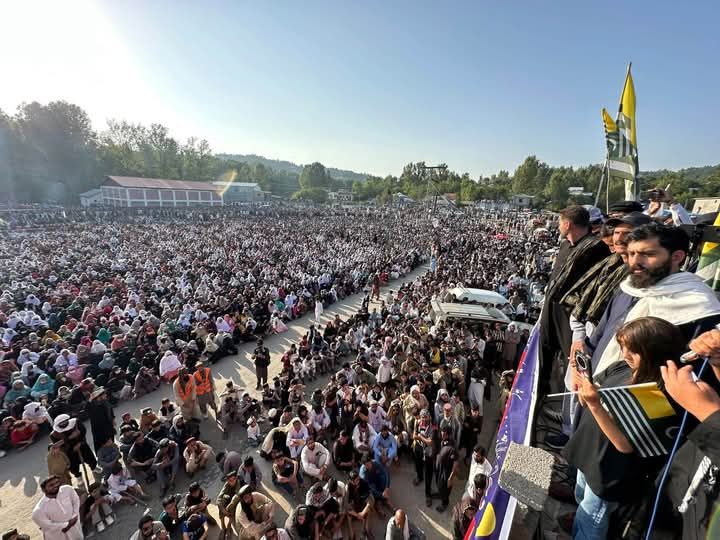
Members of the Jammu Kashmir Joint Awami Action Committee attend a consultative meeting in Muzaffarabad, discussing the government’s failure to implement agreements reached after the September 29 Kashmir protest.

Tensions rise in Pakistan-administered Jammu and Kashmir as the Joint Awami Action Committee accuses the Pakistani government of failing to implement agreements reached after the historic September 29 protest, sparking fears of renewed unrest.

Muzaffarabad | Special Report: More than three months after the historic September 29 protest in Pakistan-administered Jammu and Kashmir, political tensions are once again intensifying as the Jammu Kashmir Joint Awami Action Committee (JKJAAC) accuses the Government of Pakistan of failing to honor commitments made during post-protest negotiations.

In a consultative meeting held in Muzaffarabad, JKJAAC leader Shoukat Nawaz Mir publicly accused the Pakistani government of breaching commitments made after the September 29 protest.

The allegations have reignited speculation across social media and political circles about whether Kashmir is heading toward another phase of mass protests—raising serious questions about governance, trust, and political accountability in the disputed region.

The September 29 Protest and Its Aftermath

On September 29, 2025, the JKJAAC led what many observers described as one of the most significant and coordinated protests in the history of Pakistan-administered Jammu and Kashmir. Demonstrations were reported across multiple districts, with widespread public participation demanding relief from economic pressures, governance failures, and long-standing administrative grievances.

Following the protest, negotiations were initiated between the JKJAAC leadership and a government-appointed negotiating committee. These talks resulted in what the committee later described as a “charter of demands”, with assurances from Islamabad that a dedicated implementation mechanism would be established.

However, according to JKJAAC, those assurances have remained largely unfulfilled.

“Negotiations Have Lost Credibility”

In recent days, the JKJAAC formally announced its refusal to continue talks with the government’s negotiating committee, citing a lack of progress and seriousness.

The committee alleges that while a special body was constituted to oversee implementation of agreed demands, meaningful engagement with that body was quietly discontinued by the government itself.

This decision has fueled widespread debate across Kashmir, with many residents asking whether dialogue has once again been reduced to a symbolic exercise rather than a genuine effort to resolve public grievances.

Allegations of “Cheating” and Breach of Trust

The strongest expression of discontent came during a JKJAAC consultative meeting held in Muzaffarabad’s Lal Chowk, where core committee member Shoukat Nawaz Mir openly accused the Pakistani government of deception.

Addressing party members and supporters, Mir stated that the Kashmiri people had shown restraint and political maturity following the September protest, but the continued failure to implement agreed measures had deeply eroded public trust.

“When the time comes, the people of Kashmir will give a decisive response,” he warned, stopping short of announcing a fresh protest call.

Notably, the JKJAAC has not yet declared a final date or strategy for renewed demonstrations, signaling that internal consultations are still ongoing.

Social Media Speculation and Public Anxiety

Following the suspension of talks, social media platforms were flooded with unverified claims suggesting that a new protest movement was imminent. While JKJAAC leaders have neither confirmed nor denied these reports, the growing uncertainty has added to public anxiety in the region.

Political analysts warn that prolonged ambiguity—combined with economic stress and governance challenges—could push the situation toward instability if credible dialogue is not restored.

A Pattern Kashmir Knows Too Well

For many in Kashmir, the current standoff feels familiar. Protest-led negotiations followed by delayed or partial implementation have marked several past movements in the region.

Observers argue that the issue is not merely about individual demands but about a systemic crisis of trust between Kashmiri political actors and the federal decision-making structure.

“The real danger,” says one analyst, “is not another protest, but the normalization of broken promises.”

What Comes Next?

As of now, the JKJAAC continues to press forward with its case politically, keeping the option of street protests open while avoiding an immediate escalation.

Whether the Pakistani government chooses renewed engagement—or continues with what critics describe as a policy of delay—may determine whether Kashmir witnesses another wave of mass mobilization.

For a region already burdened by economic hardship and political uncertainty, the coming weeks could prove decisive.

Remote Public Health Jobs: Global Trends, Equity, and Workforce Shifts

0

The rapid expansion of digital infrastructure and cross-border collaboration has quietly transformed how public health systems operate. Once rooted in government offices, field surveys, and on-site laboratories, public health work is increasingly conducted online. From epidemiological modelling to health policy research, professionals now contribute from home offices, research hubs, or entirely different continents. Remote public health jobs have emerged as a structural shift rather than a temporary response to crisis, reflecting deeper changes in how health expertise is deployed globally.

This evolution has been accelerated by the COVID-19 pandemic, but its implications extend far beyond emergency response. Governments, multilateral agencies, universities, and non-governmental organisations are reassessing workforce models, cost structures, and talent pipelines. As public health challenges grow more interconnected—spanning climate change, migration, and digital surveillance—the move toward remote work raises critical questions about equity, effectiveness, and accountability.

The Digital Turn in Public Health Employment

Public health has traditionally relied on physical proximity: to communities, laboratories, and policy institutions. However, advances in cloud computing, secure data sharing, and teleconferencing have reduced the need for constant on-site presence. Tasks such as data analysis, literature reviews, grant management, behavioural research, and policy drafting can now be conducted remotely with minimal loss of efficiency.

This shift mirrors broader labour market trends but carries unique significance for health systems. Public health agencies often face chronic funding constraints and workforce shortages. Remote roles allow institutions to tap into global expertise without relocation costs, while professionals gain flexibility and access to international opportunities previously limited by geography.

The Rise of Remote Public Health Jobs in a Globalised World

The growth of remote public health jobs reflects the globalisation of health governance itself. International bodies such as the World Health Organization (WHO), UNICEF, and major philanthropic foundations increasingly operate through distributed teams. Research collaborations span multiple countries, while disease surveillance relies on real-time data streams rather than local reporting alone.

In high-income countries, remote roles are frequently embedded within national health agencies or academic institutions. In lower- and middle-income regions, they often appear through donor-funded projects, global NGOs, or international research consortia. This creates a transnational labour market where expertise flows across borders, sometimes faster than regulatory frameworks can adapt.

Key Roles Moving Online

Not all public health functions are equally suited to remote work, but several roles have seen sustained growth:

  • Epidemiologists and biostatisticians analysing datasets from multiple regions

  • Health policy analysts drafting reports and regulatory assessments

  • Monitoring and evaluation specialists reviewing programme outcomes

  • Health communications professionals managing campaigns and risk messaging

  • Research coordinators overseeing multinational studies

These roles rely heavily on analytical skills, digital collaboration, and written output, making them compatible with remote arrangements.

Data and Employment Trends

Labour market data from global recruitment platforms and international organisations indicate a steady increase in remote listings within health-related categories since 2020. While exact figures vary, estimates suggest that remote or hybrid roles now account for a significant share of new public health vacancies in North America and Europe.

In contrast, regions such as South Asia, Africa, and parts of Latin America see fewer locally advertised remote positions but contribute a growing share of remote workers hired by international employers. This asymmetry highlights both opportunity and risk: while professionals gain access to global markets, domestic public health institutions may struggle to retain talent.

Global Inequality and Access to Opportunity

The expansion of remote work has reopened long-standing debates about equity in global health. On one hand, professionals from historically underrepresented regions can participate in international projects without migration. On the other, disparities in internet access, institutional support, and credential recognition persist.

For example, a public health researcher in Nairobi or Muzaffarabad may possess comparable expertise to a counterpart in London but face barriers related to bandwidth reliability, time zone alignment, or employer bias. Additionally, remuneration for remote roles is often pegged to employer location rather than worker context, leading to uneven compensation structures.

Regulation, Accountability, and Ethics

Remote work in public health raises regulatory questions that remain unresolved. National health data protection laws, ethical review processes, and employment regulations are typically designed for domestic workforces. When analysis, data handling, or policy drafting occurs across borders, lines of accountability can blur.

Data sovereignty is a particular concern. Health datasets may be analysed remotely in jurisdictions with different legal standards, raising questions about privacy and consent. International organisations have issued guidelines, but enforcement remains inconsistent, especially in short-term consultancy arrangements.

Comparing Public and Private Sector Adoption

Public sector health agencies have generally adopted remote work more cautiously than private or non-profit actors. Government institutions often cite security concerns, bureaucratic constraints, and political accountability as reasons for limiting fully remote roles.

By contrast, global NGOs and research institutes have been quicker to embrace distributed teams. Their funding models and project-based structures allow greater flexibility, though sometimes at the cost of long-term job security for workers.

This divergence may shape future career pathways, with professionals moving between sectors depending on their tolerance for precarity versus stability.

Impact on Health Outcomes

Assessing whether remote work improves public health outcomes is complex. Early evidence suggests that analytical and planning functions can be performed effectively at a distance, particularly when supported by strong local implementation partners.

However, critics warn against over-centralisation of expertise. Public health interventions require contextual understanding, cultural sensitivity, and community trust—elements that are difficult to maintain without on-the-ground engagement. Remote roles, if poorly integrated, risk reinforcing top-down approaches detached from lived realities.

Workforce Wellbeing and Sustainability

Remote arrangements can offer better work-life balance, particularly for caregivers and professionals in conflict-affected or remote areas. Yet they also introduce challenges: isolation, blurred boundaries, and limited mentorship opportunities.

In public health, where early-career learning traditionally occurs through fieldwork and institutional immersion, the long-term impact of remote-heavy models on professional development remains uncertain.

Looking Ahead: Structural Change or Temporary Shift?

Most evidence suggests that remote work is now embedded in public health employment structures. While some roles will return to physical offices or field sites, hybrid and fully remote models are likely to persist, shaped by funding priorities, technological capacity, and political will.

The challenge for policymakers and institutions is to ensure that this transformation strengthens, rather than fragments, global health systems.

The expansion of remote work has redefined how public health expertise is produced, shared, and applied. Remote public health jobs offer new pathways for collaboration and inclusion, but they also expose gaps in regulation, equity, and institutional capacity. As global health challenges grow more complex, the effectiveness of this model will depend on how well it balances technological efficiency with local knowledge, ethical standards, and sustainable workforce development.

U.S. Military Intervention in Venezuela: Maduro Captured, Global Tensions Surge

0

CARACAS / WASHINGTON — January 3, 2026: In a dramatic escalation of the longstanding U.S.–Venezuela confrontation, the United States executed a coordinated military operation early Saturday, resulting in the capture of Venezuelan President Nicolás Maduro and his wife, Cilia Flores. U.S. authorities say they have transported the couple out of Venezuela and plan to prosecute them on charges including narco-terrorism.

The operation, described by President Donald Trump as “large-scale” and successful, involved elite U.S. forces and air strikes in and around the capital Caracas, creating explosions and widespread alarm among residents. Trump announced in a press briefing that the United States will temporarily administer Venezuelan affairs “until a safe political transition can be arranged.”

Political, Legal, and Strategic Objectives

The Trump administration has publicly framed the intervention as part of a broader campaign against corruption, narcotics trafficking, and what it labels an “illegitimate” regime in Caracas. U.S. officials have long accused the Maduro government of collaborating with drug cartels and using state resources to sustain its grip on power.

Trump also signaled that the U.S. intends to be “very strongly involved” in Venezuela’s vast oil sector in the interim, framing economic re-engagement as essential to both Venezuelan recovery and American strategic interests.

Domestic Reactions Inside Venezuela

The Maduro government has denounced the assault as an act of imperial aggression that violates Venezuelan sovereignty. Vice President Delcy Rodríguez and other officials have demanded proof of life for the detained president and rejected claims of U.S. justification for the strikes. Maduro’s supporters have staged localized protests, heightening internal instability.

Opposition leadership in Venezuela offered a contrasting perspective—some figures hailed the capture as a pivotal step toward democratic restoration and pledged to work toward a transitional government.

International Diplomatic Shockwaves

The global response to the intervention has been sharply divided:

  • Brazil, a key regional neighbor, condemned the military action as crossing “an unacceptable line,” urging a United Nations response and cautioning against further destabilization in Latin America.

  • Mexico and other Latin American governments warned that foreign military intervention threatens regional stability and expressed concern over possible refugee movements and spillover effects.

  • China, Russia, and Cuba strongly criticized the operation as a violation of international law, framing it as a dangerous precedent for U.S. interventionism.

  • Some Western leaders, while critical of Maduro’s governance, called for peaceful political dialogue and respect for the United Nations Charter.

Risks, Regional Implications, and What Comes Next

Analysts warn that the unfolding situation presents multiple risks:

Security risks: The presence of foreign troops and the temporary administration of Venezuelan institutions may fuel armed resistance or insurgent activity.

Humanitarian concerns: Venezuela’s already acute economic crisis—including widespread shortages and mass migration—may deepen amid instability.

Regional diplomacy: Latin American governments must navigate a political landscape reshaped by direct U.S. military engagement on the continent for the first time in decades.

While the United States frames its action as a step toward accountability and reform, global leaders and international law experts caution that such an intervention without broad multilateral support raises complex legal and ethical questions about sovereignty and the use of force.