

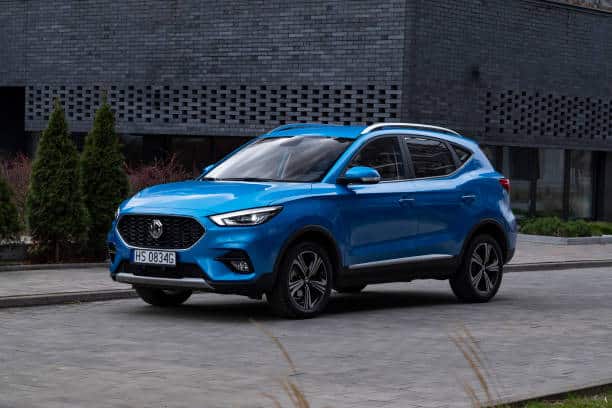

In the landscape of American automobility, the sub-$20,000 new car has become an endangered species. Amidst a market dominated by $50,000 trucks and $60,000 electric vehicles, the quest for a brand-new vehicle with a five-figure price tag feels like a relic of a bygone era. Yet, for a significant segment of the population—students, first-time buyers, gig workers, and budget-conscious families—this price bracket represents not a luxury, but a necessity for economic participation.
This report from The Azazi Times investigates the stark reality of finding new cars under 20000 in today’s market. We move beyond promotional hype to deliver a clear-eyed analysis of what is available, what compromises are inherent, and why these vehicles hold profound social and global importance. This is not a sales pitch; it is a journalistic exploration of accessible mobility in an age of inflation and shifting priorities.
The Economic Landscape: Why Have Affordable Cars Disappeared?
The trend is unmistakable. A decade ago, a dozen models started under $16,000. Today, that list has shrunk to a handful. The reasons are multifaceted:
The Azadi Times
No state grants. No corporate lobby. Just ground‑truth reporting from Kashmir & beyond
You make this possible.
Manufacturer Margins: SUVs, trucks, and premium features yield significantly higher profits than compact sedans.
Consumer Preferences: American buyers have overwhelmingly shifted towards larger vehicles.
Regulatory and Technological Costs: Incorporating advanced safety features, fuel-efficient technologies, and connected services increases base production costs.
Inflation and Supply Chains: Post-pandemic economic pressures have pushed the price of materials and logistics higher.



The critical caveat for any buyer: a car’s Manufacturer’s Suggested Retail Price (MSRP) is a starting point. Destination charges, state taxes, title, and registration fees will add $1,500 to $3,000 to the final “out-the-door” price. Furthermore, dealer markups on even budget models, while less common than on high-demand vehicles, can still occur.
The Social Imperative: Why New Cars Under $20,000 Matter
The value of this market segment extends far beyond a simple transaction. Affordable new cars serve a vital socio-economic function:
Gateway to Reliability: They offer warranty-protected, predictable transportation, freeing low- and middle-income households from the maintenance roulette of older used cars.
Economic Enablers: They are the vehicles for delivering groceries, commuting to community colleges, or starting a small service business.
A Global Ripple Effect: Models that begin their life in the U.S. market are frequently exported as used cars to markets in South Asia, Africa, the Middle East, and Latin America. The specs, safety, and pricing set today in American showrooms influence mobility options for millions globally tomorrow.
The Contenders: An Analysis of Remaining New Cars Under 20000
As of the 2025 model year, the field is sparse but noteworthy. These are base models, often with manual transmissions and minimal frills, designed for pure utility.
1. Nissan Versa: The Reigning Value Leader
The Nissan Versa consistently holds the title of America’s most affordable new car. Its sub-$17,000 starting MSRP is a headline in itself.
The Case For: It offers a surprising amount of standard content for the price, including automatic emergency braking, lane departure warning, and a 7-inch touchscreen. Its 35 MPG combined fuel rating and spacious interior for its class are practical virtues.
The Reality Check: The cabin uses hard, basic plastics, and the 122-horsepower engine prioritizes efficiency over excitement. It is a tool for point-A-to-point-B transportation, and a competent one at that.
2. Mitsubishi Mirage: The Unapologetic Economobile
Often the subject of automotive critics’ disdain, the Mitsubishi Mirage understands its mission with single-minded focus: minimize cost.
The Case For: Its trifecta is unparalleled: the lowest starting price, the longest powertrain warranty (10 years/100,000 miles), and some of the highest fuel economy figures (39 MPG combined) for a non-hybrid gasoline car. Its tiny footprint is ideal for dense urban environments.
The Reality Check: The 78-horsepower three-cylinder engine is underpowered for highway merging, cabin noise is pronounced, and interior refinement is minimal. It is a car for those whose primary metric is dollars per mile.
3. Kia Rio: The Refined Choice on the Fringe
The Kia Rio sedan and hatchback have historically offered a more polished experience. While its starting price now dances at the $17,500 mark, it frequently appears in conversations about new cars under 20000 due to aggressive dealer incentives.
The Case For: It feels more substantial and better-insulated than its rivals. The interior design is clean and user-friendly, and Kia’s reputation for reliability and a strong 5-year/60,000-mile basic warranty adds peace of mind.
The Reality Check: To stay under $20,000, you will be looking at a base model with few amenities. Its position highlights the trend of once-entry-level brands moving slightly upmarket.
4. Hyundai Venue: The SUV-Style Alternative
The Hyundai Venue represents the new face of entry-level: a subcompact SUV. While its base price starts just over $21,000, it is included here because strategic discounts and incentives can often bring it into the high-$19,000 range, making it a psychological entry into the SUV category.
The Case For: It offers the raised driving position, cargo flexibility, and rugged styling cues that modern buyers crave. An 8-inch touchscreen with Apple CarPlay and Android Auto is standard, which is a significant tech advantage.
The Reality Check: At this price, it is front-wheel-drive only with a modest 121-horsepower engine. It proves that the traditional sedan is being supplanted even at the budget end of the spectrum.
A Moment of Silence: The Departed
The discontinuation of models like the Chevrolet Spark, Hyundai Accent, and Kia Forte signals a clear industry retreat from the deep-value segment. Their absence makes the remaining options more significant.
Safety: Dispelling the Myth of the “Unsafe” Cheap Car
A persistent myth suggests that a lower price equates to lower safety. This is largely outdated. Federal regulations mandate a robust suite of standard safety features. Every new car under $20,000 in the U.S. market includes:
Electronic Stability Control
A comprehensive array of airbags (often 6-10)
A rearview camera
Anti-lock brakes
Increasingly, even base models include automatic emergency braking (AEB). While they may lack the adaptive cruise control or blind-spot monitoring of premium cars, they are engineered to pass the same crash tests. The financial constraint manifests more in driver-assistance conveniences than in core crashworthiness.
The Total Cost of Ownership: Looking Beyond the Sticker
The savvy buyer must analyze the long-term financial picture. A low MSRP can be undermined by:
Insurance: Rates vary by model, driver history, and location. Get quotes before buying.
Financing: A high interest rate on a loan can negate thousands in savings. Secure financing beforehand from a credit union or bank.
Fuel Economy: This is where these cars shine, often saving $500-$1,000 annually compared to the average vehicle.
Depreciation: While steep in percentage terms, the actual dollar amount lost on a $19,000 car is less than on a $40,000 car.
Warranty: A longer warranty (like Mitsubishi’s or Hyundai-Kia’s) can provide significant long-term value and predictability.
The Electric Question: Are EVs Part of This Conversation?
In a word: no. As of 2025, the concept of a new electric car under $20,000 in the USA remains a future aspiration. Even with federal tax incentives, which are applied at point of sale, the cheapest new EVs start in the mid-$20,000s. The used EV market is where budget-conscious electric mobility currently resides, carrying its own set of considerations around battery health and charging access.
Final Analysis: Is the Pursuit Still Worthwhile?
The answer is a qualified yes. Purchasing a new car under 20000 is an exercise in pragmatic prioritization. You are trading power, comfort, and status for accessibility, reliability, and efficiency.
Who should consider it:
The buyer for whom a full warranty and freedom from immediate repair costs is paramount.
The urban dweller who values easy parking and low fuel costs.
The individual viewing a car strictly as a necessary tool for economic advancement.
Who might look elsewhere:
Those who can secure a certified pre-owned vehicle with similar warranty coverage and more features for the same price.
Buyers who regularly undertake long highway journeys and desire more power and refinement.
Conclusion: Preserving a Pathway to Mobility
The dwindling list of new cars under 20000 is more than an automotive trend; it is a reflection of changing economic and social priorities. While the market forces pushing prices upward show no sign of abating, the vehicles that remain—the Versa, the Mirage, the Rio—serve as crucial lifelines. They affirm that entry into new-car ownership, with its associated safety and reliability, should not be the exclusive domain of the affluent.
As the industry marches toward an electrified and increasingly digital future, the fate of the affordable new car hangs in the balance. Their continued existence is not just a consumer issue, but a barometer of inclusive design and economic empathy in the global automotive industry. For the budget-conscious buyer today, they represent a finite, but still vital, frontier of frugality.
Disclaimer: All pricing is based on manufacturer MSRP for base models as of Spring 2025 and excludes destination, tax, title, and dealer fees. Prices are subject to change and vary by region. The Azadi Times does not endorse any specific vehicle or brand and advises all buyers to conduct thorough research, including test drives and total cost analysis, before purchase.