
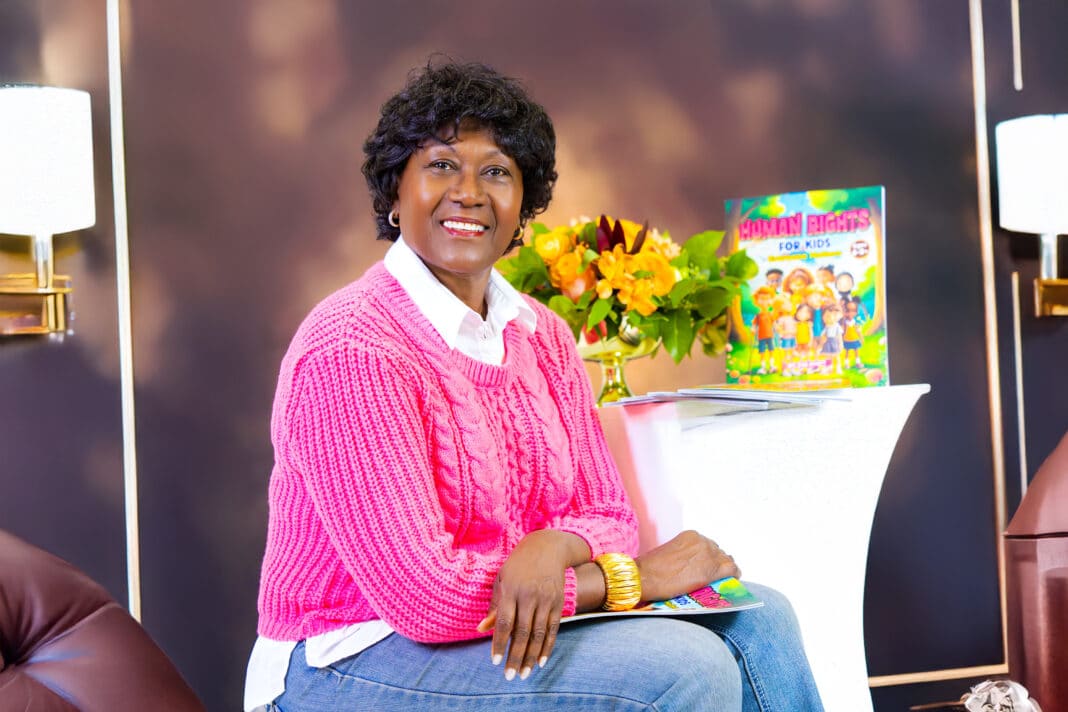

KINGSTON / NEW YORK — In a world where the rights of children are often relegated to dry legal documents or reactive crisis interventions, a quiet but potent revolution is being seeded through the pages of children’s books. At the helm of this movement is Eva Hyatt, a Jamaican-American author, certified human rights consultant, and educator who is systematically dismantling the notion that concepts like dignity, equality, and justice are too complex for young minds.
Hyatt’s mission is both simple and profound: to ensure every child knows their 30 fundamental human rights as outlined in the UN Convention on the Rights of the Child. But her methodology is where the genius lies. She wields storytelling not as a mere diversion, but as a primary pedagogical tool to foster empathy, resilience, and an unshakeable sense of self-worth from the earliest ages.
“We teach children their ABCs and numbers to prepare them for the world of academia. Why, then, do we so often neglect to teach them the foundational language of their own humanity—their rights?” This question, implicit in all of Hyatt’s work, drives a comprehensive ecosystem of change that spans literature, structured curricula, and community engagement through her Queen of the Road Foundation, Inc.

The Azadi Times
No state grants. No corporate lobby. Just ground‑truth reporting from Kashmir & beyond
You make this possible.
The challenge of human rights education has always been one of translation. How does one convey the spirit of Article 12 (the right to express an opinion) or Article 19 (the right to be protected from violence) to a six-year-old? Hyatt’s answer is found in her growing catalogue of publications under her imprint, Books by Eva Hyatt.
Titles like Human Rights for Kids: Everyone Matters and the Human Rights Adventures series do not simply list rights; they embed them in relatable narratives. A story about a character being listened to by adults becomes a lesson in Article 12. A tale of a child finding safety and care illustrates Article 19. This narrative approach moves learning from the cognitive to the affective domain. Children don’t just know their rights; they feel them through the struggles and triumphs of the characters they befriend.
“When a child connects with a character who is treated unfairly and sees that character advocate for themselves, it creates a cognitive blueprint,” explains a child development psychologist consulted for this article. “It’s a form of experiential learning through proxy. The story provides the safe space to explore complex social contracts, making the abstract tangibly just.”
This is complemented by titles like Taking Care of You, which focuses on self-worth and emotional well-being—cornerstones for understanding that rights begin with the self. A child who understands their own inherent dignity is better equipped to recognize and challenge its violation.
Beyond the Book: The Architecture of the Queen of the Road Foundation
Recognizing that a book alone cannot reshape an educational paradigm, Hyatt established the Queen of the Road Foundation, Inc. This organization is the operational arm of her vision, designed to bridge the gap between literature and lived experience.
The Foundation’s work is strategically multi-pronged:
From Teen Lawn‑Mower to AI‑Driven Investor: The Evolution of Hamish Sutherland
Resource Distribution: It provides free, high-quality educational tools for classrooms and homeschool settings. This is a critical equity-based approach, ensuring that under-resourced schools are not left behind in the human rights literacy movement.
Structured Curricula: Beyond supplemental lesson plans, the Foundation offers a more formalized curriculum. This allows educators to integrate human rights education seamlessly into subjects like social studies, literacy, and even civics, providing a scaffolded learning journey from kindergarten through middle school.
Community Projects: Perhaps most impactfully, the Foundation encourages and supports community-based projects. These initiatives—such as community clean-ups (linking to the right to a clean environment, Article 24) or peer mediation programs (linking to the right to peaceful assembly, Article 15)—transform passive learning into active citizenship. Children learn that their rights are not just protections but tools for positive community engagement.
The Consultant’s Edge: Grounding Stories in Substance
What distinguishes Hyatt from many well-intentioned children’s authors is her formal credential as a certified human rights consultant. This is not merely a title; it is the bedrock of her credibility. It ensures that her whimsical stories and engaging activities are anchored in the rigorous principles of international human rights law and pedagogy.
This dual identity allows her to navigate a delicate balance. She possesses the creative flair of a storyteller but operates with the analytical rigor of a consultant. A narrative about sharing is carefully crafted to reflect the principles of non-discrimination (Article 2). A lesson on personal safety is meticulously aligned with the right to protection from violence (Article 19). This prevents the dilution or misinterpretation of core rights, ensuring that the foundational message remains legally and ethically sound.
“In an age of misinformation, having resources that are both accessible and authoritative is paramount,” notes an education officer at a global NGO focused on child protection. “Hyatt’s work fills a crucial niche. It provides a trustworthy conduit between the high-level language of international law and the developmental needs of a child.”
Global Relevance in a Fractured World
While Hyatt’s Jamaican-American heritage informs a unique cultural perspective, her work is inherently universal. The need for rights-based education is a global constant. In regions emerging from conflict, her materials can help rebuild a social fabric based on mutual respect. In stable nations, they can inoculate against the rise of intolerance and bullying by fostering empathy from within.
Her model aligns with several powerful global trends:
The Rise of Social-Emotional Learning (SEL): Educational systems worldwide are recognizing that academic achievement is inextricably linked to emotional intelligence, empathy, and self-regulation. Hyatt’s work is a natural extension of SEL, providing the ethical and legal framework upon which these skills can be built.
The Child Agency Movement: There is a growing recognition of children not as passive recipients of care but as active agents in their own lives. By teaching children their rights, Hyatt directly empowers them with the vocabulary and confidence to participate in decisions that affect them.
Preventative, Not Reactive, Protection: Much of the world’s child protection infrastructure is designed to respond to harm. Hyatt’s work is fundamentally preventative. A child who knows their body is their own (Article 34, protection from sexual exploitation) is more likely to report abuse. A child who knows they have a right to an education (Article 28) is more likely to value it and resist forces that would deny it.
Challenges and the Path Forward
Despite the clarity of her vision, the path to widespread adoption is not without its obstacles. Hyatt’s public profile remains largely within educator and activist circles, lacking the broad media recognition that could catalyze a global movement. Scaling the impact of the Queen of the Road Foundation will depend heavily on forging strategic partnerships with ministries of education, international NGOs like UNICEF and Save the Children, and philanthropic organizations whose mandates align with child empowerment.
Furthermore, in some cultural and political contexts, the very idea of “children’s rights” can be misconstrued as challenging traditional authority or promoting disobedience. Navigating these sensitivities requires a nuanced approach, one that emphasizes how rights are inextricably linked to responsibilities and how they strengthen, rather than weaken, family and community bonds by fostering mutual respect.
Conclusion: A Blueprint for a More Just Future
Eva Hyatt is more than an author; she is an architect of a more rights-conscious future. In a media landscape saturated with content for children, her work stands out for its purposeful depth. She is not just creating readers; she is nurturing advocates, empathists, and citizens.
Her integrated model—blending captivating literature with professional consultancy and a proactive foundation—provides a replicable blueprint for anyone serious about embedding human rights into the bedrock of childhood education. As the global community grapples with persistent inequalities and emerging threats to human dignity, the imperative to raise a generation that not only understands but champions its rights has never been greater. Through her books and her foundation, Eva Hyatt is ensuring that this next generation will not be silent. They will be equipped with the stories, the knowledge, and the conviction to speak their truth and claim their place in a world where, as her work insists, everyone truly matters.