No state backing. No paywalls. Just truth. Support Kashmir's independent voice. Join 2,400+ patrons who fund independent voices.
Zero Paywalls
Reader Funded
Award Winning
Secure Payment
Encrypted
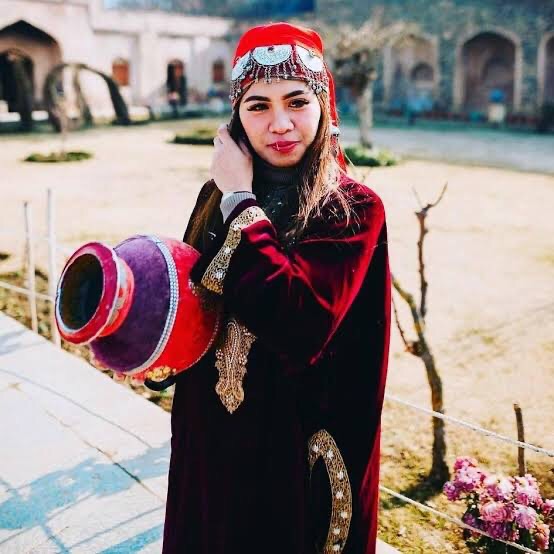
Beyond the well-trodden narratives of geopolitical conflict, the Himalayan region of Jammu & Kashmir holds a secret: it is one of the world’s most intricate and diverse human tapestries. Stretching from the subtropical foothills of Jammu to the high-altitude deserts of Ladakh, and from the bustling streets of Srinagar to the remote valleys of Gilgit-Baltistan, this region is a living laboratory of social identities.
For centuries, the social fabric of this vast area has been woven from threads of caste, clan, and tribe—collectively known as biradari, quom, or zat. These identities are not mere relics; they are dynamic forces that continue to shape political allegiances, marriage networks, land ownership, and even migration patterns to the UK and the Gulf. This article offers a comprehensive, region-wide analysis of these social structures, providing a nuanced understanding that is often overlooked in mainstream discourse.
To apply the classical, rigid Hindu caste model of the Indian plains to Jammu & Kashmir is to misunderstand its essence. Here, social stratification is a complex blend of:
No state backing. No paywalls. Just truth. Support Kashmir's independent voice. Join 2,400+ patrons who fund independent voices.
Tribal Lineages: Especially among pastoral and mountain communities.
Clan Networks: Patrilineal groups that form the core of political and social organization.
Ethnic and Linguistic Groups: Communities bound by a shared language and history, often predating modern borders.
Occupational Guilds: Artisan groups whose identities are linked to hereditary trades.
This results in three overlapping systems that function across the region:
The Tribal System: Defining communities like the Gujjars, Bakerwals, and the diverse Dardic tribes of the north.
The Clan/Biradari System: Dominant among Rajputs, Jats, Sudhans, and others, forming the backbone of rural power structures.
Occupational Caste System: Including groups like the Nais (barbers), Tarkhans (carpenters), and Kumhars (potters).
While these identities remain potent in rural areas—dictating marriage alliances and local leadership—they are being rapidly transformed in urban centers like Srinagar, Jammu, and Gilgit by education, globalization, and a shift towards more fluid, modern identities.
The social landscape of AJK is predominantly rural and deeply influenced by robust biradari networks. Political power and land ownership are often traced along these clan lines.
Major Communities of AJK:
Jats: Predominantly agricultural and politically dominant in the districts of Mirpur, Bhimber, and Kotli. Their influence extends powerfully into the British-Kashmiri diaspora.
Rajputs: With subgroups like Minhas, Bhatti, and Chauhan, the Rajputs are a land-owning and politically significant community in Mirpur, Kotli, and Bhimber, claiming a historical warrior heritage.
Gujjars: A large pastoral tribal group, the Gujjars are a vital part of the social fabric in the mountainous districts of Muzaffarabad, Neelum, Bagh, and Poonch.
Sudhans (Sudhozai): Concentrated in the districts of Poonch and Sudhanoti, the Sudhans have played a historically pivotal role in the region’s politics.
Awans: Claiming a warrior ancestry, the Awans are an influential community in Muzaffarabad, Hattian, and Poonch.
Syeds: Respected as descendants of the Prophet Muhammad, Syed families hold significant religious and social prestige across AJK.
Mughals & Kashmiri Sheikhs: Communities with claims to Central Asian or urban, artisan roots, adding to the region’s diverse social strata.
This part of the former princely state is a study in contrasts, divided into three distinct cultural and geographical zones.
A. The Kashmir Valley: A Unique Lineage System
The Kashmiri Muslim social structure is distinct, with a strong emphasis on familial lineage rather than a rigid occupational hierarchy.
Syeds and Mirs: Families claiming descent from the Prophet Muhammad or early Islamic saints, often holding positions of religious respect.
Bhat/Butt: One of the largest communities, believed to be descendants of converted Hindu Brahmins, now prominent in all professions.
Sheikhs: A broad category encompassing many Kashmiri Muslims, often with historical links to trade, crafts, or administration.
Lone, Dar, Rather, and Wani: Large, widespread biradaris traditionally associated with agriculture and various crafts.
Gujjars and Bakerwals: Classified as a Scheduled Tribe in India, these nomadic pastoralists are a vital part of the valley’s economy and culture, migrating seasonally between the high and low pastures.
Kashmiri Pandits: The region’s historic Hindu Brahmin community, known for their scholarship and administrative roles. While the majority migrated in the early 1990s, a small population remains.
B. The Jammu Region: Where Plains Meet Hills
The social structure of Jammu more closely resembles that of the North Indian plains, adapted to the Himalayan foothills.
Hindu Communities: The Dogra Rajputs were the historic ruling class. Brahmins form the priestly and scholarly class, and Dogra Jats are a dominant agricultural community. Various Scheduled Castes (like Megh and Chamar) also form a significant part of the population.
Muslim Communities: The Gujjars are the largest Muslim tribal group here. Bakerwals are their nomadic counterparts. Rajput Muslims and other biradaris like Malik and Chauhan have a strong presence in districts like Rajouri and Poonch.
C. Ladakh: Crossroads of Buddhism and Islam
Ladakh’s social structure is defined by ethnicity and religion, split between the Buddhist-majority Leh and the Shia-Muslim-majority Kargil.
Leh (Buddhist-Majority):
Ladakhi Buddhists (Monpas, Bhotiyas): Tibetan-origin communities that form the core population.
Brokpa (Dards): An ancient Indo-Aryan tribe residing in villages like Dah and Hanu, known for their unique cultural practices.
Kargil (Shia-Majority):
Baltis: A Tibetan-origin Muslim community speaking the Balti language, dominant in Kargil town and eastern areas.
Purig Pa: The indigenous people of the Purig region (Suru Valley), a blend of Tibetan and Dardic influences.
Dards of Drass: Often called the “world’s second-coldest inhabited place,” the Dards of Drass are an Indo-Aryan tribe with a distinct cultural identity.
Arguably the most ethnically complex part of the wider region, Gilgit-Baltistan is a sanctuary for unique, ancient cultures and languages.
Shins and Yashkuns: The indigenous Dardic peoples of the region, forming the bedrock of populations in Gilgit, Ghizer, and Astore.
Burusho: The unique inhabitants of Hunza and Nagar, who speak Burushaski, a language isolate unrelated to any other in the world.
Wakhi: A Pamiri people of Tajik origin living in the high-altitude valleys of Gojal (Upper Hunza), known for their distinctive music and housing.
Baltis: The predominant community of the Skardu division, with a rich history rooted in Tibetan culture and language.
Kohistanis: Dardic tribes inhabiting the Upper Kohistan area, with their own distinct cultural codes.
Across the entire region, from the ballot box to the pasture, caste and tribal affiliations remain a powerful force.
Elections: Political parties often calibrate their candidates based on the dominant biradari or tribe in a constituency—Jats in Mirpur, Gujjars in mountainous belts, Rajputs in Jammu.
Land and Economy: In rural areas, land ownership patterns are still heavily influenced by traditional clan hierarchies.
Migration Networks: The massive diaspora from regions like Mirpur to the United Kingdom is organized along biradari lines, which provides crucial support networks but also perpetuates these identities abroad.
Conflict and Resolution: In remote areas, traditional jirgas or councils of tribal and clan elders often serve as the primary mechanism for dispute resolution, sometimes operating parallel to formal state systems.
The 21st century is undeniably reshaping these ancient structures.
Urbanization: In cities, professional and educational identities are beginning to supersede biradari affiliations.
Inter-Marriage: While still limited, marriages across different biradaris and ethnic groups are becoming more common, especially among the educated urban elite.
Occupational Shift: The link between caste and profession is eroding as younger generations abandon hereditary trades for modern careers in technology, business, and the arts.
Diaspora Evolution: Second and third-generation Kashmiris in the UK are increasingly identifying with broader labels like “Kashmiri” or “Pakistani,” moving away from specific clan identities.
Political Evolution: While still relevant, the politics of caste is being challenged by issues of governance, development, and a pan-regional Kashmiri identity.
The social landscape of Jammu & Kashmir is a profound mosaic, reflecting millennia of migration, conquest, and cultural exchange. From the Rajput clans of Jammu to the Dardic tribes of Gilgit, and from the Syed families of the Valley to the Brokpa of Ladakh, these identities form the deep, complex substratum of the region’s history.
To understand Jammu & Kashmir is to appreciate this intricate social fabric. While the forces of modernity are slowly transforming these structures, the enduring legacy of biradari, tribe, and clan remains an indispensable key to unlocking the true soul of this breathtakingly beautiful and complex part of the world. The tapestry is not static; it is being rewoven with new threads, creating a pattern that honors its past while steadily evolving into its future.
Trending Topics


The Azadi Times is an independent digital news platform based in Muzaffarabad, Kashmir, dedicated to credible journalism, in-depth reporting, and global analysis. We cover Kashmir, South Asia, and international affairs with a commitment to truth, editorial integrity, and public accountability.
Get important news delivered directly to your inbox and stay connected!
© 2026 The Azadi Times. All Rights Reserved.