
More than seven decades later, the words of a document once celebrated across the valleys of Jammu and Kashmir now seem to unsettle the very rulers who claim its legacy.
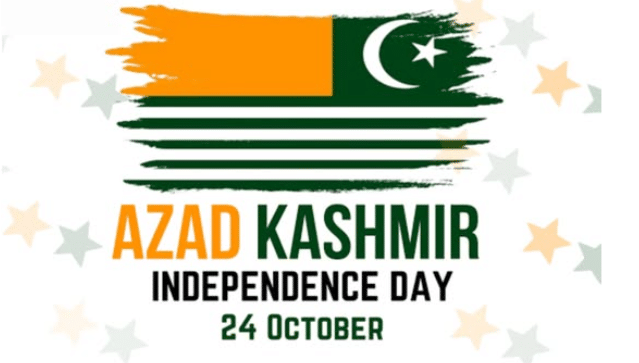
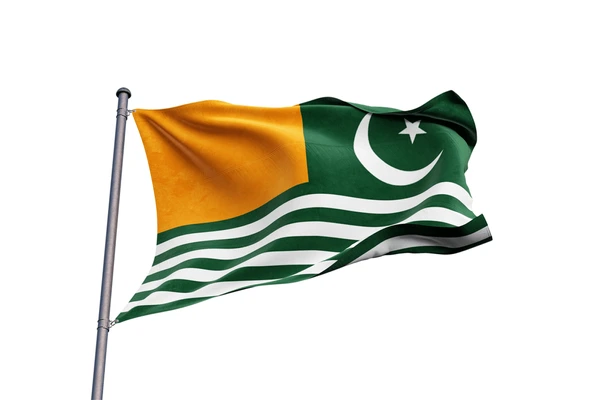
In Pakistan-administered Jammu and Kashmir, the 24 October 1947 Declaration of Independence — once seen as a symbol of freedom from Dogra rule — has become a subject of unease.
Today, any mention of that declaration sends half a dozen ministers rushing to the Directorate of Information, nervously holding press conferences to clarify what it “really means.”
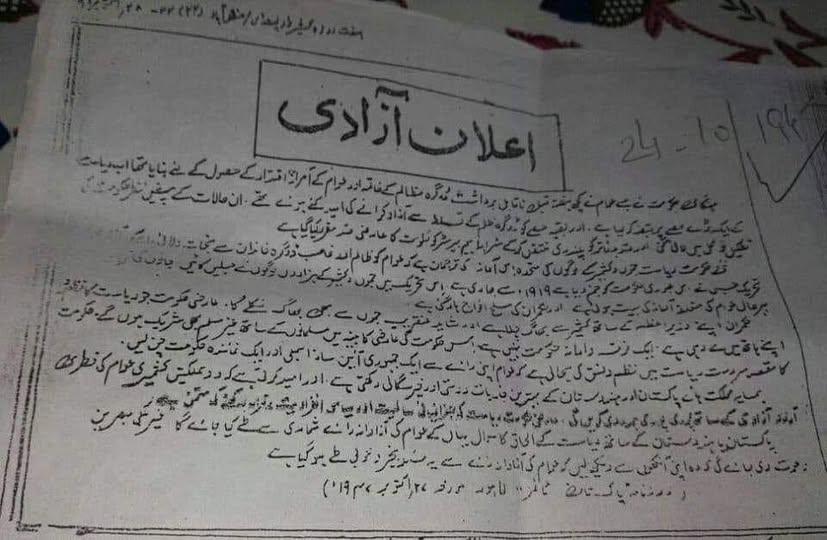
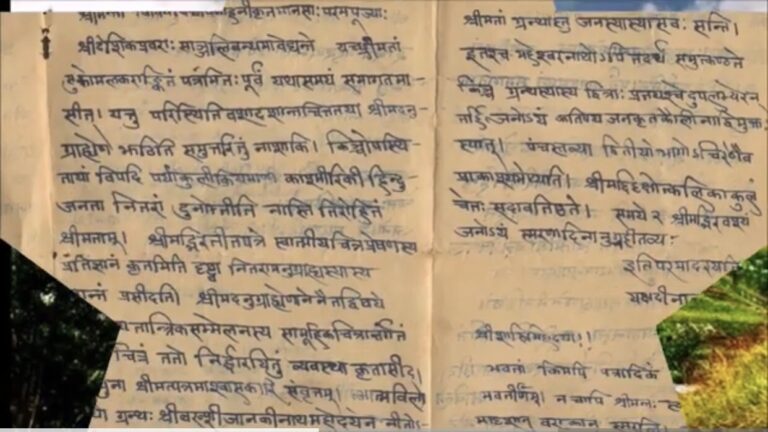
The Declaration of Independence (24 October 1947)
“The emergency government, formed by the people only a few weeks ago to end the unbearable Dogra tyranny and to secure power for the people, has now taken control over a major part of the state and hopes to liberate the remaining areas from Dogra domination.
In these circumstances, the government has been reorganized and offices moved to Pallandri. Mr. Barrister Ibrahim has been appointed as the interim president.
The new government represents the authentic voice of the people of Jammu and Kashmir, striving to free them from the oppressive and usurping Dogra dynasty.
The freedom movement, which gave birth to this provisional government, has been ongoing since 1919. Thousands of Kashmiris have endured imprisonment and sacrificed their lives in this struggle. Ultimately, the genuine voice of the people has prevailed, and the armed forces of the ruler have been defeated.
The ruler, along with his prime minister, has fled from Kashmir and may soon have to leave Jammu as well. The interim government now assumes control of the administration of the state. This government is not communal in character.
Its temporary cabinet will include non-Muslim members as well. The immediate objective is to restore order so that the people may freely elect a democratic constituent assembly and a representative government.
The government maintains sentiments of friendship and goodwill towards neighboring countries, Pakistan and India. It hopes that both nations will fully sympathize with the Kashmiri people’s natural desire for freedom.
The interim government is determined to preserve the geographical integrity and political individuality of the state.
The question of accession to either Pakistan or India shall be decided by the free will of the people through an impartial plebiscite, with international observers invited to witness that the issue is settled in accordance with the people’s choice.”
(Published in The Pakistan Times, Lahore — 25 October 1947)

The Betrayal of an Ideal
The very government born from this declaration — which once symbolized liberation from colonial dominance — was later transformed into an administrative tool serving that same dominance.
Those who now demand rights from this 24 October government seem deeply disturbed by its original text.
The Azadi Times
No state grants. No corporate lobby. Just ground‑truth reporting from Kashmir & beyond
You make this possible.
This contradiction exposes a long history of opportunism and distortion: while the rhetoric of “self-rule” is loudly proclaimed, any effort to define what that actually means in practice is deliberately avoided.
On one hand, the leadership uses “public sentiment” as a shield to conceal its submission to state pressure and political expediency. On the other, it becomes complicit — even subconsciously — in restricting genuine grassroots movements that seek to restore true people’s governance.
In the Pakistan-administered region of Jammu and Kashmir, the restoration of the right to self-governance can only be achieved by reviving the democratic, secular, and constituent spirit of the 24 October 1947 Declaration.
Similarly, in Gilgit-Baltistan, the path to legitimate self-rule lies in demanding the right to form a democratic, secular, and representative government — as envisioned in that same spirit.
Both governments, while maintaining ties with Pakistan based on public will, can move toward a lasting solution to the Kashmir dispute — one grounded in the rights of all the peoples of the former princely state of Jammu and Kashmir.
Through local resource development and participatory governance, they can lay the foundation for healthy, progressive societies rooted in justice and self-determination.
— Courtesy: Haris Qadeer (translated and adapted for The Azadi Times)