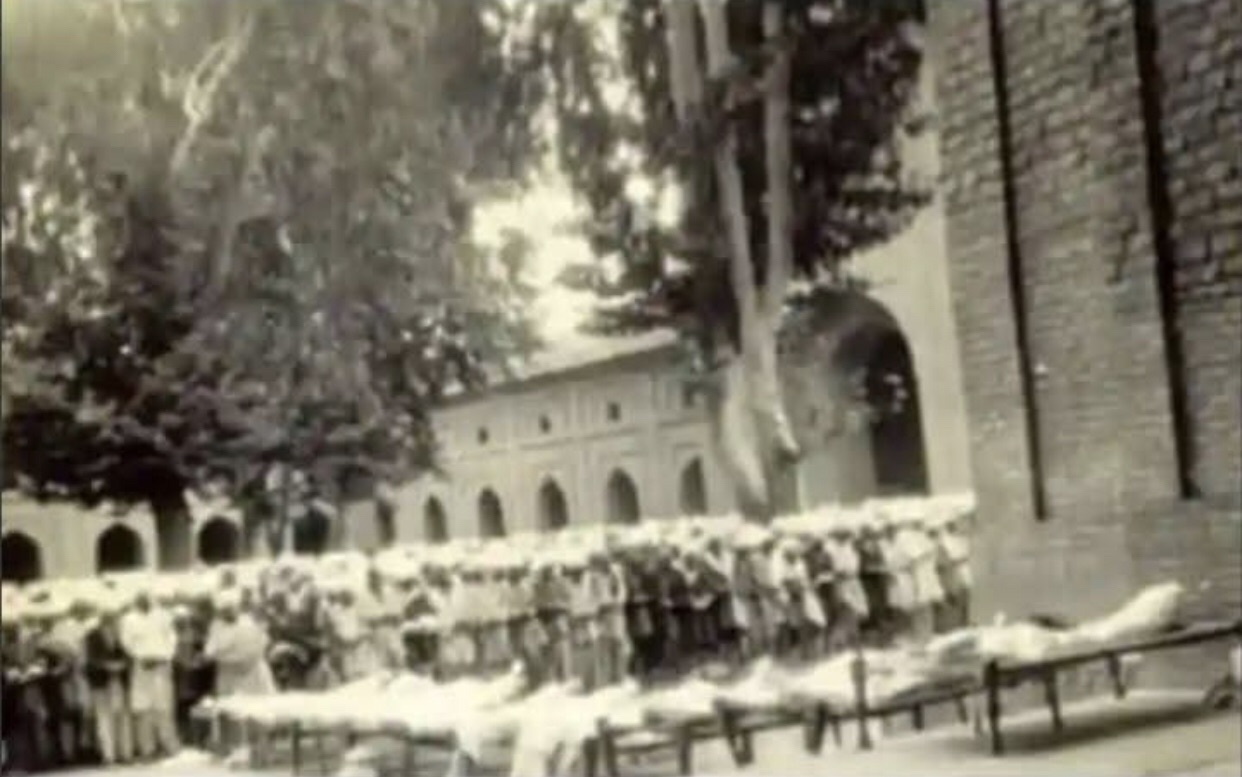

On July 13, 1931, twenty-two Kashmiri Muslims were shot dead outside Srinagar Central Jail, trying—one after another—to complete the call to prayer as Dogra soldiers opened fire. The event, etched into Kashmir’s collective memory, marked the beginning of a political awakening and set off a struggle for dignity, rights, and self-determination. Nearly a century later, July 13 is both a day of solemn remembrance and heated debate: Was it a spontaneous uprising or a politically orchestrated plan? Is the story being suppressed or manipulated? And how does its legacy shape Kashmiri identity in a rapidly changing political landscape?
This feature examines the origins, controversies, commemoration, and contemporary relevance of Martyrs’ Day, offering international readers a balanced and nuanced perspective.
In the early 20th century, the princely state of Jammu and Kashmir was ruled by the Dogra dynasty. Maharaja Hari Singh presided over a diverse population, but the majority of Muslims faced systemic discrimination—land policies, taxation, and limited political participation were persistent grievances. The simmering discontent found voice in scattered protests and growing demands for reform.
The Azadi Times
No state grants. No corporate lobby. Just ground‑truth reporting from Kashmir & beyond
You make this possible.
Abdul Qadeer Khan, a cook from outside Kashmir, became a symbol of resistance when he allegedly urged the people to rise against the Maharaja’s regime. His arrest and trial drew thousands to Srinagar Central Jail on July 13, 1931. Tensions ran high, and the atmosphere was charged with anticipation and anger.
The Events of July 13, 1931
As the day unfolded, the crowd gathered in solidarity with Abdul Qadeer. When the time for Zuhr (midday) prayers arrived, a young man stood to deliver the azan (Islamic call to prayer). A Dogra soldier fired, killing him instantly. Another rose to continue the prayer—and was shot dead as well. This continued until 22 men had fallen, each determined to complete the azan despite the threat.
The killings sparked immediate outrage, riots, and a wave of mourning across the Valley. The funerals, attended by tens of thousands, became mass protests against Dogra rule. For many, July 13 marked the birth of Kashmir’s modern political consciousness—a turning point after decades of silence.
The Maharaja, under pressure, appointed the Glancy Commission, which recommended limited reforms, including greater Muslim representation in administration and politics. For many Kashmiris, however, the changes fell short of true justice.
The narrative of July 13 as a spontaneous popular uprising is challenged by some historians and political observers—especially those outside the Kashmir Valley or aligned with minority groups. They argue that the incident was not entirely organic, but may have been encouraged or manipulated by emerging political actors seeking to destabilize Dogra rule and further communal polarization.
Prem Nath Kaul, historian:
“The grievances were real, but the rapid escalation and subsequent violence suggest some orchestration. Some leaders benefited politically; the martyrs’ families remained powerless.”
This perspective finds echoes among some residents of Jammu and within Hindu minority communities, who recall the aftermath—attacks on Hindu shops and homes, and retaliatory violence. They contend that the events of July 13 set in motion a cycle of communal tensions that would haunt the region for decades.
Others, particularly National Conference leaders and Kashmiri civil society members, reject this revisionist view:
NC Youth Leader:
“To call it a planted plan is to insult the courage of those who stood up. They were not pawns; they were pioneers of Kashmiri resistance.”
For international readers, this debate highlights the complexities of historical memory in conflict zones—how martyrdom can be both a symbol of heroism and a tool of political mobilization.
Martyrs’ Day and the Politics of Remembrance
For decades, July 13 was officially observed as Kashmir Martyrs’ Day. State holidays, public ceremonies, and gatherings at Srinagar’s Mazar-e-Shuhada (Martyrs’ Graveyard) became annual rituals. The Jammu & Kashmir National Conference (NC)—whose founders were involved in the events of 1931—led these commemorations, using the day to reinforce their legitimacy and connect with the masses.
Omar Abdullah, NC leader:
“These martyrs lit the torch of political awakening. That flame still burns, despite every attempt to extinguish it.”
Such ceremonies served as reminders of sacrifice and as platforms for political messaging. But they also became contested spaces—other parties, especially those challenging NC’s narrative or advocating separatism, have at times sought to reshape the meaning of July 13, using it to advance their own visions for Kashmir.
The abrogation of Article 370 in August 2019 marked a seismic shift in Kashmir’s relationship with India. The region’s semi-autonomous status was revoked, direct rule from New Delhi imposed, and local political structures dismantled. Since then, July 13 has disappeared from the official holiday calendar, and public commemorations have been increasingly restricted.
For the past five years, authorities have regularly sealed the Martyrs’ Graveyard, detained activists, and prevented political leaders from gathering. Police cite “security concerns,” but critics see it as an attempt to erase uncomfortable histories and suppress Kashmiri identity.
Omar Abdullah, CM of Indian administered Kashmir:
13th July massacre is our Jallianwala Bagh. The people who laid down their lives did so against the British. Kashmir was being ruled under the British Paramountcy. What a shame that true heroes who fought against British rule in all its forms are today projected as villains only…
— Omar Abdullah (@OmarAbdullah) July 13, 2025
BJP spokesperson:
“We cannot allow glorification of a communal riot that hurt the unity of the state.”
This suppression extends beyond July 13. Local holidays, public memorials, and even history curricula have been altered, reflecting a broader effort to redefine Kashmir’s narrative from above.
Despite restrictions, Kashmiris continue to remember July 13 privately, through prayers, stories, and social media. For many, the day is not just about the past, but about the ongoing struggle for dignity and recognition.
A Teacher in Budgam:
“We teach our students about the bravery of those 22 men. But now we whisper it—because speaking aloud feels dangerous.”
Young Journalist:
“We grew up seeing our elders pay respects at the graveyard. Now it’s surrounded by police. Even mourning feels like a crime.”
Historian in Jammu:
“It was a day of courage, yes, but also unleashed forces that no one fully understood.”
Elder at the Graveyard:
“They died for us. But even they didn’t know what they were dying for. And neither do our children today.”
These voices reveal the layered reality of remembrance—a mix of pride, uncertainty, and resistance. The right to memory itself has become a battleground.
The politics of Martyrs’ Day reflects deeper tensions in Kashmiri society. National Conference leaders frame July 13 as the foundation of a secular, democratic movement. Separatist groups emphasize its role in the fight for self-determination, often distancing themselves from NC’s legacy. The Indian government, meanwhile, presents it as a communal riot, or omits it altogether.
International human rights organizations and media—like BBC and Al Jazeera—have documented these shifting narratives, highlighting the ways in which history is weaponized, suppressed, or reimagined.
For The Azadi Times, the challenge is clear: To tell the story honestly, centering Kashmiri voices without falling into the traps of state-sponsored propaganda.
July 13, 1931, was not the end of Kashmir’s struggle, but the beginning of a long and winding road towards self-determination. The events of that day catalyzed movements for political rights, social justice, and, eventually, demands for autonomy or independence.
Today, the spirit of July 13 persists in the Valley’s ongoing calls for dignity and agency. Even as political repression intensifies, and as historical memory is contested, the aspiration for self-determination remains undiminished.
A Young Activist:
“They can erase the holiday, lock the graveyard, change the textbooks—but they cannot erase what people carry in their hearts.”
For international readers, July 13 offers a window into the complexities of South Asian politics, communal relations, and the universal human struggle for justice. It is a case study in how memory can be both a source of empowerment and a target of repression.
Journalists and scholars emphasize the need for balanced, fact-based reporting—neither glorifying nor dismissing the events, but seeking to understand them in all their ambiguity.
July 13, 1931, is a foundational moment in Kashmir’s story—a day of martyrdom, awakening, debate, and division. Its legacy is contested, but its impact endures. As Kashmir confronts new challenges, the struggle over memory and history remains central.
At The Azadi Times, we believe history belongs to the people, not to politicians or governments. The dignity of those who died should never be erased, nor their memory used for narrow gain.
To honor July 13 is not just to recall the past, but to assert the right to remember, to mourn, and to demand a future built on truth and justice.