No state backing. No paywalls. Just truth. Support Kashmir's independent voice. Join 2,400+ patrons who fund independent voices.
Zero Paywalls
Reader Funded
Award Winning
Secure Payment
Encrypted
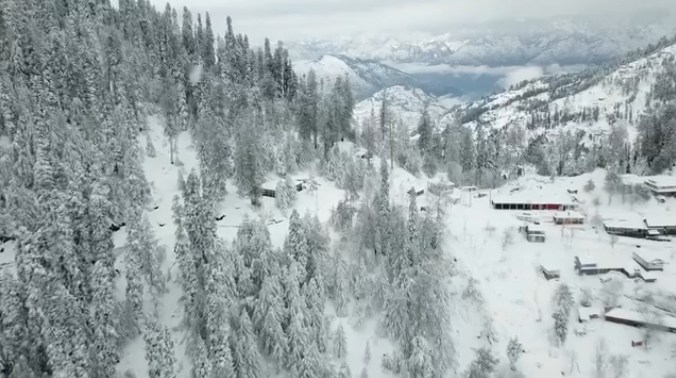
For centuries, the word Kashmir has been synonymous with snow-covered peaks, frozen lakes, and postcard-perfect winters. Each year, as December approaches, people from both sides of the Line of Control — from Gulmarg to Neelum Valley eagerly await the heavy snowfall in Kashmir that transforms the valley into a white wonderland.
But this winter, the question many are asking is different: When will it snow again like before?
Current meteorological data from both Azad Kashmir and Indian-administered Jammu & Kashmir suggest relatively dry conditions through mid-November 2025.
Forecasts from weather services show clear skies and mild temperatures in major valleys including Muzaffarabad, Srinagar, and Pahalgam, with no immediate sign of heavy snow.
No state backing. No paywalls. Just truth. Support Kashmir's independent voice. Join 2,400+ patrons who fund independent voices.
In contrast, high-altitude regions such as Gurez, Neelum, Shounter, Baboon Valley, and Gulmarg may begin receiving light to moderate snowfall later this month as Western Disturbances strengthen.
Experts note that “the first major spell of heavy snow in Kashmir is now shifting deeper into winter — often arriving in late December or even January.”
Throughout history, Kashmir has seen multiple historic snowfalls that reshaped life, economy, and memory across the region.
In February 1967, Gulmarg recorded nearly 8.4 meters of snow — one of the heaviest in South Asia’s modern history. Roads were buried, electricity was cut for days, and traditional Kashmiri houses crumbled under the weight of the snow.
In February 1996, a powerful Western Disturbance dumped around 4.5 meters of snow in the Pir Panjal region, paralyzing road connectivity between Srinagar and Jammu for weeks.
In January 2017, back-to-back snowstorms triggered massive avalanches in Gurez Valley, claiming the lives of 24 people — both civilians and Indian soldiers. It was one of the deadliest snow disasters in recent memory, reminding locals of the dangers heavy snow can bring.
Across the border in Pakistan-administered Kashmir, a wave of avalanches following heavy snowfall in January 2020 devastated parts of Neelum Valley. More than 70 people lost their lives, homes were destroyed, and entire villages were buried under snow.
Historical chronicles speak of an extraordinary winter between October 1877 and May 1878, when continuous snowfall for more than ten days crippled trade and movement in the valley — still remembered by elders as “the winter when the sky fell to the earth.”
While heavy snowfall remains a romantic and economic symbol of Kashmir’s identity, scientists warn that climate change is reshaping its rhythm.
Over the last two decades, snowfall patterns have grown erratic — late starts, shorter durations, and less accumulation in the lower valleys. The result:
Ski resorts like Gulmarg open later and close sooner.
Apple orchards receive less “winter chill” required for quality yield.
Glacial melt and water-supply timings are shifting.
Environmentalists say this transformation should concern everyone, as Kashmir’s snowmelt sustains the rivers of both Pakistan and northern India.
Heavy snowfall in Kashmir is both a blessing and a challenge.
When snow arrives on time, it brings a tourism boom — hotels in Gulmarg, Neelum Valley, and Astore fill up overnight, and local economies flourish. However, when snow is delayed or lighter than usual, tourism-dependent businesses face severe financial losses, leading to a temporary economic slump.
For mountain communities in regions like Leepa, Gurez, and Kel, heavy snowfall often results in long periods of isolation. Roads remain blocked for weeks, cutting off essential supplies and emergency access. This isolation not only disrupts daily life but also highlights the urgent need for better winter infrastructure.
The weight of snow also puts immense pressure on fragile infrastructure. Avalanches, roof collapses, and power outages are common during intense snow spells, especially in unplanned settlements where buildings lack proper structural safety.
Amid these challenges, snowfall remains deeply tied to Kashmiri culture and emotions. Snow festivals, winter weddings, and poetry often celebrate what locals call “the white silence” — a symbol of both beauty and resilience that defines life in the valley.
Authorities across Azad Kashmir and Indian-administered territories are now investing in better early-warning systems and road-clearing equipment.
Residents in upper valleys are advised to stock food, medicine, and fuel before the deep winter months begin.
Climate experts urge communities to view heavy snowfall as a natural cycle demanding adaptation, not fear — by building stronger homes, preserving forest cover, and monitoring glacial health.
The coming months will decide whether this winter joins Kashmir’s long list of historic snowfalls or marks yet another dry spell in a changing climate.
For now, the plains remain calm, the mountains wait, and Kashmir’s people — farmers, hoteliers, shepherds, and storytellers — look skyward for that first, timeless flake.
“When the snow finally falls,” says an old man in Neelum Valley, “it brings not just cold, but memory. It reminds us who we are.”
Trending Topics


The Azadi Times is an independent digital news platform based in Muzaffarabad, Kashmir, dedicated to credible journalism, in-depth reporting, and global analysis. We cover Kashmir, South Asia, and international affairs with a commitment to truth, editorial integrity, and public accountability.
Get important news delivered directly to your inbox and stay connected!
© 2026 The Azadi Times. All Rights Reserved.