No state backing. No paywalls. Just truth. Support Kashmir's independent voice. Join 2,400+ patrons who fund independent voices.
Zero Paywalls
Reader Funded
Award Winning
Secure Payment
Encrypted
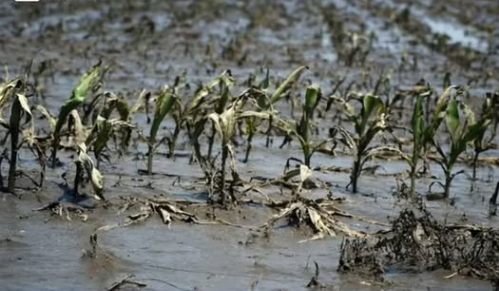
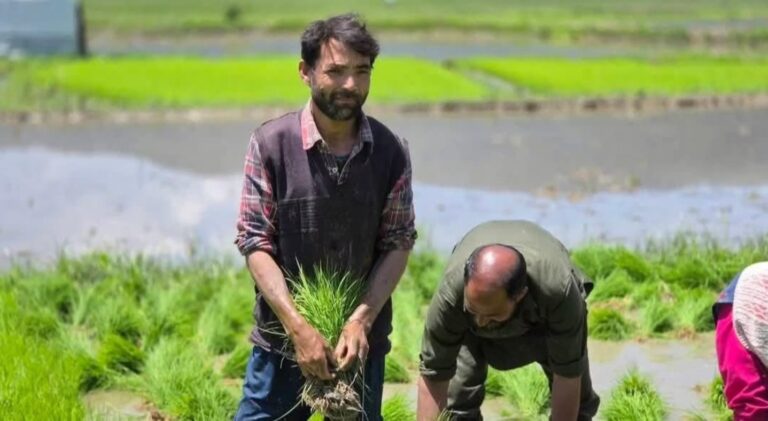
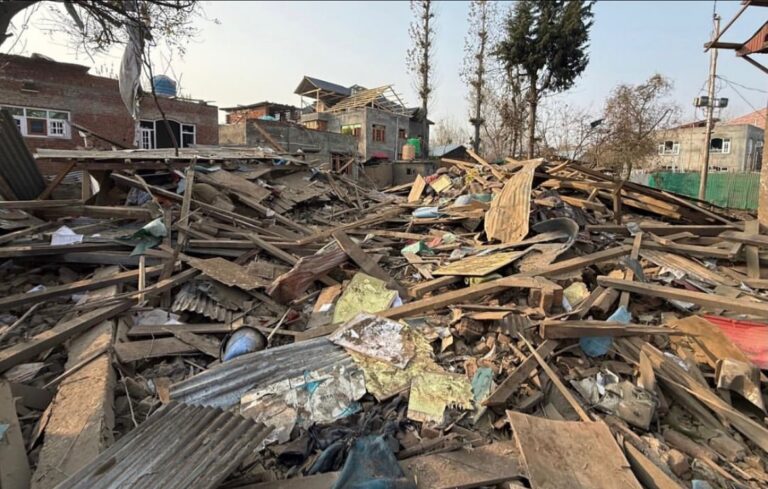
Srinagar — Southern and central districts of Kashmir are reeling under a severe agricultural crisis after recent rains and floods destroyed thousands of hectares of farmland, leaving tens of thousands of farmers in distress.
According to an initial survey conducted by the Agriculture Department, a total of 12,066.33 hectares of farmland has been affected across the valley. Of this, 9,588.73 hectares of land has seen crops either completely destroyed or partially damaged.
The Director of Agriculture Kashmir, Sartaj Ahmad Shah, confirmed that the worst-hit districts include Pulwama, Kulgam, Anantnag, and Budgam, with losses running into millions of rupees. He noted that emergency measures are underway to provide financial relief and immediate rehabilitation for affected farmers. Essential crops such as rice, maize, and vegetables have been washed away in many areas, creating fears of food shortages and long-term economic fallout.
No state backing. No paywalls. Just truth. Support Kashmir's independent voice. Join 2,400+ patrons who fund independent voices.
District Pulwama has been identified as the worst affected region, with nearly 3,830 hectares of farmland damaged. Of this, more than 2,730 hectares of agricultural land has suffered extensive losses, wiping out over 50 percent of standing crops.
Agriculture Officer for Kakapora, Shakil Ahmad, reported that villages such as Kakapora, Sathergund, Marwal, Pahoo, Ratnipora, and Lelhara have witnessed complete destruction of rice, maize, and vegetables. Similarly, areas in Pampore, including Zonipora, Meej, Wuyan, Bachen Shalina, and Khandizal, have also reported massive crop losses.
Chief Agriculture Officer Pulwama, Waheed-ur-Rehman, said assessment teams are preparing detailed reports of the losses in each affected area.
In neighboring Shopian district, at least 224 hectares of farmland have been damaged, with Zainapora and Ramnagri emerging as the most affected localities.
In Kulgam district, floods have impacted nearly 1,183 hectares of land, of which 1,070.1 hectares sustained heavy losses. Officials reported that more than 5,182 farmers have been directly affected, with damages valued at ₹18.4 million (1.84 crore rupees).
Chief Agriculture Officer Farooq Ahmad Reshi said that villages in Qaimoh, DH Pora, Devsar, and several parts of Kulgam tehsil were badly hit. In Qaimoh alone, 501.51 hectares of farmland was destroyed, prompting recommendations for compensation exceeding ₹8.5 million (85 lakh rupees).
In Anantnag district, approximately 2,641.66 hectares of farmland has been impacted. Chief Horticulture Officer Shahnawaz Ahmad reported that areas including Kokernag, Sheer Bagh, Hanjivera, Zarpara, Arahpora, Chehl Gund, and Banga Dara have been severely damaged.
In Zarpara and Arahpora alone, 700 hectares of farmland has been ruined, while Chehl Gund has lost 430 hectares of vegetable crops and Banga Dara 320 hectares. Officials warn that land erosion and flooding have made several fields unfit for cultivation in the near future.
In Srinagar district, around 408 hectares of land have been damaged, particularly in Lasjan, Batamaloo, and Rangreth.
In Ganderbal, nearly 196 hectares have been affected, with Lar and Wakura recording significant crop damage.
Meanwhile, in Budgam district, the floods have devastated 2,723 hectares of farmland, of which 1,702.25 hectares have been confirmed as badly damaged. The worst-hit areas include Chrar-e-Sharif, Beerwah, and Khansahib, where rice, maize, and vegetable crops have been largely destroyed.
In northern Kashmir, Kupwara, Bandipora, and Baramulla districts have also suffered, with a combined total of 570 hectares affected. The main crops damaged include maize, rice, and pulses.
Agriculture experts warn that the total losses may run into hundreds of millions of rupees, crippling Kashmir’s already fragile economy where agriculture remains the primary source of livelihood.
The widespread devastation has sparked urgent appeals for financial relief, crop insurance payouts, and government-backed rehabilitation programs. Farmers across the valley say they fear debt traps and long-term poverty if aid does not arrive quickly.
Officials from the Agriculture Department have assured that damage assessment reports are being finalized, and relief measures will soon be announced. However, with the sowing season disrupted and vast areas left uncultivable, the road to recovery is expected to be long and difficult.
Trending Topics


The Azadi Times is an independent digital news platform based in Muzaffarabad, Kashmir, dedicated to credible journalism, in-depth reporting, and global analysis. We cover Kashmir, South Asia, and international affairs with a commitment to truth, editorial integrity, and public accountability.
Get important news delivered directly to your inbox and stay connected!
© 2026 The Azadi Times. All Rights Reserved.