No state backing. No paywalls. Just truth. Support Kashmir's independent voice. Join 2,400+ patrons who fund independent voices.
Zero Paywalls
Reader Funded
Award Winning
Secure Payment
Encrypted
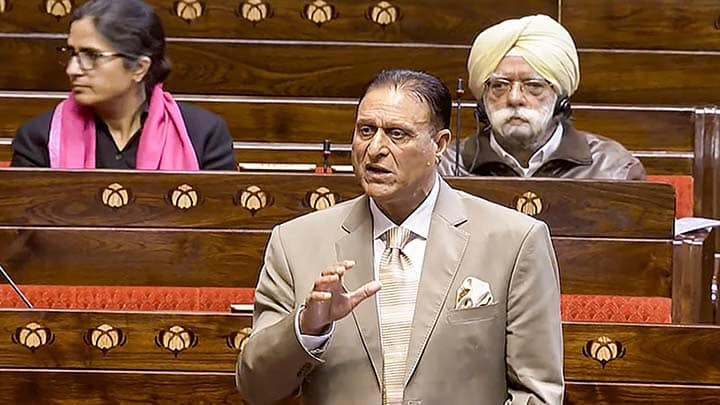
Jammu – In a strong statement highlighting regional energy justice, Chaudhary Muhammad Ramzan, a senior political leader in Indian-administered Kashmir, has called for the territory to regain full control over its major hydropower projects currently operated by the National Hydroelectric Power Corporation (NHPC). The leader stressed that these projects, situated within the region, generate substantial electricity and revenue, yet the local population receives only a small fraction of the benefits produced from their own natural resources.
Ramzan explained that the NHPC has long recovered more than its initial investments in these projects, leaving the local population dependent on electricity imports and unable to fully utilize the wealth generated from their own rivers. “It is high time that the ownership and control of these hydropower projects return to Indian-administered Kashmir. Despite hosting significant hydropower infrastructure, the region continues to face electricity shortages, while the projects continue to produce massive revenue that flows outside the territory,” he said.
The leader criticized the unequal arrangements that currently exist, emphasizing that local governance and management of energy resources is not only a matter of economic fairness but also crucial for the long-term development and sustainability of the region. “Reclaiming these projects will strengthen the financial foundation of the territory, reduce reliance on imported electricity, and enable reinvestment in local development and essential infrastructure,” he added.
No state backing. No paywalls. Just truth. Support Kashmir's independent voice. Join 2,400+ patrons who fund independent voices.
Chaudhary Muhammad Ramzan pointed out that this issue is not new and forms part of a wider set of demands raised by local organizations in other parts of Jammu & Kashmir over the past three years. Among these, the Jammu & Kashmir Joint Awami Action Committee has repeatedly emphasized that the territory has the right to manage and benefit from electricity generated within its own borders. According to the committee, local oversight of energy resources is fundamental to ensuring equitable development, addressing energy shortages, and empowering local communities economically.
The NHPC, which operates multiple hydroelectric projects in the territory, has faced criticism from regional leaders for a lack of transparency in the distribution of electricity and revenues. While the corporation claims that projects are managed under national guidelines, local representatives argue that the disproportionate allocation of electricity undermines regional growth, economic stability, and the rights of the population in Indian-administered Kashmir.
Experts note that local control over energy resources is not just a political demand but a practical necessity. Hydropower projects, if managed locally, could provide a consistent energy supply, create employment opportunities, and allow for reinvestment in infrastructure, education, and healthcare. They argue that giving the territory authority over its own resources would also reduce dependency on external power imports, thereby enhancing energy security and enabling self-reliant development.
Chaudhary Muhammad Ramzan also stressed the symbolic significance of the demand. “Energy generated in our rivers belongs to the people of Indian-administered Kashmir. Reclaiming these resources is a matter of justice, fairness, and recognition of the rights of the local population,” he said. He further underlined that long-term economic justice can only be achieved if the territory has the authority to make decisions over its natural resources, including hydropower, water management, and electricity distribution.
This call for local ownership aligns with wider regional demands for economic autonomy and self-determination, which have been a consistent theme among political and civic organizations in Indian-administered Kashmir. By asserting control over hydropower projects, regional leaders hope to create a framework in which economic benefits, energy security, and infrastructure development directly serve the local population, instead of primarily benefiting external entities or centralized authorities.
As tensions persist over resource allocation, the debate over local control of energy infrastructure is likely to remain central to political discourse in the territory. Chaudhary Muhammad Ramzan’s appeal underscores the broader aspirations of the people of Indian-administered Kashmir, who seek equitable access to the wealth generated from their own land and rivers.
With growing public awareness and support from organizations such as the Jammu & Kashmir Joint Awami Action Committee, calls for revising energy management policies are intensifying. The discourse on hydropower ownership not only touches on economic and infrastructure concerns but also resonates with the region’s long-standing quest for autonomy, fair governance, and the fundamental right of its people to control the resources that are inherently theirs.
Trending Topics


The Azadi Times is an independent digital news platform based in Muzaffarabad, Kashmir, dedicated to credible journalism, in-depth reporting, and global analysis. We cover Kashmir, South Asia, and international affairs with a commitment to truth, editorial integrity, and public accountability.
Get important news delivered directly to your inbox and stay connected!
© 2026 The Azadi Times. All Rights Reserved.