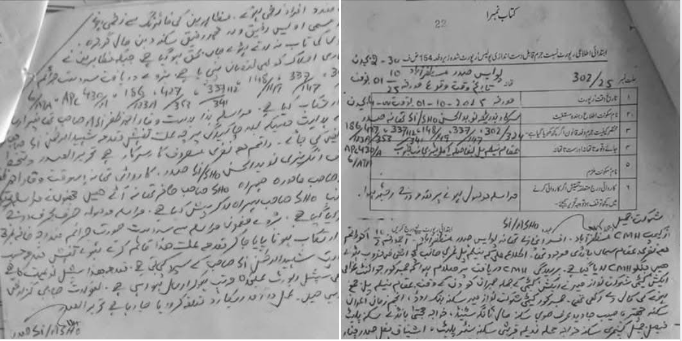

Muzaffarabad | October 10, 2025: A murder case has been registered against 2,500 individuals, including Shaukat Nawaz Mir and other members of the Jammu Kashmir Joint Awami Action Committee (JKJAAC), following the death of protester Owais Rafiq during demonstrations held on October 1 in Muzaffarabad.
The First Information Report (FIR), filed by police under multiple sections including the Anti-Terrorism Act (ATA), was brought to public attention on Thursday by journalist Naeem Chughtai. The move has triggered fresh political debate across Pakistan-administered Jammu and Kashmir (AJK), where tensions between the government and the rights movement have remained high for weeks.
From Protest to Prosecution
According to official documents, the FIR was lodged in police custody after violent clashes erupted between security forces and demonstrators in the AJK capital. Protesters, led by the Joint Awami Action Committee, had been demanding affordable electricity tariffs, transparent governance, and control over local resources issues that have resonated widely among the region’s population.

The Azadi Times
No state grants. No corporate lobby. Just ground‑truth reporting from Kashmir & beyond
You make this possible.
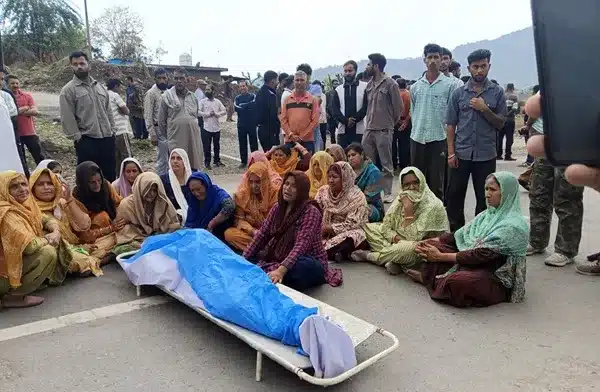
The death of Owais Rafiq, described by locals as a committed young activist, sparked widespread outrage and calls for accountability. Witnesses claim he was struck during police action to disperse the crowd, a claim authorities have not publicly addressed.
The inclusion of anti-terrorism provisions in the FIR has alarmed rights observers, who say the case represents an escalation in the government’s approach to dealing with civic dissent.
Ultimatum and Escalating Tensions
The filing of the case comes days after Shaukat Nawaz Mir, the convener of the JKJAAC, issued a 10-day ultimatum to authorities, demanding the arrest of those responsible for killing protesters — particularly those involved in the September 29 “Peace March” killings during the Muslim Conference rally in Muzaffarabad.

In his public statement, Mir warned that if justice was not delivered within the given time frame, the committee would be compelled to resume its long march towards Muzaffarabad, reviving fears of another wave of protests.
Political analysts in the region believe that the FIR’s timing immediately after Mir’s ultimatum suggests an attempt to neutralize the movement’s leadership. Sources within the Action Committee told Azadi Times that arrests of key organizers “cannot be ruled out” in the coming days.
Rights Groups Warn of ‘Criminalizing Dissent’
Human rights advocates have criticized the government’s approach, arguing that using terrorism laws against protest organizers undermines the democratic fabric of AJK.
“These are citizens demanding their rights, not insurgents,” said a Muzaffarabad-based rights activist, speaking to Azadi Times on condition of anonymity. “Criminalizing peaceful dissent only deepens mistrust between the people and the state.”
Local observers point out that the JKJAAC movement — once dismissed as a fringe coalition — has evolved into one of the largest grassroots mobilizations in AJK’s recent history, drawing participants from civil society, traders, teachers, and the youth.
Public Sentiment and Media Attention
The case has reignited public debate over state accountability, with many Kashmiris viewing the FIR as an attempt to silence a growing movement. On social media, hashtags such as #AJKRightsMovement, #JusticeForOwaisRafiq, and #KashmirBleeds have gained traction, with activists urging international media and rights organizations to take notice.
Several journalists, including those from international outlets, have highlighted that the JKJAAC’s protest movement reflects a deeper frustration with governance structures and economic inequality in the region — an issue that has rarely received sustained global coverage.
As AJK braces for what could be another tense week, the Joint Awami Action Committee has yet to release an official statement responding to the FIR. Meanwhile, political circles in Muzaffarabad remain abuzz with speculation that the state may attempt to preempt further mobilization by detaining senior JKJAAC leaders.
The unfolding events underscore a pivotal moment for Azad Jammu and Kashmir where demands for accountability and autonomy increasingly challenge the balance of power between the public and the state apparatus.