No state backing. No paywalls. Just truth. Support Kashmir's independent voice. Join 2,400+ patrons who fund independent voices.
Zero Paywalls
Reader Funded
Award Winning
Secure Payment
Encrypted

No state backing. No paywalls. Just truth. Support Kashmir's independent voice. Join 2,400+ patrons who fund independent voices.
No state backing. No paywalls. Just truth. Support Kashmir's independent voice. Join 2,400+ patrons who fund independent voices.
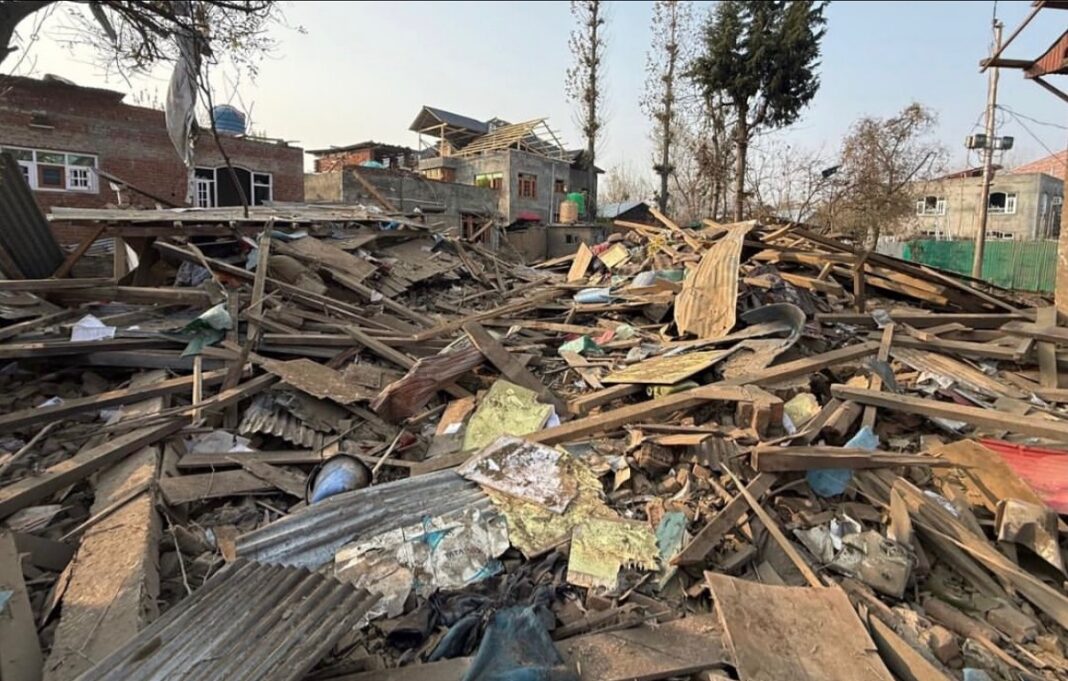
PULWAMA, Indian Administered Kashmir – A pre-dawn operation carried out by Indian authorities in Pulwama district has triggered widespread condemnation and humanitarian concerns after controlled explosions were used to demolish a house, severely damaging a residential neighborhood and leaving dozens homeless in the bitter winter cold.
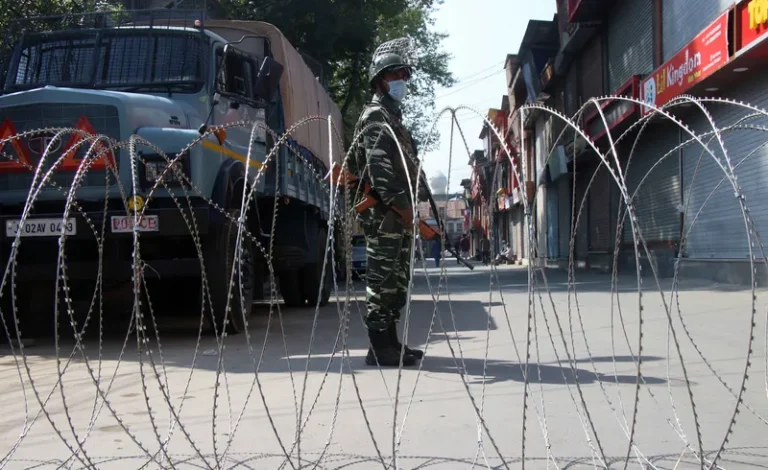
The operation, which lasted nearly two hours between midnight and 2 AM on Friday, targeted the two-story family home of Dr. Umar Nabi, a physician accused by Indian security agencies of involvement in a previous car-blast case in Delhi. The area was heavily cordoned off by security forces, and neighboring families were evacuated before the demolition began.
However, residents and rights groups allege the action amounted to “collective punishment,” citing the extensive collateral damage to surrounding civilian properties.
No state backing. No paywalls. Just truth. Support Kashmir's independent voice. Join 2,400+ patrons who fund independent voices.
Local inhabitants described being jolted awake by two massive explosions that ripped through the silence of the night. The force of the blasts caused panic, particularly among children and the elderly.
“The entire village shook. We thought an attack had taken place. No one imagined a demolition would involve blasts of this scale,” one shaken resident told our correspondent, requesting anonymity due to fear of reprisal.
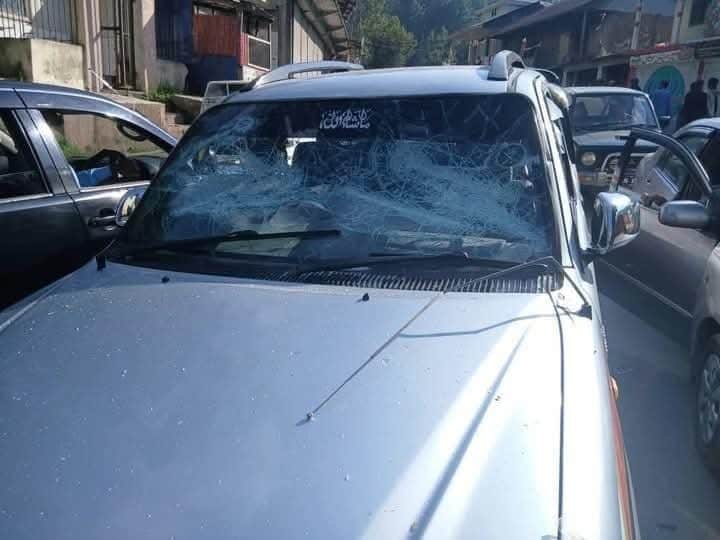
By daylight, the full scale of the destruction became clear. While Dr. Nabi’s house was completely reduced to rubble, the shockwaves had inflicted severe damage on at least six adjacent homes. The window panes of over twenty other houses and a nearby mosque were shattered.
Preliminary estimates by residents point to property losses running into crores of rupees. With night-time temperatures plunging, the immediate need for shelter for the displaced families has turned into a pressing humanitarian crisis.
Human rights advocates and legal experts have sharply criticized the method of demolition, questioning its proportionality and legality.
“A ‘controlled demolition’ in a civilian area does not typically involve explosions that destroy half a neighborhood,” stated a retired civil engineer from Srinagar. “The use of such force, regardless of the allegations against one individual, raises serious ethical and legal concerns about the protection of non-combatants and their property.”
Many in the local community and international human rights circles view the practice of demolishing the family homes of accused individuals as a form of collective punishment, which is prohibited under international humanitarian law.
The incident has also drawn criticism from civil society groups in Pakistan-Administered Kashmir, highlighting the cross-regional concern over the tactic.
“Demolishing homes, displacing families, and destroying civilian property is unacceptable. Whether in Srinagar or Muzaffarabad—such measures cannot be justified under any modern democratic framework,” several activists stated in a joint comment to our publication.
They called on international human rights watchdogs to take notice of what they described as an escalating pattern of punitive actions in the region.
The controversial demolition follows a series of recent security incidents, including a major blast at a police station in Srinagar and intensified counter-insurgency operations in South Kashmir. These events have contributed to a heightened sense of tension and public anger, particularly over damage to civilian infrastructure.
While local community volunteers have begun organizing temporary shelter and aid for the affected families, long-term rehabilitation is expected to be a lengthy and costly process.
In the aftermath, independent journalists, legal observers, and human rights defenders are demanding:
A transparent investigation into the scale of explosives used.
An official assessment of the structural damage to all affected civilian homes.
Adequate and immediate compensation for all displaced and affected families.
As the region navigates a volatile security landscape, incidents like the Pulwama demolition risk deepening the chasm of mistrust between the civilian population and the authorities, raising urgent questions about due process, proportionality, and the rules of engagement in conflict-affected areas.
This is a developing story and will be updated as more information becomes available.
Hot this week

The Azadi Times is an independent digital news platform based in Muzaffarabad, Kashmir, dedicated to credible journalism, in-depth reporting, and global analysis. We cover Kashmir, South Asia, and international affairs with a commitment to truth, editorial integrity, and public accountability.
Get important news delivered directly to your inbox and stay connected!