Wednesday, April 1, 2026
12.8 C
Srinagar
Home Blog Page 103

Mujtaba Banday Freed After 21 Days – “Our Struggle for Kashmir’s Freedom Will Never Stop”

0

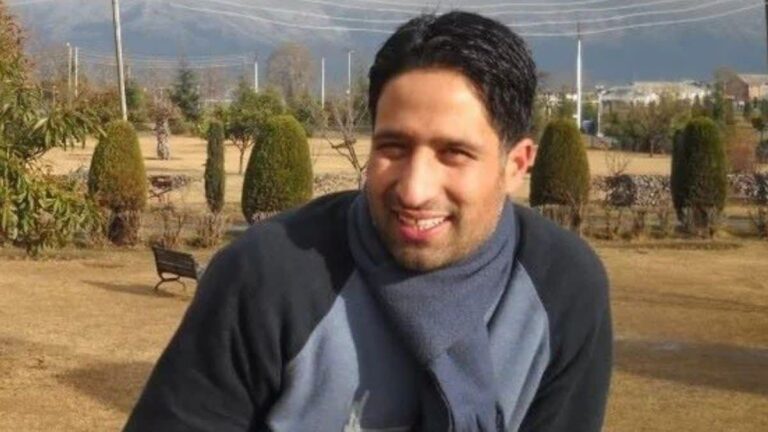
Muzaffarabad: The President of the Jammu Kashmir National Students Federation (NSF), Mujtaba Banday, has been released on bail after 21 days. The Additional District and Sessions Court confirmed his bail, following which NSF activists organized a rally, escorting him to Muzaffarabad Martyrs’ Memorial, Chakothi, and the graves of Farukh Raza Qureshi and NSF founding leader Gulnawaz Butt.

“The State and Its Resources Belong to Us” – Mujtaba Bande

Addressing the gathering after his release, Mujtaba Banday reaffirmed his unwavering stance, stating:

“This state, its people, and its resources belong to us. The people of Jammu and Kashmir have the foremost right over their land. No external force will be allowed to exploit our homeland.”

He rejected any rumors or propaganda, emphasizing:

“No matter how much false propaganda is spread, we have neither apologized nor will we ever do so. Our struggle is solely for the freedom of Jammu and Kashmir, and we stand firm on this cause.”

Overseas Kashmiris & Pro-Freedom Activists Support the Struggle

The NSF President expressed gratitude to all pro-freedom organizations, overseas Kashmiris, and human rights activists who raised their voices and protested for his release.

“This movement is not just about a few individuals; it represents the collective will of the people of Jammu and Kashmir. Our fight for the right to self-determination will continue, no matter the obstacles.” – Mujtaba Banday

When Will the International Community Take Action?

Many Kashmiri nationalist leaders urge the global community, human rights organizations, and the United Nations to take notice of the ongoing suppression of pro-freedom voices in both Indian-administered and Pakistani-administered Jammu & Kashmir.

For decades, Kashmiris have endured oppression while demanding their fundamental rights. It is time for the international community to break its silence and support the people of Kashmir in their quest for self-determination and justice.

Kashmiris Demand International Airport in AJK Gains Momentum

0

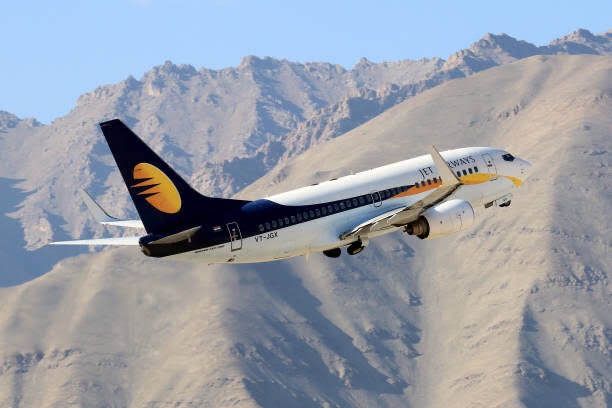
MIRPUR: Azad Jammu and Kashmir (AJK), home to over 5 million people, remains deprived of an international airport, despite over 2.5 million Kashmiris living abroad. Citizens have launched a strong campaign demanding the activation of existing airports in Muzaffarabad and Rawalakot, as well as the establishment of a new international airport to facilitate both local and overseas Kashmiris.

Challenges for Overseas Kashmiris

Kashmiris living abroad, particularly in the United Kingdom, Middle East, and North America, face serious travel difficulties when visiting their homeland. Currently, they must land at Islamabad International Airport, from where traveling to remote areas of AJK can take several hours. The journey also involves security risks, as highlighted by the recent tragic murder of Chaudhry Tasaraf, a British-Kashmiri youth, who was killed by armed robbers while traveling from Islamabad to Dadyal. This incident has intensified demands for a safer and more accessible travel route for Kashmiris.

Unfulfilled Promises and Political Inaction

Before the 2021 general elections, the President of AJK, Barrister Sultan Mehmood Chaudhry, pledged to reactivate Muzaffarabad, Mirpur, and Rawalakot airports and work towards the establishment of a fully operational international airport. However, despite strong public demand, no concrete progress has been made. Citizens now urge both the President and Prime Minister Chaudhry Anwar-ul-Haq to take serious steps and push the Government of Pakistan to fulfill this long-standing demand.

AJK’s Existing Airports: A Neglected Infrastructure

Although Muzaffarabad and Rawalakot have small airstrips, they are currently used only for paragliding and emergency operations. Following the 2005 earthquake, these airports were briefly opened for domestic flights, but they have remained non-operational since 2006. In contrast, Gilgit-Baltistan, another disputed region, already has an international airport. The disparity highlights the need for equal infrastructure development in AJK.

Mirpur: A Strong Case for an International Airport

Mirpur, often referred to as “Mini London”, has a large overseas Kashmiri population in the UK, who frequently travel between the two regions. A dedicated airport would reduce travel time, enhance security, and improve connectivity, benefiting thousands of families. In light of this, overseas Kashmiris, along with local activists, have intensified their efforts to pressure authorities for action. The Jammu and Kashmir Joint Public Action Committee has also included the demand for an international airport in its agenda.

Unique Protests and Public Demonstrations

Kashmiri activists, such as Mahmood Ahmed Musafir from Kotli, have staged creative protests to highlight public hardships. He has walked long distances and used animals for travel to draw attention to the region’s transportation issues. Recently, he led a long march from Bhimber to Muzaffarabad, giving the government a deadline until April 16 to take action.

Economic and Tourism Benefits of an International Airport

The establishment of an international airport in AJK would not only ease travel difficulties but also boost the local economy. It would:

Promote tourism, making AJK a more accessible destination for international visitors.
Create thousands of jobs, particularly in aviation, hospitality, and trade sectors.
Encourage investment, supporting business growth and economic development.

Kashmiri People Demand Immediate Action

The people of Azad Kashmir have made their demand clear: the government must take immediate action to establish an international airport in the region. This is not just about travel convenience—it is about security, economic growth, and equal rights for the people of Kashmir.

Azad Kashmir Prepares for Online Motor Vehicle Registration

0

MUZAFFARABAD: In a step toward digital governance in Azad Kashmir, (Pakistan-administered Kashmir) preparations for the launch of an online motor vehicle registration system have reached their final stage. This initiative, spearheaded by Chairman Central Board of Revenue (CBR) Chaudhry Raqeeb, aims to modernize the vehicle registration and tax payment system, ensuring convenience for vehicle owners across the region.

To advance the project, Deputy Commissioner Excise (Mirpur Circle) Ali Asghar Bukhari has traveled to Lahore to receive a comprehensive briefing on the online database and data center infrastructure at the Punjab IT Board headquarters in Arfa Karim Tower.

Punjab IT Board Briefs Azad Kashmir Excise Authorities

During the visit, Punjab IT Board (PITB) project in-charge provided a detailed briefing to Ali Asghar Bukhari on the vehicle registration process, token tax payment system, and overall data security protocols. Following the session, he was given a tour of the data center, where the PITB team showcased their digital infrastructure for vehicle registration and tax collection.

In alignment with CBR Azad Kashmir’s directives, the Inland Revenue Department of Azad Kashmir is actively working on a digital strategy to facilitate online registration and tax payments. Once implemented, vehicle owners in Azad Kashmir will be able to register their vehicles and pay taxes from the comfort of their homes, eliminating the need for physical visits to government offices.

Collaboration with Punjab IT Board to Strengthen Digital Tax Reforms

This initiative follows a meeting held last week at Kashmir House, where a delegation from the Punjab IT Board met with Commissioner Inland Revenue South, Syed Ansar Ali, to discuss the implementation of online vehicle registration. Additionally, a PITB delegation is set to visit Mirpur soon to assess the Inland Revenue Department’s preparations for this advanced digital transformation project.

A Major Step Towards Digital Tax Reforms in Azad Kashmir

Under the directive of Prime Minister of Azad Kashmir, Chaudhry Anwar ul Haq, the CBR and Inland Revenue Department have been working to digitize the region’s tax system. Their recent initiatives include:

  • Integration of the Point of Sale (POS) system in major retail brands.
  • Preventing double taxation on major industries through a data integration agreement with Pakistan’s Federal Board of Revenue (FBR).
  • Online submission of sales tax returns, enhancing transparency and compliance.
  • Upcoming launch of a dedicated POS mobile application for seamless tax transactions.

The Kashmiri diaspora, businesses, and international stakeholders should closely follow these reforms as they impact economic development, business efficiency, and transparency in governance. Digitalization is the future, and Azad Kashmir is now making bold moves to align itself with the global digital economy.

Unfair Treatment of Overseas Kashmiris at Gerry’s

0

Muzaffarabad Pakistan Administered Kashmir: The systematic exploitation of overseas Kashmiris seeking UK visas has raised serious concerns, as applicants face excessive fees, technical issues, and unfair visa rejections. In response, prominent Kashmiri business leader and former President of the Chamber of Commerce, Faisal Manzoor, has written a formal letter to British Ambassador to Pakistan, Jane Marriott, urging immediate intervention to address these injustices.

This development comes after several Mirpur-based councilors met Faisal Manzoor, highlighting how Gerry’s, the private visa service provider, has been charging over £150 per application under the pretext of security and service charges. The issue is particularly significant as a large number of overseas Kashmiris, many of whom are British citizens, rely on this process to visit their homeland.

Overseas Kashmiris Face Financial Exploitation in Visa Process

Kashmiris living abroad have long contributed to the economy of both Kashmir and the UK, yet they now find themselves subjected to unjust financial burdens when applying for UK visas. In addition to the £150 service fee, applicants are required to pay an additional 14% in taxes and bank charges when booking an online appointment at Gerry’s. However, due to frequent failures in Gerry’s online system, many applicants are unable to secure appointments after making payments.

Adding to the frustration, when applicants request refunds, they are denied reimbursement of the 14% tax and bank charges, resulting in collective financial losses amounting to millions.

Unjustified Visa Rejections: Systematic Disempowerment of Kashmiris?

The situation is further worsened by the increasing number of visa rejections faced by applicants from Kashmir and Pakistan-administered regions, raising concerns about systemic discrimination. Faisal Manzoor, in his letter, pointed out that UK visa officers at the British Embassy in Islamabad have been arbitrarily rejecting applications without transparent justifications. Furthermore, applicants are denied the right to appeal UK visit visa refusals, forcing many to reapply and lose additional money in visa fees.

This trend has led many Kashmiris to question whether these policies are part of a larger pattern of institutional bias, discouraging freedom of movement for members of the Kashmiri diaspora who wish to visit their families in Indian- and Pakistan-administered Kashmir.

Demand for UK Government’s Intervention

The Kashmiri diaspora plays a crucial role in international trade, business, and cultural exchange, yet they continue to face barriers in mobility due to unjust policies. Faisal Manzoor has urged British authorities to take immediate steps to:

  1. Regulate visa service providers like Gerry’s to ensure fair and transparent pricing.
  2. Investigate arbitrary visa rejections and provide applicants with proper justifications and the right to appeal.
  3. Address the technical failures in Gerry’s online system to prevent applicants from unnecessary financial losses.

Kashmir’s Apple Farmers Fight for Survival Amid Surge in Washington Apple Imports

0

Srinagar, Kashmir: The Kashmir Valley Fruit Growers cum Dealers Union has raised alarm over the growing threat to the local apple industry due to the influx of imported apples, particularly from Washington, USA. In a letter addressed to the Prime Minister of India, the union has urged immediate action to halt the entry of foreign apples, which they say is pushing thousands of Kashmiri apple farmers towards financial distress.

Kashmir’s Apple Industry Under Threat

The horticulture sector is the backbone of the economy in Jammu & Kashmir, Himachal Pradesh, and Uttarakhand, providing livelihoods to over 700,000 families. However, the recent policy decision to reduce import duties on Washington apples has sparked fear among local farmers. The move, set to take effect from April 2, 2025, will allow cheaper American apples to flood Indian markets, making it nearly impossible for indigenous apple growers to compete.

The Economic and Political Challenges Facing Kashmiri Apple Farmers

Kashmir’s apple growers have been facing a series of crises, including political instability, the devastating 2014 floods, and unpredictable weather patterns such as hailstorms, strong winds, and unseasonal rainfall. These factors have already weakened the industry, and now, the influx of cheaper foreign apples threatens to collapse it entirely.

Washington Apples: A Trade Policy That Harms Kashmiri Farmers

The issue has gained further significance with the announcement of new tariff reductions by the U.S. government under trade agreements, which will benefit American apple exporters at the cost of local producers. The fruit growers union believes this policy is directly harming Kashmiri apple farmers, as well as those in Himachal and Uttarakhand, by reducing their market share and forcing them into economic vulnerability.

Kashmiri Apple Growers Demand 100% Import Duty on Washington Apples

In their plea to the Prime Minister, the Kashmir Valley Fruit Growers have demanded the imposition of a 100% import duty on Washington apples to safeguard India’s domestic apple industry. The chairman of the union, Bashir Ahmad Bashir, expressed hope that the government would take this issue seriously and implement immediate measures to protect the livelihood of apple growers in Kashmir and other apple-producing regions.

As an independent pro-Kashmir international news agency, we recognize that the Kashmiri apple industry is not just a local economic concern but a global trade issue that requires urgent intervention. The Kashmiri apple is internationally renowned for its taste, quality, and rich cultural significance, and it must be protected from unfair trade policies that favor foreign corporations over local farmers.

This development once again highlights how Kashmir’s economy remains vulnerable to external decisions, further underscoring the need for policies that prioritize local businesses, sustainable agriculture, and the empowerment of Kashmiri farmers

Crackdown on Kashmiri Political and Religious Leadership – AAC and JKIM Banned for Five Years

0

Srinagar: In a move aimed at further weakening pro-Kashmir leadership in Kashmir, the Indian government has banned the Awami Action Committee (AAC) and Jammu & Kashmir Ittihad-ul-Muslimeen (JKIM) under the Unlawful Activities (Prevention) Act (UAPA) 1967 for a period of five years.

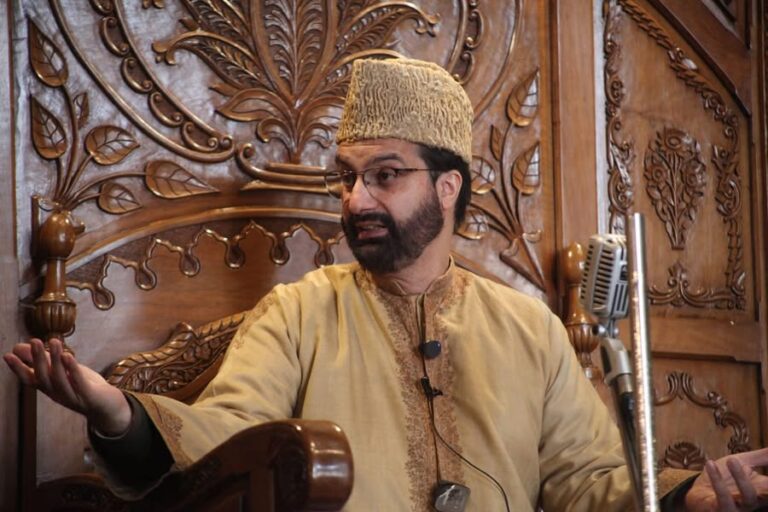
The Awami Action Committee, led by Mirwaiz Umar Farooq, and JKIM, headed by Masroor Abbas Ansari, have been accused of engaging in activities that allegedly threaten India’s sovereignty, integrity, and security. The Indian Home Ministry claims that these organizations have supported separatist movements, promoted anti-India sentiments, and facilitated funding for militancy in Jammu and Kashmir.

Criminal Charges Against Awami Action Committee and Its Leadership

According to the Home Ministry’s notification, several criminal cases have been registered against AAC leaders, including sedition, unlawful assembly, and incitement to violence. Police records indicate that Mirwaiz Umar Farooq and other AAC members have faced multiple FIRs in Srinagar’s Nowhatta, Safa Kadal, and Kothi Bagh police stations for their alleged anti-India speeches, election boycott calls, and protests.

Additionally, the National Investigation Agency (NIA) has also filed a charge sheet against AAC spokesperson Aftab Ahmad Shah and other individuals for their alleged involvement in anti-state activities. The government argues that if AAC were not banned, it would continue to promote militancy, disrupt public order, and fuel separatist movements in the region.

JKIM Accused of Anti-State Activities

Similarly, the Jammu & Kashmir Ittihad-ul-Muslimeen (JKIM) has been accused of facilitating terrorism, spreading anti-India propaganda, and collecting funds for separatist agendas. The Home Ministry states that the organization has actively worked to instigate violence, create unrest, and challenge India’s constitutional authority over Jammu & Kashmir.

The government has justified the ban under Section 3 of UAPA, citing national security threats. Officials claim that without intervention, JKIM would have continued to provoke anti-state sentiments, question Jammu & Kashmir’s integration with India, and disrupt peace in the region.

Mirwaiz Condemns the Ban Calls it Suppression of Kashmiri Voice

Following the announcement of the ban, Mirwaiz Umar Farooq, the leader of the Awami Action Committee (AAC), strongly condemned the move, calling it an attempt to intimidate and disempower the people of Jammu and Kashmir.

In a statement on social media, he wrote:

“Strongly condemn the ban on Awami Action Committee and declaring it an ‘Unlawful Association.’ Formed by Shaheed-e-Millat at the peak of the Holy Relic (Moi Muqaddas) agitation in 1964, it has unwaveringly stood by the people of J&K, advocating their aspirations and rights through completely non-violent and democratic methods and calling for a peaceful resolution of the Kashmir conflict through dialogue and deliberation, for which its members suffered jails, incarceration, and even martyrdom. This move seems part of the continuation of the policy of intimidation and disempowerment that is being followed vis-à-vis J&K since August 2019. The voice of truth may be suppressed through force, but will not be silenced.”

His remarks highlight the broader trend of political repression in Kashmir post-August 2019, where key political and religious figures have faced arrests, house detentions, and organizational bans aimed at silencing pro-Kashmir voices.

Kashmir Under Systematic Suppression

The ban on AAC and JKIM is part of a larger crackdown on political, religious, and separatist organizations in Indian-administered Kashmir, reflecting a continued effort to silence voices that challenge New Delhi’s control over the region. Since the revocation of Article 370 in August 2019, India has intensified its military presence, political suppression, and legal crackdowns against pro-Kashmir and separatist groups.

Human rights activists argue that such bans are an extension of Kashmir’s colonial-style occupation, where political expression, dissent, and religious leadership are systematically suppressed. By targeting groups like AAC and JKIM, India aims to eliminate any remaining organized resistance and further curtail Kashmiri self-determination movements.

The ban raises serious concerns over the eroding political space and shrinking civil liberties in Kashmir. With most pro-freedom and religious groups either dismantled or silenced, the latest move indicates that New Delhi seeks to impose complete political submission on the region. However, despite these actions, Kashmir’s struggle for identity, autonomy, and freedom remains deeply rooted in its historical and political consciousness.

This development signals yet another aggressive step in India’s effort to consolidate its control over Kashmir, while Kashmiris continue to resist, against all odds, in their pursuit of political and territorial rights.

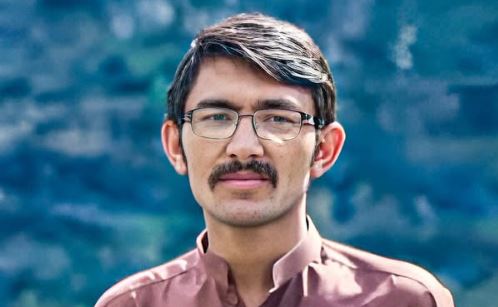
Kashmiri Scholar Aala Fazili Granted Bail After Three Years of Injustice

    0

    Srinagar: In a significant legal development, a Jammu court has granted bail to PhD scholar Aala Fazili, who was arrested nearly three years ago under the Indian law Unlawful Activities (Prevention) Act (UAPA). His 2011 article, “Chains of Slavery Will Break,” published in The Kashmir Walla, was deemed controversial by the Indian authorities, leading to his prolonged detention. However, the court ruled that there is no evidence linking Fazili’s writings to any act of terrorism, making his imprisonment unjustified.

    Delivering the judgment, Third Additional Sessions Judge Madan Lal stated:

    “The author neither called for armed resistance, nor incited rebellion against the state, nor advocated for violence. There is no attempt to weaken state authority through terrorism or acts of violence.”

    Criminalizing Journalism and Intellectual Discourse in Kashmir

    The Jammu and Kashmir State Investigation Agency (SIA) alleged that Fazili’s article was “highly provocative and seditious, aimed at creating unrest in the region.” Based on this claim, he was arrested in April 2022. However, the court pointed out that the government itself ignored the article for more than a decade, proving that it neither posed an immediate threat nor had any long-term impact on public order.

    “From November 6, 2011, to April 4, 2022, the government took no action against the article, indicating that it neither incited unrest nor contributed to an increase in militancy-related incidents,” the court observed.

    The Jammu and Kashmir High Court had also noted earlier that there was no evidence to suggest that the article incited violence.

    “There is no proof on record that the article led anyone to resort to violence. The entire charge sheet is silent on any direct consequence of the article in terms of public disturbance or militancy. The accusations against Fazili are baseless and built on assumptions,” the judgment stated.

    Weaponizing the Law to Silence Kashmiri Voices

    Fazili’s case is not an isolated incident but part of a systematic crackdown on intellectuals, journalists, and dissenting voices in Kashmir. The Kashmiri people continue to live under an occupation that criminalizes free speech, where academics and journalists face arbitrary arrests for their work.

    The prosecution’s case relied heavily on the testimony of The Kashmir Walla’s employee, Yash Raj Sharma, who was hired seven years after the article was published. The claim that Fazili was the article’s author was made despite the magazine’s editorial process, which requires author verification before publication. This raises serious concerns about the credibility of evidence used to justify Fazili’s three-year-long detention.

    Kashmir: A Land in Chains

    For decades, Kashmir has been subjected to systematic oppression, enforced disappearances, media censorship, and suppression of political dissent. The use of draconian laws like UAPA and Public Safety Act (PSA) has turned the region into one of the most militarized zones in the world, where intellectual and journalistic freedom is curtailed at every step.

    Fazili’s arrest reflects India’s broader policy of silencing Kashmiri voices—anyone who speaks of freedom, human rights, or political self-determination is branded a “threat” and imprisoned without trial.

    At its core, this case highlights the ongoing colonial treatment of Kashmir, where even an academic article can be used as a pretext for incarceration. Fazili’s bail may be a relief, but the larger battle for Kashmir’s freedom continues. The world must recognize the plight of Kashmiri scholars, journalists, and civilians who are systematically targeted simply for expressing their truth.

    Kashmiri Scholar Wins Prestigious Global Research Award for Cancer Breakthrough

    0

    Srinagar: In a significant recognition of Kashmiri scientific excellence, Umar Majeed Khawaja, a distinguished researcher from the University of Kashmir’s Department of Clinical Biochemistry, has been honored with the Global Scholar-in-Training Award (GSITA) 2025 by the American Association for Cancer Research (AACR). This prestigious award, conferred upon only 15 researchers worldwide, acknowledges exceptional contributions to cancer research.

    Khawaja is among the two Indian scholars selected for this accolade, the other being a researcher from the All India Institute of Medical Sciences (AIIMS), New Delhi. His groundbreaking work on colorectal cancer has earned him an invitation to the AACR Annual Meeting in Chicago (April 25-30, 2025), where he will present his research and engage with leading global oncologists. This fully-sponsored opportunity will allow him to collaborate with experts and explore the latest advancements in oncology.

    Advancing Kashmir’s Research Footprint on a Global Stage

    This achievement marks a pivotal moment for Kashmir’s scientific community, reinforcing the region’s growing presence in international biomedical research. The Vice Chancellor of the University of Kashmir, Professor Nilofer Khan, hailed Khawaja’s recognition as a testament to the university’s rising global research stature. She stated:

    “This is a proud moment for Kashmir University and a validation of our commitment to high-quality research. Umar’s success will inspire young researchers and strengthen our scientific collaborations at an international level.”

    Khawaja is currently pursuing his PhD under the mentorship of Dr. Reena Singh (Lovely Professional University, Punjab) and Dr. Shoukat Ahmad Gani (University of Kashmir). His research focuses on the anti-cancer potential of Rheum webbianum, a medicinal plant indigenous to the Himalayan region. The findings from his work hold promise for developing novel cancer therapies based on natural compounds.

    Bridging Science and Society in Kashmir

    Expressing his gratitude, Umar Majeed Khawaja emphasized the importance of perseverance in scientific research. He remarked:

    “This award is a recognition of the dedication of researchers who work in challenging environments. My study contributes to a deeper understanding of cancer biology and potential treatments. I hope this inspires young scientists in Kashmir to pursue ambitious research goals.”

    Apart from his academic endeavors, Khawaja has actively contributed to cancer awareness initiatives in Kashmir, advocating for early diagnosis and preventive strategies. His work has been published in leading international scientific journals, and he is a peer reviewer for several high-impact publications.

    His success underscores Kashmir’s potential as a hub for cutting-edge scientific inquiry, positioning the region’s researchers as key contributors to the global fight against cancer.

    BLA Takes Over Train, Demands Government Action in 48 Hours

    0

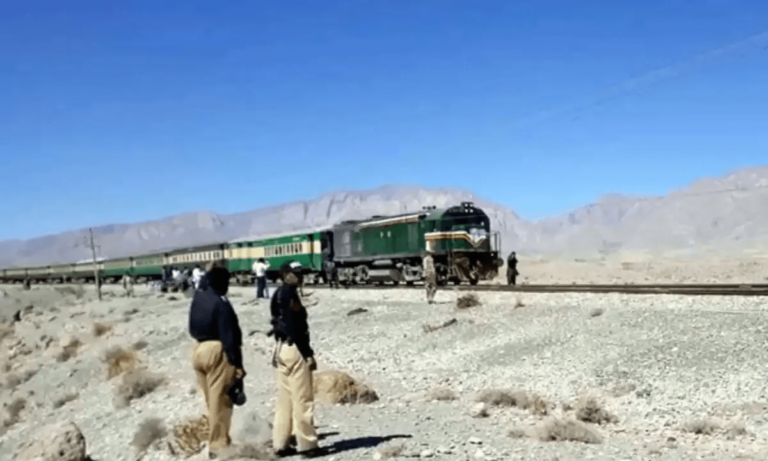
    SRINAGAR: The Baloch Liberation Army (BLA), a separatist group active in Pakistan’s southwestern Balochistan province, hijacked the Jaffar Express train early Tuesday, taking hundreds of passengers hostage before releasing women, children, and civilians.

    However, over 200 individuals, including Pakistani military personnel, remain in captivity as the group issues a 48-hour ultimatum to the government.

    Key Details:

    • Train Hijacked: The BLA claimed responsibility for the attack, stating it seized the train around 1 a.m. local time in Bolan district. The train was carrying over 400 passengers, many of whom were reportedly affiliated with the military or other government agencies.
    • Hostages Released: After identifying passengers, the BLA released women, children, and civilians, who were later taken to Paniar Railway Station. However, the group confirmed that 214 individuals, including more than 100 military and paramilitary personnel, are still being held.
    • BLA’s Demands: The group has demanded the release of an unspecified number of “missing persons” allegedly detained by Pakistani authorities. It warned that if its demands are not met within 48 hours, all hostages will be killed and the train destroyed.

    Security Forces Respond:

    Pakistani security forces have launched a major operation in the area, with ground troops and aerial units deployed near the hijacked train’s location. Clashes between militants and security personnel have been reported, though details remain scarce.

    Official Statements:

    • A senior Pakistani security official, speaking anonymously to BBC World Service, confirmed the presence of military personnel on the train.
    • BLA spokesperson Jeeyand Baloch accused the Pakistani government of “state terrorism” and warned against further military action.

    Background:

    Balochistan, Pakistan’s largest province, has been a hotspot for separatist insurgency for decades. Groups like the BLA accuse the central government of exploiting the region’s resources while neglecting its people. The Pakistani military denies these allegations, labeling the militants as “foreign-backed terrorists.”

    International Implications:

    The hijacking underscores the ongoing instability in Balochistan, a region of strategic importance due to its role in China’s Belt and Road Initiative, including the development of Gwadar Port. The incident has drawn international attention to the long-standing conflict and human rights concerns in the area.

    Current Situation:

    As of now, the Jaffar Express remains under BLA control, with Pakistani security forces assessing their next steps. The situation remains tense, with fears of further violence if negotiations fail.

    This is a developing story. Updates will follow as more information becomes available.

    Train Attack in Balochistan: Gunmen Target Jaffar Express, Hostages Taken

    0

    • Location: The train was intercepted near Tunnel No. 8 in Bolan district, Balochistan, Paksitan
    • Casualties: The driver sustained injuries, but no immediate fatalities were reported.
    • Hostage Situation: Security sources confirmed that militants took passengers hostage, including women and children.
    • Response: Security forces swiftly cordoned off the area and launched a clearance operation. Hospitals in Sibi and Quetta were placed on high alert, with ambulances and a relief train dispatched to the scene.

    Quetta, Balochistan: In a brazen act of terrorism, unidentified gunmen attacked the Jaffar Express, a passenger train traveling from Quetta, the provincial capital of Balochistan, to Peshawar, the capital of Khyber Pakhtunkhwa. The attack occurred near the town of Mach, in the Gudar-Lar and Piro Kanri area, leaving the train driver injured and hundreds of passengers held hostage.

    According to Dawn News, the assailants intercepted the train near Tunnel No. 8 in the Bolan district, opening fire and forcing the train to halt. The Jaffar Express, consisting of nine carriages and carrying approximately 500 passengers, was targeted in a remote and mountainous region, making rescue operations challenging.

    Security forces have cordoned off the area and launched a clearance operation to rescue the hostages, many of whom are reported to be women and children. Emergency measures have been enforced in hospitals across Sibi, and ambulances have been dispatched to the scene. However, the difficult terrain has hampered rescue efforts.

    Railway officials confirmed the attack, stating that the train driver was wounded in the firing. Security forces are engaged in heavy gunfire with the attackers, who are believed to have links with foreign facilitators. Authorities have also deployed a relief train to assist in the rescue mission.

    The Balochistan government spokesperson, Shahid Rind, emphasized that all relevant agencies are on high alert and urged the public to remain calm and avoid spreading rumors. Meanwhile, the Civil Hospital in Quetta has also been placed on emergency standby, with medical staff called in to handle potential casualties.

    Federal Interior Minister Mohsin Naqvi condemned the attack, calling the perpetrators “savages” who deserve no mercy. He expressed solidarity with the victims and prayed for the speedy recovery of the injured.

    This incident is the latest in a series of terrorist activities targeting Balochistan and Khyber Pakhtunkhwa. Recent weeks have seen a surge in violence, including attacks on a jewelry shop in Hub, the assassination of political leaders in Khuzdar, and the destruction of vehicles on the Coastal Highway. Security forces have reportedly arrested several terrorists and foiled multiple plots, but the region remains volatile.

    Security sources have also highlighted evidence of cross-border infiltration from Afghanistan, with four terrorists recently arrested near the Pakistan-Afghanistan border in Toba Kakar. The suspects were found in possession of Kalashnikov rifles, hand grenades, and other weapons, and reportedly confessed to planning major terrorist operations.

    As the situation unfolds, authorities are working to secure the release of the hostages and neutralize the threat. The attack underscores the ongoing challenges faced by Pakistan in combating terrorism and ensuring the safety of its citizens.